

Zymeworks: A Rising Star in Bispecific Antibody Development with Three Core Technology Platforms Attracts Major Pharma Partnerships

Zymeworks
Protein Therapy Developer
Outstanding overseas enterprises have long served as key benchmarks for Chinese entrepreneurs. At the turn of the year, VCBeat conducted an in-depth analysis of the top 30 overseas healthcare companies by funding amount in 2019, presenting these case studies to readers with the aim of helping investment institutions identify promising directions and enabling investors to find valuable models for learning.

Among antibody-based therapeutics, monoclonal antibodies represent one of the most important categories and have maintained a year-on-year growth trend in recent years. According to data from the Qianzhan Industry Research Institute, sales revenue for monoclonal antibody drugs reached $49.7 billion in 2011 and $106 billion in 2017, with a compound annual growth rate (CAGR) of 11.5% from 2011 to 2017.
However, monoclonal antibodies can only target a single antigen or epitope, whereas the pathogenesis of certain diseases is often associated with multiple disease pathways. Bispecific antibodies, which can simultaneously bind to two antigens or epitopes, overcome this limitation of monoclonal antibodies.
Bispecific antibodies are antibody molecules capable of simultaneously and specifically binding to two antigens or two epitopes. Theoretically, they can exert synergistic effects comparable to the combination of two monoclonal antibodies, thereby enhancing the cytotoxic activity against tumor cells. Bispecific antibodies have become one of the hottest investment areas in new drug development within the industry today, holding broad application prospects in cancer immunotherapy.
Across the ocean, a bispecific antibody development company has attracted significant attention. As of January 14, 2020, the company’s market capitalization stood at $1.839 billion. Despite its relatively small market cap, the company has leveraged its bispecific antibody development platform to forge deep collaborations with globally renowned pharmaceutical companies such as Eli Lilly, GSK, and Pfizer. In China, BeiGene has also extended an olive branch to the company.
This company is Zymeworks.
Zymeworks, founded in 2003 and headquartered in Vancouver, Canada, is a clinical-stage biopharmaceutical company dedicated to the development of next-generation multifunctional antibodies. With robust R&D capabilities and three complementary technology platforms, the company is well-positioned to consistently develop novel antibody therapeutics.
Dr. Ali Tehrani, co-founder of Zymeworks, holds a Master’s degree in Biochemistry from the University of Massachusetts (commonly known as UMass) and a Ph.D. in Microbiology and Immunology from the University of British Columbia. During his doctoral studies, he co-founded the non-profit organization Student Biotechnology Network, for which he received the UBC Faculty of Science Distinguished Leadership Achievement Award in 2002.
Since the founding of Zymeworks in 2003, Ali Tehrani has served as the company’s Chief Executive Officer and a member of its Board of Directors, overseeing technical operations and patent applications, and helping the company secure its angel financing round.
According to Crunchbase, Zymeworks has completed eight rounds of financing since its inception. The company listed on the New York Stock Exchange in May 2017 under the ticker symbol ZYME; in June 2019, it completed a secondary public offering, raising $201.3 million.
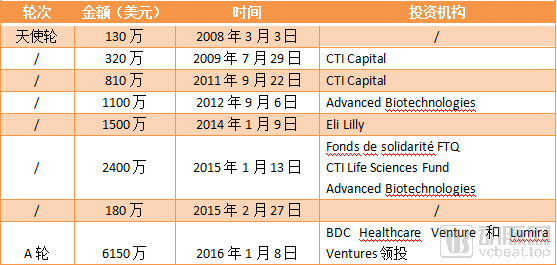
Source: Crunchbase; Graphic by VCBeat
Bispecific antibodies do not exist in nature and must be artificially produced through recombinant DNA or cell fusion technologies. Therefore, the bispecific antibody technology platform is key to the successful development of drugs. The official website shows that Zymeworks has three technology platforms: Azymetric™, ZymeLink™, and EFECT™. These platforms can work with the company's existing computational and protein engineering solutions to produce different antibody combinations.
Azymetric™: Design and Screening of Bispecific Antibodies
Azymetric™ is a bispecific antibody design and screening platform. The bispecific antibodies produced can spontaneously assemble into a single molecule, featuring two distinct antigen-binding fragments (Fab) at the ends of their arms. Their domains are formed through the pairing and combination of specialized heavy and light polypeptide chains, enabling rapid target screening and significantly shortening drug development timelines.
Antibodies produced by Azymetric™ feature a long serum half-life, high stability, low immunogenicity, and high yield. Compared with other bispecific antibody platforms, this platform is compatible with diverse antigen-binding structures and cytotoxic conjugates. This flexibility enables the company to efficiently evaluate the biology of different targets and the mechanisms of antigen-binding regions.
ZymeLink™: Enhancing Therapeutic Response
ZymeLink™ is an antibody-drug conjugate (ADC) design platform that enables the linkage of antibodies to small-molecule cytotoxic drugs via peptide chains, thereby assembling ADC therapeutics. These agents remain stable in circulation without releasing the small-molecule payload, yet can specifically and effectively release it within the tumor microenvironment.
ADCs produced by ZymeLink™ have the following characteristics: a fixed drug-to-antibody ratio; retention of the Fc region effector functions of the antibody, enabling it to recruit and activate immune cells; and maintenance of favorable pharmacokinetics through FcRn binding.
EFECT™: Customizing and Optimizing Immune Responses
EFECT™ is an antibody Fc region function modulation platform that regulates immune cell responses by modifying the antibody’s Fc region. The Fc region, located at the base of the Y-shaped antibody, binds to receptors on immune cells; engagement with different Fc receptors can activate distinct immune cell functions. Through this platform, the company can tailor the immunological activity of antibodies, and enhancing Fc-mediated antibody activity can improve therapeutic efficacy. In other words, EFECT™ not only improves the targeting capability of antibody drugs but also extends their half-life in circulation, thereby reducing the frequency of dosing required for patients.
Currently, Zymeworks has two drug candidates in clinical development, ZW25 and ZW49, primarily targeting HER2-positive tumors such as breast cancer, gastric cancer, and lung cancer.
HER2-targeted therapies currently available on the market are primarily indicated for HER2-high breast and gastric cancers, leaving a substantial proportion of patients with HER2-positive tumors (such as those with HER2-low expression) without effective treatment options. Data indicate that among patients with HER2-positive tumors, approximately 57% of those with gastroesophageal cancer and 81% of those with breast cancer exhibit low-to-moderate HER2 expression.
Zymeworks’ investigational drugs hold therapeutic potential for patients with low-to-moderate HER2 expression and also cover second- to third-line treatment for those with high HER2 expression, indicating a substantial market prospect.
ZW25 is a bispecific antibody developed on Zymeworks’ Azymetric™ platform that simultaneously binds to two non-overlapping epitopes of HER2. This unique design enables multiple mechanisms of action, including dual blockade of HER2 signaling, enhanced binding and removal of HER2 proteins from the cell surface, and potent effector functions, thereby promoting antitumor activity in patients.
Zymeworks is developing ZW25 as a HER2-targeted therapy for patients with HER2-expressing solid tumors. The U.S. Food and Drug Administration has granted Fast Track designation to ZW25 in combination with standard-of-care chemotherapy as first-line treatment for gastroesophageal adenocarcinoma, and has designated ZW25 as an orphan drug for the treatment of gastric cancer and ovarian cancer.
The company’s other R&D pipeline candidate, ZW49, is a HER2-targeted antibody-drug conjugate (ADC) developed based on ZW25 using the Azymetric™ and ZymeLink™ platforms, with the same indications as ZW25. Currently, ZW49 is undergoing Phase I clinical trials to evaluate its efficacy in treating patients with locally advanced or metastatic HER2-positive tumors.
Zymeworks’ technology platform and R&D capabilities have attracted numerous companies to collaborate on drug development, including Eli Lilly, GSK, Merck, and BeiGene. Through partnerships with major pharmaceutical companies, the company has generated substantial revenue and mitigated R&D risks.
In November 2018, Zymeworks and BeiGene entered into a strategic collaboration for the clinical development and commercialization of ZW25 and ZW49. Under the agreement, BeiGene obtained exclusive rights to develop and commercialize ZW25 and ZW49 in Asia (excluding Japan), Australia, and New Zealand. Zymeworks received a $40 million upfront payment, is eligible for milestone payments totaling up to $390 million, and will receive tiered royalties based on future sales.
On January 13, 2020, Zymeworks announced the initiation of a Phase II trial for the ZW25 combination therapy and reached an agreement with Pfizer to jointly advance this study. ZW25 will be used in combination with Pfizer’s oral CDK4/6 inhibitor Ibrance (palbociclib) and fulvestrant for the treatment of patients with HR-positive, HER2-positive locally advanced or metastatic breast cancer who have received prior therapy. Zymeworks will sponsor the study, and Pfizer will provide palbociclib.
As a large number of international biotechnology companies begin to invest in bispecific antibodies, with continuous maturation of R&D technologies and steady advancement of clinical drugs, the enthusiasm of domestic enterprises for developing bispecific antibody drugs is gradually heating up.
Currently, multiple domestic companies, including Innovent Biologics, YZY Biopharma, EMBiologics, Alphamab Oncology, Akeso, and Genor Biopharma, have established pipelines for bispecific antibody drugs.
Innovent Biologics: Anti-VEGF/Complement Bispecific Antibody IBI302
IBI302, an investigational Class 1 novel drug with independent global intellectual property rights developed by Innovent Biologics, has entered Phase I clinical trials. Targeting VEGF, C3b, and C4b, IBI302 simultaneously binds to vascular endothelial growth factor (VEGF) and complement components, thereby blocking the VEGF signaling pathway and complement activation. This dual mechanism inhibits the growth of pathological neovascularization and addresses the root cause of the disease, achieving both symptomatic relief and fundamental treatment.
YZY Biopharma: YBODY Bispecific Antibody for Cancer Therapy
YBODY, an independently developed tumor-therapeutic bispecific antibody by YZY Biopharma, possesses pleiotropic functions capable of simultaneously binding to tumor antigens and human immune cells. While identifying, inhibiting, and killing tumor cells, this class of antibodies can activate the human immune system, significantly enhancing the effective tumoricidal activity of the antibodies and improving control over tumor recurrence and metastasis, thereby demonstrating superior biological performance and favorable stability.
Aimab Therapeutics: EGFR and c-MET Bispecific Antibody EMB01
EMB01, developed by Y-Mabs Biologics based on its bispecific antibody platform for multiple solid tumor indications, received IND approvals from the U.S. FDA and China’s National Medical Products Administration in late 2018, initiating Phase 1/2 clinical trials. EMB01 is a bispecific antibody targeting EGFR and c-MET with a unique synergistic mechanism.
Alphamab: Proprietary Bispecific Antibody Platform
CRIB (Charge Repulsion Improved Bispecific) is a bispecific antibody platform independently developed by Alphamab Oncology. Based on the intact antibody framework structure, it significantly increases the probability of heterodimer formation while hindering homodimer formation by purposefully adjusting the charge network distribution between different Fc chains, thereby achieving the construction of bispecific antibody molecules.
Zhongshan Akeso: Bispecific Antibody Targeting Both CTLA-4 and PD-1
AK104 is the world’s first first-in-class bispecific antibody targeting both CTLA-4 and PD-1 to enter clinical trials, developed by Akeso Biopharma for the treatment of a broad spectrum of malignant tumors. The drug initiated an international, multicenter Phase I clinical trial in Australia in December 2019.
Jian Neng Long: ITab Immune Antibody Technology Platform
Jian Neng Long’s ITab Immune Antibody Technology Platform: Bispecific antibody molecules simultaneously bind to tumor-associated antigens and the T-cell antigen CD3, directing T cells toward tumor cells. This interaction forms an immunological synapse between the two cell types, triggering T-cell activation and subsequently inducing tumor cell cytolysis, leading to tumor cell death.