

Poly Health's Eight-Year Transformation from Real Estate to Big Health: A Strategic Evolution and Product Portfolio Overview
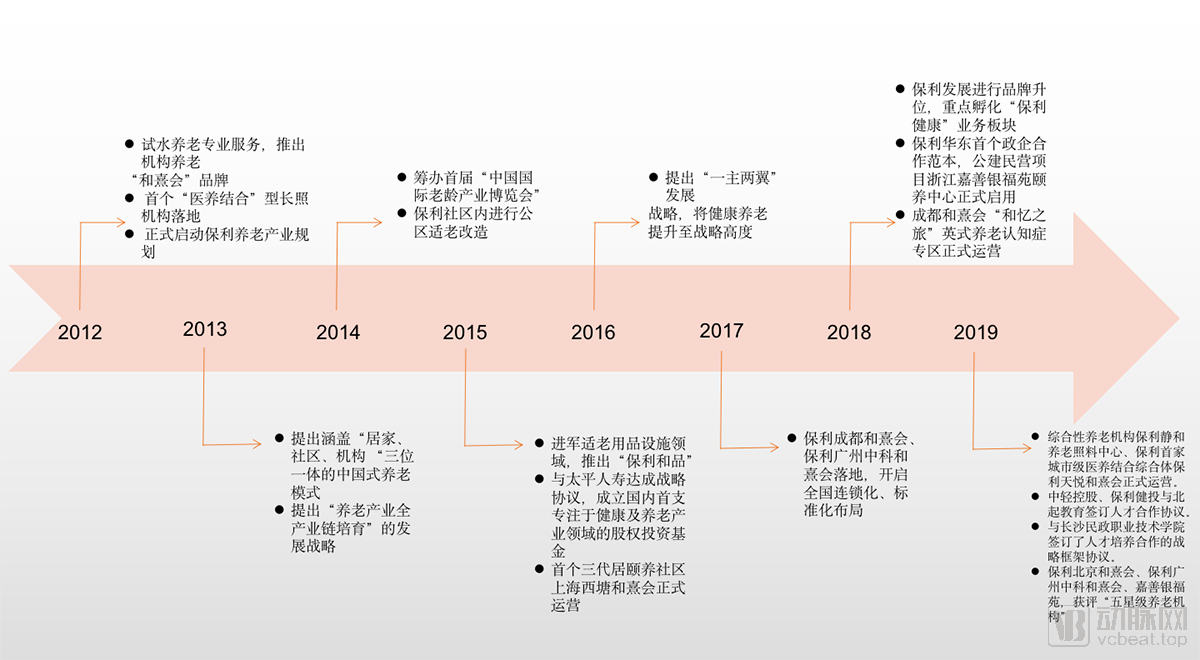
In 2012, the growth ceiling of the real estate industry became increasingly apparent, placing greater pressure on leading real estate enterprises and prompting them to gradually pursue strategic transformation.
In active response to the national strategy of “Healthy China” and in fulfillment of its social responsibilities as a central state-owned enterprise, Poly entered the market in 2012. This move also aimed to extend service duration, enhance the service value chain, and boost property premium capabilities, with the strategic intent of securing an early foothold in the broader health and wellness sector.
In 2016, Poly Group proposed a business layout of “One Core, Two Wings,” with real estate investment and development as the core, and comprehensive services and real estate finance as the two wings. It elevated health and elderly care to a strategic level and formally established Poly Health Industry Investment Co., Ltd. (hereinafter referred to as “Poly Health Investment”). Centered on the strategic goal of “Health+” and using health and elderly care services as the entry point, the company aims to provide professional, full-lifecycle, full-chain, and all-age healthy living services to society. It seeks to build a virtuous ecosystem for health industry investment and operation, striving to become a “partner in healthy living” that promotes industry development.
Source: Provided by the company (Graphic by VCBeat)
Unlike other real estate developers that prioritized entering the “integrated complex” market, Poly Real Estate began by focusing on the elderly care services needed by existing community residents. After eight years of steady development, Poly is now formally operating six facilities and has one facility in trial operation. It is reported that, to date, the average occupancy rate across these seven facilities exceeds 60%, with the earliest facility established in Beijing achieving an occupancy rate of over 98%. Most of these facilities have basically achieved operational profitability.
Poly Health Investment has established a national business footprint centered on Beijing, Shanghai, Guangzhou, and Chengdu, enabling coordinated operations across four major regions: the Beijing-Tianjin-Hebei area, the Yangtze River Delta, the Pearl River Delta, and Southwest China. It has developed a membership model that allows individuals to join in one location and access elderly care services in multiple locations. To gain deeper insights into the development of Poly’s elderly care initiatives, VCBeat (WeChat ID: vcbeat) conducted an exclusive interview with Guo Yanzhou, Assistant General Manager of Poly Health Investment, who shared the company’s experiences and achievements in recent years.
A close examination of Poly Elderly Care’s development history reveals that Poly has been advocating a “trinity” elderly care system encompassing home-based, community-based, and institutional care since 2013:
by elderly care institutions"He Xi Hui"Provide medium- to long-term care, primarily serving elderly individuals with essential nursing needs, adopt an integrated medical and elderly care model, and establish facilities with 50–300 beds in central cities.
Community Micro-Institutions Incubated by Property Management Companies“Heyue Club”Provide short-term residential care within the community, primarily for semi-independent elderly individuals, with fewer than 50 beds established in large communities.
Home-based in-home service provider incubated by property management companies“He Yuan”Undertake responsibilities such as remote health management and in-home rehabilitation nursing care.
However, as its business expanded, Poly Group found that the traditional elderly care model, characterized by three isolated and self-contained systems, was not conducive to the long-term development of its health sector. It therefore attempted to integrate the functions of the “trinity” model within its institutions, thereby achieving"Institutional services as the foundation, community-based services as the scenario, and home care as the endpoint"elderly care model.
For example, Beijing Hexihui, which previously served only as an institutional elderly care facility, now leverages its integrated medical and elderly care resources to provide in-home services to four surrounding communities, in addition to fulfilling its original institutional role. “This level of outreach is something that smaller, traditional community-based institutions cannot achieve,” said Guo Yanzhou.
Poly Health Investment has deeply cultivated institutional elderly care, actively strengthening the transformation and incubation of multi-format business models. Through diversified exploration of project models, Poly Health Investment has engaged in deep synergy with its core real estate business, fostering the widespread development of various formats such as high-end elderly care complexes, medical-nursing valleys, and industry cities, thereby enriching its service product forms and system.
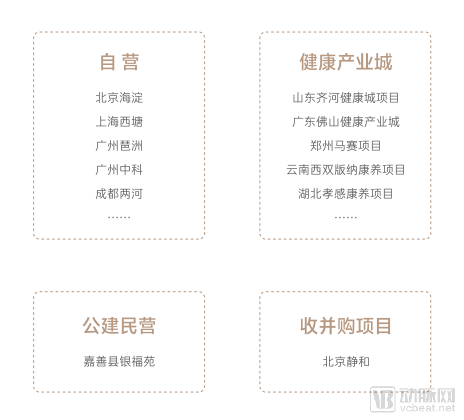
Image source: Provided by the company
Notably, Poly Health Investment takes elderly care as its starting point, aiming to build a comprehensive product ecosystem that spans all age groups and covers the entire life cycle. Poly Health Investment has enriched its health and elderly care product portfolio, expanding into a “Health + Lifestyle” model encompassing cultural tourism, wellness, and medical devices, as well as a “Health + Industry” model. With health management as the cornerstone, it provides a full life-cycle service system spanning pregnancy and childbirth, adolescence, middle age, and old age, guiding people of all age groups to eliminate “silos” in health services.
Furthermore, Poly Health Investment is committed to fostering a green, transparent, healthy, and harmonious community health atmosphere and an all-age healthy community culture that supports communal living for people of all ages. It is understood that, in addition to traditional home-based, community-based, and institutional elderly care models, Poly Health Investment has also launched age-friendly products under the brand “Poly Heping,” a media platform called “Global Aging,” an elderly care industry fund named “Taiping Poly,” and the China International Senior Care Industry Expo.
In the specific provision of elderly care services, Poly Health Investment adopts a three-dimensional “medical-care-nursing” integrated elderly care service system. With daily living assistance as the foundation, medical services as the guarantee, and healthy aging as the distinctive feature, this model extends across institutional, home-based, and community settings.
Guo Yanzhou stated, “I previously pursued my graduate studies at International University of Health and Welfare in Japan and have worked in the elderly care industry for nearly a decade. Over time, I came to realize that there is no fundamental difference in elderly care services per se. The true distinction lies in the spiritual core. We firmly believe in the power of humanism and emphasize culturally enriched elderly care.”
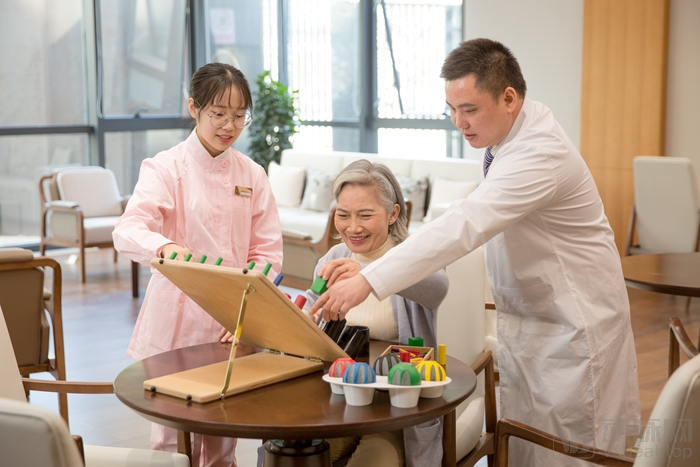
Image source: Provided by the company
Significant Investment in Hardware
Poly, which originally built its business in real estate, has been relatively more willing to invest in hardware. “Poly does not aim for ostentatious hardware; rather, it seeks to create a relatively comfortable environment for older adults by addressing their needs and adhering to government regulations for elderly care institutions,” said Guo Yanzhou.
Poly Health Investment has implemented age-friendly renovations tailored to the physical conditions of the elderly, including handrails, barrier-free access, chairs with rounded corners, and adjustable beds.
More systematic services with comprehensive SOPs
Poly Health Investment’s elderly care facilities maintain a relatively high staff-to-resident ratio, with premium projects reaching approximately 1:2, thereby enabling more meticulous and in-depth corporate services.
In terms of standardization systems, Poly Health Investment began building its corresponding standardized system in 2015, with the first version of its Standard Operating Procedures (SOP) framework established in 2016. As the variety of institutional types increased, Poly Health Investment collaborated with the School of Public Policy and Management at Tsinghua University in 2018 to adjust and upgrade its SOPs.
Guo Yanzhou cited an example: in terms of nursing processes, version 1.0 involved only simple steps such as knocking on the door, entering the room, greeting, and providing care services. Version 2.0, however, added detailed specifications, such as monitoring indoor temperature and adjusting the bed to specific angles. Assessment criteria were established based on these requirements, ensuring that nursing care is conducted in a more standardized and regulated manner.
Regular Training Activities
Currently, most caregivers are migrant workers. To ensure service quality, Poly provides training. Through processes such as training, temporary assignments, and official onboarding, nursing staff receive comprehensive learning and practical experience. Guo Yanzhou stated that training is conducted by experienced employees, resembling an apprenticeship model where senior staff mentor newcomers. Moreover, the training is frequent and repetitive, akin to “chanting wooden fish.”
It is understood that Poly Health Investment conducts over 100 training sessions annually. Only through repetitive emphasis and regular practice, akin to the rhythmic striking of a wooden fish, can the required standards be met.
Cultural Elderly Care Becomes More Diverse
Elderly individuals today are no longer content with merely meeting their basic material needs; instead, they increasingly demand higher quality in daily care and emotional support.
At Hexi Club, Poly Group continuously enriches its service offerings and innovates its service models. Catering to the diverse interests of elderly residents, the facility organizes a variety of themed activities centered around family bonds, holidays, and personal hobbies, including major branded events such as “Jiujiu Xihe” and “Ode to Time: 70th Anniversary Celebration.” These initiatives aim to inspire seniors’ pride in their contributions to national development and foster a strong sense of familial belonging within the institution.
Poly Health Investment also actively adheres to Party-building guidance in cultural life, firmly believing in the power of humanism. With culture as its foundation, it has developed a unique Poly Hexi cultural elderly care model. The cornerstone of Hexi Culture is a family-oriented service culture characterized by “dedication, attentiveness, empathy, and love,” emphasizing familial care and companionship.
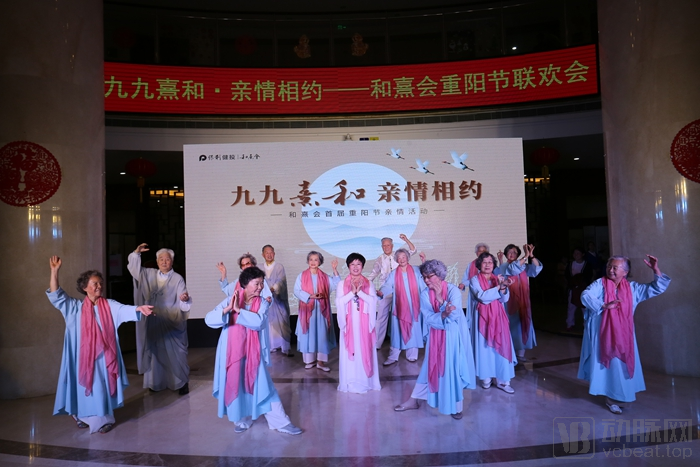
Image source: Provided by the enterprise
Deeper Integration of Medical and Elderly Care
Providing medical services and implementing health insurance coverage were considerations Poly had in mind even before establishing its institution. At the inception of Beijing Hexi Club, an in-house medical facility—Anping Outpatient Clinic—was established to serve as a primary healthcare hub for resident seniors, offering them basic diagnostic and treatment services.
In addition, Beijing Hexihui has entered into strategic partnerships with Peking University First Hospital and Peking University International Hospital by installing appointment registration kiosks within its facilities. Elderly residents can register at the institution and then proceed directly to Peking University First Hospital for medical consultations.
Specialized Dementia Brand
To address the unique physiological, sensory, and cognitive characteristics of older adults with dementia, safe age-friendly environments should be created through optimized spatial layout, color application, and signage design, thereby enhancing their independence and improving their quality of life.
Based on a thorough understanding of each elder’s life experiences and personal preferences, various non-pharmacological interventions are employed to help alleviate their emotional distress and improve their quality of life.
Notably, Poly Health Investment has developed a smart cloud platform that integrates data from institutions, communities, and home-based care settings, providing customers with full-lifecycle services and facilitating precise, intensive, and scalable elderly care operations.
Over the course of eight years, Poly developed its own proprietary operational system, which was validated in 2019. In that year, Poly Beijing Hexi Hui was rated as a “Five-Star Elderly Care Institution,” while Poly Guangzhou Zhongke Hexi Hui and Jiashan Yinfu Yuan also passed the on-site assessment for “Five-Star Elderly Care Institution” status, signifying industry recognition of their service quality and hardware facilities.
In terms of future planning, Poly Health Investment will adopt a hybrid model that combines asset-light expansion—through leasing, consulting, entrusted management, brand licensing, and industrial alliances—with asset-heavy expansion via equity investments, property acquisitions, construction, and management.
Property Renovation:Identify high-quality properties in the cities where the institution is currently located and in key development regions, and convert them into elderly care facilities through acquisition, leasing, or other means.
Acquisition and Operation:Identify relatively mature chain elderly care service providers in the market and incorporate them into the Poly system through acquisitions of operators and mergers and acquisitions.
Management Output:Export mature elderly care operational models through consulting services, entrusted management, and other methods.
Brand Export:Leveraging Poly’s “Hexi Club”’s years of project operation experience, it has established a high level of industry recognition and is pursuing brand licensing.
In terms of strategy, Poly Health Investment will center on the “Health+” strategic objective, leveraging health and elderly care as its core support. It will expand business formats vertically and extend the industrial chain horizontally, building upon specialization, utilizing scale as a means, and aiming toward industrialization. This approach will establish a first-class domestic health service brand characterized by diversified business formats and a full-industry-chain model, thereby achieving the development goals of scaled elderly care services, specialized service standards, industrialized health services, and capitalized health investments.
In terms of market strategy, Poly Health Investment’s elderly care segment will continue to focus primarily on provincial capital cities and relatively developed second-tier cities, introducing Poly Health Investment’s concepts and technologies through partnerships or mergers and acquisitions.
Guo Yanzhou stated that first- and second-tier cities hold distinct advantages in terms of residents’ awareness of senior living facilities and their financial capacity. The first resident at Beijing’s Hexi Hui was a man who had studied in the Soviet Union in its early years; he has been living there for over seven years and enjoys a stable life. For enterprises, achieving a balance between operational costs and revenue is also a key factor in site selection. Relatively speaking, it takes less time to reach this break-even point in first- and second-tier cities, typically within about two years.
Next, Poly Health Investment will continue to seize the opportunities brought by the “Healthy China” initiative and further explore the broader health sector.