

Shengshi Tianxin: Tackling the Billion-Dollar Chronic Disease Management Market with a Smart Medication Adherence Solution
254 million people, accounting for 18.1% of the total population. These are the latest figures on the population aged 60 and above released by the National Bureau of Statistics in 2020.
As population aging intensifies, the number of patients with chronic diseases in China continues to grow. According to data from the National Health Commission, there are now over 300 million people living with chronic conditions in China; deaths attributable to chronic diseases account for 85% of all disease-related mortality, and the associated disease burden represents 70% of the total disease burden, making prevention and control efforts increasingly urgent.
The hallmark of chronic diseases is their prolonged course, requiring patients to undergo continuous care, long-term medication, and frequent follow-up examinations. Patients’ level of active engagement, self-management capabilities, and medication adherence significantly influence disease progression. However, due to a lack of medical knowledge, many patients with chronic conditions often fail to understand or accept their treatment plans, leading to medication refusal. Furthermore, given the extended duration of chronic disease treatment, which necessitates strict, long-term adherence to prescribed medication schedules, some patients miss doses due to work commitments, or reduce or discontinue medication out of complacency once symptoms improve.
Qianzhan Research Institute pointed out in its report that more than 60% of patients with chronic diseases do not take medications as prescribed, due to a lack of scientific and rational chronic disease management methods. This leads to suboptimal drug efficacy, disease recurrence, complications, and difficulties in controlling medical costs. Taking the U.S. market as an example, annual healthcare losses attributable to medication non-adherence reach $290 billion, resulting in 125,000 preventable deaths.
In this context, improving medication adherence among patients with chronic diseases, formulating rational chronic disease management plans, and establishing seamless post-discharge service channels have become a scientifically sound and effective approach to addressing the challenges of chronic disease care. This is precisely the mission behind the establishment of Hebei Shengshi Tianxin Electronic Technology Co., Ltd. (hereinafter referred to as “Shengshi Tianxin”).
“Your time is limited, so don’t live someone else’s life. Don’t be trapped by dogma—which is living with the results of other people’s thinking. Don’t let the noise of others’ opinions drown out your own inner voice.”
For Wang Zhihong, founder of Shengshi Tianxin, Steve Jobs’ words may well capture his entrepreneurial mindset. Having served in the military for 17 years in China’s Xinjiang and Tibet border regions, he resolutely plunged into the startup wave 16 years ago, all to break free from the stable public-sector career that others viewed as secure.
Innovative R&D capability is Wang Zhihong’s forte. He holds multiple invention patents for medical devices and was once a top-ten finalist in the Alibaba Super Winner Competition. However, despite his engineering background, Wang actually has no professional medical training. Why did he ultimately choose to cross over into founding a medical technology company? The answer is quite simple: his parents, who had been suffering from illness for many years.
“My parents suffered from multiple chronic conditions, including cerebral thrombosis, heart disease, and hypertension. From my mother’s hospitalization for heart disease in 1998 to my father’s passing in June 2019, they were hospitalized more than 20 times over those two decades,” recalled Wang Zhihong during the interview.
“During this period, my mother experienced sustained hypertension due to missing doses of an antihypertensive medication on two occasions, which even led to a recurrence of cerebral thrombosis. My father’s condition was more severe; prolonged and excessive irrational medication use first resulted in two hospitalizations for severe anemia, and he ultimately passed away from lung cancer metastasized from renal cell carcinoma.”
Drawing on his years of experience caring for his ailing parents, as well as extensive interactions with numerous other patients and their families, Wang Zhihong observed that relapses of chronic conditions due to missed doses, incorrect dosages, or medication errors are remarkably common. In light of this, Wang abandoned his e-commerce company, which generated annual sales in the tens of millions of yuan, to focus on developing an intelligent automatic dispensing machine for chronic disease management, “with the aim of addressing the medication management challenges faced by his own parents and hundreds of millions of patients.”
On July 28, 2016, Shengshi Tianxin was officially established. By the end of that year, the first prototype of the intelligent medication dispenser was developed.
Since its inception, Shengshi Tianxin has been in operation for nearly four years and has now officially launched its fifth-generation intelligent medication dispenser, the “Aihui” Health Steward, to the market.
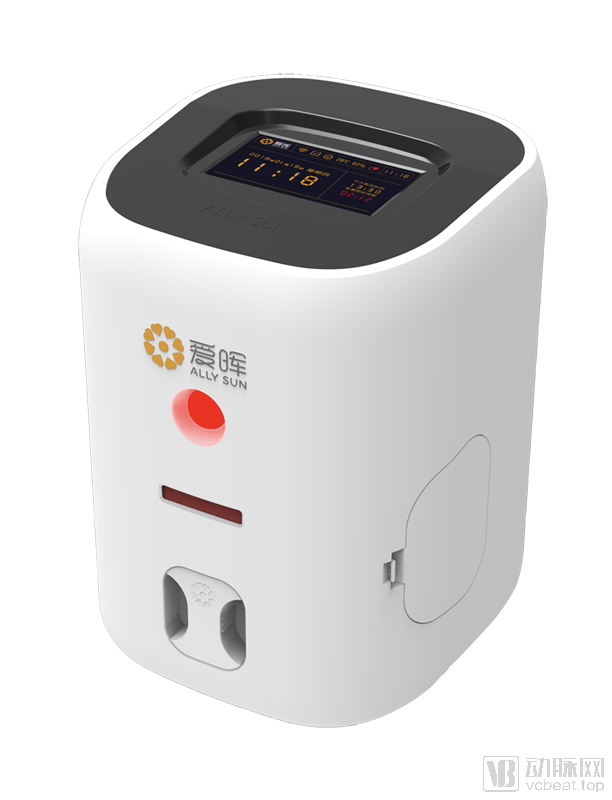
“AIHUI” Health Manager Product Image
Addressing patients’ urgent need for medication management, “Aihui” Health Steward has pioneered patented technologies for automatic medication dispensing and comprehensive reminders, thereby tackling the challenge of poor medication adherence. Patients simply scan the medications to load them; the device then automatically sets default dosing schedules and amounts based on the drug package inserts. Users can also manually configure settings in accordance with their physicians’ instructions.
As the scheduled medication time approaches, the “Aihui” health steward can automatically dispense various solid medications of different sizes and shapes within minutes. It then sends medication reminders to users through multiple channels—including device alerts, a mobile app, WeChat, and phone calls—ensuring that they take the correct dosage on time.
“After the medication is loaded, users don’t have to worry about it for a week; they just need to wait for the ‘medicine to come to their mouth.’ Currently, we are the only company in China whose technology has reached a practical level,” said Wang Zhihong.
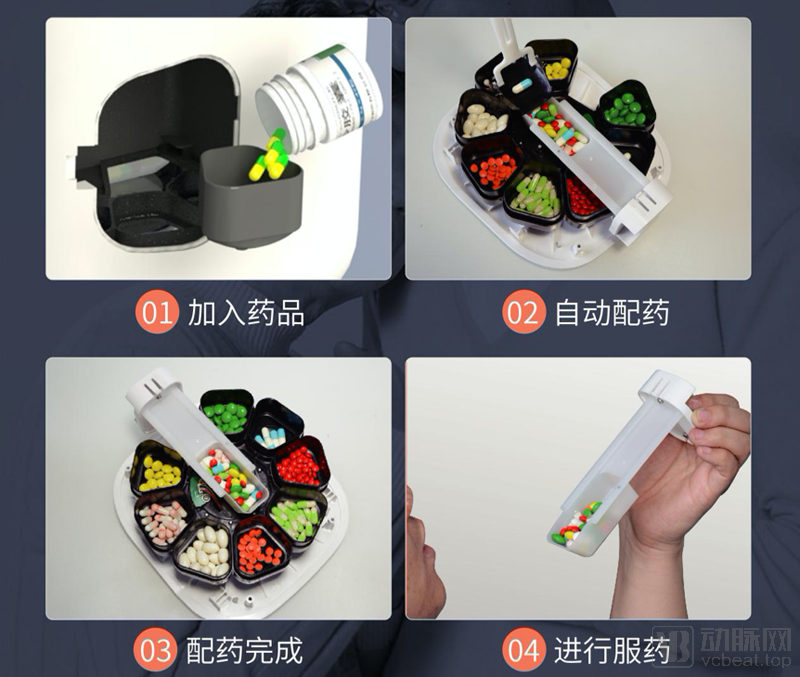
“AIHui” Health Steward Automated Medication Dispensing Technology
Building on medication management, the “Aihui” Health Steward further enables the acquisition of precise medication data for users, continuously and in real time collecting objective information such as the name, specification, dosage, and timing of medications taken by patients. Leveraging this accurate information, the Health Steward prompts users to promptly utilize other home medical devices for routine testing, thereby continuously monitoring and recording dynamic health indicators.
According to the introduction, the system determines the optimal timing for testing based on actual medication intake times and provides timely reminders. After users enter measurement data into the app terminal, the “Aihui” Health Manager automatically uploads the data and correlates it with medication timestamps. The queried indicators generate curves reflecting specific post-medication time intervals and physiological states. These test results more closely align with each patient’s individual real-world conditions, thereby enabling targeted, personalized health guidance services, facilitating the early detection of abnormal physiological changes, and allowing patients to seek medical diagnosis and treatment promptly.
By integrating data on precise medication adherence, physiological metrics, environmental conditions, and health management plans, the “Aihui” Health Steward will establish individual electronic health records for patients. These records will provide critical medical data during clinical diagnosis and health status assessments, thereby constructing an out-of-hospital comprehensive health information network to address the issues of patient “disconnection” and loss of care continuity after discharge.
“‘Aihui’ Health Steward significantly reduces the workload of service providers and improves patients’ medication adherence. Operating as a self-contained closed loop with minimal scale, it can be described as a simple yet effective solution for chronic disease management,” said Wang Zhihong confidently during an interview.
On the other hand, the launch of new products inevitably faces imitation and competition from peers. Wang Zhihong stated that intellectual property barriers have been established to safeguard the core competitiveness of internal product R&D. “To date, we have filed 13 patent applications for this project, including six invention patents and seven utility model patents, eight of which have already been granted.”
Product development, corporate operations, and talent acquisition all rely on financial support, which is particularly critical in the healthcare industry. It is reported that Shengshi Tianxin secured RMB 3 million in seed funding in 2017, primarily to advance the early-stage research and development of its products. With commercialization underway, the company is now launching an equity financing round totaling RMB 10 million, mainly intended for product manufacturing and market launch, as well as the deployment of marketing and promotion activities.
In addition to leveraging capital to gain a foothold in the market, Shengshi Tianxin is currently focusing on early-stage market development by seeking B2B partnerships and is in discussions with multiple internet healthcare companies. However, unlike the traditional profit model of medical device companies that rely solely on hardware sales, Wang Zhihong plans for the company to adopt a business model centered on giving away products while generating revenue through services. “We aim to generate revenue by providing essential services such as home medication delivery, medical consultation guidance, and health checkup recommendations,” he stated.
Wang Zhihong revealed to VCBeat that this business model can be implemented in two ways: one is through partnerships with pharmaceutical retail chains, and the other is by operating self-owned pharmacies that leverage store locations to provide warehouse-style home delivery services. He stated, “Compared to traditional pharmaceutical retail, we can offer scheduled home delivery services through centralized distribution within specific areas, based on users’ medication needs and location data. This approach not only reduces labor costs and improves delivery efficiency but also eliminates rent and operational expenses associated with chain stores, bringing costs down to just 10% of those in the traditional industry.”
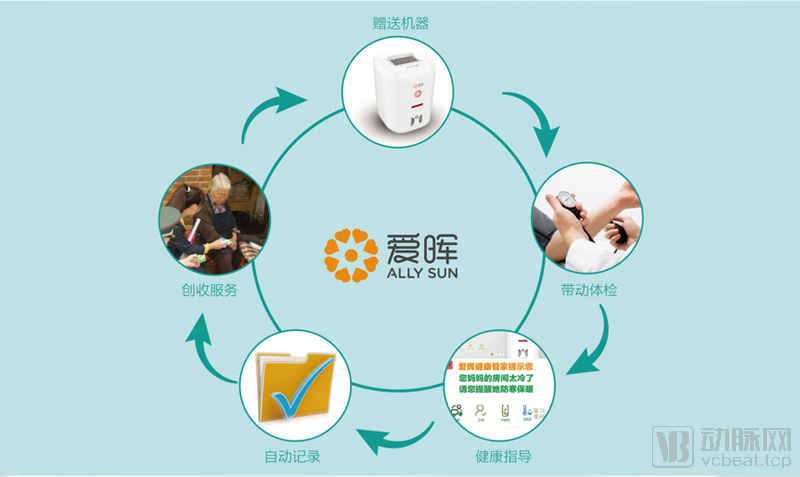
“iHui” Health Steward Chronic Disease Management Closed Loop
“Of course, we cannot provide the service of selling medications in small quantities like traditional pharmacies, but our customer base is not comprised of such individuals,” said Wang Zhihong. “In our user profiling, they are mainly chronic disease patients who take multiple medications on a stable regimen, and we can supply them with medications through scheduled deliveries.”
In addition, Shengshi Tianxin plans to expand its data services over the next three years, providing real-world, precise big health data to pharmaceutical institutions and enterprises to offer objective data support for tracking efficacy analysis, decision-making, and other purposes.
“Overall, we plan to acquire more than 300,000 customers over a three-year period, achieving pharmaceutical sales revenue of no less than RMB 500 million. As a non-core business, our data services segment has currently been set with a baseline revenue target of RMB 5 million,” mentioned Wang Zhihong. “Looking further ahead, I hope that through continuous improvement of our products and services, we will ultimately become the leading enterprise in the chronic disease management industry.”
At the end of the interview, as Wang Zhihong reflected on the years since founding his company, difficulties and challenges flashed before his eyes like a revolving lantern. With deep emotion, he remarked, “Adversity is a precious gift bestowed by fate upon entrepreneurs; only those who have been thoroughly tempered can hope to claim this treasure. Although I had long anticipated that the journey would be arduous and painful, life is about living it to the fullest—striving to leave behind something meaningful that can help others. This, indeed, is the original intention behind my entrepreneurial endeavor.”