

BridgeBio Pharma: Building a Rare Disease Empire Through a Portfolio of Over 20 Biotech Ventures and Pioneering Genetic Medicines
BridgeBio
Pharmaceutical R&D Developer
On June 26, 2019, a biopharmaceutical company emerged onto the scene, listing on the Nasdaq Stock Market in the United States and claiming the title of the largest biotech IPO of the year, stunning observers. This company is BridgeBio (also known as BridgeBio Pharma; stock ticker: BBIO), a U.S.-based firm specializing in treatments for rare diseases.
BridgeBio issued 20.5 million ordinary shares at $17 per share on the day, aiming to raise $348.5 million. Its stock closed up more than 62% at $27.55 per share.
On July 1, 2019, the company closed its initial public offering (IPO) of common stock. The IPO involved the issuance of a total of 23.575 million shares of common stock, including 3.075 million shares sold pursuant to the underwriters’ exercise of their over-allotment option, raising gross proceeds of over $400 million. After deducting $28.1 million in underwriting discounts and commissions and $6.5 million in offering expenses, BridgeBio received net proceeds of approximately $366.2 million from the IPO.
BridgeBio’s success has revealed to the world a novel model for establishing biotechnology companies. In contrast to the traditional approach that consolidates scientists and investors around specific diseases, BridgeBio favors creating multiple subsidiaries, each enjoying semi-autonomous operational authority, sharing parent-company resources, and overseeing designated business lines of the parent company.
According to BridgeBio’s 2019 annual report, the company had eight wholly owned biopharmaceutical subsidiaries and effectively controlled (holding more than 50% of shares with voting rights) 17 companies. BridgeBio has also stated that its business model offers greater advantages and efficiency compared to those of other biotechnology companies. Supported by this model, the company now boasts 21 core pipelines, four of which have entered Phase III clinical trials.
It is worth noting that these achievements were accomplished within just five years of BridgeBio’s founding. Established in 2015 in Palo Alto, within the San Francisco Bay Area of California, the company was named “Bridge” to reflect its original mission: to build a bridge connecting academic research with clinical applications, thereby translating research outcomes from universities, academic medical centers, and pharmaceutical research institutes into gene-targeted therapies required for clinical treatment.
Mendelian Genetic Disorders: The Founding Ground of the BridgeBio Empire
“Mendel” is widely known thanks to “Mendel’s Laws of Inheritance,” which are rooted in the famous pea hybridization experiments featured in high school biology textbooks. However, what many people may not realize is that there is also a category of genetic disorders named after “Mendel”—Mendelian disorders. These are genetic conditions controlled by a single pair of alleles, such as sickle cell anemia, albinism, and color blindness, characterized by strong effects from single-gene variants.
BridgeBio was founded with the initial aim of advancing translational medicine for Mendelian genetic disorders, which are often rare diseases. According to the U.S. Orphan Drug Act of 1983, a rare disease is generally defined as one affecting fewer than 200,000 patients annually in the United States (with a total U.S. population of approximately 327.2 million). Therapies developed to treat such conditions are referred to as orphan drugs.
Due to the limited market size for orphan drugs, companies anticipate that the costs of developing such drugs may be difficult to recoup through sales. Therefore, companies developing these drugs must apply to the U.S. FDA for orphan drug designation before submitting a New Drug Application (NDA) or Biologics License Application (BLA), thereby qualifying for government financial incentives, such as potential waivers of user fees and tax credits.
Currently, BridgeBio’s drug pipeline with Orphan Drug Designation includes BBP-870, BBP-265, BBP-009, BBP-589, BBP-587, and BBP-631.
Notably, after several years of research focused on Mendelian genetic disorders, BridgeBio has established a pipeline of more than ten development programs for such conditions. In addition to the six programs mentioned above that have received orphan drug designation, BridgeBio’s ongoing pipeline includes ten additional candidates: BBP-305, BBP-551, BBP-831, BBP-681, BBP-711, BBP-671, BBP-761, BBP-561, BBP-472, and BBP-418.
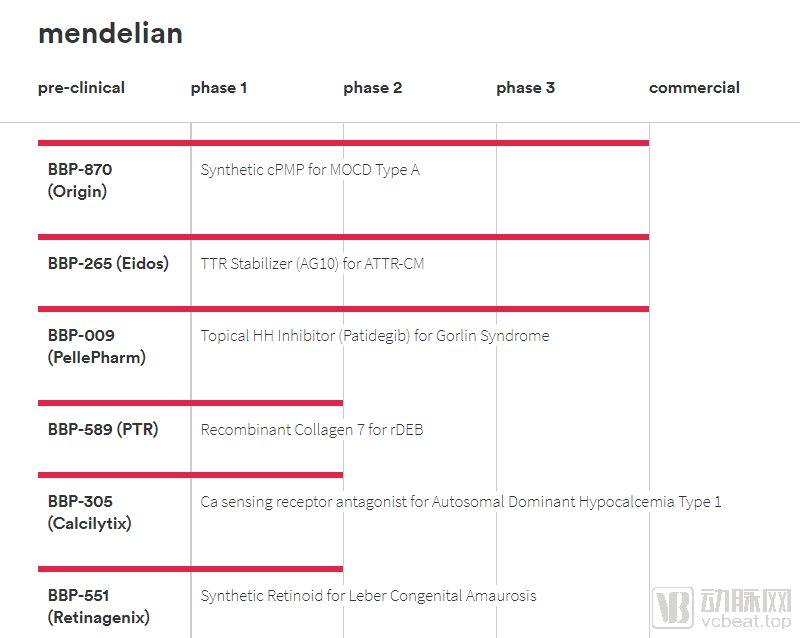
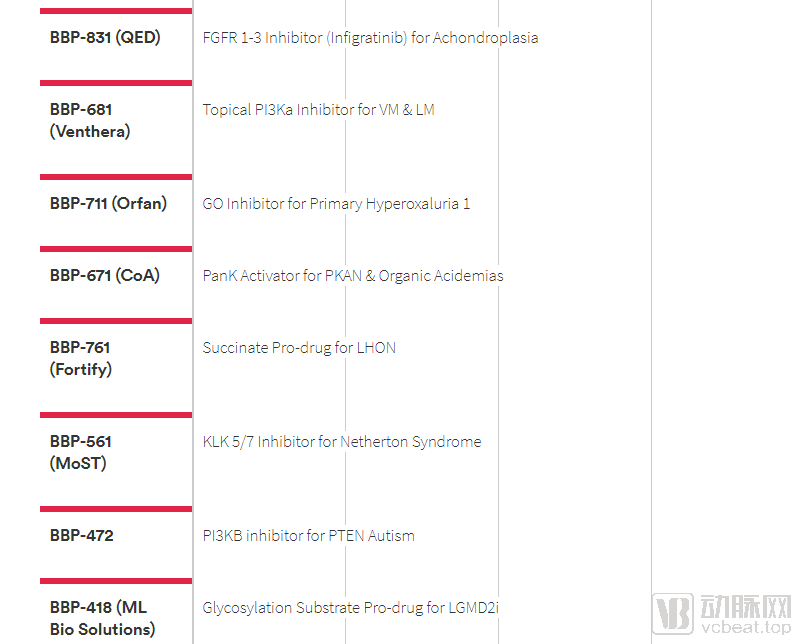 BridgeBio’s Partial R&D Pipeline (Image Sourced from Official Website)
BridgeBio states on its official website: “Every investigational drug in our pipeline represents hope for an important segment of patients in need of a treatment.”
Indeed, as BridgeBio has declared, all of its R&D pipelines are targeted at patients with rare diseases that lack effective treatments, covering more than twenty rare conditions including molybdenum cofactor deficiency, Gorlin syndrome, dystrophic epidermolysis bullosa (DEB), Leber congenital amaurosis, chondrodysplasia, venous malformations, pantothenate kinase-associated neurodegeneration (PKAN), Leber hereditary optic neuropathy, and PTEN hamartoma tumor syndrome-associated autism.
This section focuses on the company’s three R&D pipelines that have advanced to Phase III clinical trials: BBP-870, BBP-265, and BBP-009.
BBP-870: Developed by subsidiary Origin Biosciences, specifically for the treatment of MoCD type A, a rare disease
BBP-870 is primarily indicated for the treatment of molybdenum cofactor deficiency type A (MoCD type A), an ultra-rare autosomal recessive inborn error of metabolism caused by disrupted synthesis of the molybdenum cofactor (MoCo), which is essential for sulfite oxidase (SOX) activity. Patients are typically infants or children.
Molybdenum cofactor deficiency (MoCD) type A causes irreversible and fatal neurological damage in patients, including cerebral atrophy with white matter necrosis, facial dysmorphism, and spastic paraplegia. The clinical manifestations of MoCD include early-onset, rapidly progressive postnatal encephalopathy and refractory epilepsy, ultimately leading to severe disability or death. The disease progresses rapidly and is associated with high infant mortality. Currently, there are no approved effective therapies available for this rare disorder to benefit affected patients.
BBP-870 is a cyclic pyranopterin monophosphate (cPMP) replacement therapy designed to reduce the accumulation of toxic sulfites in infants and children with MoCD type A, thereby alleviating central nervous system symptoms. Notably, BBP-870, marketed under the brand name Fosdenopterin, was developed by Origin Biosciences, a subsidiary of BridgeBio. It is currently available in Israel, Canada, and countries in Central and Eastern Europe, and the company is submitting a marketing approval application to the U.S. FDA.
It is reported that BBP-870 has also been granted “Rare Pediatric Disease” and “Breakthrough Therapy” designations in the United States. Given that the drug targets a life-threatening condition with no currently available alternative therapies, BBP-870 is also eligible for Priority Review designation, which, if approved, would further expedite the approval timeline for its New Drug Application (NDA).
Dr. Neil Kirby, CEO of subsidiary Origin Biosciences, stated, “We have begun the rolling submission to the U.S. FDA of the New Drug Application for BBP-870 for the treatment of Molybdenum Cofactor Deficiency Type A. This represents a significant milestone for our company and for patients affected by this disease. We hope to enable infants suffering from this devastating condition to gain rapid access to our novel therapeutic.”
Dr. Neil Kumar, CEO of parent company BridgeBio, added, “BridgeBio was founded to develop breakthrough medicines for patients with genetic diseases. We hope that the NDA submitted by Origin to the FDA will be among the first products in our portfolio to deliver life-changing therapies to patients.”
BBP-265: Developed by subsidiary Eidos Therapeutics, specifically for the treatment of ATTR, a rare disease
BBP-265 (AG10) is primarily indicated for the treatment of transthyretin amyloidosis (ATTR), a condition caused by transthyretin (TTR) instability due to genetic mutations or aging. TTR levels can reflect changes in protein synthesis and abundance in the body following injury. Its main function is to maintain normal physiological levels of thyroxine and retinol-binding protein (RBP); under normal physiological conditions, it transports approximately 15% of circulating thyroxine.
ATTR is typically classified into three categories: wild-type ATTR cardiomyopathy (ATTRwt-CM), mutant ATTR cardiomyopathy (ATTRm-CM), and ATTR polyneuropathy (ATTR-PN). ATTR causes amyloid deposition between cells in various organs, leading to polyneuropathy and cardiomyopathy. Currently, there are no FDA-approved therapies for this condition.
AG10 is a transthyretin (TTR) stabilizer. The drug treats ATTR by stabilizing TTR and preventing the formation of toxic amyloid fibrils. Reportedly, AG10 was developed by Eidos Therapeutics, a subsidiary of BridgeBio.
In November 2019, Eidos Therapeutics announced the Phase II clinical trial data for AG10: researchers administered 800 mg of AG10 twice daily to 41 patients with ATTR amyloidosis. After a 65-week follow-up period, participants in the AG10 Phase II trial exhibited lower mortality (8.5%) and cardiovascular-related hospitalization rates (25.5%) compared to the placebo group in ATTR studies, with more stable cardiac biomarkers and echocardiographic parameters.
During the study period, 19 participants (40.4%) experienced treatment-emergent serious adverse events, with the most common being congestive heart failure (10.6%) and acute kidney injury (8.5%). It is reported that Eidos Therapeutics has initiated the Phase III clinical trial of BBP-265, which was expected to commence in the first quarter of 2020.
Jonathan Fox, M.D., President and Chief Medical Officer of subsidiary Eidos Therapeutics, stated: “The Phase 2 clinical trial results for AG10 further demonstrate the sustained tolerability of AG10 in patients with advanced ATTR-CM. The data show that mortality and cardiovascular-related hospitalization rates were significantly lower in the treatment group than in the control group of ATTR-CM patients. These findings encourage us to continue supporting the development of AG10 as a potential best-in-class therapy for patients with ATTR-CM.”
However, Eidos Therapeutics has also granted Alexion Pharmaceuticals, a U.S. pharmaceutical company, an exclusive license to develop and commercialize BBP-265 in Japan. Its subsidiary, Eidos Therapeutics, received a $25 million upfront payment and $25 million in equity investment.
BBP-009: Developed by the holding company PellePharm, indicated for Gorlin syndrome and advanced basal cell carcinoma
In July 2015, BridgeBio made an initial investment of $4.5 million in PellePharm, a clinical-stage biopharmaceutical company. Through a series of transactions completed by December 2016, BridgeBio increased its equity stake in PellePharm to more than 50%. Although BridgeBio determined that its initial investment in PellePharm constituted a variable interest, it did not become the primary beneficiary until December 2016.
BBP-009 is a small-molecule inhibitor of the Hedgehog signaling pathway (Patidegib) developed by PellePharm for the treatment of Gorlin Syndrome and locally advanced or metastatic basal cell carcinoma (BCC), two rare skin cancers.
Patients with Gorlin syndrome carry hereditary mutations in the PTCH1 gene, leading to the development of multiple basal cell carcinomas (BCCs), which predominantly appear on the face. Currently, there are no FDA-approved therapies, and the standard treatment is surgical excision. Patients with high-frequency BCCs present similarly to those with Gorlin syndrome, exhibiting numerous BCCs across the body surface. Unlike Gorlin syndrome, however, patients with high-frequency BCCs do not carry hereditary PTCH1 gene mutations. The current standard of care for these patients is also surgery.
Patidegib inhibits the activation of the Hedgehog signaling pathway by blocking Smo protein function, thereby reducing the incidence of basal cell carcinoma (BCC). The topical gel formulation of patidegib has demonstrated promising efficacy in Phase 2 clinical trials. It has been granted Breakthrough Therapy Designation and Orphan Drug Status by the U.S. Food and Drug Administration (FDA) for the treatment of Gorlin syndrome.
Currently, BridgeBio is actively providing financial support to PellePharm for the Phase 3 clinical trial of BBP-009.
It is worth noting, however, that BridgeBio’s equity control over PellePharm has been subject to ongoing disputes. PellePharm previously entered into a collaboration agreement with LEO Pharma. According to BridgeBio’s assessment, PellePharm remained a Variable Interest Entity (VIE) following the reconsideration event, as it lacked sufficient equity at risk to finance its activities without additional subordinated financial support.
However, based on the changes to PellePharm’s governance structure and board composition under the LEO Agreement, BridgeBio is no longer the primary beneficiary, as it no longer holds the power to make key decisions that have the most significant impact on PellePharm’s economic performance. Accordingly, BridgeBio deconsolidated PellePharm on November 19, 2018, and following the deconsolidation, PellePharm is considered a related party of BridgeBio.
It is worth emphasizing that although BridgeBio focuses on Mendelian genetic diseases, the company has gradually expanded its R&D scope. It is now involved in targeted cancer therapy and gene therapy, with its fast-progressing BBP-831 (QED) oncology targeted therapy pipeline having entered Phase III clinical trials.
Spending Lavishly: Aggressively Acquiring Stakes in 20+ Pharmaceutical Companies to Build an Orphan Drug Empire
As of July 1, 2019, according to incomplete statistics, BridgeBio held investments in 15 VIEs (Variable Interest Entities), had 8 wholly-owned subsidiaries, 1 partially-controlled subsidiary, and 1 VIE involved in disputes.
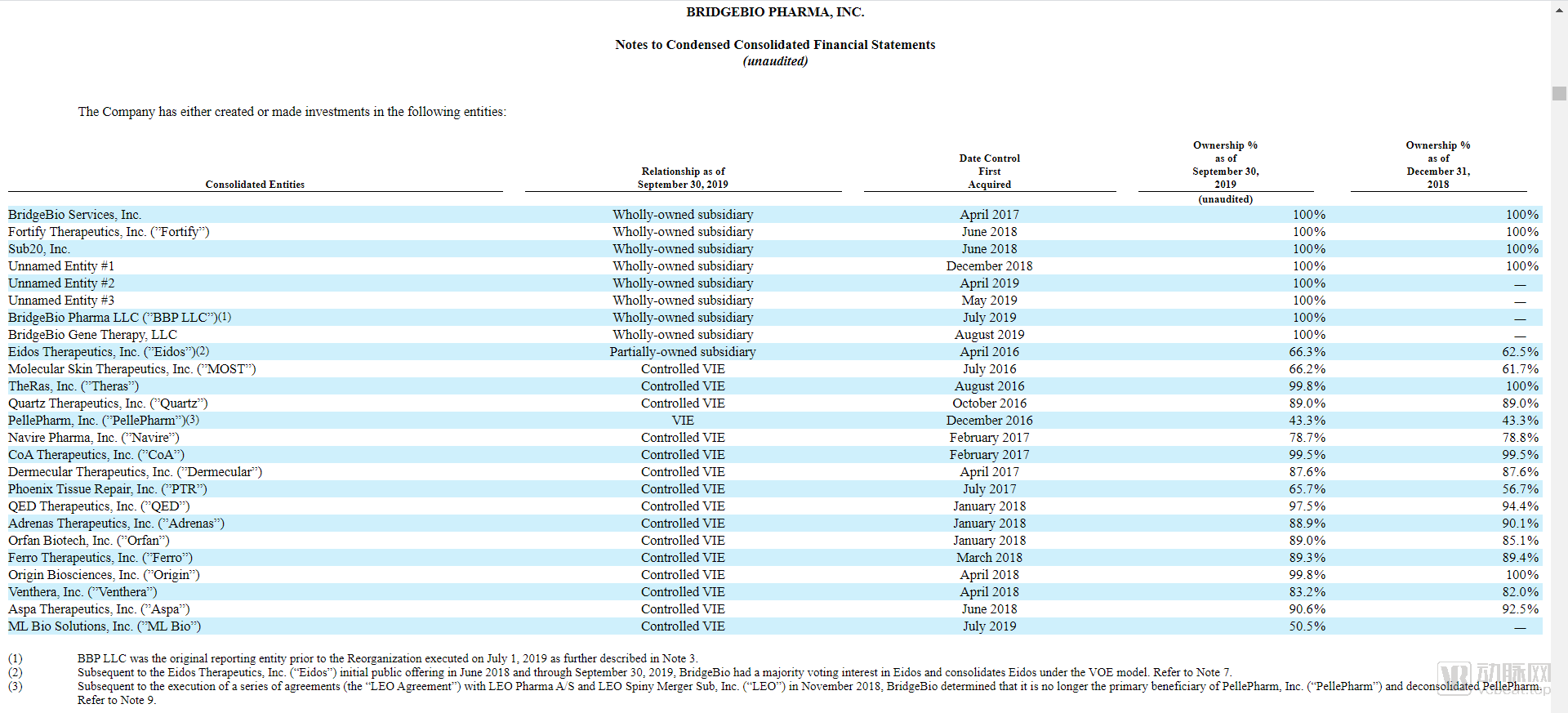
List of Subsidiaries Held by BridgeBio
BridgeBio also stated in its development strategy that it either establishes wholly-owned subsidiaries or invests in certain VIEs. In 2019 alone, BridgeBio made 17 equity investments, including an $80 million investment in QED, a $24 million investment in Origin, an $11.6 million investment in Aspa, an $11.6 million investment in Adrenas, and a $7 million investment in PTR, among others.
In 2019 alone, the number of portfolio companies exceeded ten, effectively implementing the company’s development strategy of “either establishing wholly-owned subsidiaries or investing in VIE structures.” The pharmaceutical companies invested in by BridgeBio in 2019 included QED Therapeutics, Origin Biosciences, Aspa Therapeutics, Adrenas Therapeutics, ML Bio Solutions, CoA Therapeutics, TheRas, Venthera, Ferro Therapeutics, Navire Pharma, Orfan Biotech, Molecular Skin Therapeutics, and Quartz Therapeutics.
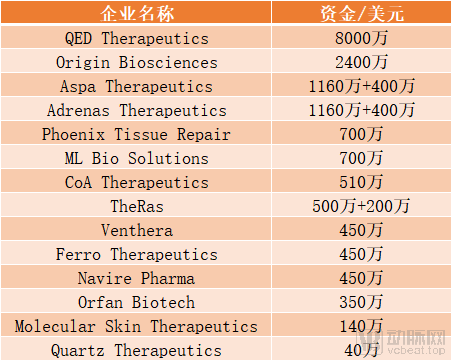
Breakdown of BridgeBio’s Investments in 2019
According to BridgeBio’s financial report for the first three quarters of 2019, the company spent $200.4 million on investing activities alone within the nine-month period, primarily comprising $197.7 million for the purchase of marketable securities, $2.5 million for R&D assets related to asset acquisitions, and $900,000 for equipment purchases. Meanwhile, net cash provided by financing activities reached $355.9 million during the same period in 2019.
The Company currently holds total cash, cash equivalents, and marketable securities of approximately $611.9 million, which includes BridgeBio Group’s $446.1 million stake in Eidos Therapeutics but excludes the $165.8 million held by Eidos itself.
Since its inception, BridgeBio has demonstrated strong performance in fundraising, completing a nearly $300 million Series D financing round in 2019 and becoming a major hotspot in the biopharmaceutical industry at the time.
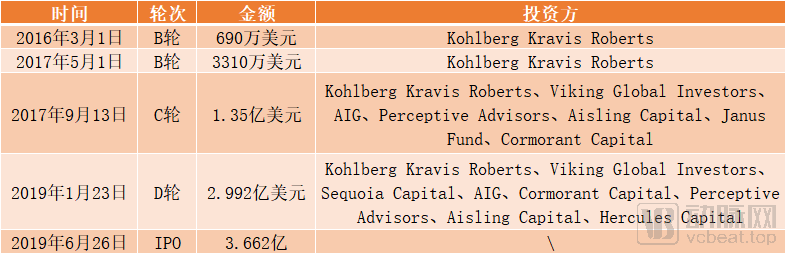
BridgeBio's Historical Financing Data (Source: Crunchbase)
Notably, BridgeBio’s subsidiary, Eidos Therapeutics, went public on the Nasdaq a year earlier than its parent company, listing on June 20, 2018, completing a $106.3 million IPO with a valuation of $608 million. In contrast, BridgeBio’s IPO valuation reached $2 billion.
By adopting a business model comprising parent-subsidiary structures and investments in Variable Interest Entities (VIEs), BridgeBio has streamlined operations to minimize redundant work, enabling rapid termination of unsuccessful projects to mitigate losses. Although the company has not yet secured FDA approval for any drug under this model, its robust and rapidly advancing clinical pipeline suggests that regulatory approval is only a matter of time.