

Junlin Healthcare New Drug Express – Issue 3, 2020: Highlights on TCR-T Therapy Breakthroughs, Risankizumab Superiority in Psoriasis, and mRNA Vaccine Progress
Jan 20, 2020 19:53
CST Updated
19:53

This week, there were 8 new drug data entries, including 4 for oncology, 1 for infectious diseases, 2 for metabolic disorders, and 1 for dermatology.
❖Adaptimmune announced that its TCR-T therapy had demonstrated preliminary responses or unconfirmed responses in four types of solid tumors, causing its stock price to surge by 200% on the same day. The following day, Adaptimmune and Astellas Pharma announced an $897 million collaboration agreement to jointly develop allogeneic TCR-T therapies, further driving up the stock price. Its current market capitalization stands at approximately $480 million. From the current perspective, CAR-T therapy has already achieved a breakthrough, demonstrating significant value in last-line treatments targeting CD19. Although commercial adoption has been constrained by high pricing and its application is currently limited to hematologic malignancies, approved products are already on the market. In contrast, TCR-T therapy has long been regarded as the next big thing because it can target both intracellular and extracellular antigens and address the broader market of solid tumors. However, TCR-T has yet to fully prove its ability to specifically recognize tumor antigens. Adaptimmune has achieved interim results in small-scale Phase I trials, with hopes for more groundbreaking data in the future. Currently, there are over 30 TCR-T candidates in clinical trials internationally, while in China, only Xiangxue Pharmaceutical has such a candidate.
❖In head-to-head trials for the treatment of adult psoriasis, AbbVie’s IL-23 antibody risankizumab successfully outperformed Cosentyx (secukinumab). Psoriasis is essentially an incurable chronic disease that significantly impacts quality of life, resulting in a consistently strong market outlook; the market size was approximately $15 billion (ex-factory price) in 2019. Previously, the mainstay of treatment was TNF-alpha inhibitors. The approval of Janssen’s Stelara in 2009 officially ushered in the era of interleukin antibody therapy for psoriasis. Currently, the international landscape is largely dominated by three major players: Johnson & Johnson’s Stelara (ustekinumab), Novartis’s Cosentyx (secukinumab), and UCB’s Cimzia. Given the robust efficacy of first-line treatments, subsequent entrants seeking to capture market share must generally displace established competitors. For instance, the strong sales performance of Novartis’s secukinumab was driven by its superiority over Humira and ustekinumab. Now that AbbVie’s risankizumab has successfully defeated secukinumab in head-to-head trials, it is expected to achieve rapid volume growth in the future.
Moderna Announces Positive Interim Results for Safety and Immunogenicity at 7 Months from Phase 1 Clinical Study of Its Investigational CMV Vaccine
Moderna Announces Positive Interim Results for Safety and Immunogenicity at Seven Months Following the Third Dose of Its Investigational Cytomegalovirus Vaccine (mRNA-1647) in Phase 1 Clinical Study
mRNA-1476 is a CMV vaccine composed of six mRNA components, five of which encode different subunits of the CMV cell membrane-associated pentameric complex, and one of which encodes glycoprotein B (gB).
In the Phase I trial, the second interim analysis reported on the safety and immunogenicity for the first three dose levels up to seven months after the start of the clinical trial, as well as for the highest dose level (300 µg) up to three months.
In both the CMV seronegative and seropositive groups, neutralizing antibody titers against epithelial cell infection increased significantly. MRNA-1647 is expected to be the first mRNA vaccine globally to enter Phase 2 clinical trials for CMV.
Schematic of mRNA-1476 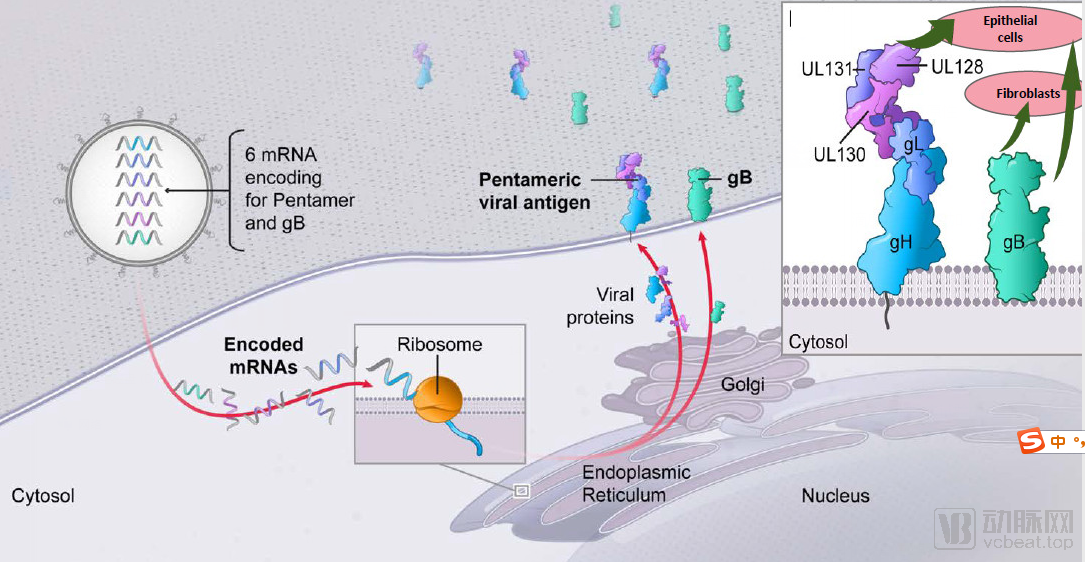
Data source: Moderna
Sintilimab Met Primary Endpoint in Phase 3 Study as First-Line Treatment Combined with Chemotherapy for NSCLC Without EGFR Sensitizing Mutations or ALK Gene Rearrangements
Innovent Announces That Sintilimab Met Primary Endpoint in Interim Analysis of Phase 3 Study as First-Line Treatment for NSCLC Without EGFR Sensitizing Mutations or ALK Gene Rearrangements, in Combination with Pemetrexed Disodium and Platinum-Based Chemotherapy
Sintilimab is a PD-1 antibody.
In the ORIENT-11 study, a Phase 3, randomized, double-blind, controlled trial, 397 patients were enrolled. The primary endpoint was progression-free survival (PFS) assessed according to RECIST criteria, and secondary endpoints included overall survival (OS), safety, and others.
Interim analysis met the primary endpoint; detailed data will be disclosed later.
The U.S. FDA Has Approved a New Indication for Semaglutide Injection to Reduce the Risk of Major Adverse Cardiovascular Events in Patients with Type 2 Diabetes and Cardiovascular Disease
Novo Nordisk Announces U.S. FDA Approval of New Indication for Semaglutide Injection 0.5 mg or 1 mg to Reduce the Risk of Major Adverse Cardiovascular Events (MACE) in Adults with Type 2 Diabetes and Known Cardiovascular Disease
Semaglutide is a glucagon-like peptide-1 (GLP-1) analog, a hormone that induces insulin secretion.
In the SUSTAIN 6 cardiovascular outcomes trial, Ozempic or placebo was added to standard care in adults with type 2 diabetes and established cardiovascular disease, with final assessment of cardiovascular safety.
Ozempic significantly reduced the risk of the composite endpoint of cardiovascular death, non-fatal myocardial infarction, or non-fatal stroke.
Intercept Pharmaceuticals Announces FDA Delays Decision Date on Potential First NASH Drug Obeticholic Acid (OCA)
Intercept Pharmaceuticals issued an announcement stating that the U.S. FDA has delayed the review decision date for obeticholic acid (OCA), its potential first-in-class new drug for NASH.
Obeticholic acid is a selective farnesoid X receptor (FXR) agonist.
Phase 3 Trial: Comparing the Therapeutic Efficacy of Different Doses of Obeticholic Acid versus Placebo
At 18 months of treatment, among the intention-to-treat (ITT) population receiving different doses of OCA, the proportion of patients who achieved an improvement in liver fibrosis by more than one stage without worsening of NASH was 17.6% (10 mg) and 23.1% (25 mg), compared with 11.9% in the placebo group. This is currently the only investigational NASH therapy to have yielded positive results in late-stage clinical trials.
FDA Accepts BMS’s BLA for Approval of Opdivo and Yervoy Combination Therapy as First-Line Treatment for NSCLC Without EGFR or ALK Mutations
The FDA has accepted the BLA submission from BMS, approving the combination therapy of Opdivo and Yervoy for first-line treatment of patients with metastatic or recurrent non-small cell lung cancer without EGFR or ALK genomic tumor aberrations.
Opdivo is a PD-1 antibody, and Yervoy is a CTLA-4 antibody; both are products of BMS.
In the Phase 3 CheckMate-227 trial, the study comprised two parts: a) comparing Opdivo in combination with low-dose Yervoy versus chemotherapy in patients whose tumors did not express PD-L1; b) comparing Opdivo in combination with low-dose Yervoy versus chemotherapy in patients regardless of PD-L1 expression status.
Among patients with PD-L1 ≥1% and those with PD-L1 <1% treated with the Opdivo plus low-dose Yervoy combination regimen, the 2-year survival rate was 40% in both groups. In contrast, among patients in the chemotherapy control group, the 2-year survival rates were 33% for those with PD-L1 ≥1% and 23% for those with PD-L1 <1%.
Astellas Publishes Research Findings on Oncolytic Viruses Expressing IL-7 and IL-12 Enhancing Sensitivity to Immune Checkpoint Antibody Therapies
Astellas Publishes Research in Science Translational Medicine on Oncolytic Viruses Expressing IL-7 and IL-12 to Enhance Sensitivity to Immune Checkpoint Antibody Therapies
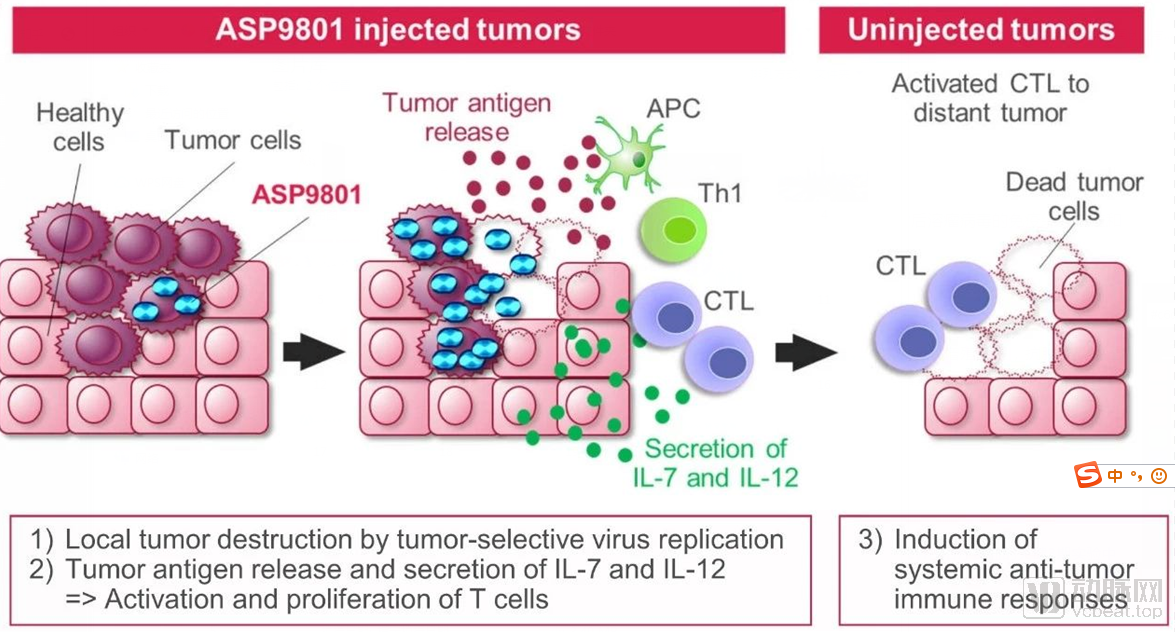
As an oncolytic virus, ASP9801 can disrupt the integrity of tumor tissue and release tumor antigens. The IL-7 and IL-12 expressed by ASP9801 can significantly promote T cell proliferation and activation.
In animal experiments, comparing the immune cell proliferation and anti-tumor activity of unmodified oncolytic viruses with those engineered to express IL-7 and IL-12
Oncolytic viruses engineered to express IL-7 and IL-12 demonstrated enhanced immune cell proliferation and significantly improved antitumor activity in animal studies. Furthermore, pretreatment with oncolytic viruses expressing IL-7/IL-12 substantially potentiated the therapeutic efficacy of PD-1 and CTLA-4 antibodies.
Mechanism of Action of ASP9801
Data source: Astellas
AbbVie Announces That Its IL-23 Antibody Risankizumab Demonstrated Superior Clinical Efficacy to Secukinumab in Head-to-Head Trial for the Treatment of Adult Psoriasis
AbbVie Announces That Its IL-23 Antibody Risankizumab Demonstrated Superior Clinical Efficacy Compared with Secukinumab (an IL-17A Inhibitor) in a Head-to-Head Trial for the Treatment of Adults with Moderate-to-Severe Plaque Psoriasis
Risankizumab is a humanized IgG1 monoclonal antibody targeting IL-23A, which selectively binds to the p19 subunit of IL-23 and inhibits the interaction between IL-23 and its receptor. In terms of signal transduction, Risankizumab and secukinumab (which targets IL-17A) are in an upstream-downstream relationship.
Phase 3 trial, head-to-head, enrolling 327 patients, with approximately 1:1 randomization
After 52 weeks of treatment, the proportion of patients receiving risankizumab who achieved PASI 90 (a 90% improvement in the Psoriasis Area and Severity Index) was as high as 87%, compared with 57% for secukinumab. The results at 16 weeks also demonstrated non-inferiority
Adaptimmune Announces Initial Responses in Four Solid Tumor Indications with Its SPEAR T-Cell Technology Platform, Including Two Confirmed Responses
Adaptimmune Announces Preliminary Responses in Four Solid Tumor Indications Using Its SPEAR T-Cell Technology Platform: Including Two Confirmed Responses and Two Pending Confirmation. On This News, Adaptimmune’s Pre-Market Stock Price Surged 200%.
Apaptimmune’s SPEAR T-cell technology is a TCR-T therapy.
Phase I Trial, Single-Arm Last-Line Therapy
Two confirmed responses included: one case of hepatocellular carcinoma (100% reduction in lesion size; the first patient enrolled in the Phase 1 ADP-A2AFP trial) and one case of rectal mucosal melanoma (42% reduction in lesion size; the first patient enrolled in the Phase 1 ADP-A2M429L trial).
❖ Eli Lilly announced the acquisition of Dermira, a company dedicated to developing therapies for chronic skin diseases, for approximately $1.1 billion. This acquisition secures lebrikizumab, an innovative humanized monoclonal antibody targeting interleukin-13 (IL-13), as well as Qbrexza (glycopyrronium), a dermatological treatment already approved by the U.S. FDA, thereby strengthening Eli Lilly’s development pipeline in immunology research.
❖Biogen Announces Agreement with Pfizer to Acquire Clinical-Stage Investigational Therapy PF-0251749Biogen announced that it has reached an agreement with Pfizer to acquire the clinical-stage investigational therapy PF-0251749. This small-molecule inhibitor of casein kinase 1 (CK1) is capable of crossing the blood-brain barrier to enter the central nervous system and can be used to treat behavioral and neurological symptoms associated with various psychiatric or neurological disorders.
❖Incyte and MorphoSys jointly announced that they have entered into a global research, development, and commercialization collaboration agreement to co-develop and co-commercialize MorphoSys’s investigational anti-CD19 antibody tafasitamab (MOR208). The Fc region of tafasitamab has been further optimized, and the drug is currently in clinical trials for the treatment of B-cell malignancies.
❖BioNTech Announces Acquisition of Neon Therapeutics for Approximately $67 Million in ADS to Strengthen Its Immuno-Oncology Pipeline. Neon Therapeutics Was Named One of the Next-Generation Biotech Startups of 2017 by BioSpace, with a Research Focus on Neoantigen Therapies.
❖Kadcyla’s marketing application in China was accepted by the Center for Drug Evaluation (CDE), with acceptance numbers JXSS1900012/13, and entered the priority review pathway in June 2019. If approved smoothly, trastuzumab emtansine will become the first antibody-drug conjugate (ADC) drug marketed in China.