

LeftHand Doctor Launches 'Prescription Snap' Feature to Prevent Dangerous Alcohol-Drug Interactions Ahead of Lunar New Year
“Cephalosporins + Alcohol = Poison”
“Cold Medicine + Alcohol = Liver Failure”
“Sleeping Pills + Alcohol = A Life Lost”
……
These formulas are not sensationalism; they have long been validated in medical practice. Every year, a significant number of individuals require emergency hospital care due to the concurrent use of alcohol and medications. Just a few days ago, a man in Xiamen collapsed in his rented apartment after consuming alcohol while taking cold medication. Fortunately, he was discovered promptly by his landlord and police officers and rushed to the hospital, thereby saving his life.
With the Year of the Rat Spring Festival just around the corner, festive gatherings inevitably involve lively toasts and heavy drinking among friends and family. Which medications contraindicate alcohol consumption? Are anecdotal experiences reliable? It is therefore particularly important to quickly and clearly understand your medication regimen and receive personalized feedback.
“Simply by taking photos of the medication box and prescription with a smartphone, users can instantly access professional and accurate medication information, receiving the most valuable practical guidance,” said the Head of Product at Beijing Zuoyi Technology Co., Ltd. He introduced that their consumer-facing product, the “Zuoshou Yisheng” (Left-Hand Doctor) mini-program, has already served patients from over 100 Grade A tertiary hospitals. The recently launched “Photo Prescription” feature is simple to use, convenient, and efficient, effectively addressing the aforementioned pain points.
“Don’t drink and drive, don’t drive after drinking” is a commonly heard slogan. However, as public awareness of medication safety continues to rise, more and more people are heeding the warning: “Don’t take medication while drinking alcohol, and don’t drink alcohol while on medication.” Especially during holidays and festive seasons, popular science articles on this topic flood social media feeds like WeChat Moments in wave after wave.
Common examples include the combination of cephalosporin antibiotics and alcohol consumption, which can lead to a "disulfiram-like reaction." A disulfiram-like reaction, also known as an Antabuse-like reaction, is a toxic response caused by the accumulation of acetaldehyde in the body due to the consumption of alcoholic beverages (or exposure to alcohol) after taking medications (such as cephalosporins).
In addition, alcohol consumption after taking certain medications available on the market—such as metronidazole (Miediling), tinidazole (Lizhu Kuaifujing), cefuroxime axetil (Fulexin), and sulfonylurea hypoglycemic agents—can also trigger a disulfiram-like reaction.
Cold medications often contain acetaminophen; consuming alcohol concurrently can lead to the formation of metabolites that cause severe liver damage, potentially resulting in liver failure.
Combining sleeping pills with alcohol can lead to dangerous consequences, as alcohol intensifies the sedative effects of sleeping pills and suppresses brain activity, causing severe drowsiness and dizziness. If the individual is active while under these effects, the risk of falls, injuries, and car accidents increases.
In addition to the aforementioned categories, alcohol consumption is contraindicated when taking analgesics for pain relief, as alcohol can potentiate the sedative effects of these medications, posing a risk of fatal outcomes in cases of overdose. Furthermore, alcohol should be avoided when taking antihistamines, such as loratadine or diphenhydramine, because concomitant use may lead to drowsiness, dizziness, and occasionally hypotension.
Furthermore, certain antianginal and antihypertensive medications, such as isosorbide dinitrate and reserpine, have rapid vasodilatory effects. When taken with alcohol, they may cause mild headaches or, in severe cases, lead to hypotension, elevated blood lipids, and even life-threatening complications.
The above situation indicates that mixing alcohol with medication is undoubtedly “playing with one’s life.”
However, there are simply too many types of medications. Although one may read article after article on popular science, how much information is truly retained? When the need arises to apply this knowledge, who would take the time to dig it out and read through it bit by bit?
So, how can we effectively identify these key pieces of information and avoid unnecessary risks? The Left Hand Doctor mini-program offers an excellent solution to this series of challenges!
Beijing Zuoyi Technology Co., Ltd. (hereinafter referred to as “Zuoyi Technology”) was founded in 2015 and is a technology company dedicated to developing AI-powered general practitioners. The core team members hail from Baidu’s Natural Language Processing Department, Tencent, and the National Health Commission of China. In addition to its robust technical team, Zuoyi Technology has access to clinical data from nearly 60 Grade A tertiary hospitals and engages more than 100 physicians with associate senior titles or above from these institutions as part-time consultants.
“Our flagship product, Left Hand Doctor, is currently a leading general practitioner AI chatbot in China that supports natural language conversations. It provides patients with services including self-diagnosis, medication inquiries, dosage guidance, and medical knowledge Q&A. By integrating cutting-edge technologies such as deep learning, big data processing, semantic understanding, and interactive medical dialogue with clinical medicine, it delivers trustworthy healthcare information to patients through conversational interfaces,” said the Head of Product at Zuoyi Technology.
Supported by a database of 70 million medical Q&A entries, the newly launched “Prescription Photo” feature in the Zuoshou Doctor mini-program provides efficient and specific medication guidance for common diseases.
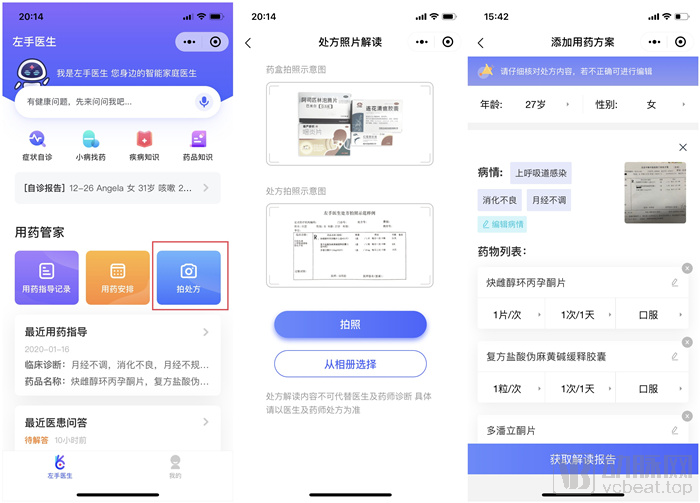
One-click operation: Users simply need to access the “Left Hand Doctor” mini-program, tap “Scan Prescription” on the homepage to enter the camera interface, and directly capture an image of the prescription. Leveraging OCR and structured data processing, Left Hand Doctor automatically recognizes all information on the prescription and provides personalized medication guidance.
(Figure)
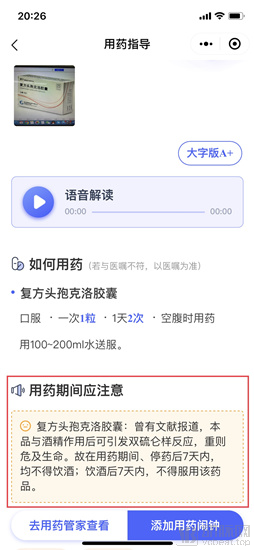
“In addition to scanning prescriptions, users can also take photos of medication packaging and manually input dosage information to instantly receive a medication regimen,” said the Head of Product at Zuoyi Technology. Often, after purchasing medications at pharmacies or hospitals, users seek additional information on proper usage. By using the “Scan Prescription” feature in the mini-program to simply photograph the medication box, they can obtain detailed medication guidance. This feature clearly specifies the frequency and dosage of administration, along with precautions during treatment, instructions for discontinuation, management of adverse reactions, disease recovery guidance, and contraindications or cautions, making it highly practical. For medications that must not be combined with alcohol, Left Hand Doctor prominently highlights this warning on the medication guidance page, significantly reducing the time users spend searching for such critical information.
(Figure)
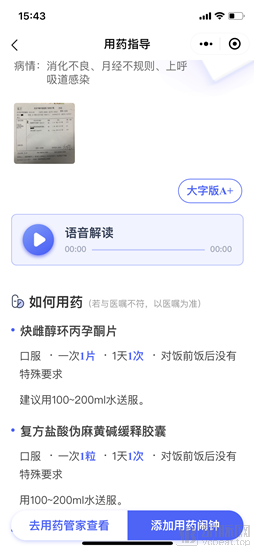
In addition, to better serve users, the Left Hand Doctor mini-program offers a large-font version and voice explanations for its “Medication Guidance” feature, specifically tailored for middle-aged and elderly users.
(Figure)
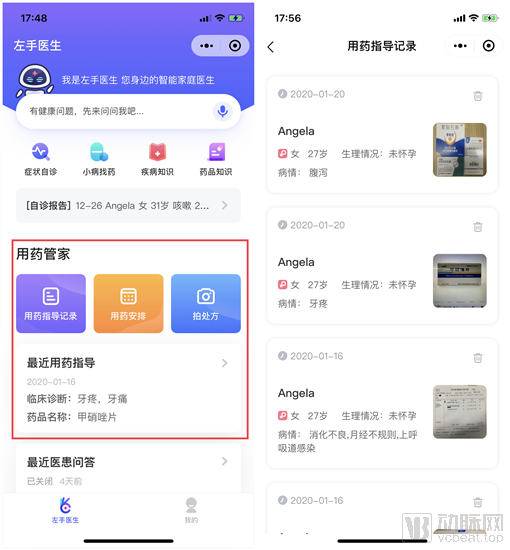
Additionally, the Left Hand Doctor mini-program saves all user medication records. Upon subsequent use, users can clearly view their most recent “Medication Guidance” on the homepage; clicking this entry allows them to review the previous medication record. Meanwhile, by clicking “Medication Guidance Records” on the homepage, users can access all historical medication records.
(Figure)
Amidst the myriad challenges plaguing the healthcare industry today, the rise of digital health has become virtually inevitable. The digitization of healthcare has emerged as a major trend in recent years. Advances in the internet and new technologies have accelerated the progress and broadened the application of digital medical technologies, making digital health an effective entry point for transforming the current state of the healthcare industry.
Amid this trend, “Healthcare + Big Data + AI” has become a buzzword. From building a digital healthcare ecosystem with general practitioners to serving both B-end and C-end users, Zuoshou Doctor has been consistently strengthening its efforts. The launch of the Zuoshou Doctor mini-program not only provides users with convenient and high-quality service experiences but also demonstrates its determination and creativity in deeply cultivating the consumer market.
“If you don’t drink, you’re not a true friend.” During Chinese New Year gatherings, some people always use this phrase to pressure others into drinking. Should you drink or not? How can you drink safely without causing any trouble? Open the “Prescription Snapshot” feature in the Left Hand Doctor mini-program to get accurate answers in just one second!