

From Product Validation to Market Validation: The Evolution of China's Medical AI Industry
Since 2016, the integration of artificial intelligence and healthcare has begun to spark innovation across various sectors. After several years of development, medical AI faced its commercialization test in 2019, increasingly entering clinical applications and physicians’ workflows, and bore fruit in early 2020. On January 15, 2020, the National Medical Products Administration approved the registration of Keya Medical’s innovative product, “Coronary Flow Reserve Fraction Calculation Software,” making it the first AI-based imaging product to obtain a Class III medical device certificate.
In addition, what new developments have emerged in AI products in 2019? At the 2019 Future Healthcare 100 Conference, VCBeat’s VBInsight released the “2019 China Medical Artificial Intelligence Report.” This article is an excerpt from the report; you can scan the QR code below to download the full version for free.

Medical AI Application Matrix Centered on Core Algorithmic Capabilities
Based on the dependent application service targets, medical usage scenarios, and scope of applicable medical conditions, the report constructs a matrix of medical AI applications, summarizes China’s medical AI industry, and presents an industry landscape map.
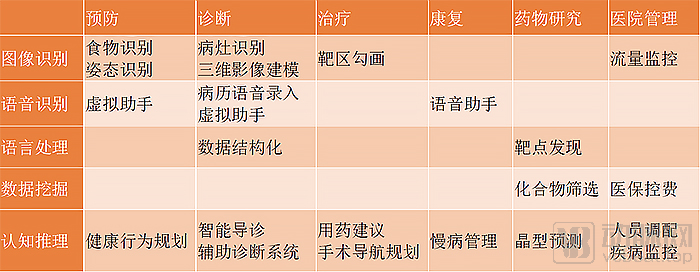
Matrix of AI Applications in Healthcare
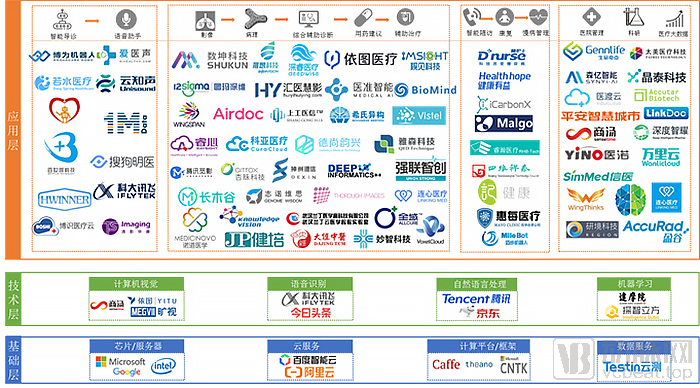
Medical AI Industry Landscape
Analysis of Application Scenarios for Medical AI in Hospital Settings
AI + Virtual Assistants: Integrating Different Stages of Diagnosis and Treatment Is Key
According to a survey by DXY, more than 50% of resident physicians spend an average of over four hours per day writing medical records. Forbes has reported that in outpatient settings, physicians spend only 52.9% of their time communicating with patients, 37% on documentation, and 10% on miscellaneous tasks.
Three hours in line, two minutes for consultation. The three major pain points during the consultation phase are the heavy workload of medical record entry for doctors, difficulties in quality control of medical records, and a lack of outpatient services for patients. Leveraging three core technologies—speech recognition, semantic understanding, and microphone arrays—AI-powered virtual assistants can be applied across multiple stages, including pre-consultation, during consultation, and post-consultation.
Pre-Consultation: Intelligent triage robots are gradually becoming a new highlight in hospitals. These robots primarily perform semantic analysis on patients’ voice inputs to provide triage and guidance recommendations, thereby saving labor costs and enhancing convenience for patients. More advanced triage robots can also collect patients’ vital signs through sensors, conduct preliminary consultations, and feed back basic physiological data and clinical summaries to outpatient physicians in advance. This enables doctors to obtain partial information about the patient’s condition before the encounter, thus improving consultation efficiency and reducing misdiagnosis.
During Consultation: The AI medical record assistant can directly convert speech into structured electronic medical records. The entire intelligent voice entry process is supported by a medical language data model, enabling simultaneous examination, diagnosis, and medical record documentation. This eliminates frequent interruptions to physicians’ diagnostic workflows, thereby saving time and allowing them to focus on clinical care. The AI surgical assistant enables surgeons to operate electronic devices contactlessly using technologies such as virtual screens, speech recognition, and gesture recognition. This effectively reduces operative time and lowers the risk of infection.
Post-Consultation: After the patient is discharged, the AI virtual assistant can conduct follow-up visits and satisfaction surveys, and push medical instructions, reminders for re-examination, and popular science education on health.
AI+Clinical Workflow: Rational Allocation of Medical Resources to Maximize Efficiency
Clinical Workflow: A Generalized Description of Hospital Management Processes and Physician Workflows. The primary issue addressed by clinical workflows is the automated transmission of documents, information, or tasks among multiple participants using digital tools to achieve hospital operational objectives (digitalization of non-clinical activities).
Artificial intelligence is leading the comprehensive digital transformation of the healthcare industry through hospital management and clinical workflow management, helping medical institutions optimize clinical workflows, deliver better healthcare services, and generate higher profits.
The purpose of hospital management is to fully optimize the allocation of medical resources in hospitals and maximize benefits.
AI models hospital data to train precise algorithms that automatically generate work schedules. For instance, it can analyze electronic health records and medical histories to identify patients requiring urgent care, prioritize the allocation of medical resources to them, and optimize the sequencing of medical services.
From a product classification perspective, clinical workflow management can be divided into medical device management, physician tools, and payment management based on the target objects.
Medical Device Management: The Shift from Manual to Intelligent Management. Pain points in medical device management include dispersed distribution and low efficiency in maintenance, repair, and quality control. As intelligence, informatization, and standardization become the prevailing trends in medical device asset management, the medical device service market has evolved from simple equipment repair to comprehensive lifecycle management of medical devices.
Physician Tools: From Empowering Individual Physicians to Enabling Multi-Point Physician Collaboration. The primary role of physician tools is to empower doctors, enhancing work efficiency and strengthening their professional capabilities.
Cost Containment in Medical Insurance: Shifting from Rule-Based to Big Data-Driven Approaches. Artificial intelligence and big data have introduced new paradigms for the development of intelligent monitoring systems for medical insurance. In certain regions, efforts are underway to leverage big data analytics—including case-based reasoning, analysis of medical behavior patterns, evaluation of diagnostic and treatment protocols, and diffusion analysis within physician-patient networks—to enhance the detection of fraudulent claims and ensure the appropriateness of insurance reimbursements.
AI + Preventive Management: Achieving Comprehensive Disease Screening and Prediction
Superior physicians prevent disease before it arises; preventive medicine is superior to reactive treatment. With advances in artificial intelligence, big data, genomics, and other technologies, it is now possible to predict the likelihood of developing certain diseases. Angelina Jolie underwent a prophylactic bilateral mastectomy to reduce her risk of cancer. This surgery was performed because she carries a genetic mutation that significantly increases her risk of breast and ovarian cancer.
This is a disease risk prediction from a genetic perspective, while AI can also achieve disease screening and prediction from our behavioral, biochemical, imaging, and other test results.
Taking diabetic retinopathy as an example, it is a common retinal vascular disease and the leading cause of blindness among patients with diabetes. China has the largest number of type 2 diabetes patients globally. As the diabetic population grows, both the prevalence and blindness rate of diabetic retinopathy have been rising year by year.
Because diabetic retinopathy often presents no clinical symptoms in its early stages, by the time symptoms appear, the condition has typically progressed to a severe stage, making it easy to miss the optimal window for treatment. Therefore, the efficacy of treatment for diabetic retinopathy depends on timely intervention. However, due to a shortage of ophthalmologists and low public awareness in China, the current screening rate for diabetic retinopathy remains below 10%.
China has over 900,000 primary healthcare institutions, accounting for 95% of the total number of medical facilities in the country and serving a population of 580 million. However, there is an insufficient supply of primary care physicians; the current workforce is unable to handle this workload, leading to physician burnout and increased rates of misdiagnosis and missed diagnoses.
Furthermore, the inadequacy of advanced medical equipment at the primary care level is evident. In China, medical devices in primary healthcare institutions are predominantly priced below RMB 500,000, with very few exceeding RMB 1 million. This indicates a low level of technological sophistication, limiting their capability to basic diagnosis and treatment while rendering them insufficient for early screening of complex and refractory diseases.
Preventive management products can be categorized into screening products and predictive products based on their scope of use.
The core distinction between screening and diagnosis lies in the fact that diagnosis confirms a specific disease after obvious symptoms have manifested, whereas screening is conducted without prior knowledge of whether the individual is diseased.
By analyzing mainstream AI-based early screening products on the market, we found that they are primarily concentrated in three categories: pulmonary nodule screening, diabetic retinopathy screening, and cancer screening. This is because the imaging data required for these screenings—such as digital radiography (DR), computed tomography (CT), and fundus photographs—are relatively easy to obtain. Furthermore, the National Institutes for Food and Drug Control (NIFDC) established two standard databases in 2018—one for color fundus images and another for pulmonary CT scans—which has significantly facilitated product development, regulatory approval, and market promotion.
Artificial intelligence, leveraging multimodal data such as text, medical imaging, and streaming physiological data (e.g., heart rate, blood oxygen saturation, and respiration), can be applied to predict a variety of diseases, including infectious epidemics, chronic non-communicable diseases, and mental disorders.
AI-Assisted Diagnosis: The Integration of CDSS and MDT Is the Future Direction
From the diagnostic data flow perspective, patients first undergo a series of examinations, including imaging, pathology, and in vitro diagnostics, to obtain preliminary results. Subsequently, the examination data are integrated and stored through information systems such as PACS and HIS. Finally, all data are aggregated at the physician’s end for comprehensive interpretation.
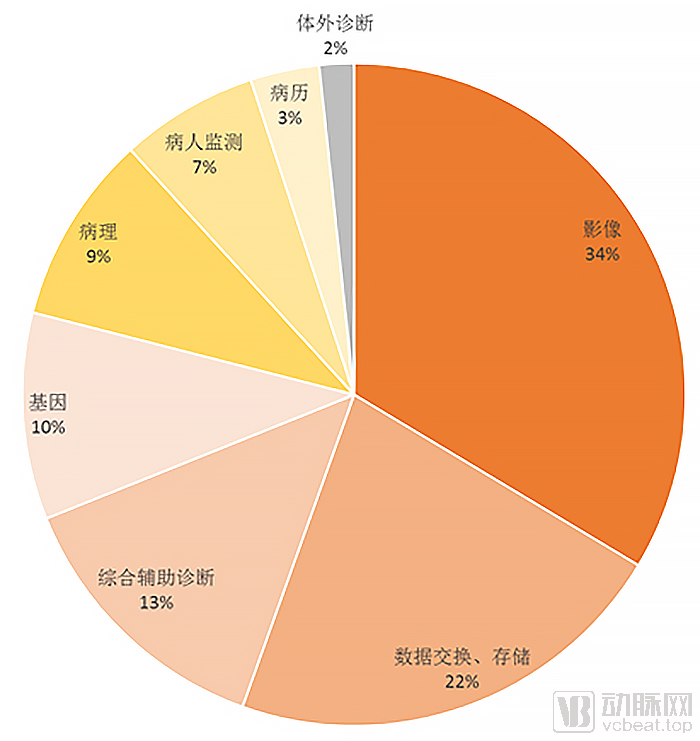
The ultimate goal of artificial intelligence is to achieve independent, comprehensive diagnosis akin to that of human experts. However, current mature applications remain largely focused on individual tasks, particularly in the field of medical imaging. Our analysis of 120 companies in the AI-assisted diagnosis sector reveals that imaging-based auxiliary diagnosis accounts for the largest share (34%), followed by data integration and storage (22%).
Based on the four major imaging modalities—X-ray, CT, MRI, and ultrasound—along with the latest nuclear medicine imaging technology (PET), AI applications in medical imaging primarily focus on image classification, organ labeling, segmentation of tissue structures and lesions, as well as image registration. Product development is concentrated on the chest, head, pelvis, and extremity joints. The greatest investment has been directed toward pulmonary nodules and other lung-related diseases, followed by cardiovascular and cerebrovascular conditions. In the pelvic region, the focus is mainly on the prostate and rectum, while musculoskeletal applications center on fractures and bone age assessment.
For hospital clients, AI imaging products seeking to enter Tier 3 Grade A hospitals must address two key needs of physicians in these institutions: efficiency and research. Currently, relatively mature computer-aided diagnosis products for CT-detected pulmonary nodules, CTA-based coronary artery disease, and stroke have all met physicians’ demands for improved image interpretation efficiency.
For township-level hospitals with relatively weaker medical capabilities, constrained by challenges such as outdated equipment and staffing shortages, AI-based imaging products for primary care are primarily built around X-ray and ultrasound to assist in diagnosing common conditions. Imaging AI companies can deploy private cloud solutions for these facilities, connect them to cloud-based PACS within medical consortia, or provide in-house training to enhance physicians’ image interpretation and report generation skills.
Throughout the workflow of medical diagnosis, pathological diagnosis, as the subsequent step to medical image analysis, serves as the "gold standard" for diagnosis.
Traditional pathological diagnosis is characterized by high subjectivity, low reproducibility, and a high misdiagnosis rate. Pathologists rely on visual inspection and personal experience to analyze and diagnose by observing cellular morphology and tissue architecture in microscope slides magnified 40 to 400 times. When necessary, immunohistochemistry or immunofluorescence assays are employed to aid in judgment, followed by manual counting or software-assisted statistical analysis of the images.
Meanwhile, similar to radiology, China faces a severe shortage of pathology professionals. According to the Health Statistical Yearbook, there are only 10,200 registered practicing pathologists in China, a figure that falls far short of the National Health Commission’s standard of staffing one to two pathologists per 100 hospital beds. The total shortfall of pathologists in China is estimated to be nearly 100,000.
Applications of AI in pathology can be categorized into three types based on the level of involvement:
Utilizing digital scanning technology to generate whole-slide images (WSI): extraction of image-related features and qualitative and quantitative analysis, including information on cell size, structural characteristics, cell population density, and spatial distribution.
Classification and Grading of Pathological Images: AI can directly output results for tissue classification, benign-malignant differentiation, and cancer grading, thereby improving the accuracy, efficiency, and consistency of pathological diagnosis. Currently, AI technology has achieved an accuracy rate of approximately 90% in the classification and grading of breast cancer, brain cancer, prostate cancer, and other malignancies.
Full-process digitalization enables primary diagnosis via digital slides, digital reporting, and digital slide archiving. By leveraging high-throughput, rapid whole-slide imaging (WSI) technology, all conventional histological slides can be scanned and converted into digital formats. Integrated with computer storage and internet transmission technologies, these digital slides are archived and uploaded to the cloud, establishing a regional network-based pathology diagnostic platform with rapid retrieval capabilities. This creates a “cloud pathology department” that transcends geographical limitations, further reducing misdiagnoses caused by subjective errors on the part of pathologists, facilitating data access for pathologists and other healthcare professionals, and enhancing overall work efficiency.
Integrating Multidisciplinary Data, Including Biology, Chemistry, Immunology, Genetics, and Clinical Information, to Assist Physicians in Diagnosis and Treatment: AI is not only used for the analysis of pathological morphological data but also integrates immunohistochemistry, molecular testing data, and clinical information to generate a comprehensive final pathological diagnosis report. This provides patients with prognostic information and precise guidance for pharmacotherapy.
In November 2018, at the 13th Critical Assessment of Structure Prediction (CASP) competition—often referred to as the “Olympics” of the protein field—DeepMind’s artificial intelligence program, AlphaFold, successfully predicted the 3D structures of proteins from gene sequences and won first place.
AI is increasingly being applied to genetic testing. With the maturation of next-generation sequencing (NGS) technology, the cost of sequencing a single genome has dropped below $1,000. The rapid development of gene sequencing has also generated massive amounts of data. How to interpret this big genomic data, identify disease-associated variants, and pinpoint pathogenic genes has become a current bottleneck in the field’s development. Leveraging its powerful data processing and learning capabilities, artificial intelligence has entered the process of interpreting genomic sequences.
As early as 2014, IBM partnered with the New York Genome Center to develop a program specialized in analyzing tumor genomes based on IBM’s Watson artificial intelligence system. In a recently published article in the journal Neurology Genetics, IBM disclosed its latest research findings. Researchers obtained a tumor biopsy sample and a blood sample from a patient, and sequenced the DNA from both samples as well as the RNA from the tumor.
These sequencing data were separately submitted to the IBM Watson Genomics program and an expert team composed of bioinformaticians and oncologists for analysis. The Watson system completed a report outlining potential clinical treatment options in just 10 minutes, whereas the manual analysis by the expert team took 160 hours to produce a similar report.
Integrated Auxiliary Diagnostic System is similar to MDT (Multidisciplinary Team Consultation), a process in which experts from multiple disciplines jointly discuss and formulate personalized diagnosis and treatment plans for patients, particularly suitable for the management of complex diseases such as cancer, kidney failure, and heart failure.
To achieve comprehensive interpretation, artificial intelligence must at least accomplish the following two steps: multi-source heterogeneous data mining, and the combined use of Clinical Decision Support Systems (CDSS) and Multidisciplinary Teams (MDT).
Multi-Source Heterogeneous Data Mining:AI companies collaborating with hospitals need to leverage big data technologies to clean, de-identify, structure, and standardize multi-source structured and unstructured data. This enables hospitals to unify previously fragmented medical data, establish an interconnected medical big data platform, and lay the data foundation for big data processing and analysis.
Integration of CDSS with MDT: Single-discipline-based Clinical Decision Support Systems (CDSS) lack a shared service model and are often embedded as subsystems within Electronic Medical Records (EMR), making it difficult to comprehensively assess patient conditions. By leveraging the advantages of Multidisciplinary Team (MDT) collaboration and evidence-based correlations, optimal diagnostic outcomes and treatment plans can be derived, thereby further enhancing the efficiency and quality of medical services.
AI-Assisted Therapy: Centered on Surgery and Pharmaceuticals, with Efficiency Enhancement as the Core
Centered on the two primary treatment modalities—pharmacotherapy and surgical intervention—AI-assisted therapy has played a significant role in preoperative planning, intraoperative navigation, and intelligent medication management, effectively reducing surgical duration and minimizing complications.
During cancer treatment, target volume delineation and treatment planning consume a significant amount of physicians' time and energy. Each cancer patient typically has around 200 CT images, and during delineation, physicians must annotate the organs and tumor locations on each image. Using traditional methods, this process takes physicians 3 to 5 hours. If the first course of treatment proves ineffective (i.e., tumor reduction is less than 30%) due to inaccurate target delineation or changes in the tumor, the treatment plan must be adjusted, requiring physicians to redo the delineation for the patient.
Preoperative Planning: Artificial intelligence can automatically delineate the corresponding target areas based on CT/MRI imaging data using image recognition technology, and then automatically generate specific radiotherapy or surgical plans for final confirmation by physicians.
Intraoperative Navigation: Accurately correlates preoperative imaging data with actual anatomical structures, leveraging technologies such as VR, MR, and surgical guides, along with 3D digital modeling and algorithm optimization, to achieve precise localization of lesions.
Medication Recommendations: Leveraging real-world big data on medication use and artificial intelligence technologies to deliver personalized medication guidance. Personalized medication entails administering the most appropriate drug at the optimal dose, to the right patient, at the most suitable time.
AI + Rehabilitation: Aiming for Patients’ Return to Daily Life
Clinical medicine primarily aims to ensure survival, enabling patients to stay alive through therapeutic interventions such as pharmaceuticals, medical devices, and surgery. In contrast, rehabilitation medicine focuses on quality of life, employing rehabilitative therapies to partially or fully restore impaired functions, thereby facilitating patients’ better reintegration into society. Therefore, clinical medicine and rehabilitation medicine are complementary: clinical medicine intervenes during the acute treatment phase, while rehabilitation medicine engages during the recovery phase. Ultimately, both disciplines work together to alleviate disease and help patients gradually transition back to normal life.
From the perspective of rehabilitation data flow, rehabilitation is divided into three stages: monitoring, guidance, and conditioning—that is, first acquiring data, then analyzing it, and finally applying it.
Monitoring—Wearable Devices: Compared to the application of AI in diagnosis and treatment, its implementation in the field of rehabilitation is more challenging. This is because data in the diagnostic and therapeutic phases is readily accessible (derived from hospital information systems), allowing products to be refined simply through data utilization and algorithmic iteration. In contrast, rehabilitation requires wearable devices to collect personal health data. Currently, most wearable devices on the market are monitoring devices capable of tracking health indicators such as blood glucose, blood pressure, heart rate, body temperature, and respiration.
Guidance—Rehabilitation Robots: The volume of health data generated by an individual each day is immense. How to process this data, transform it into information, convert information into knowledge, and further translate knowledge into actionable health management insights—this is the role of artificial intelligence following the collection of human life-cycle data.
The most intuitive example is the rehabilitation robot. By leveraging technologies such as artificial intelligence, the Internet of Things (IoT), and big data, rehabilitation robots make equipment more user-friendly and intelligent, achieving goals such as human-computer interaction, intelligent assisted training, and precise force control. Currently, rehabilitation robots are primarily focused on musculoskeletal rehabilitation, auditory and visual rehabilitation, and speech rehabilitation, with future expansion expected into cardiopulmonary and neurological rehabilitation. Conditioning: Health Management
Health management transforms passive disease treatment into proactive self-monitoring of health. Leveraging physiological data, AI-driven health management systems learn individual physical characteristics through data analysis and design personalized health management plans for each user. Current primary applications include diabetes care, chronic disease management, blood pressure control, breast health management, and fetal heart rate monitoring.
Health management primarily involves key health-related components, including risk identification, health assessment, mental health monitoring, and health intervention.
Risk Identification: Identify the risk of disease occurrence and provide measures to reduce risk by acquiring information and applying artificial intelligence technology for analysis.
Health Assessment: Collect personal lifestyle information, including dietary habits, exercise routines, and medication adherence; leverage artificial intelligence for data analysis to evaluate the patient’s overall health status and assist in planning daily life.
Mental Health: Utilizing artificial intelligence technology to perform emotion recognition from data such as language, facial expressions, and voice.
Health Intervention: Utilizing artificial intelligence to analyze user physiological data and customize health management plans.
AI + Research: Productivity Tools Unleash the Productive Forces of Researchers
Generally, pharmaceutical companies need to spend $500 million to $1 billion and take 10 to 15 years to successfully develop a new drug. The high risk, long development cycle, and substantial costs associated with new drug research and development represent the most significant pain points for pharmaceutical enterprises.
Currently, the application of artificial intelligence in the field of new drug development has permeated every stage, including drug discovery, clinical trials, and regulatory approval for market launch. Key application scenarios encompass target identification, compound screening, crystal form prediction, drug repurposing, medical translation, and pharmacovigilance.
Drug discovery begins with target identification. Pharmacologists infer the structures of physiologically active compounds based on scientific literature and personal experience, thereby identifying potential targets. However, in today’s era of information explosion, a new life sciences paper is published every 30 seconds. In addition, vast amounts of data—including patents and clinical trial results—are dispersed globally, making it impossible for researchers to keep track of all available information due to limited time and resources. The traditional process of target discovery takes an average of 2–3 years.
Artificial intelligence leverages natural language processing (NLP) to analyze vast amounts of medical literature and related data, employing deep learning to uncover the interactions between compounds and diseases, identify therapeutic targets, and shorten the target discovery cycle.
In compound synthesis, AI can simulate the pharmacological properties of small-molecule compounds, identify the most promising candidates for synthetic testing within weeks, and reduce the testing cost per compound to $0.0001, thereby significantly lowering the overall cost of compound synthesis.
After identifying a target, it is necessary to find corresponding small-molecule compounds that match the target. This matching process is analogous to a user searching for a keyword (the target) on Baidu, with the search engine returning a list of relevant results (small-molecule compounds). This constitutes compound screening.
High-throughput screening and traditional virtual drug screening are time-consuming and associated with low success rates in drug development. The emergence of artificial intelligence has opened a new avenue for the discovery of innovative small-molecule drugs.
Optimizing Clinical Trial Design: The 2015 “Announcement on Verification of Clinical Trial Data” enforced rigorous verification of clinical research data. Subsequent policies have imposed higher and more explicit requirements on clinical research, repeatedly emphasizing the application of information systems and technologies. Taimei Medical Technology leverages artificial intelligence to structure medical knowledge, facilitating the structuring, standardization, and related reasoning of multi-source heterogeneous clinical data. Within its eCollect (EDC) system, AI technologies such as calculation of drug-adverse reaction associations and OCR-based medical record recognition are applied, significantly enhancing the quality and efficiency of data collection.
Registration and Submission: Since 2019, China has been progressively implementing the eCTD (electronic Common Technical Document) standard, continuously promoting the internationalization and digitalization of drug registration and review. The low level of automation in traditional CTD processes has resulted in companies still consuming substantial time and human resources on “paperwork” for regulatory submissions. The introduction of artificial intelligence technologies holds promise for achieving integrated intelligent operations in the registration and submission process, including automated writing, automated translation, automated publishing, and streamlined regulatory filing.
Pharmacovigilance: Pharmacovigilance primarily addresses two aspects of pharmaceuticals—safety and efficacy—and encompasses the collection, analysis, monitoring, and prevention of adverse reactions associated with drugs and treatments. In 2015, the U.S. Food and Drug Administration (FDA) mandated that post-marketing safety reports for pharmaceuticals be submitted electronically. In 2019, China’s National Adverse Drug Reaction Monitoring Center launched a direct reporting system to enable online submission of adverse reaction reports. Taimei Medical Technology’s eSafety pharmacovigilance system can directly interface with the direct reporting systems of the Center for Drug Evaluation (CDE) and the National Medical Products Administration (NMPA), allowing for direct submission of adverse reaction reports. The system has also passed submission testing for the FDA’s Adverse Event Reporting System (AERS) and the European Union’s EudraVigilance pharmacovigilance database. The application of artificial intelligence technologies enables the eSafety system to feature automatic import of CIOMS forms, automatic import of scanned SAE reports, extraction of adverse reaction data, and report translation, significantly enhancing work efficiency.
Analysis of Medical AI Product Pipeline
We surveyed 62 companies across seven key subsectors, focusing on the progress of their product applications, covering a total of 82 products. Among these, auxiliary diagnosis and preventive screening products were the most numerous, with 31 and 13 products, respectively. Compared to last year’s report, “2018 Medical AI Report: Crossing Over and Setting Out Again,” the following new trends have emerged: the number of partner hospitals has generally increased from dozens to hundreds; the market is gradually expanding from the saturated “red ocean” of imaging AI to “blue ocean” areas such as drug R&D, rehabilitation management, and clinical workflow management; while imaging AI in 2018 mainly focused on thoracic and pulmonary diseases and ophthalmology, the key strategic focus in 2019 shifted to the cardiovascular and cerebrovascular fields.
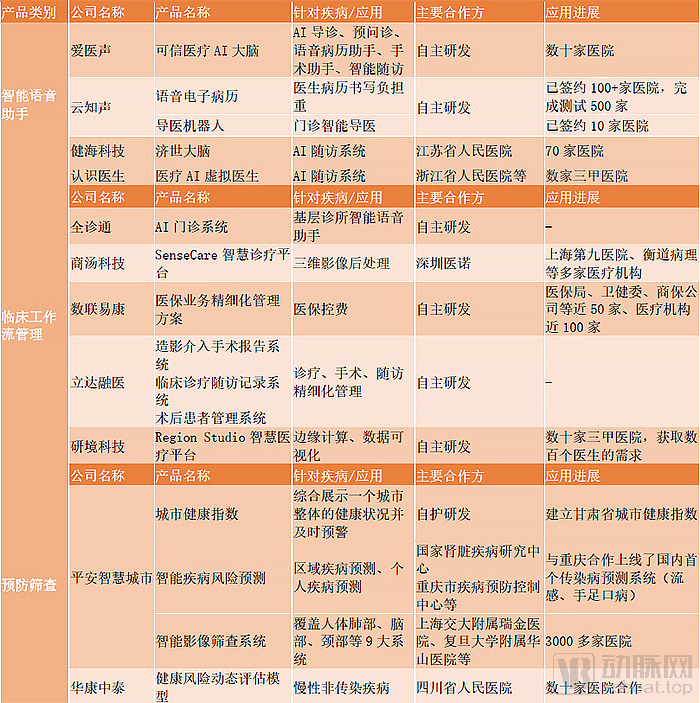
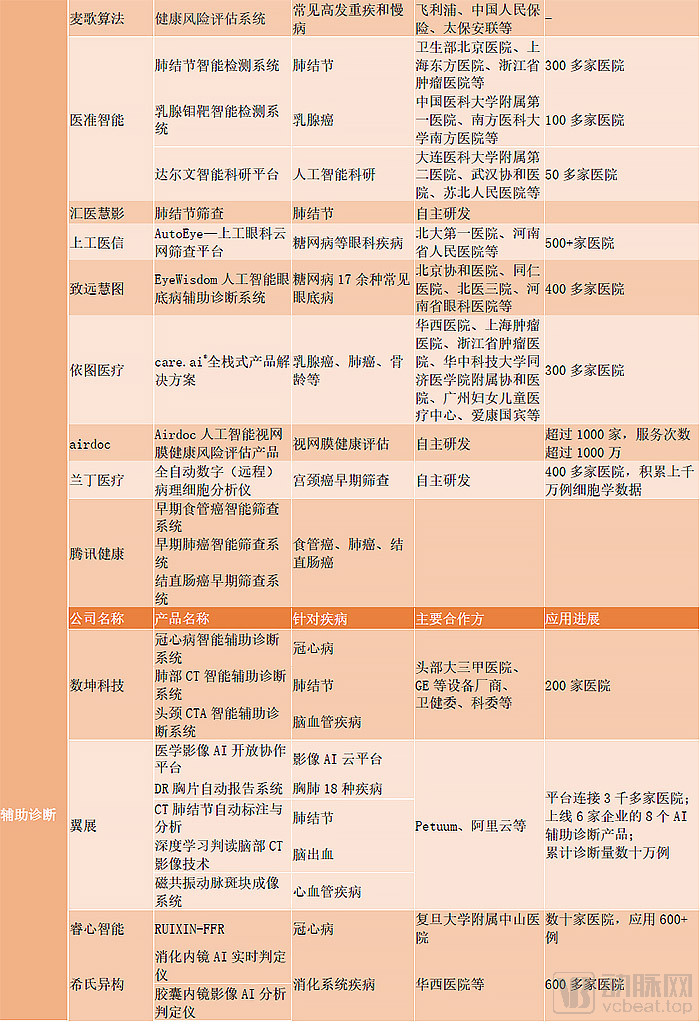
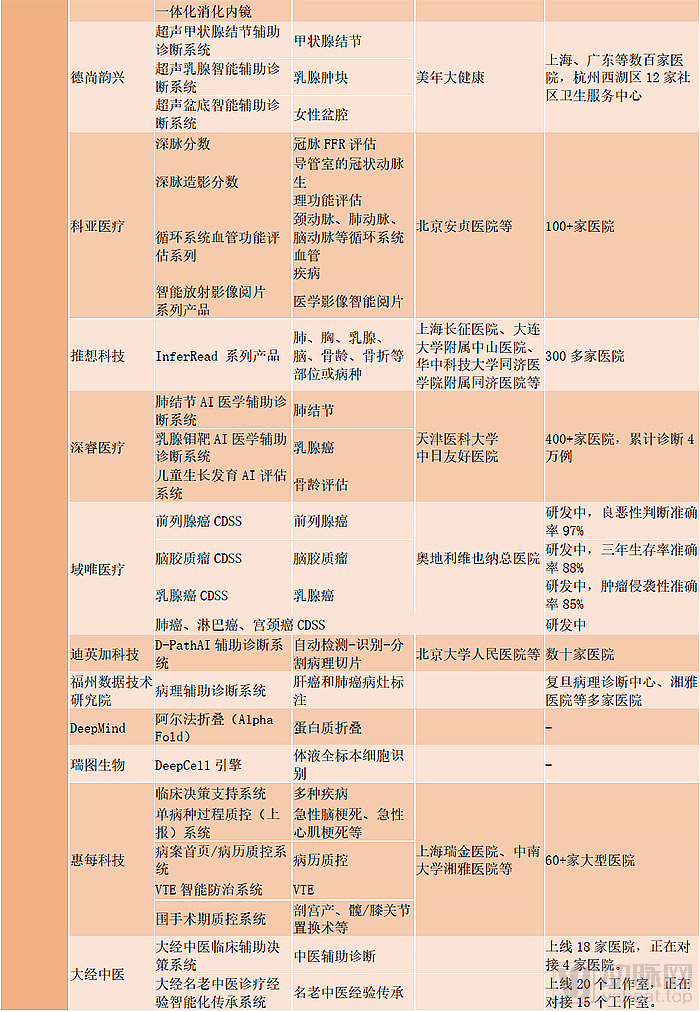
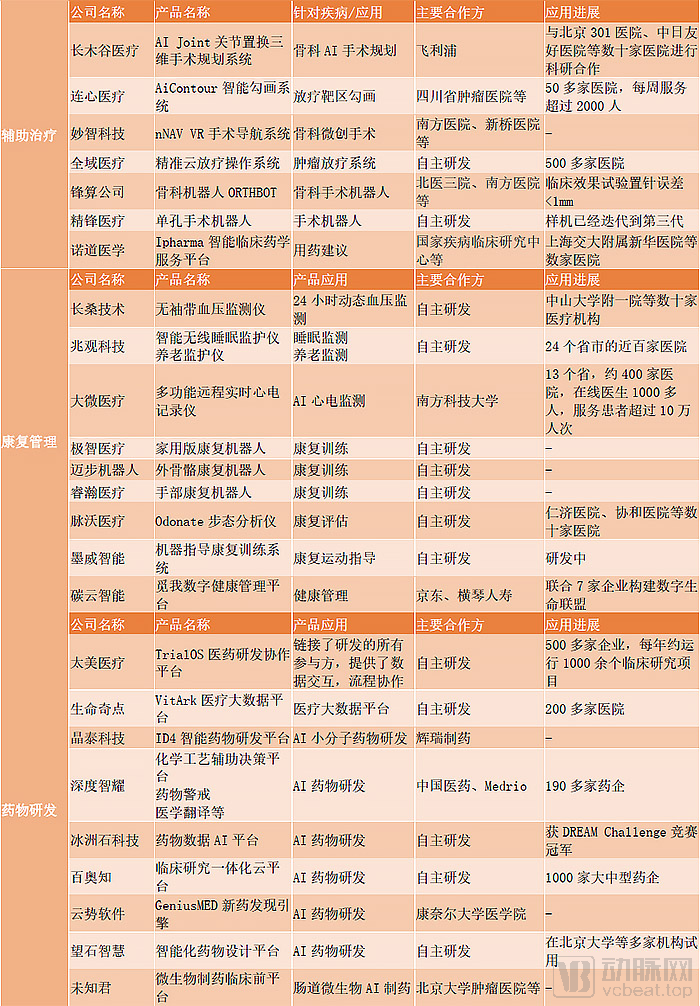
Excerpt on the Application Progress of Medical AI Products (as of October 2019)
Analysis of Investment and Financing for Chinese Medical AI Companies
To facilitate statistical analysis, we adhered to the following principles when processing investment and financing data: the scope of statistics covers more than 180 major enterprises in the medical AI industry; financing events included in this report are limited to venture capital investments from the angel round up to (but excluding) the IPO stage, excluding IPOs, private placements, donations, mergers and acquisitions, and other such events; rounds between the angel round and Series A are consolidated into the angel round, all rounds designated with “A” are consolidated into Series A, all rounds designated with “B” are consolidated into Series B, all rounds designated with “C” are consolidated into Series C, and rounds from Series D up to (but excluding) the IPO stage are consolidated into “Series D and above.”
All monetary amounts in the charts and graphs of this report are denominated in RMB. Foreign currency amounts have been uniformly converted into RMB based on the average exchange rate for the year in which the event occurred. Financing amounts in the millions, tens of millions, or hundreds of millions have been standardized as 1 million, 10 million, or 100 million, respectively. Financing events with undisclosed rounds or undisclosed amounts are excluded from the statistics in the following charts. The data cutoff date is October 31, 2019.
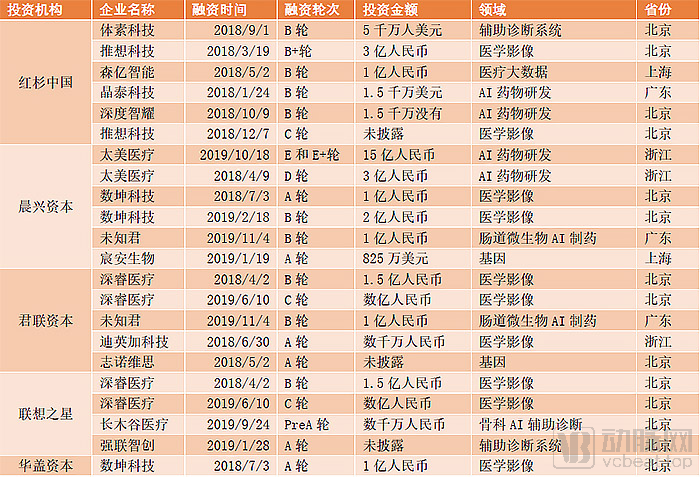
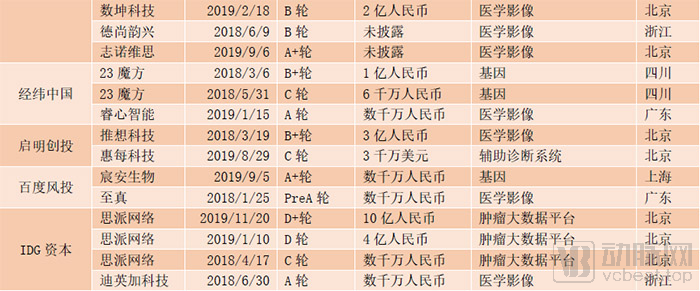
2018–2019 Investment Institution Activity Level
From the perspective of financing rounds, investment and financing activities in 2019 were mainly concentrated in Series A (25 deals, accounting for 60%), with an average financing amount of RMB 20 million per company. Most of these companies were established between 2017 and 2018 (such as Changmugu Medical, Ruixin Intelligence, and Nuodao Medicine). Although there were only 6 financing deals at Series D and above, the total amount reached RMB 2.46 billion (accounting for 58%).
In terms of individual corporate financing amounts, Taimei Medical Technology ranked first in 2019 with a total financing of RMB 1.5 billion, followed by Sipei Network and Senyi Intelligence. Unlike in 2018, when investments were concentrated in the field of AI-based medical imaging, the top 10 companies by financing amount this year are primarily distributed across the fields of AI-driven drug discovery and healthcare big data platforms.
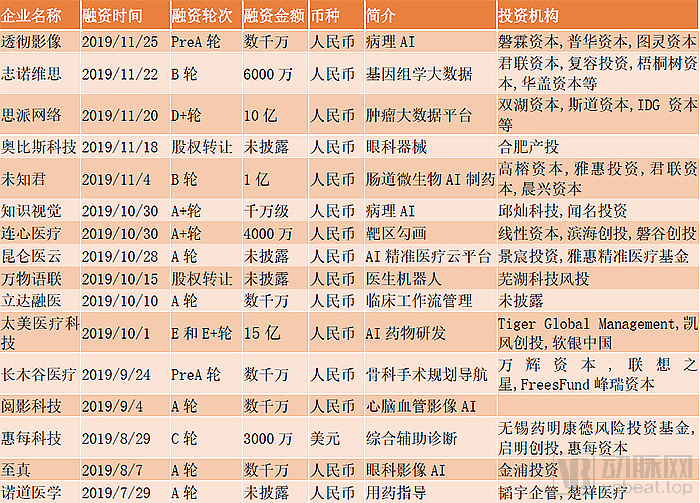
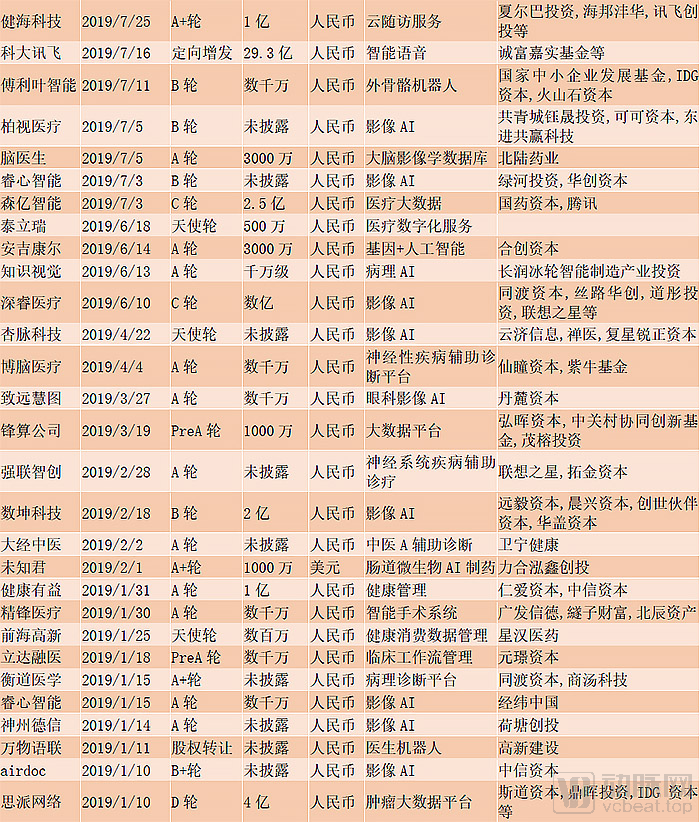
Medical AI Companies That Completed Financing in 2019 (as of November 2019)
In terms of funding utilization, the capital raised by the aforementioned companies remains primarily dedicated to product R&D, aiming to continuously enrich their product portfolios and strengthen competitive barriers. For instance, after securing RMB 200 million in financing, Shukun Technology plans to expand into other disease areas such as oncology and neurological disorders, thereby covering key diseases and clinical scenarios involving the heart, brain, lungs, breast, and prostate. Secondly, some companies are allocating funds to explore new business domains; for example, Taimei Medical Technology intends to enter the emerging pharmaceutical marketing market after completing its RMB 1.5 billion Series E+ financing round. Lastly, a portion of the funds is designated for product marketing and promotion.
Final Thoughts
A consensus has gradually emerged among academia, industry, and clinicians that artificial intelligence (AI) will become an indispensable assistant for physicians. This year, no one is pitting AI against doctors; instead, the industry has entered a phase focused on standard-setting and genuine integration into clinical workflows. Establishing a robust and sustainable commercial ecosystem serves as the driving force for industrial advancement. We are beginning to see the names of AI startups appear on hospital procurement lists, with their value being recognized at tangible price points.