

Insights from Data of 107 Internet Hospitals: Service Innovation Models and Future Development Pathways
Looking back on the five-year turbulent journey of internet hospitals, we have moved from the initial exploratory phase, through the pilot testing phase, regulatory rectification phase, and policy-support phase, to the current phase of accelerated implementation. Although each stage has exhibited distinct characteristics, innovation remains the enduring theme of internet hospitals. VCBeat Institute has continuously tracked the development and changes in internet hospitals and released the “2019 Internet Hospital Report: From Model Transformation to Service Innovation.” This article primarily excerpts the sections on service innovation and trends.

Scan the mini-program QR code to download the "2019 Internet Hospital Report" for free.
In accordance with relevant national policies, internet hospitals primarily operate under two models: hospital-led internet hospitals and enterprise platform-based internet hospitals. The former is predominantly represented by tertiary Grade A hospitals, which mainly utilize their own physicians to conduct online diagnosis and treatment activities. The latter is represented by digital health enterprises such as WeDoctor, Haodf Online, and Chunyu Yisheng; these platforms rely on offline physical medical institutions and engage physicians registered at their affiliated institutions as well as other medical facilities to provide online diagnosis and treatment services.
To better dissect the direction and content of service innovation in internet hospitals, VCBeat Research Institute collected data from the apps or official websites of 107 internet hospitals and conducted interviews and surveys with relevant enterprises. Through the organization and analysis of this data, we have drawn the following conclusions:
Corporate platform-based service innovation exhibits greater enthusiasm.
Among the 107 internet hospitals, 44 were hospital-led internet hospitals and 63 were enterprise platform-based internet hospitals, accounting for 41% and 59% of the sample, respectively. Of these, 21 hospital-led internet hospitals (51%) optimized and upgraded their services, while 47 enterprise platform-based internet hospitals (75%) innovated their service offerings. Therefore, in terms of innovation initiative, enterprise platform-based internet hospitals demonstrated a higher level of engagement.
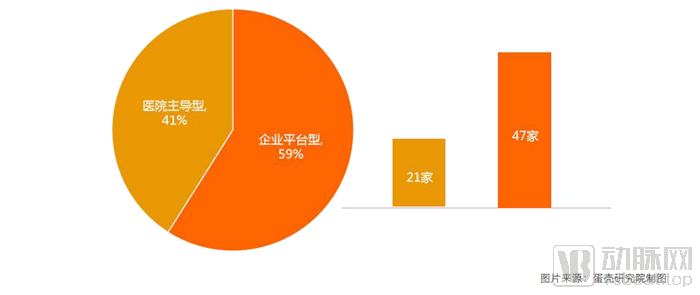
Proportion of the Number of Service Innovations in Two Types of Internet Hospitals
Disease Diagnosis and Treatment Become the Focus of Service Innovation in Internet Hospitals
Currently, by integrating the service functionalities of both types of internet hospitals, in addition to the basic pre-consultation services offered during the early development stage—such as health information, disease consultation, and appointment registration—the key services currently being developed and operated by internet hospitals are primarily categorized into three areas: disease diagnosis and treatment, health management, and physician services.
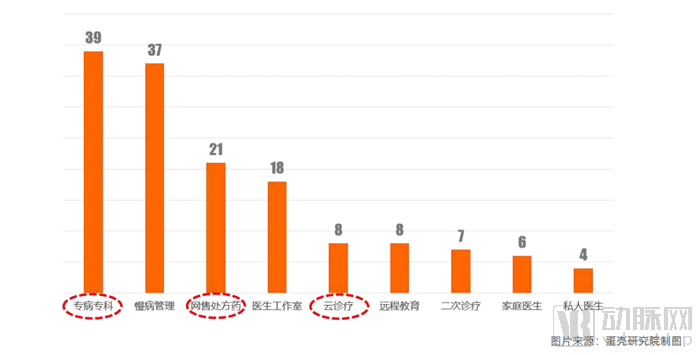
Major Types of Service Innovation in Internet Hospitals
The first category is disease diagnosis and treatment, including specialized departments for specific diseases, online prescription drug sales, cloud-based consultations, second opinions, family doctors, and private physicians. These services deepen the disease consultation process to improve diagnostic accuracy and provide personalized diagnosis and treatment.
Specialized Disease Departments refer to the establishment of dedicated online departments based on specific disease types, assembling expert resources in those disease fields to provide specialized services for patients, ranging from consultation and appointment scheduling to diagnosis, treatment, and post-diagnosis management. Cloud Diagnosis and Treatment involves uploading electronic medical records, imaging, electrocardiogram (ECG), pathology, and other data to the cloud, breaking down hospital boundaries to achieve cross-institutional sharing of patients’ basic information and examination/test results. It provides patients with inter-hospital cloud consultations, cloud diagnoses, and cloud treatments, offering optimal treatment plans by integrating resources across hospitals. Second Opinion Services are designed for patients who have doubts about their initial diagnosis and treatment results; relevant experts are organized to provide further evaluation and issue a second diagnostic opinion, thereby enhancing the accuracy of the diagnosis.
The second category is health management, including chronic disease management and family doctor services. China has a population of over 300 million people with chronic diseases, with hypertension and diabetes being the most prevalent conditions. Patients with chronic diseases require long-term medication guidance and rehabilitation management. As their conditions are relatively stable, they are well-suited to the service model of internet hospitals.
The third category is physician services, such as physician studios and remote education. As the core resource in healthcare, physicians play a decisive role in patient recovery. Physician studios are designed around clinicians’ practical needs in disease diagnosis and treatment. By leveraging physicians’ areas of expertise, these platforms facilitate patient acquisition and referral, while providing patient management services such as medical record administration and follow-up care, thereby reducing physicians’ workload. Physicians can also enhance their personal visibility through online live streaming and academic exchanges, helping ambitious clinicians build strong personal brands. Remote education addresses physicians’ needs for skill enhancement and career advancement by offering services such as academic conferences, expert-led courses, and remote guidance.
Hospital-led initiatives build specialized disease and department services around dominant disciplines
Based on a review of services provided by 21 hospital-led internet hospitals, the key operational services currently include specialized disease and specialty care, cloud-based diagnosis and treatment, family physician services, remote education, chronic disease management, and health management.
The hospital boasts advantages in medical expertise and technical resources. Its specialized departments mainly include oncology, neurology, hepatobiliary surgery, breast surgery, and urology, providing diagnostic and therapeutic services for complex and refractory conditions in these fields.
Hospital-led internet hospitals leverage the advantages of offline physical hospitals, with each institution offering specialized online services for specific diseases and departments based on their leading disciplines, thereby bringing more high-quality medical services online. Through access to specialist appointment slots, patients can schedule outpatient consultations with department specialists with a single click and receive expert diagnostic and treatment services. Prescriptions issued by these specialists are directly integrated into the pharmacy management system, allowing patients to pick up their medications immediately after consultation. If a patient’s condition is severe and requires surgical intervention, the system can immediately coordinate with the hospital’s operating rooms and arrange for specialists to perform the surgery. Additionally, dedicated inpatient wards for specific diseases are provided to facilitate efficient patient management by physicians.
Therefore, hospital-led internet hospitals leverage their advantages in offline medical resources to achieve seamless online-offline integration for specialized diseases and departments, thereby establishing green channels for specialized care.
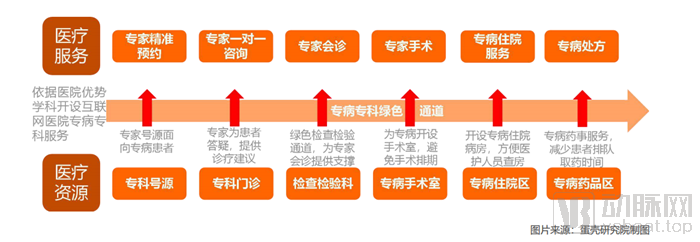
Hospital-Led Internet Hospital Services for Specialized Diseases and Departments
As a typical representative of hospital-led internet hospitals, Heilongjiang Provincial Hospital’s Smart Hospital has been committed to providing patients with higher-quality and more convenient internet hospital services through innovations in technology and medical care. As one of the first batch of internet hospitals in the province, Heilongjiang Provincial Hospital, in collaboration with Zhuojian Technology and Longjiang Media, has leveraged internet platforms and technologies to establish an integrated service system comprising three core components: unified appointment scheduling, internet hospital services, and electronic health cards.
Cloud-Based Diagnosis and Treatment Facilitates Inter-Hospital Collaboration by Integrating Regional Resources
Cloud-based diagnosis and treatment emerged as a key innovation highlight of hospital-led internet hospitals in 2019. As hospitals vary in their areas of clinical expertise, cloud-based diagnosis and treatment—encompassing cloud electronic medical records, cloud imaging, cloud electrocardiography, and cloud pathology—aggregates superior specialist resources within the region to jointly address complex and refractory conditions. Internet hospitals affiliated with Yinchuan First People’s Hospital, The First Affiliated Hospital of Zhejiang University School of Medicine, and Guangdong Sanjiu Brain Hospital are all pioneering innovations in cloud-based diagnostic and therapeutic services.
Cloud-based diagnosis and treatment services in hospital-led internet hospitals mainly include cloud archiving, cloud sharing, cloud diagnosis, cloud expert consultation, and cloud quality control services. These services primarily aim to provide patients with higher-quality medical care by fully leveraging the hospital’s own medical resources and integrating regional medical records, expert resources, and diagnostic capabilities. To address limited storage space in hospitals, storing part of patient information on the cloud enables long-term preservation of patient data. Moreover, doctors from various hospitals within the region can access a patient’s medical history from other institutions, providing critical data support for accurate diagnoses. For complex or difficult cases, cloud-based consultations can be conducted by connecting specialists across the region to develop optimal treatment plans.
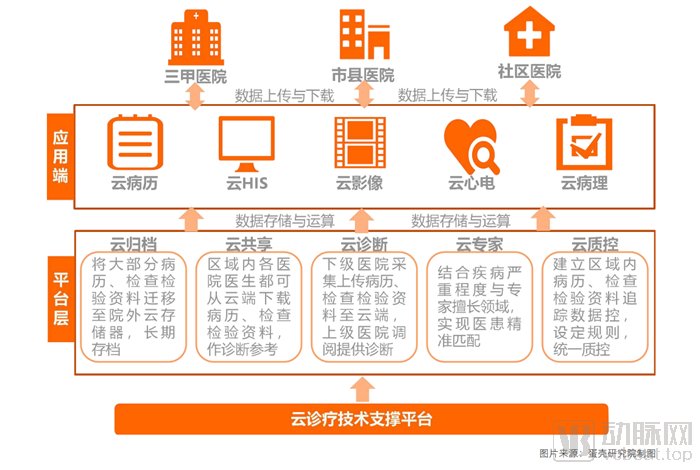
Schematic Diagram of Cloud Consultation Service Functions
As a hospital-led internet hospital, Guangdong Sanjiu Brain Hospital Internet Hospital, with the assistance of Wuhan Runyun Technology Co., Ltd.—a joint venture established by China Resources Medical and Xinyi International—has built functional modules including appointment registration, online consultation, cloud diagnosis and treatment, and health services. Particularly in the area of cloud diagnosis and treatment services, supported by Xinyi International’s Medical Cloud Platform, Guangdong Sanjiu Brain Hospital Internet Hospital leverages its specialization in neurology to strengthen inter-hospital collaboration. It has begun exploring cloud-based diagnostic and therapeutic services, striving to create a service ecosystem characterized by parallel advancement of “online + offline” and “intra-hospital + inter-hospital” models with complementary resources, thereby comprehensively enhancing services for neurology patients.
Specialized Internet Hospitals Have Inherent Advantages in Chronic Disease Management
Compared with comprehensive internet hospitals, specialized internet hospitals focus on providing internet-based medical services for specific categories of diseases. Currently, specialized internet hospitals cover specialties such as cardiology, nephrology, orthopedics, endocrinology, psychiatry, and dermatology—precisely the departments managing chronic conditions like hypertension, kidney disease, diabetes, mental disorders, and skin diseases.
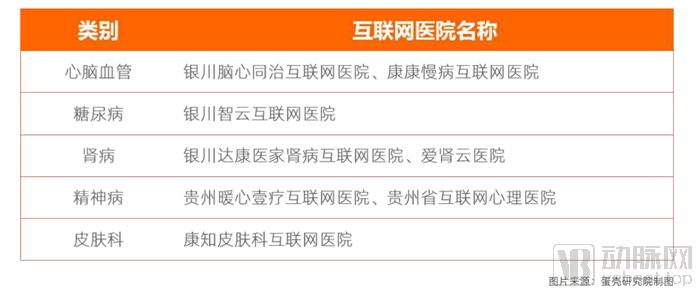
Specialized Internet Hospital for Chronic Disease Management
Therefore, specialized internet hospitals leverage their expert resources and management advantages in the field of chronic diseases to prioritize the advancement of chronic disease management services. These services include providing personalized care plans covering medication, diet, exercise, and daily routines for patients with chronic conditions, enabling them to undergo rehabilitation under scientific guidance and prevent disease progression. For instance, Yinchuan Brain-Heart Co-Treatment Internet Hospital and Kangkang Chronic Disease Internet Hospital offer management services for cardiovascular and cerebrovascular chronic diseases; Yinchuan Zhiyun Internet Hospital provides diabetes management; and Guizhou Nuanxin Yiliao Internet Hospital and Guizhou Provincial Internet Psychiatric Hospital offer mental health management services.
Enterprise Platform-Based Upgrade of Chronic Disease Management Service System
From the perspective of service innovation types, enterprise platform-based internet hospitals exhibit distinct differentiating features compared to hospital-led internet hospitals. Building on a solid foundation of specialized disease and department-specific diagnosis and treatment services, enterprise platform-based internet hospitals further expand their service offerings to include chronic disease management, online sales of prescription drugs, second medical opinions, and private physician services. These platforms demonstrate prominent advantages in traffic management, data operations, and service optimization. They are able to acquire patient and physician traffic through multi-channel promotion, while simultaneously driving service innovation by analyzing data on patient and physician needs.
Internet hospitals operated by multiple digital health companies, including WeDoctor, Haodf Online, DXY, and Chunyu Doctors, have launched services such as chronic disease management and specialized care. Medlinker and Apricot Forest have introduced physician studio services, while Miaoshou Doctor, Jianke, and 111 Group have rolled out online prescription drug sales. Penguin Almond and Miaoshou Doctor offer second-opinion consultation services, and Ping An Good Doctor has introduced its signature private physician service.
Public hospitals face strained medical resources, as they are primarily responsible for disease diagnosis and treatment, leaving insufficient resources allocated to chronic disease management. Enterprise-based platform internet hospitals are well-positioned to address this gap by building an integrated service system tailored to the characteristics of chronic diseases, encompassing health education, follow-up examinations and consultations, medication management, patient follow-up, and insurance payment services. In the initial phase, these platforms reduce the incidence of chronic diseases and promote effective self-management through preventive health education, expert-led health lectures, and patient community engagement. By conducting regular health check-ups for chronic disease patients and continuously monitoring their vital signs, these platforms provide critical data to inform subsequent treatment decisions. For patients with severe conditions, online follow-up consultation services are offered to deliver timely diagnostic results and treatment plans.
Moreover, patients with chronic diseases require long-term medication and continuous monitoring. A medication management system can provide long-term management of medication adherence, while a follow-up management system enables continuous, dynamic post-diagnosis care for these patients. Currently, many insurance institutions have introduced chronic disease insurance products that encourage patients to actively engage in self-management through customized coverage and premium incentive programs, thereby reducing the rate of disease progression.
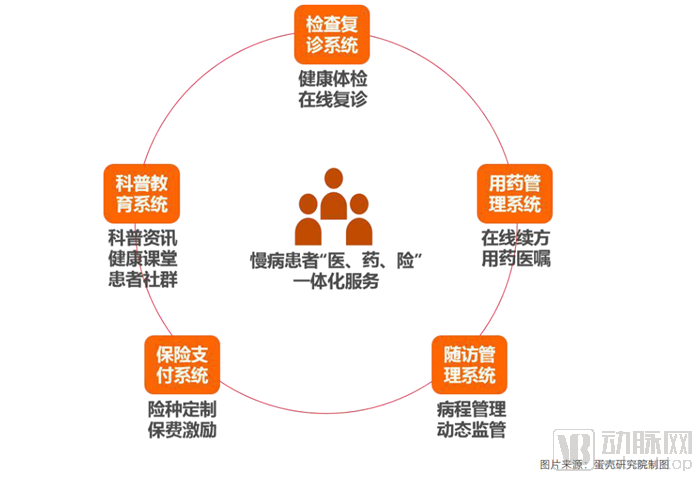
Chronic Disease Management Service System
As one of the early pioneers in internet hospitals, DXY has leveraged its internet hospital platform as a nexus to cover a range of online services, including medical science popularization, health information, online consultations and follow-up visits, prescription issuance, and online medication purchases. Given that general healthcare needs are relatively dispersed, DXY began integrating online and offline services in 2016 to provide chronic disease management for specific patient populations. It established the Diabetes Care Center to explore new models of chronic disease management.
At the DXY Diabetes Care Center, patients can access services across three dimensions: information, communication, and interaction. The process forms a closed-loop system that delivers a comprehensive experience, starting with patient education, progressing through doctor-patient communication during intermediate stages, advancing to face-to-face diagnosis and treatment, and then returning to education, intervention, and guidance post-treatment. Key components include the establishment of multi-tiered service teams, diverse types of medical service institutions, and big data management for chronic diseases.
Online Sales of Prescription Drugs Bring New Growth to Enterprise-Platform Internet Hospitals
The absence of an explicit ban on the online sale of prescription drugs has brought a significant surge in traffic to pharmaceutical e-commerce platforms. Previously, after obtaining a prescription during a follow-up consultation at an internet hospital, patients had to either pick up their medications at designated offline medical institutions or download the prescription to purchase drugs independently at pharmacies, causing inconvenience for patients.
Currently, under the previously enacted Drug Administration Law of the People's Republic of China, the online sale of prescription drugs is not explicitly prohibited. After patients obtain prescriptions through online follow-up consultations, these prescriptions can be automatically routed via a Prescription Review and Circulation Center to pharmaceutical e-commerce platforms. Upon receiving and verifying the prescriptions, these platforms dispense the medications and deliver them directly to patients' homes, thereby enabling patients to truly enjoy an integrated service of consultation and medication acquisition without leaving their residences.
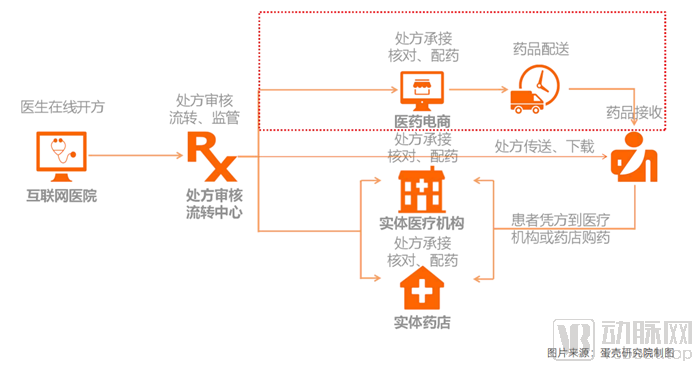
Schematic Diagram of the Online Sales Service Process for Prescription Drugs
Miaoshou Yisheng is one of the earliest internet healthcare companies to obtain qualifications for operating an internet hospital. Miaoshou Yisheng Internet Hospital has established a comprehensive medical service system encompassing online consultations, e-prescriptions, physician education, health science popularization, and patient management. Particularly in pharmaceutical services, the company operates three major segments: the Miaoshou Online Mall, Yuanxin Grand Pharmacy, and pharmaceutical commerce.
Regional Internet Hospitals Will Gradually Replace Individual Internet Hospitals
Currently, the development of internet hospitals is predominantly characterized by individual hospital-based models, which leverage each hospital’s medical resources to migrate certain medical services online. In the future, the construction of internet hospitals will break down institutional boundaries, integrating medical resources across different campuses through cloud-based platforms tailored to regional healthcare development. Consequently, regional internet hospitals will emerge as the primary direction for growth.
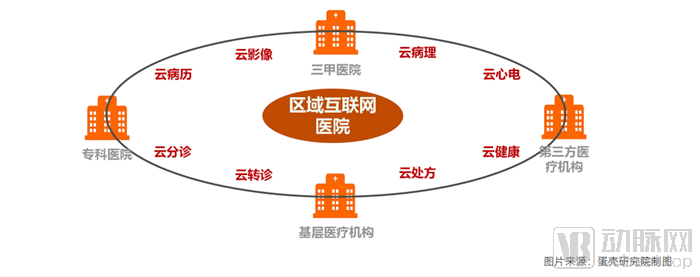
Schematic Diagram of the Regional Internet Hospital Service Network
Regional Internet Hospitals connect tertiary hospitals, specialized hospitals, primary healthcare institutions, and third-party medical organizations via a cloud-based platform, enabling the interconnectivity of physicians, medical equipment, and patient information across all types of healthcare facilities. Based on patients’ conditions, those with common illnesses are managed at the primary care level, while patients with complex or refractory diseases are referred to tertiary hospitals, thereby effectively implementing tiered diagnosis and treatment.
Meanwhile, by leveraging cloud-based electronic medical records (EMR), cloud imaging, cloud pathology, cloud electrocardiography (ECG), and cloud prescriptions, the sharing of patient medical histories, examination and test results, and prescription medication information is achieved. Medical experts from tertiary hospitals empower physicians at primary healthcare institutions through internet hospital cloud platforms, enabling them to manage a broader spectrum of diseases. Furthermore, physicians across various medical institutions can conduct consultations and diagnoses via the cloud platform, jointly providing Multidisciplinary Team (MDT) services for complex and rare conditions, thereby enhancing the accuracy and scientific rigor of diagnoses. As early as 2017, WeDoctor partnered with Pingdingshan City, launching a pilot program in Jia County. This initiative broke away from the traditional development path of individual internet hospitals, jointly exploring a regional internet hospital model.
During the development of the regional internet hospital in Jia County, Pingdingshan City, the Jia County Government was responsible for constructing healthcare infrastructure—including county-level hospitals, township health centers, and standardized village clinics—and for staffing these facilities with qualified healthcare professionals. WeDoctor Group provided a complete suite of smart hardware, system platforms, and ongoing operational services. Healthcare institutions leveraged WeDoctor’s smart hardware and system platforms to deliver medical and health services, including basic public health programs, family doctor contract services, and remote consultations.
The entire project leverages the tightly integrated county-level medical consortium as its core mechanism to connect healthcare institutions across four tiers within the region: municipal, county, township, and village. Specifically, an intelligent cloud platform for tiered diagnosis and treatment is established at the county central hospital, enabling real-time interoperability of data generated by various cloud platforms with county-, city-, and even provincial-level medical cloud systems. “Mobile Hospital” cloud clinic vehicles are deployed to township health centers, allowing medical personnel to travel to villages and provide basic public health services to residents. Village clinics are equipped with remote electrocardiogram (ECG) and remote consultation devices, while family doctor teams are provided with “21st Century Barefoot Doctor” cloud clinic kits, thereby achieving a model where primary-level examinations are conducted locally and diagnoses are made by higher-level specialists.
Building on the experience in Jia County, the “Pingdingshan Model” was rolled out citywide. It connects upward to more than 3,200 hospitals and over 300,000 physicians nationwide, and extends downward to cover six municipal- and county-level hospitals, 115 township health centers (community health service centers), and 2,330 village clinics (community health service stations). As of October 2019, Pingdingshan had conducted more than 30,000 remote electrocardiogram (ECG) interpretations and over 60,000 remote consultations, significantly enhancing the service capacity of primary care facilities.
Therefore, regional internet hospitals can better promote the rational flow of medical resources, address the uneven distribution of healthcare resources, and balance the supply-demand mismatch between patients and providers. The Internet Hospital Cloud will further empower Medical Consortiums, providing service support for various models such as Medical Communities, Urban Medical Groups, Cross-regional Specialty Alliances, and Telemedicine Collaboration Networks. This will achieve comprehensive and accessible healthcare services, truly realizing the goal of treating 50% of diseases at the community level, 40% at county-level hospitals, and 10% of critical illnesses at provincial and municipal hospitals.
Specialized Internet Hospitals Will Become a New Competitive Landscape
Currently, whether hospital-led or enterprise-led, internet hospitals are predominantly comprehensive in nature, covering multiple departments such as general surgery, internal medicine, gynecology, dermatology, otolaryngology and ophthalmology, and pediatrics. The related services provided, including health information, online consultations, diagnosis, pharmaceuticals, and post-consultation care, are all generic. The first tier of participants in the comprehensive internet hospital sector is monopolized by large Grade A tertiary hospitals, which possess inherent advantages in terms of physicians, medical equipment, and medical technology, making it difficult for other types of hospitals and internet platform enterprises to compete with them.
Therefore, other hospitals and internet platform companies need to leverage their own advantages to build and operate specialized internet hospitals. The service system of specialized internet hospitals includes specialist doctors, specialized hospitals, specialized equipment, specialized service processes, specialized medications, and specialized insurance.
Specialists focus long-term on the treatment of specific disease categories, providing a guarantee of professional talent for specialty-oriented internet hospitals. Specialty hospitals, serving as the offline supporting institutions for these internet hospitals, enable professional alignment with online services and achieve seamless integration between online and offline care. Specialty equipment includes dedicated diagnostic and testing devices, auxiliary diagnosis and treatment systems, and remote consultation systems, all of which enhance the accuracy of specialty diagnosis and treatment. Specialty service processes are tailored to the unique characteristics of diseases in each department, designing customized workflows for appointment scheduling, consultations, examinations and tests, diagnosis, and follow-up, thereby improving patients’ healthcare experience through personalized service processes. For specialty medications targeting conditions such as dermatological diseases, maternal and child health, and diabetes, high-quality pharmaceutical e-commerce platforms are selected to handle prescription fulfillment and drug delivery services, ensuring medication safety.
Specialty diseases are primarily categorized into two groups: those with consumer-oriented attributes and those involving serious medical care. These conditions align closely with health insurance, chronic disease insurance, and critical illness insurance, making them particularly suitable for commercial insurance intervention. Commercial insurers can flexibly design product offerings tailored to specific specialty diseases to meet patients’ insurance needs.
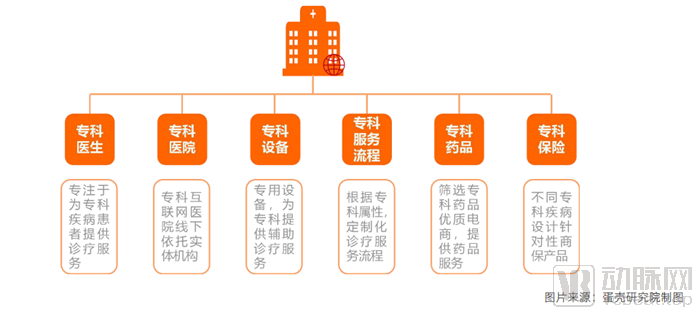
Specialty-Focused Internet Hospital Service System
Future specialized internet hospitals will primarily fall into two categories. The first category consists of consumer-oriented specialized internet hospitals, focusing on areas such as dentistry, medical aesthetics, and maternal and child health. These are departments that public Grade A tertiary hospitals are often reluctant to operate, allowing for differentiated competition. Meanwhile, patients in these segments have strong personalized needs and are willing to pay a premium for high-quality services.
Another category is specialty-focused internet hospitals with a strong medical orientation, such as those specializing in oncology and cardiovascular and cerebrovascular diseases. Leveraging years of operational management experience and long-accumulated expert resources in their respective fields, these hospitals introduce advanced equipment to provide patients with more precise and comprehensive diagnosis and treatment services. Compared with generalist internet hospitals, the core advantages of this type of internet hospital lie in their technical expertise and service quality.
The Internet Hospital Technology Platform Will Be Iteratively Upgraded to Meet Patient Needs
Services drive technological innovation, and technological innovation empowers services. As the foundational infrastructure, the technical platform of internet hospitals must undergo iterative upgrades in response to evolving service demands.
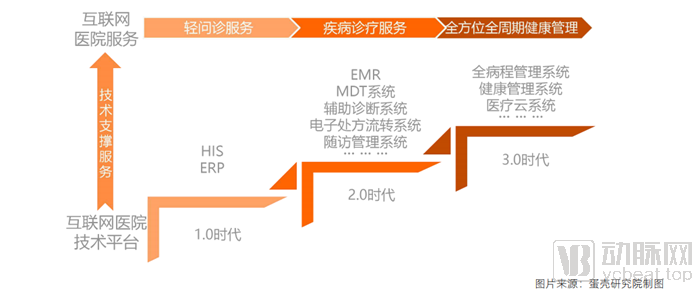
Upgrade Path for the Technical Platform of Internet Hospitals
In the 1.0 era, technology platforms were primarily represented by systems such as Hospital Information Systems (HIS) and Enterprise Resource Planning (ERP). The HIS focused on registration and billing, recording outpatient registration and payment transactions, while automatically allocating resources such as outpatient services and physician schedules to enable healthcare institutions to deliver patient care.
ERP integrates the operational management of human resources, finances, and materials between Hospital Information Systems (HIS) and financial management. Building upon this foundation, ERP systems implement segmented management to achieve refined operational control. The technical platform at this stage is capable of meeting patient needs such as consultations, appointment registration, and information inquiries.
In the 2.0 era, patient needs have evolved from lightweight consultations to comprehensive disease diagnosis and treatment. Hospital Information Systems (HIS) and Enterprise Resource Planning (ERP) systems, which focus more on hospital management, are unable to effectively meet the demands of clinical diagnosis and treatment. Consequently, internet hospital technology platforms have undergone iterative upgrades, exemplified by Electronic Medical Records (EMR), Multidisciplinary Team (MDT) systems, and clinical decision support systems.
The Electronic Medical Record (EMR) system is the core of hospital information systems, playing a vital role in organizing and sharing patient information, as well as enhancing the standardization and completeness of medical records. The Multidisciplinary Team (MDT) system provides technical support for multidisciplinary consultations, including remote consultations and diagnoses, effectively integrating expert resources both within and outside the hospital. The clinical decision support system leverages AI technology to assist physicians in disease diagnosis, thereby improving diagnostic accuracy and reducing the incidence of misdiagnosis. The electronic prescription circulation system enables an integrated information service encompassing online prescribing, prescription review, dispensing, and medication delivery, making medication access more convenient for patients. The follow-up management system assists physicians in post-consultation patient management, alleviating their workload.
In the upcoming Era 3.0, internet hospital technology platforms will be represented by whole-course disease management systems, health management systems, and medical cloud systems. The whole-course disease management system will enable intelligent, end-to-end management of the patient journey, encompassing consultation, appointment scheduling, clinical visit, treatment, and follow-up. This ensures that a patient’s entire medical record is clearly visible and fully traceable throughout the care continuum.
The health management system will provide lifecycle-oriented health management services for individuals in sub-health conditions, those with chronic diseases, and patients with acute or established diseases, aiming to reduce disease incidence, optimize chronic disease management, and promote recovery. The medical cloud system primarily comprises cloud-based electronic medical records (EMR), cloud imaging, cloud electrocardiography (ECG), and cloud pathology. It will break down hospital boundaries, enable the sharing of patient laboratory and diagnostic information, and integrate high-quality medical resources across hospitals to deliver healthcare services. Therefore, the Internet Technology Platform 3.0 will meet patients’ needs for comprehensive, full-lifecycle health management.
In summary, after years of development, internet hospitals have expanded their services from lightweight consultations to disease diagnosis and treatment as well as health management. They have moved beyond extensive, land-grab-style expansion and entered a phase of intensive, connotative growth.
Internet hospitals of both models leverage their respective strengths to actively drive service innovation. Hospital-led internet hospitals capitalize on expert resources and patient loyalty within local jurisdictions, deepening services such as cloud-based medical records, cloud consultations, and specialized disease-specific care around diagnosis and treatment. Enterprise platform-led internet hospitals utilize their traffic resources and advantages in supply chain aggregation to focus on operations in chronic disease management, online sales of prescription drugs, second-opinion consultations, and private physician services, thereby achieving differentiated development compared to hospital-led models.
In the future, as policies become more refined and technology advances, internet hospitals will continue to iterate and upgrade around patient needs, building regional internet hospitals and specialized specialty-focused internet hospitals, thereby improving the convenience and quality of medical services and bringing greater benefits to patients.