

Grid-based Screening and Tiered Diagnosis Play a Critical Role in Wuhan's Pandemic Response
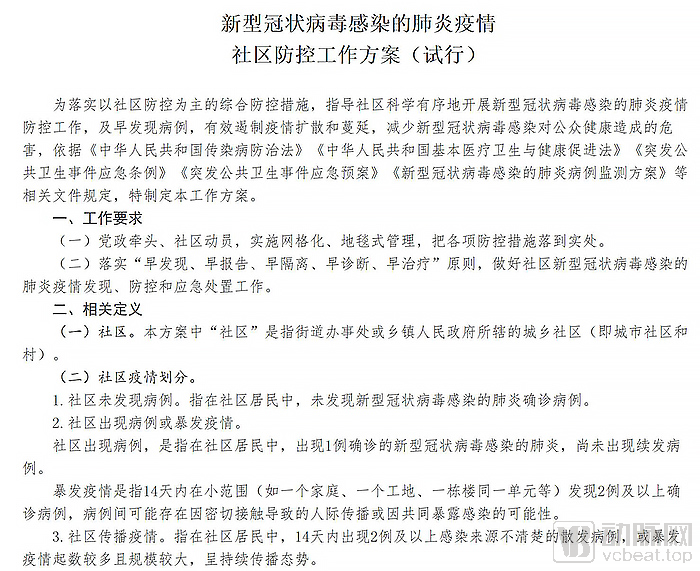
On January 24, 2020, the Joint Prevention and Control Mechanism for the Novel Coronavirus Pneumonia Epidemic, established under the leadership of the National Health Commission on January 21 and comprising 32 departments, issued the Notice on Strengthening Community Prevention and Control of the Novel Coronavirus Pneumonia Epidemic (Pneumonia Mechanism Issuance [2020] No. 5) (hereinafter referred to as the “Notice”) and the Work Plan for Community Prevention and Control of the Novel Coronavirus Pneumonia Epidemic (Trial). The Notice required local joint prevention and control mechanisms for the pneumonia epidemic to “fully leverage community mobilization capabilities, implement grid-based and comprehensive management, promote mass prevention and control, ensure stable prevention and control, effectively implement comprehensive prevention and control measures, achieve ‘early detection, early reporting, early isolation, early diagnosis, and early treatment,’ and prevent the importation, spread, and exportation of the epidemic to control disease transmission.” Subsequently, grassroots organizations across various regions responded swiftly and made corresponding arrangements.
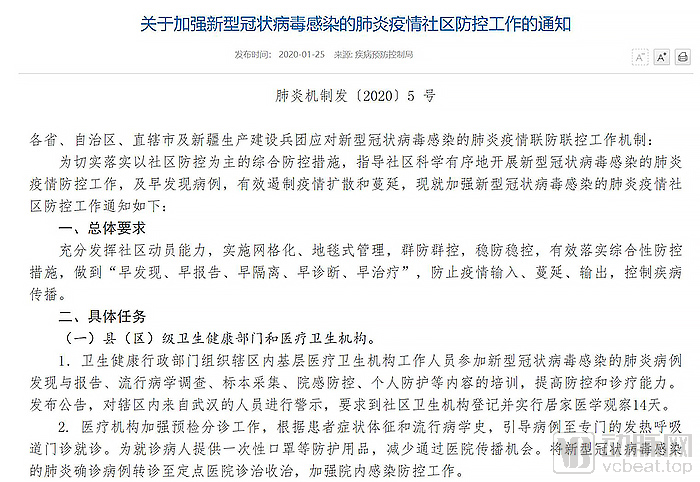
Regarding the most critical link in epidemic prevention and control—primary-level containment—the Notice has made precise, effective, and practical arrangements. VCBeat (WeChat ID: Vcbeat) believes that although the number of cases will continue to rise in the near term due to the gradual release of previously accumulated cases, the outbreak of pneumonia caused by the novel coronavirus is gradually being brought under control as the measures outlined in the Notice are implemented and coordinated with other joint prevention and control mechanisms, such as extended holidays. The turning point is imminent, and it is only a matter of time before the epidemic ends.
The Sudden Onset of the Epidemic: Information Asymmetry Once Triggered a Run on Medical Resources
The novel coronavirus is an entirely new virus. To date, even experts within the healthcare system cannot claim to fully understand this virus, let alone the general public. Consequently, the epidemic exhibited an explosive trend in Wuhan several days ago.
Wuhan, known as the “Thoroughfare of Nine Provinces,” is one of China’s most important transportation hubs. It provides access westward to Bashu (Sichuan and Chongqing), eastward to Wu and Yue (the Jiangsu-Zhejiang region), northward along the Han River to Henan and Shaanxi, and southward via Dongting Lake to Hunan and Guangxi. Since the advent of the high-speed rail era, Wuhan has further solidified its position as one of the nation’s most critical high-speed rail hubs.
Wuhan is also a major center for higher education in China. According to the 2018 Statistical Bulletin on National Economic and Social Development of Wuhan, released by the Wuhan Municipal Bureau of Statistics in 2019, the number of undergraduate and junior college students enrolled in Wuhan reached 969,000 in 2018, ranking among the highest nationwide.
Meanwhile, Wuhan also serves as the economic hub of Central China. According to the data on Wuhan’s economic performance in the first three quarters of 2019, released by the Wuhan Municipal Bureau of Statistics and the Wuhan Survey Team of the National Bureau of Statistics on October 24, 2019, Wuhan’s GDP for the first three quarters reached RMB 1.152839 trillion, with the full-year figure projected to exceed RMB 1.5 trillion. Consequently, Wuhan has attracted a substantial influx of labor from surrounding regions.
Convenient transportation, coupled with the vast influx of migrant populations, enabled the epidemic to spread rapidly across China during the annual Spring Festival travel rush—often described as “the largest human migration in history”—creating a severe situation where a single spark could start a prairie fire.
After the scale of the outbreak was found to be expanding, Wuhan City rapidly implemented measures, ranging from restricting population movement in and out of the city and suspending intra-city public transportation to ultimately sealing off all transport links between Wuhan and the outside world; meanwhile, designated medical institutions within the city were assigned to treat febrile patients.
The sudden surge in the scale of the epidemic caught Wuhan’s medical institutions and residents off guard, leading to a rapid depletion of protective equipment such as face masks. The temporary shortage of transportation materials and inventory during the Spring Festival holiday, coupled with nationwide panic buying of medical protective equipment, exacerbated the scarcity of medical supplies.
Due to the general lack of medical literacy among Chinese citizens and information asymmetry at the time, local attitudes shifted from widespread optimism and neglect in the early stages of the outbreak to confusion and uncertainty. Fuelled by sensationalism from individuals with ulterior motives and self-media outlets lacking professional ethics, panic began to spread gradually among some residents of Wuhan.
Driven by this panic, a large number of febrile patients in Wuhan flocked to designated hospitals across the city for treatment within a short period, causing severe overcrowding. This situation mirrored a bank run during an economic crisis, placing additional strain on medical resources that were already scarce amid the epidemic. Although Wuhan serves as the medical hub of Central China and boasts some of the most advanced medical resources in the country, it was still overwhelmed by this surge in demand for healthcare services.
In fact, the warm winter season is inherently a peak period for influenza, with fever and cough being very common symptoms. The symptoms of most local residents visiting designated outpatient clinics may not be caused by the novel coronavirus, but rather by ordinary influenza. Rashly seeking care at designated tertiary medical institutions not only exacerbates the burden on the healthcare system but also significantly increases the risk of cross-infection.
The Critical Role of Community-Based Initial Screening, Confirmed-Case Referral, and Tiered Diagnosis and Treatment in Infectious Disease Outbreaks
To address this issue, on January 24, the Wuhan Municipal Novel Coronavirus Pneumonia Prevention and Control Command issued Notice No. 7, mandating tiered diagnosis and treatment for febrile patients to alleviate the medical burden on designated hospitals.
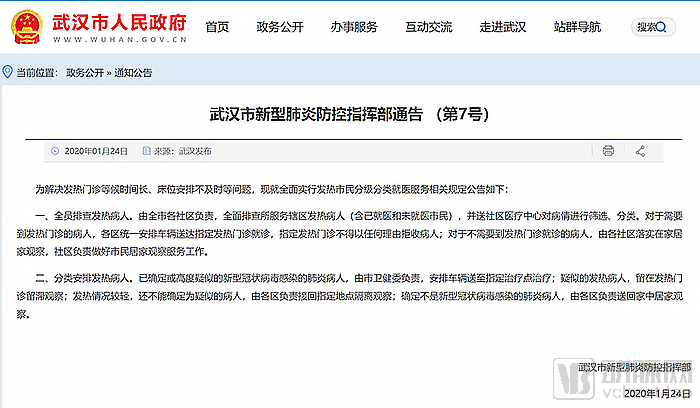
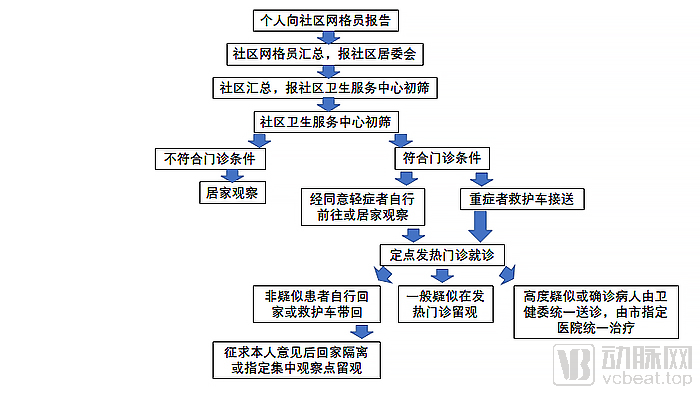
First, conduct comprehensive screening of all febrile patients. The announcement requires all communities across the city to thoroughly identify febrile patients within their jurisdictions and refer them to community health centers for triage and classification. For patients requiring care at fever clinics, each district shall arrange unified transportation to designated fever clinics; these designated fever clinics must not refuse any patient under any circumstances. For patients who do not require treatment at fever clinics, home-based observation shall be implemented by their respective communities, which are responsible for providing support services for citizens undergoing home observation.
Second, implement triage and management for febrile patients. Patients confirmed or highly suspected of having novel coronavirus-infected pneumonia shall be transferred by the Municipal Health Commission to designated treatment facilities. Suspected febrile patients shall remain in the fever clinic for observation. Patients with mild fever who cannot yet be classified as suspected cases shall be taken back by their respective district authorities to designated locations for isolation and observation. Patients ruled out for novel coronavirus-infected pneumonia shall be sent home by their respective district authorities for home-based observation.
In its news broadcast on the evening of January 27, China Central Television (CCTV) demonstrated the immediate effectiveness of the tiered diagnosis and treatment system. Taking the Shuiguohu Street Community Health Service Center in Wuchang District, Wuhan, which serves nearly 90,000 residents across nine communities, as an example, the center admitted nearly 20 feverish patients in a single day, identified two suspected cases of novel coronavirus pneumonia, and arranged timely referrals.
According to statistics from the “2018 Briefing on the Development of Health and Healthcare Services in Wuhan,” released by the Wuhan Municipal Health Commission, there were a total of 569 medical institutions across the city, including 421 community health service centers (stations), 84 township (subdistrict) health centers, and 64 secondary hospitals. Even after excluding primary care institutions lacking the capacity to operate fever clinics, the remaining number is still several times greater than the 61 fever-clinic-designated medical institutions officially reported by Wuhan (the number of tertiary hospitals in Wuhan is also exactly 61). This substantial surplus can significantly alleviate the pressure on these hospitals.
Following initial screening at community health service centers, patients suspected of novel coronavirus infection present at the fever clinics of designated hospitals with relatively complete medical records. This enables physicians to make targeted diagnoses rapidly, thereby reducing their workload and improving diagnostic efficiency. Meanwhile, other patients requiring diagnosis can receive more professional and reliable treatment.
According to reports from frontline news media, as national medical teams and supplies arrived in Wuhan and the tiered diagnosis and treatment system was implemented, the immense pressure on local medical resources gradually eased, and public sentiment stabilized.


In addition, Wuhan has leveraged mobile apps to provide citizens with self-service pneumonia screening and reporting. Residents can search for the “Wuhan Micro Neighborhood” mini-program on WeChat and remotely submit their self-assessment reports through the platform. The system immediately provides an online preliminary diagnosis and registers the isolation address via geolocation. If medical attention is required, the community will arrange for initial screening, while the system tracks the progression of the patient’s condition. This approach further accelerates response times and reduces the risk of transmission.
Personnel Control: Grid-Based, Carpet-Style Mass Prevention and Control
The high volume of population movement poses a significant challenge to the prevention and control of infectious diseases. According to Wuhan Mayor Zhou Xianwang at a press conference on January 26, nearly 5 million people were estimated to have left Wuhan for various parts of the country before the city severed its transportation links with the outside world, with the majority heading to other cities in Hubei Province.
Consequently, other cities in Hubei Province successively implemented traffic closure measures. As of the early hours of January 27, when Xiangyang sealed off inbound and outbound traffic, all areas of Hubei Province, except for the sparsely populated Shennongjia region, entered a “city lockdown” status. These cities include Wuhan, Ezhou, Xiantao, Zhijiang, Qianjiang, Huanggang, Chibi, Jingmen, Xianning, Huangshi (including Daye City and Yangxin County), Dangyang, Enshi, Xiaogan, Yichang, Jingzhou, Suizhou, Shiyan, and Xiangyang.
As the number of newly confirmed cases gradually increases across various regions, 30 provincial-level administrative divisions in China have successively announced a Level I response to major public health emergencies. This is the highest level of emergency response, aimed at controlling population movement from all aspects and reducing the risk of transmission.
While specific operational details of Level I emergency responses vary slightly among local governments, the overall framework remains largely consistent. Key measures include controlling public spaces to prevent gatherings, implementing grid-based screening, conducting targeted checks on individuals from other regions, strengthening epidemic prevention and control, intensifying public awareness campaigns, and ensuring strict accountability.
Public space management involves the temporary closure of all public cultural venues, tourist attractions, internet cafes, entertainment and gaming establishments, hotels, and other non-essential places where people congregate. It also entails halting mass cultural activities, travel, and group dining events to minimize population gathering and movement, thereby reducing the risk of transmission. Some regions have further suspended public transportation to discourage residents from going out.
Grid-based Coverage Screening is conducted with urban and rural communities as the basic units and grids as the foundation. Led by local police officers, it organizes community cadres, medical personnel, and grid administrators to carry out door-to-door visits and screenings in accordance with the requirements for grid-based management and services, ensuring that “no household and no individual is left out.”
As the epidemic intensified, staff members of relevant government agencies across China gradually returned to their posts. In particular, street-level workers and grid administrators on the front lines of communities remained at their stations even on Chinese New Year’s Eve, conducting comprehensive grid-based screenings. It is no exaggeration to say that without their tireless efforts, effective prevention and control of the epidemic would have been difficult to achieve.
Key screening efforts focus on proactively notifying and comprehensively screening individuals arriving from epidemic areas as well as local residents who have previously traveled to such areas, ensuring a clear baseline and thorough understanding of the situation. For tourists arriving from epidemic areas, relevant hotels and other entities are urged to properly carry out registration, prevention and control measures, and reporting. In some regions, tourists from epidemic areas are even centralized in designated hotels for necessary medical observation.
Strengthening epidemic prevention and control involves adopting a tiered diagnosis and treatment approach to promptly transfer identified febrile patients within the jurisdiction to local medical facilities for screening, classification, and strict isolation. Patients requiring care at fever clinics shall be transported by epidemic prevention vehicles, uniformly arranged by district- or county-level governments, to designated fever clinics. For patients not requiring visits to fever clinics, community authorities shall supervise their self-isolation and observation at home, and provide home-based observation services under the guidance of local health departments. For suspected cases, confirmed cases, and close contacts of novel coronavirus pneumonia, cooperation with health departments, disease prevention and control institutions, and medical and health institutions is required to facilitate screening, isolated treatment, and home observation. Those who refuse to comply shall be dealt with in accordance with the law.
Intensify publicity efforts by strengthening the dissemination and popularization of epidemic prevention knowledge. Conduct targeted public education in public spaces and urban-rural communities, with particular emphasis on grassroots areas such as townships where information access is limited, to ensure widespread awareness and participation in epidemic control. Meanwhile, strengthen guidance of public opinion, urge the public not to believe, spread, or fabricate rumors, and actively cooperate with community authorities in implementing comprehensive epidemic prevention and control measures.
Effective implementation of responsibilities requires all levels and departments to fulfill their functional and territorial duties, strictly adhere to duty rostering and the reporting system for major incidents, and seriously handle, in accordance with discipline and law, any failure to implement responsibilities, inadequate performance of duties, or concealment, delayed reporting, or false reporting.
Meanwhile, on January 27, the General Office of the State Council announced an extension of the Spring Festival holiday to February 2 and a postponement of school start dates. The aim was to further reduce the risk of transmission during the return-to-work travel period. In fact, many local governments, as a precautionary measure, further delayed the resumption of work beyond the officially extended holiday, thereby strengthening epidemic control efforts.
Final Thoughts
As the measures outlined in the Notice are progressively implemented, and under the combined effects of tiered diagnosis and treatment, grid-based coverage, and other joint prevention and control mechanisms, the epidemic caused by the novel coronavirus pneumonia has been gradually brought under control and reversed. It is believed that the epidemic will soon reach a turning point. Nevertheless, the public should remain highly vigilant, minimize outings in accordance with local government recommendations, adhere to protective measures, participate in joint prevention and reporting efforts, and refrain from believing or spreading rumors.
Finally, let us pay our highest tribute to all healthcare workers who have stood firm on the front lines; it is you who have built a Great Wall of flesh and blood for us.
Stay strong, Wuhan! Stay strong, China!