National Health Commission Addresses Eight Key Questions on Medical Teams, Supplies, and Transmission Routes
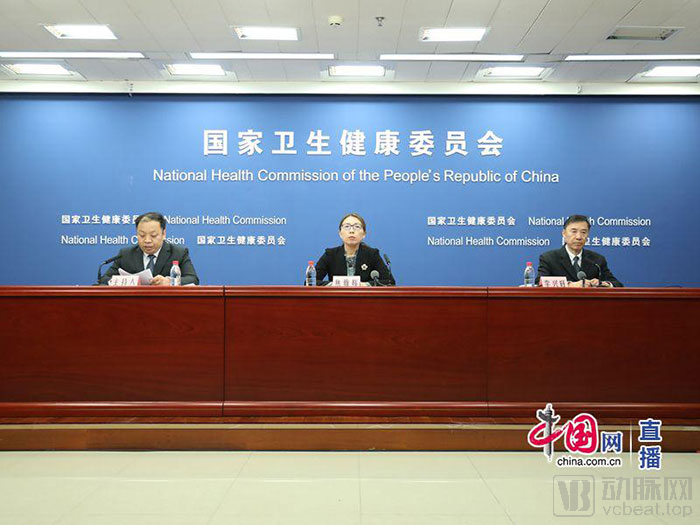
On January 28, the National Health Commission held a press conference on the prevention and control of pneumonia caused by novel coronavirus infection, providing updates on the deployment of medical teams to support Hubei Province in its fight against the epidemic. The briefing primarily covered four areas: overall progress in epidemic prevention and control, operational and living arrangements for medical teams, modes of transmission, and supply of medical materials. It also addressed eight major issues of widespread public concern.
Mi Feng, Spokesperson for the National Health Commission and Deputy Director of the Publicity Department:On January 27, the National Health Commission convened a nationwide teleconference on epidemic prevention and control to redeploy and further advance containment efforts. Meanwhile, it guided local authorities in further refining emergency response plans and continued to dispatch high-quality medical resources to support Hubei Province. The Commission also published a “Navigation Map of Designated Hospitals and Fever Clinics for the Medical Treatment of Pneumonia Caused by Novel Coronavirus Infection” on its official WeChat account, “Healthy China,” enabling the public to promptly and accurately locate designated hospitals and fever clinics based on their geographic location.
From 0:00 to 24:00 on January 27, 30 provinces (autonomous regions and municipalities) reported 1,771 newly confirmed cases, 515 newly severe cases, and 26 newly deceased cases (24 in Hubei Province, 1 in Beijing, and 1 in Hainan Province). There were 9 newly cured and discharged cases and 2,077 newly suspected cases.
As of 24:00 on January 27, the National Health Commission had received reports from 30 provinces (autonomous regions and municipalities) of a total of 4,515 confirmed cases, with 976 cases in critical condition, 106 deaths, and 60 patients discharged after recovery. There were 6,973 suspected cases.
To date, a total of 47,833 close contacts have been traced. On the current day, 914 individuals were released from medical observation, with 44,132 individuals currently under medical observation.
Cumulative confirmed cases reported from the Hong Kong, Macao, and Taiwan regions: 8 cases in the Hong Kong Special Administrative Region, 7 cases in the Macao Special Administrative Region, and 5 cases in the Taiwan region.
How many medical teams and how many medical personnel are working on the front lines?
By the evening of the 28th, a medical team of 6,000 personnel will be deployed to support Hubei Province.
Jiao Yahui, Deputy Director of the Bureau of Medical Administration and Hospital Management under the National Health Commission:According to statistics, the first batch of medical teams dispatched from Shanghai and Guangdong arrived in Wuhan on January 24. To date, a total of 30 medical teams comprising 4,130 personnel have reached Hubei Province to carry out their work. The composition of these medical teams includes specialists in respiratory medicine, infectious diseases, and critical care; physicians and nurses; personnel from local civilian institutions and the military; as well as practitioners of both Western and Traditional Chinese Medicine (TCM). In effect, the makeup of these medical teams encompasses nearly all of the nation’s healthcare resources and capabilities. Hospitals directly under or administered by the National Health Commission have also formed special national medical teams to provide emergency assistance to Wuhan. The TCM medical team from the China Academy of Chinese Medical Sciences, along with teams from Beijing, Shanghai, and Guangdong, has been deployed. Currently, apart from the Xinjiang Production and Construction Corps, Tibet Autonomous Region, and Hubei Province itself, medical personnel have been drawn from all other 29 provinces, autonomous regions, and municipalities across the country to rush to Wuhan.
Today, an additional 13 medical teams comprising approximately 1,800 personnel are expected to arrive in Wuhan. By tonight, nearly 6,000 medical staff from across China will have been deployed to support Hubei Province’s epidemic prevention and control efforts. These healthcare workers will join their Hubei counterparts on the front lines of the battle against the novel coronavirus pneumonia outbreak.
These medical personnel were not only providing support to Wuhan; their deployment was also centrally coordinated by the authorities on the front lines. In addition to Wuhan, medical teams were carrying out work at designated hospitals in seven other cities: Huanggang, Xianning, Xiaogan, Xiantao, Tianmen, and Qianjiang.
Two phrases circulating online recently have deeply moved me: “When the nation calls, we answer; when called, we return; when engaged in battle, we prevail.” Countless healthcare workers marched “against the flow,” many leaving their New Year’s Eve reunion dinners with family to urgently pack their bags and rush to the airport to provide aid to Wuhan. On behalf of the National Health Commission, I extend my highest respect to medical institutions and healthcare professionals across China, as well as those in Hubei Province and Wuhan.
How Are the Medical Teams’ Daily Needs, Work, and Health Safeguarded After Arriving in Hubei?
Hotels near the hospital were requisitioned to provide accommodation and meals, while the medical team brought some of their own protective supplies.
Jiao Yahui, Deputy Director of the Bureau of Medical Administration and Hospital Management under the National Health Commission:When assembling medical teams, the team structure was rationally arranged based on the nature and intensity of the tasks. The proportion of routine personnel was increased, enabling these teams to take over entire hospital wards as a unit. Personnel rotation was also taken into account; beyond standard rotational schedules, the frequency of staff rotations was intensified. Prior to deployment, all team members underwent a round of training in clinical care, with a particular emphasis on hospital infection control and personal protective measures, thereby prioritizing their safety from the outset.
After their arrival in Wuhan, the National Health Commission’s frontline working group actively coordinated with local government authorities in Wuhan and Hubei Province to arrange nearby hotel accommodations and address the team members’ food and lodging needs. Upon arrival, initial accommodations were provided; once they commenced work, hotels near their designated hospitals were urgently requisitioned to ensure continued provision of meals and lodging.
Given the current shortage of protective supplies in Hubei Province and Wuhan, the medical teams also carried some personal protective equipment (PPE) with them upon departure. Although other provinces are also facing severe pressure and a grim situation in epidemic prevention and control, they have still overcome difficulties to provide medical team members with necessary protective supplies and daily necessities.
Of course, working and living conditions in Hubei Province and Wuhan are undoubtedly more arduous and stressful than usual. However, many of these team members are highly experienced, having participated in the response to SARS, MERS, and even the Ebola outbreak in Africa. With their extensive expertise, healthcare workers will overcome numerous challenges to effectively carry out prevention and control measures. Local government authorities should also make every effort to provide them with necessary logistical support and safeguards for both their work and daily lives.
Rumors suggest that suspected cases are unable to secure hospital admissions; how can the issue of bed availability be addressed?
“10+10” Model: Open Beds, Newly Built Hospital Beds, and Emergency Requisitioned Beds to Total Over 10,000
Jiao Yahui, Deputy Director of the Medical Administration and Hospital Management Bureau of the National Health Commission:The issue of febrile patients in Wuhan being unable to access medical consultations or hospital admission has been highly prioritized by the National Health Commission, as well as the Hubei Provincial and Wuhan Municipal Health Commissions, which have actively implemented measures to address it. According to information obtained by our frontline working group from the Wuhan Municipal Health Commission and the Hubei Provincial Health Commission, we can provide you with a set of data.
The initial two designated hospitals in Wuhan, Jinyintan Hospital and the Pulmonary Hospital, opened 600 beds. Wuhan initially adopted the “7+7” model, which has now evolved into the “10+10” model. Under this framework, ten large hospitals provide personnel, technical expertise, and operational support, while ten small- and medium-sized hospitals are requisitioned to offer facilities, beds, and medical staff as designated centers for admitting suspected and confirmed cases. The “10+10” model plans to make 5,311 beds available, with bed capacity being gradually expanded.
Due to well-known reasons, there is a shortage of certain protective supplies, preventing medical personnel from being deployed to the front lines; this issue is gradually being resolved.
In addition, as many may have noticed, Wuhan has urgently commenced construction of two new hospitals: Huoshenshan Hospital and Leishenshan Hospital. Together, these two facilities are planned to provide 2,000–2,300 beds. Huoshenshan Hospital is expected to be completed by February 2 and will be fully taken over by the military. Leishenshan Hospital is scheduled for completion by February 5. Starting with the fourth batch, Wuhan has urgently requisitioned the new campus of Tongji Hospital affiliated with Huazhong University of Science and Technology, as well as the East Campus of Renmin Hospital of Wuhan University. In total, 14 hospitals have been repurposed, freeing up approximately 6,000 additional beds.
The total number of these beds exceeds 10,000, which can accommodate current suspected and confirmed cases, including patients with fever under observation pending exclusion.
Having beds alone is not enough. As mentioned earlier, nearly 6,000 medical personnel were urgently mobilized across China and could be deployed to patient care once these beds became available.
According to our daily monitoring, the number of patients seen at fever clinics was 10,261 yesterday. Based on this figure, the average number of febrile patients treated per hospital per day is 174. Among them, 377 patients truly required medical observation. Wuhan has mandated that all fever clinics remain open 24 hours a day and accelerate testing speeds and patient screening processes. Members of the frontline working group visit the fever clinics and designated hospitals daily to monitor progress. Current observations indicate that the difficulties in accessing outpatient care and hospital admission have been significantly alleviated.
Some healthcare workers are under immense pressure. What measures can be taken to ensure they can treat patients with peace of mind?
Arrange psychological counseling and training on hospital infection prevention and control, as well as personal protective measures.
Jiao Yahui, Deputy Director of the Bureau of Medical Administration and Hospital Management, National Health Commission:Indeed, healthcare workers are currently under significant stress, not only due to the high intensity of their work but also because of substantial psychological pressure. When entering isolation wards, doctors and nurses must don multiple layers of personal protective equipment (PPE) and have the most direct and close contact with patients, thereby facing the risk of infection. Therefore, their heightened psychological stress is understandable. Prolonged use of N95 respirators can cause sensations of hypoxia among physicians. Furthermore, they are unable to return home and are separated from their families, which contributes to psychological strain from various aspects—a situation that is also comprehensible.
Another reason, as analyzed by experts, is that when facing emerging infectious diseases whose patterns are not yet fully understood, we may experience some unknown psychological stress.
Currently, we have arranged for psychological experts to provide counseling, with a particular focus on training in hospital infection prevention and control as well as personal protective measures. Such training can help healthcare workers develop a sound understanding and realistic expectations, thereby playing a positive role in alleviating their psychological stress.
On the other hand, efforts have been made to provide medical personnel with adequate logistical support and arrangements in their daily lives. As previously mentioned, local governments have urgently requisitioned nearby hotels to offer resting facilities for healthcare workers. I specifically looked into their meal provisions; they are likely receiving boxed meals. Under such emergency conditions, their living and working standards may not compare to those in normal times. However, based on the information we have gathered, their basic needs for both life and work support are currently being met.
Are there rumors that the current number of confirmed infection cases should be around 100,000? Does the virus itself have transmissibility during the incubation period?
Case data are updated in real time and reported accurately on a daily basis; patients exhibit a certain degree of infectivity during the late stage of the incubation period.
Li Xingwang, Member of the National Medical Expert Group and Chief Expert at the Center for Diagnosis and Treatment of Infectious Diseases, Beijing Ditan Hospital:Based on our currently reported data, this is the first time I have heard of a dataset involving 100,000 patients. Our data are being updated in real time on a daily basis and are disclosed truthfully to China and the global community.
Regarding the issue of infectivity during the incubation period of COVID-19, our understanding remains limited, and further in-depth research is warranted. However, based on the general patterns of respiratory infectious diseases, infectivity tends to occur toward the end of the incubation period, meaning that patients are somewhat infectious as they approach symptom onset. In contrast, during the early stage of the incubation period, there should theoretically be no infectivity, according to the typical course of infectious diseases.
What Are the Reasons for the Low Proportion of Discharged Patients?
Recently, there has been a period of hospitalization and recovery. As time progresses, the number of discharges may increase.
Li Xingwang, Member of the National Medical Expert Group and Chief Expert at the Center for Diagnosis, Treatment, and Research of Infectious Diseases, Beijing Ditan Hospital:
The number of confirmed cases is currently rising sharply. This period marks the phase for patient hospitalization and recovery. At present, patients with mild symptoms are expected to gradually recover within approximately one week, while those with more severe conditions may require two weeks or even longer. The discharge criteria are stipulated as follows: patients can be discharged only after their clinical symptoms have largely alleviated, body temperature has returned to normal, and they have tested negative for nucleic acid in two consecutive tests. We must ensure that these patients are no longer infectious at the time of discharge. Consequently, the phenomenon currently observed is that patient discharge figures are likely to increase gradually over time.
Currently, early-stage patients predominantly present with fever, fatigue, and dry cough as their main clinical manifestations. Some severe cases may develop dyspnea or even respiratory failure, and pre-existing comorbidities may worsen. With the recent increase in mild cases, some patients do not exhibit signs of pneumonia but only experience low-grade fever or occasional dry cough, which represents some of the new characteristics observed to date.
Media reports indicate that some patients do not present with fever. In such cases, can they still transmit the infection to others?
Asymptomatic carriers are primarily close contacts, with a low likelihood of going out.
Li Xingwang, Member of the National Medical Expert Group and Chief Expert at the Center for Diagnosis, Treatment, and Research of Infectious Diseases, Beijing Ditan Hospital:This is a critical issue. As individuals from infected areas spread across the country, sporadic cases have likely emerged in many regions nationwide. Among close contacts of these sporadic cases, we have observed some asymptomatic infections—individuals who exhibit no symptoms but test positive for nucleic acid. Other patients present with mild or atypical symptoms, such as insignificant fever, occasional dry cough, or fatigue. These cases were identified through proactive screening and enhanced testing capacity. From the perspective of infectious disease dynamics, such patients possess a certain degree of transmissibility, thereby introducing additional challenges and complexity to our prevention and control efforts.
In terms of the primary modes of transmission, it is mainly through close-range droplet spread. Since patients with mild symptoms generally exhibit less coughing, the transmissibility may not be particularly strong from this perspective.
Currently, a greater number of asymptomatic infections are still being identified among close contacts. In accordance with current requirements, these close contacts are undergoing medical observation; they are not freely moving about in public spaces but are instead primarily subject to home quarantine. This approach helps ensure effective control over the sources of infection. Therefore, I believe that prioritizing the containment of infection sources is crucial to achieving the greatest possible mitigation of epidemic spread.
We wish to remind the general public that respiratory infectious diseases are primarily transmitted through close-range droplets. Everyone should wear masks and minimize close contact. Currently, "close range" is generally defined as a distance of 1–2 meters, or approximately 1.5 meters. Additionally, transmission may occur via contact; if your hands become contaminated with the virus due to lack of attention, rubbing your eyes could lead to infection. Therefore, wearing masks and practicing frequent handwashing are highly effective measures to reduce disease transmission and lower the risk of personal infection.
How to Ensure the Supply of Materials at the Front?
Establish a Dispatch System for Key Epidemic Prevention and Control Supplies
Shen Kai, Bureau of Operation Monitoring and Coordination, Ministry of Industry and Information Technology:The Ministry of Industry and Information Technology attaches great importance to the supply guarantee of epidemic prevention and control materials. As it is currently the Spring Festival holiday period, the contradiction between supply and demand for these materials is relatively prominent. During this period, the Ministry of Industry and Information Technology has mainly adopted the following four measures:
First, mobilize the national industrial and information technology systems to overcome difficulties, particularly urging manufacturing enterprises to make every effort to resume work and production.
Second, a dispatch system for key epidemic prevention and control supplies was established, along with a corresponding information platform;
Third, leverage the advantages of the national reserve system for epidemic prevention and control supplies to ensure adequate procurement and stockpiling.
Fourth, we made every possible effort to meet Wuhan’s demand for epidemic prevention and control supplies.
At present, there are still certain difficulties in the supply of protective suits. We are stepping up coordination efforts to meet Wuhan’s needs as much as possible.
Source: Official Website of the National Health Commission, China.org.cn
For more updates on the novel coronavirus outbreak, scan the QR code to view the special report.