National Health Commission Releases Public Guidelines on Epidemic Prevention: Key Measures for Post-Spring Festival Return and Child Protection
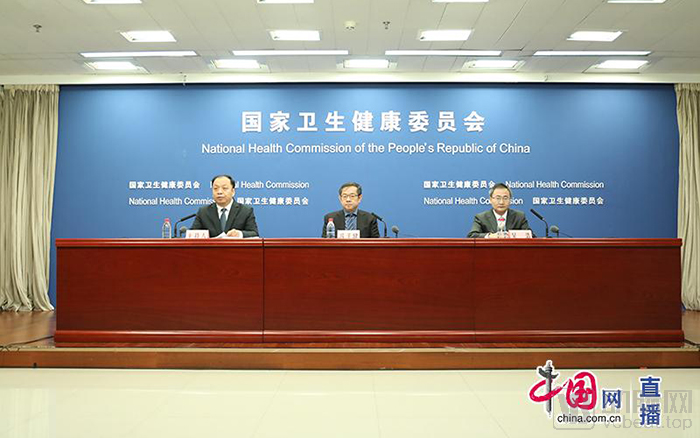
On the afternoon of January 29, the National Health Commission held a press conference, inviting Feng Zijian, Deputy Director of the Chinese Center for Disease Control and Prevention, and Wu Hao, Director of the Fangzhuang Community Health Service Center in Beijing, to provide comprehensive recommendations on public guidance for epidemic prevention. These recommendations included precautions for the peak return travel period after the Spring Festival, protective measures for the elderly and children, and guidelines for proper mask usage.
Travel Precautions for the Return Trip After the Spring Festival
Reporter's question:There is a risk of epidemic spread during the return travel after the Spring Festival holiday. Are there any measures to address this situation? For individuals returning to their place of residence from other areas without a history of contact with Hubei or Wuhan, is quarantine and observation required if they do not have fever? Could you also outline any other precautions that should be taken?
Feng Zijian, Deputy Director of the Chinese Center for Disease Control and Prevention:To my knowledge, relevant authorities and professional institutions across various regions have undertaken extensive preparatory work. The National Health Commission recently issued a series of notices and technical guidelines to strengthen guidance on prevention and control efforts. The Chinese Center for Disease Control and Prevention has developed guidelines for public prevention, outlining six common scenarios that individuals may encounter and providing recommendations for personal epidemic prevention.
We recommend that individuals monitor their health status twice daily for 14 consecutive days, starting from the time they leave an epidemic-affected area. Community health workers may contact these returning individuals to assess any changes in their health conditions. Where feasible, individuals should reside alone or in a well-ventilated single room, minimize close contact with family members, reduce outdoor activities, and especially avoid crowded public places. They should familiarize themselves with the locations of fever clinics in their return destination and maintain communication with their family doctors and community physicians. If suspicious symptoms such as fever, sore throat, or chest tightness occur, they should seek medical attention promptly based on the severity of their condition.
“Our common enemy is the virus, not the people of Wuhan”
Reporter's Question:“We learned from the previous press conference in Wuhan that 5 million people left the city before the Spring Festival. Director Wu Hao, has this situation occurred in your community? If so, what measures have you taken?”
Wu Hao, Director of the Fangzhuang Community Health Service Center in Beijing:It is important to clarify that our common enemy is the disease and the virus, not the people of Wuhan. Therefore, under the current severe epidemic situation, it is crucial for everyone to respond rationally in controlling potential sources of infection. Recently, there have indeed been members of the public, including those traveling from Hubei Province to Fangzhuang, with the majority being from Wuhan, although individuals from other cities are also present. The Fangzhuang Sub-district Office has coordinated staff from various neighborhood committees to register and manage these individuals, informing them of the specific requirements and protocols for voluntarily complying with a 14-day home quarantine, which aligns with what Mr. Feng Zijian mentioned earlier.
Meanwhile, Beijing’s neighborhood committees implemented a grid-based management system. Under the coordinated leadership of the district party committee and district government, this approach involved assigning one staff member from district-level government agencies, one from sub-district or township offices, and professional technical personnel from community health service centers to oversee each designated area. This grid-based management model has played a significant role.
During the isolation period, communities under grid-based management provided coordinated support. Neighborhood committees primarily assisted residents with essential daily needs, alleviating their concerns about basic livelihood. Meanwhile, professional technical staff at community health service centers, under the unified deployment of the Fengtai District Health Commission, fully fulfilled the role of family doctors as gatekeepers of residents’ health. In Fengtai District, as in many other areas of Beijing, family doctor teams were paired one-on-one with neighborhood committees. The contact numbers of family doctor team members were publicly disclosed within their respective jurisdictions to encourage residents to sign up with family doctors and proactively engage in health management.
In the new era, we must fully leverage new technologies to enhance control measures and implement scientific prevention and containment strategies. We have made extensive use of information technology to conduct health consultations and follow-ups, provide guidance on home-based monitoring and protective knowledge, and address psychological anxiety through online counseling. Family doctors carry out comprehensive, tiered, and classified screening and triage for patients with fever and suspected cases, reducing unnecessary hospital visits by residents and minimizing the risk of cross-infection, thereby enabling technology to support epidemic prevention and control. This approach ensures that individuals returning to Beijing can promptly contact their assigned family doctors within their jurisdiction to receive professional guidance on home-based health monitoring, disinfection, and isolation. In case of any abnormalities, they can timely consult their family doctors and also seek advice from designated specialist physicians. Generally, each community health center has established a 24-hour hotline to address questions related to epidemic prevention and control. According to the data I obtained, taking Fengtai District in Beijing as an example, during this period, we pushed health education information to over 10,000 recipients via mobile terminals used by family doctors, while also sending out more than 2,000 bulk text messages, achieving significant results.
Meanwhile, we have clearly informed the public that they can seek timely consultation if they experience any problems or symptoms. Under professional guidance, family doctors will provide appropriate advice on medical care. These measures help them fully recognize that isolation and home observation are essential components of disease prevention and control, while also ensuring they receive support and compassion from local governments and healthcare institutions within their jurisdictions.
Overall, we believe that quarantine and observation do not mean isolating communication; our goal is to contain the epidemic, but not to isolate genuine human connection.
Reporter's Question:Should communities implement measures to restrict personnel movement?
Wu Hao, Director of Beijing Fangzhuang Community Health Service Center:As previously stated, isolating the epidemic does not mean isolating genuine human connection; similarly, appropriate restrictions on transportation follow the same principle. To better contain the outbreak, it is essential to appropriately control population flow when necessary, which plays a crucial role in preventing the spread of the disease.
Community Health Service Institutions’ Online Training on Epidemic Prevention and Control Techniques
Reporter's question:Some reports indicate that community health workers in certain areas have proceeded with epidemic prevention and control tasks without adequate training. What is the current status of community-level training efforts?
Wu Hao, Director of the Fangzhuang Community Health Service Center in Beijing:For our community health service institution, the superior Health Commission promptly distributed various guidance documents on novel coronavirus pneumonia to all staff, including diagnosis and treatment protocols, contingency plans, technical guidelines for control, and prevention and control schemes. Meanwhile, the Science and Education Division of the Municipal Health Commission and the District Health Commission provided timely supervision to ensure we engaged in learning activities. We adopted an online learning approach primarily to avoid personnel congregation.
How effective is the learning outcome? We have launched a dedicated online video module to enable healthcare professionals to schedule their studies flexibly and promptly, ensuring a comprehensive training program. The District Health Commission has specially assembled an inspection team to conduct unannounced spot checks, assessing whether healthcare personnel’s knowledge and technical skills meet the required standards. This effort is not limited to the health sector; a few days ago, at a meeting convened by the Secretary of the District Committee of the Communist Party of China, repeated emphasis was placed on conveying instructions from higher-level authorities to strengthen self-protection and technical training, thereby preventing infection among healthcare workers. This is also our mission: protecting ourselves constitutes significant support in the fight against the epidemic.
At the same time, this training is not only for our own staff but also for cadres of neighborhood committees and prevention and control personnel, thereby establishing a pattern of mass prevention and mass treatment. Of course, we need to continuously improve our work methods in practice and enhance our prevention and control capabilities through problem-solving.
Reporter's question:Some social media reports indicate that in several locations, members of the public have been less than cooperative with epidemic prevention and control efforts. At this critical juncture in pandemic control, what kind of support and cooperation do community healthcare workers and staff need?
Wu Hao, Director of the Fangzhuang Community Health Service Center in Beijing:In the early stages, public panic was still prevalent. As the epidemic progressed and news media coverage intensified, the general public has developed a heightened sense of crisis. A consensus should be reached that early detection, early reporting, early isolation, early diagnosis, and early treatment constitute the optimal and most effective approach. However, it remains essential to mobilize all societal resources to implement grid-based and comprehensive carpet-style management, thereby achieving integrated prevention and control. This is crucial to prevent the importation, spread, and exportation of the epidemic, ultimately curbing the transmission of the disease.
We would also like to share our experience. Under the overall deployment of the District Committee and the District People’s Government, we established joint prevention and control measures at the local level. Through multiple channels, we disseminated knowledge and preventive measures regarding novel coronavirus pneumonia to residents within our jurisdiction. The aim was to help residents recognize that temporary lifestyle restrictions are voluntary and proactive steps in epidemic prevention and control, undertaken to ensure better health and quality of life for themselves and their families in the future, and reflecting a sense of responsibility toward oneself, one’s family, and society. Novel coronavirus pneumonia is managed under Class A infectious disease protocols; only by strictly adhering to the Law on the Prevention and Treatment of Infectious Diseases can mass prevention and control be effectively implemented, thereby curbing the spread and transmission of the epidemic.
Here, we also strongly appeal to our close-knit community residents. As a primary-level community health service institution, we bear the responsibility of serving as a frontline node in epidemic prevention and control, while simultaneously ensuring residents’ access to basic medical care and essential public health services. The workload is substantial, and the responsibilities are significant. Therefore, we sincerely hope for residents’ understanding and proactive cooperation, working together with us to establish a system of mass prevention and control, so that we may overcome the epidemic at an early date. With the widespread dissemination of our health education efforts, many residents in Fangzhuang have taken the initiative to cooperate. For instance, a few days ago, a resident who had returned from Hubei Province developed a fever and proactively contacted us by phone. We guided him to seek medical attention at Beijing Hospital. After one day of observation and isolation, COVID-19 was ruled out, and his family expressed their gratitude.
Therefore, we hope that more members of the public will raise their awareness, proactively report cases, voluntarily isolate themselves, and actively participate in our prevention and control efforts.
Mask-wearing can be determined by the level of infection risk.
Reporter's question:An increasing number of people are wearing masks. Is there a trend toward universal mask-wearing, and is this measure necessary? Will the surge in mask usage lead to supply shortages for frontline workers?
Feng Zijian, Deputy Director of the Chinese Center for Disease Control and Prevention:Personal mask-wearing for prevention should primarily be determined based on an individual’s risk of exposure to the disease. It is well known that healthcare workers who directly care for and serve patients are at the highest risk. They must strictly adhere to hospital infection prevention and control requirements by wearing masks or other personal protective equipment (PPE) and devices that meet biosafety levels and infection control standards. Other individuals should also make informed choices; wearing a mask is recommended when visiting public places or using public transportation.
If you are alone, driving by yourself, or taking a walk without close contact with others, you may choose not to wear a mask, as the risk of infection in such situations is very low. Since this disease is transmitted through close contact and respiratory droplets, wearing a mask is unnecessary in the absence of such exposure.
In another scenario, individuals presenting with fever, respiratory symptoms, or acute upper respiratory tract infection—whether self-isolating at home or seeking medical care at a hospital and needing to use public transportation—should wear a face mask.
"It is not necessary to wear masks in every setting or situation; everyone should exercise their own risk assessment."
The public does not need to change their masks constantly. In contrast, healthcare workers are subject to strict regulations regarding mask replacement intervals. Masks must be replaced after each patient care interaction involving contact, and upon exiting medical red zones or contaminated areas. A new mask is required before re-entry. These protocols, including specified maximum durations for mask wear, are strictly mandated.
Reporter's Question:Are the elderly and children relatively susceptible populations? How should we respond?
Feng Zijian, Deputy Director of the Chinese Center for Disease Control and Prevention:Since the outbreak, experts and specialized institutions from various sectors have been urgently studying the fundamental characteristics of the disease, forming expert consensus, and developing various protocols for diagnosis, treatment, prevention, and control. Current epidemic surveillance data have indeed identified some cases among children and infants; however, these cases generally present with mild clinical symptoms and disease severity. Severe cases remain predominantly among middle-aged and elderly individuals.
Currently, middle-aged and older adults, particularly the elderly with chronic underlying conditions, face a relatively higher risk of developing severe illness. We recommend strengthening protection for children and the elderly during epidemic prevention and control, especially in areas with high transmission intensity. Elderly individuals should minimize visits to public places and reduce the use of public transportation. When travel is necessary, they should ensure proper personal protective measures, such as wearing masks. Within households, children’s outings should be limited, particularly to crowded venues. If any household member exhibits symptoms of an upper respiratory tract infection, appropriate precautions should be taken to protect children and young toddlers.
Source: Official Website of the National Health Commission
For more updates on the novel coronavirus outbreak, scan the QR code to view the special report.