

iGenesis Bio's Fully Automated qPCR System Enables Rapid and Accurate Detection of SARS-CoV-2

Igenesis
Molecular Diagnostics Technology Developer
Identifying the pathogen is a prerequisite for developing diagnostic reagents required for clinical and basic testing, while in vitro diagnostics (IVD) can accelerate the determination of the relationship between novel pathogens and diseases. During outbreaks of infectious diseases, physicians can use IVD instruments to perform various tests conveniently and rapidly at the patient’s bedside in fever clinics, infectious disease wards, and isolation wards, obtaining results quickly.
Novel coronavirus (nCoV) is a new virus previously undetected in humans; the novel virus identified in Wuhan has been named 2019-nCoV. The World Health Organization’s “WHO Guidelines on 2019 Novel Coronavirus” recommend RT-PCR as the preferred method for detecting the novel coronavirus (WHO standard nomenclature: 2019-nCoV), and suggest serological testing for diagnosis only when RT-PCR is unavailable.
RT-PCR nucleic acid testing is currently the primary method for diagnosing novel coronavirus, playing a crucial role on the front lines of epidemic prevention and control. However, this method imposes stringent requirements on laboratories, supporting equipment, and technical personnel. Laboratories conducting nucleic acid testing must meet corresponding biosafety containment levels, yet the number of facilities with such high-standard experimental conditions remains very limited. Consequently, enabling RT-PCR testing to be performed in any laboratory has emerged as a new strategic focus for some companies. This is precisely the area where Igenesis has been deeply engaged.
Igenesis was established in 2015 at the Shanghai International Medical Zone. With a research and development center located on Guangzhou International Bio Island, the company boasts an R&D and production area of 3,000 square meters. Igenesis is a high-tech enterprise dedicated to molecular diagnostic technologies.
Igenesis has successfully developed a series of fully automated biological analyzers, reagents, and smart reagent cartridges applicable to fields such as microbial detection, personalized pharmacogenomic testing, cancer screening, forensic evidence analysis, and food safety. On May 16, 2018, Igenesis officially signed an agreement for a major project under China’s 13th Five-Year Plan, with its Galaxy Nano all-in-one automated qPCR system and IGS TB/RIF Lite reagent products selected for evaluation.
Igenesis’s self-developed fully automated qPCR all-in-one system is a leading point-of-care molecular diagnostic platform in China. For nucleic acid testing of the novel coronavirus (2019-nCoV), traditional PCR requires three separate rooms, whereas Igenesis’s solution completes the entire process using just one fully automated qPCR all-in-one instrument paired with a smart cartridge pre-loaded with 2019-nCoV nucleic acid detection reagents.
Physicians can place the fully automated qPCR all-in-one instrument and the smart cartridge entirely within a biosafety cabinet, performing procedures such as sample uncapping, loading, and detection within the same cabinet. The complete system, comprising both instruments and consumables, is compact and lightweight, suitable for use in outpatient clinics as well as for mobile testing in vehicles.
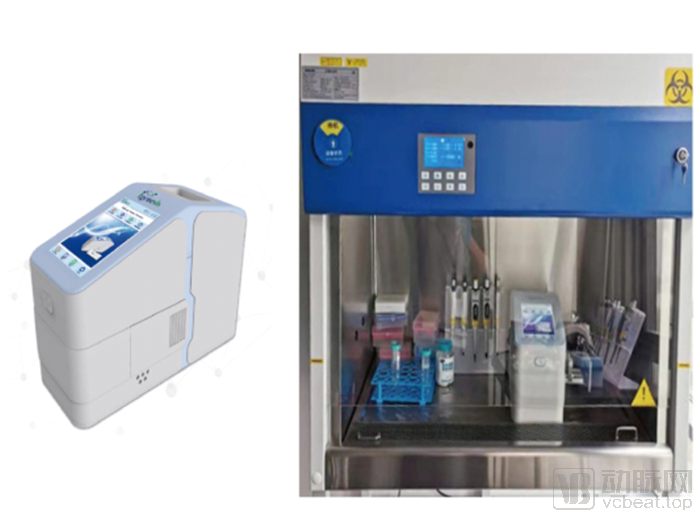
Fully Enclosed, Fully Automated Fluorescent PCR All-in-One Instrument (Image Provided by the Company)
This system is particularly well-suited for the detection of samples containing potentially infectious pathogens. The system utilizes a fully sealed, intelligent cartridge pre-loaded with reagents, wherein viral lysis, nucleic acid purification, qPCR amplification, and detection are all performed within the cartridge.
Compared with nucleic acid extraction workstations, Igenesis’s fully automated qPCR all-in-one system prevents pathogen contamination of the laboratory environment while adding an extra barrier to ensure operator safety. The fully enclosed process of viral lysis and nucleic acid extraction and purification ensures that nucleic acids do not contaminate the laboratory environment, thereby eliminating the possibility of false-positive results. The fully enclosed liquid handling and qPCR amplification detection processes prevent aerosol leakage of amplification products, thus avoiding false positives.
The amplification primers and probes in the novel coronavirus detection kit supplied with the instrument adopt sequences recommended by the WHO, enabling simultaneous detection of three conserved regions to prevent false negatives due to potential mutations. The enzyme and buffer system utilizes a well-established RNA virus detection framework, while magnetic bead-based nucleic acid extraction enhances detection accuracy. System quality control employs an RNA pseudovirus as a full-process internal control to comprehensively monitor nucleic acid extraction and qPCR amplification, thereby avoiding false-negative results.
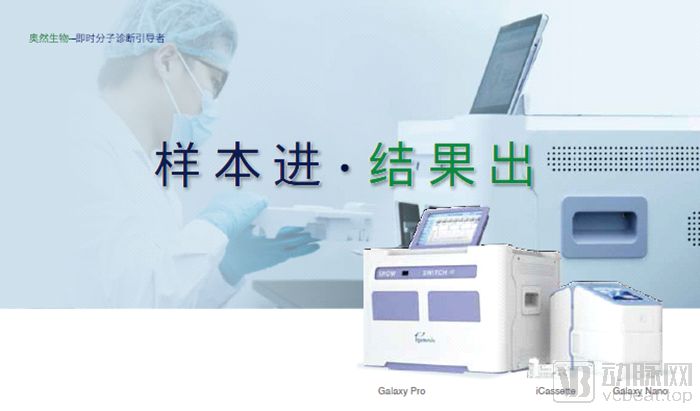
Fully Enclosed, Fully Automated Fluorescent PCR All-in-One System (Image Provided by the Company)
Furthermore, within the 90-minute testing duration, physicians need only spend 2 minutes on sample loading before awaiting the results. The straightforward procedure is suitable for any laboratory personnel, minimizing workload and preventing operational errors caused by fatigue during overtime work.
Igenesis’s fully automated qPCR all-in-one instrument and smart box platform is a multifunctional system. Its unique seven-color optical system can detect fluorescent probes for up to six different targets (excluding internal controls), offering greater possibilities for future research and disease prevention and control efforts.
In addition to SARS-CoV-2, Igenesis has developed a variety of assay reagents for the disease control and prevention system, meeting the needs for rapid and multiplex detection of various respiratory, intestinal, and vector-borne diseases. Notably, Igenesis’s independently developed Galaxy Nano and Orion have obtained EU CE certification, and Universal Nano has received registration as a Class III medical device.
Igenesis’s ability to achieve such a high standard is closely tied to the capabilities and experience of its core team.
Yu Jiachang, the Chairman, hails from the aerospace industry before transitioning to the internet and communications sector, having previously worked at 3COM, the company founded by the “Father of Ethernet.” In 2001, an anthrax infection outbreak occurred in the United States. During this period, Cepheid, a global leader in the molecular diagnostics industry, rapidly detected the bacterium using real-time fluorescence detectors based on qPCR technology for microbial detection.
This incident profoundly impacted Yu Jiachang and served as the catalyst for his entry into the biotechnology sector. Two weeks later, he joined Cepheid to participate in the research and development of the GeneXpert system, the world’s first fully automated instrument for nucleic acid extraction, amplification, and detection using microfluidics technology. He was later appointed as the overall person in charge, stepping up to address critical quality issues that arose with Cepheid’s products.
“My previous work experience has continued to benefit me greatly,” Yu Jiachang stated frankly, noting that the system automation work he was responsible for before changing careers shared remarkable similarities with biomedical equipment systems. In fact, Igenesis is the second biotechnology enterprise founded by Yu Jiachang. The core technical team at Igenesis consists of “old friends” who have worked alongside Yu for many years, covering six major disciplines—optics, electronics, mechanics, software, and biology—with a high degree of professional complementarity.
Currently, Igenesis has filed 64 patent applications for its developed products, with over 41 patents granted, including 8 invention patents. The company has also obtained 7 software copyrights. In Yu Jiachang’s view, intellectual property rights are a reflection of a company’s intrinsic value. Igenesis is in a phase of rapid growth, with R&D investment accounting for more than 70% of its expenditures, and the company plans to further increase its investment in technological research and development in the future.
With a professional team and high-quality products, the company is highly favored by investment institutions. In November 2016, Igenesis secured over RMB 50 million in Series A financing from Shenzhen Bangqin Biotechnology. Exactly one year later, Igenesis introduced strategic investment of RMB 30 million from Kehua Bio-Engineering, a listed company in the IVD industry, to support technological research and development.
2020 marked the concluding year of Igenesis’s major projects under China’s 13th Five-Year Plan. With the acquisition of its first Class III medical device registration certificate, Igenesis’s independently developed Universal Nano nucleic acid amplification assay has been officially deployed in hospitals. In this year, Igenesis will sequentially launch new technologies and products, including multiplex influenza detection kits, and accelerate the research and development of automated platforms for second- and third-generation test library preparation.