

How Huoshenshan Hospital Was Built in 10 Days: A 1,000-Bed Facility to Combat the Pandemic
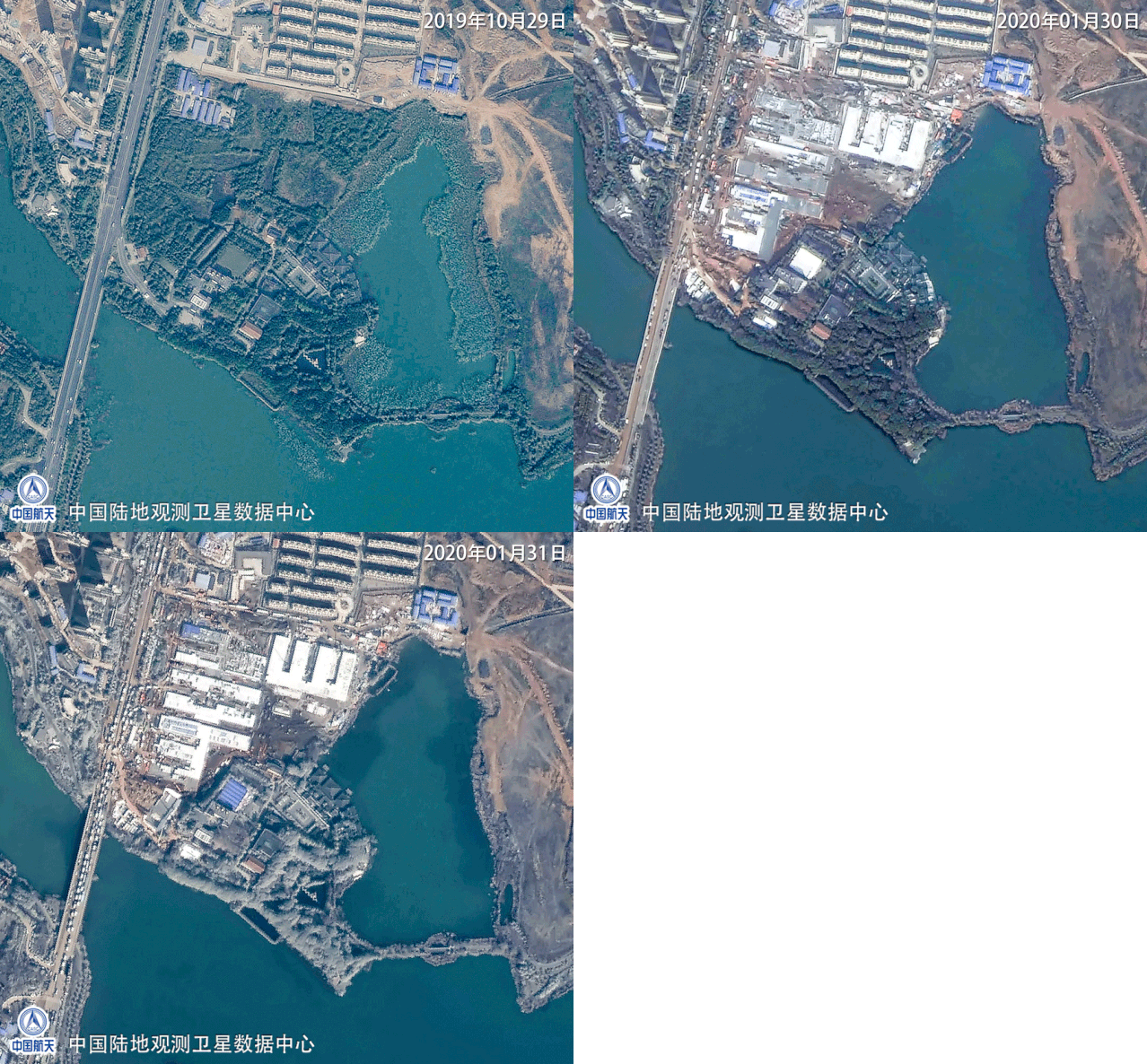
Satellite Imagery of Huoshenshan HospitalImage Source: China Centre for Resources Satellite Data and Application
In just 10 days, a hospital with a capacity of 1,000 beds was officially completed. This marks another “battle” in the ongoing race against time.
On February 2, the Wuhan Huoshenshan Hospital was completed. With a total floor area of 33,900 square meters, the hospital, modeled after Beijing’s Xiaotangshan Hospital built during the 2003 SARS outbreak, officially began admitting patients with novel coronavirus-infected pneumonia on this day. On the morning of February 2, a handover ceremony was held at Wuhan Huoshenshan Hospital. Zhou Xianwang, Mayor of Wuhan, and Bai Zhongbin, Deputy Commander of the Joint Logistics Support Force, signed the handover documents at the hospital, marking the formal transfer of Huoshenshan Hospital to medical personnel of the People’s Liberation Army.
The other Leishenshan Hospital has a total floor area of 75,000 square meters and will have 1,500 beds. It is scheduled to be delivered and put into use on the evening of February 5, and will officially begin admitting patients on February 6.
China Speed at Huoshenshan Hospital
A Review of the Huoshenshan Hospital Project
January 23: Task Assignment
To strengthen the treatment of patients with novel coronavirus-infected pneumonia, the Wuhan Municipal Command Center for Novel Coronavirus Pneumonia Prevention and Control decided to build a specialized hospital next to Zhiyin Lake in Caidian District, Wuhan, following the model of Beijing’s Xiaotangshan Hospital. The facility, named Huoshenshan Hospital, was constructed using prefabricated modular units, with a capacity of 1,000 beds, and was completed and put into operation before February 3.
The construction land area of Wuhan Huoshenshan Hospital is approximately 50,000 square meters, with a total floor area of 33,940 square meters. The entire facility is designed in the format of a field hospital, including functional areas such as an admission zone, negative-pressure ward building, ICU, medical technology department, network server room, central supply warehouse, temporary garbage storage room, and ambulance decontamination room. The hospital has a total of 1,000 beds.
Seventeen years ago, Xiaotangshan Hospital was built in just seven days to combat the SARS outbreak. The hospital centrally treated 680 confirmed SARS patients, while its 1,383 medical staff members recorded zero infections, earning it the title of “a miracle in the history of global medicine.” Today, the completion of Wuhan’s Huoshenshan and Leishenshan Hospitals will be a crucial component in winning the battle against this epidemic.
Four entities participated in the construction of Huoshenshan Hospital, led by China Construction Third Engineering Bureau, with participation from three other enterprises: Wuhan Construction Engineering Group, Wuhan Municipal Engineering Group, and Hanyang Municipal Engineering Group. After receiving the assignment on the afternoon of the 23rd, the relevant organizations rapidly mobilized thousands of workers and more than 300 units of construction machinery and equipment in preparation for site entry.
January 24: Land Leveling
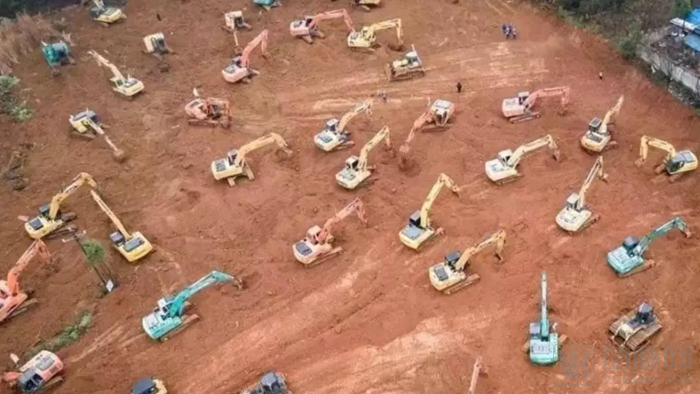
Land Leveling Image Source: People's Daily
New Year's Eve, Day 1. Starting from the 24th, at the construction site of Wuhan Huoshenshan Hospital—a facility with 1,000 beds located at the former site of the Wuhan Staff Sanatorium on Zhiyin Lake Avenue in Caidian District—lights burned brightly as more than 1,000 construction workers and various types of machinery operated at full capacity.
As of the evening of the 24th, the project had completed site leveling over an area of 50,000 square meters, equivalent to seven football fields, and internally transferred 150,000 cubic meters of earthwork, sufficient to fill 57 swimming pools. Cut-and-fill operations have been largely completed, with foundational base work partially finished. Upon substantial completion of site grading, rebar and piping materials began arriving at the site in succession.
January 25: The hospital officially commenced construction.
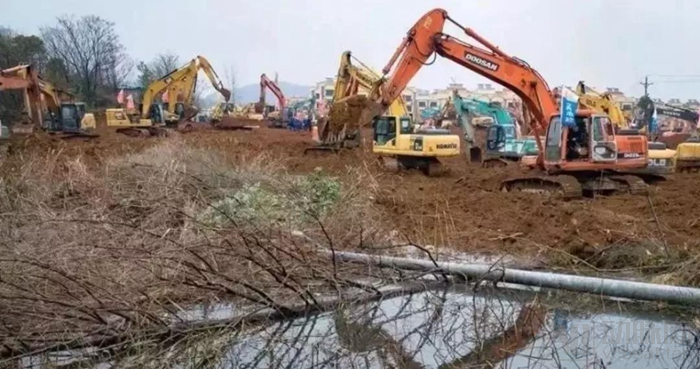
Official Construction Begins. Image Source: People's Daily
Day 2, the First Day of the Lunar New Year. Hundreds of large trucks arrived in a steady stream, transporting construction materials such as sand, gravel, and pipes. Following the completion of site leveling and earthwork backfilling on New Year’s Eve, the focus shifted to pipeline network construction. Given the health protection requirements associated with hospital projects, it is essential to ensure that operations do not adversely affect the surrounding population. Therefore, the installation of a complex environmental protection pipeline system constitutes a critical component of the overall project. Geotextiles and waterproofing membranes have already been laid in certain areas of the site.
Although Wuhan Huoshenshan Hospital is located by Zhiyin Lake, the lake is not a source of drinking water for Wuhan. Meanwhile, the construction contractor will strictly adhere to discharge standards during construction; wastewater, rainwater, and medical waste from the hospital will be collected and treated separately, ensuring that none are discharged into the lake.
January 26: Model Room Completed
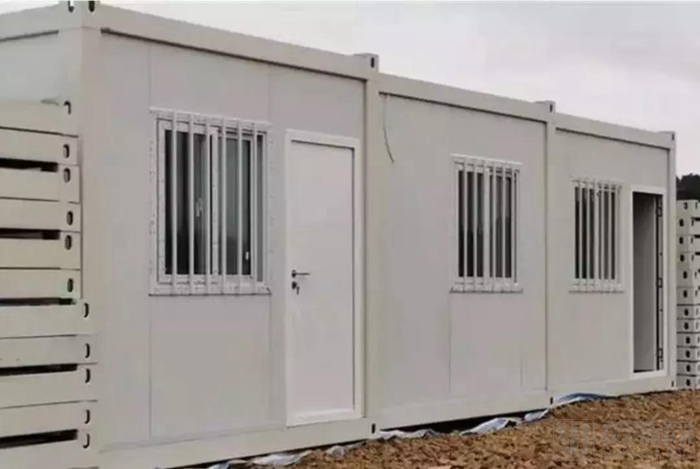
First Prefabricated Temporary Housing Unit Completed. Image Source: People's Daily
Day 2 of the Lunar New Year, Day 3. Land leveling at Huoshenshan Hospital has been basically completed; sand bedding with a thickness of 20 cm is being laid, in coordinated construction with the pre-installation of pipelines. Sewage treatment equipment and supplies mobilized from across China have arrived on site, and construction of the sewage treatment section has commenced ahead of schedule.
Installation of 30,000 square meters of HDPE impermeable membrane is underway, with full-scale construction in progress to clad the Huoshenshan Hospital site in a “protective barrier” that prevents sewage from infiltrating the groundwater. Trenching for underground pipeline networks has commenced, and materials for container-type prefabricated houses are arriving in succession. Meanwhile, the first prefabricated modular house has been completed.
The renovated model room is a negative-pressure isolation ward, a prerequisite emphasized by the WHO (World Health Organization) for the treatment of SARS patients. A so-called negative-pressure ward refers to a room where the air pressure inside is lower than that outside, achieved through specialized equipment. This setup allows fresh air from outside to flow into the ward, while air contaminated by patients inside does not leak out; instead, it is promptly discharged through dedicated ducts to designated locations. This significantly reduces the risk of infection among healthcare workers, making such wards most suitable for treating patients with respiratory infectious diseases similar to SARS.
In addition, the model room is also equipped with specialized equipment for bathroom wastewater treatment, prevention of viral leakage, and food delivery to patients.
January 27: Lifting and installation of the first batch of modular container houses commenced
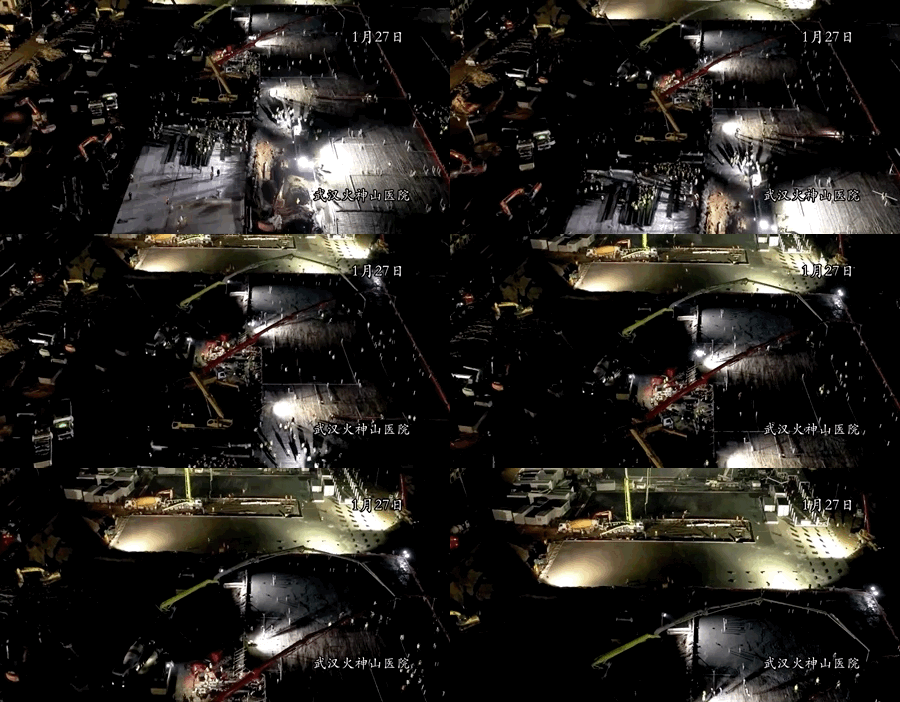
Day 4 of Construction Image Source: People's Daily
Day 3 of the Lunar New Year, Day 4. Site leveling and backfilling with crushed stone and yellow sand have been fully completed.
At 11:00 a.m., the lifting and installation of the first batch of prefabricated container houses at Wuhan Caidian Huoshenshan Hospital commenced. By the evening of the same day, site leveling and backfilling with crushed stone and yellow sand had been fully completed, while excavation of utility trenches and concrete pouring for the foundation of the prefabricated houses in the North Zone were still underway. The installation of HDPE (high-density polyethylene) geomembranes for anti-seepage purposes was in progress, with more than half of the required area already laid.
To meet the treatment needs for novel coronavirus pneumonia, on-site modifications were made to the prefabricated container houses.
January 28: Steel structure erection for the double-story ward area
Day 4 of the Lunar New Year, Day 5 overall. The steel structure of the two-story ward building has taken shape. In the morning, a large batch of containerized prefabricated housing materials was hoisted into place on-site. The steel framework for one two-story ward building has been erected, and some semi-finished floor panels have also been installed. Construction is underway on a medical corridor to connect four two-story ward buildings; one section has already been assembled, with the goal of completing two sections by the end of the day.
To meet the need for rapid construction, prefabricated components are used in an assembly-style construction process. The units come with integrated suspended ceilings, electrical wiring, and cables, as well as PVC flooring, eliminating the need for additional decoration; the flooring is simply connected using cover plates. Each room features four corner columns for structural support, which workers swiftly secure to the base plate with six bolts. The next steps involve installing partition walls, doors, and windows. It is estimated that four two-story ward buildings will be constructed within three days.
Meanwhile, to prevent moisture and water ingress, workers elevated the wards above ground using square steel supports. To ensure adequate natural lighting, a certain distance is maintained between each ward building, with the intervening spaces landscaped into gardens.
January 29: Full-scale deployment of prefabricated housing construction
Day 6, the Fifth Day of the Lunar New Year. The construction of prefabricated hospital buildings has been fully rolled out, with approximately 400 units assembled to date. The framework structures for patient wards are being erected progressively, and construction of single-story ward frameworks is also being accelerated. Nearly 700 management personnel, over 4,000 workers, and close to 1,000 pieces of large-scale mechanical equipment and transport vehicles are working on-site in 24-hour rotating shifts to support the hospital construction effort.
As of 20:00 on the same day, site leveling and backfilling were fully completed, concrete pouring for the prefabricated house foundations was approximately 90% complete, and the installation of frameworks for more than 300 container-type prefabricated houses had been finished. Meanwhile, materials for water supply, drainage, electrical systems, HVAC, and mechanical and electrical equipment were fully in place, with related works proceeding concurrently.
January 30: HDPE membrane installation fully completed
Day 7, the sixth day of the Lunar New Year. As of 12:00 noon on that day, site leveling, sand and gravel backfilling, and HDPE geomembrane installation for the Wuhan Huoshenshan Hospital project were fully completed, with 95% of the foundation concrete pouring finished. The delivery, modification, and hoisting of containerized prefabricated houses were rapidly advancing. Excavation, laying, and backfilling of pipeline trenches reached 50% completion. Equipment hoisting in the sewage treatment room was completed, with 60% of pipeline installation finished. Installation of the HDPE geomembrane for the retention pond had commenced.
The project’s largest integrated rainwater and sewage pumping station has been hoisted into place, marking the installation of the emergency hospital’s drainage “aorta.”
January 31: 90% of container consolidation has been completed.
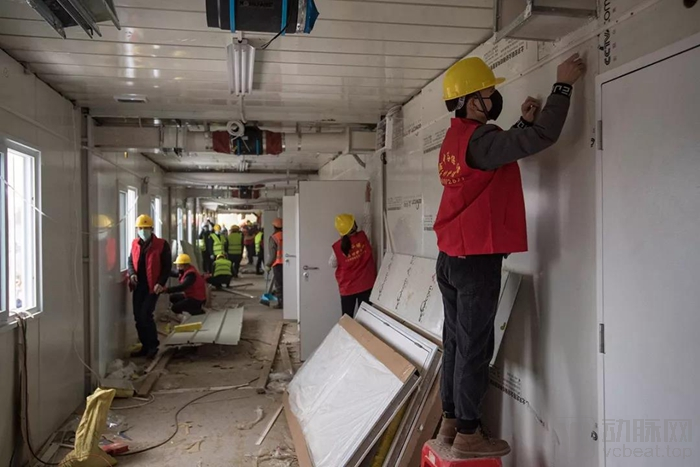
Workers are carrying out interior installation. Image source: The Paper
The seventh day of the Lunar New Year, Day 8. On January 31, Hubei Province held a press conference on the prevention and control of the novel coronavirus pneumonia outbreak, briefing on the latest developments in the province’s epidemic situation and control efforts. The conference also provided updates on the construction of Huoshenshan Hospital and Leishenshan Hospital, which have drawn widespread public attention.
As of 12:00 noon on that day, site leveling, sand and gravel backfilling, and HDPE membrane installation in the prefabricated housing area of the Huoshenshan Hospital project, constructed by China Construction Third Engineering Bureau, were fully completed; foundation concrete pouring reached 100% completion. A total of 1,650 container units had been delivered to the site (with 1,400 assembled on-site and 250 assembled off-site), representing approximately 90% completion. Skeleton installation for prefabricated buildings (including the medical technology building and ICU wards) covered 3,000 square meters, achieving about 70% completion. Excavation, laying, and backfilling of pipeline trenches were 70% complete. Equipment hoisting in the sewage treatment room was finished, with pipe installation at 80% completion. Concrete pouring for the base slab of the retention basin was completed.
At 23:49 on January 31, after five days and nights of intensive work by construction personnel from State Grid Wuhan Power Supply Company, Huoshenshan Hospital—the first hospital in Wuhan, Hubei Province, built following the “Xiaotangshan Model”—was fully powered up. The supporting power infrastructure project for Huoshenshan Hospital in Caidian District, Wuhan, adopts a dual-power-supply configuration, with four 10-kV ring main units and 24 box-type transformers installed, providing a total capacity of 14,600 kVA, and laying 8 kilometers of power cables.
Since receiving the task from the Epidemic Prevention and Control Command on January 23 to construct the power infrastructure for Huoshenshan Hospital, State Grid Wuhan Caidian District Power Supply Company responded swiftly. Leading a team of over 200 construction workers, they braved heavy rain and muddy conditions to dismantle the main power supply lines within two hours, facilitating the entry of large-scale machinery. They completed the relocation of two 10-kV lines overnight. Meanwhile, in accordance with the preliminary load requirements provided by the constructor, the company proactively allocated materials and vehicles, formulated an overall preliminary design plan for power supply construction, adopted a dual-power-supply configuration, and installed box-type transformers with a total capacity of 14,600 kVA. By January 31, the company had completed the positioning of all 24 box-type transformers and cable laying, and commenced power delivery.
February 1: Entry into the phase of medical ancillary equipment installation
The 8th Day of the Lunar New Year, Day 9. All basic site construction has been completed. A total of 1,650 container units have been installed, with over 90% assembled on-site. The structural frameworks for the prefabricated modular buildings (Medical Technology Building and ICU Wards) have been installed.
On the afternoon of February 1, the project fully entered the phase of installing medical support facilities. Key progress includes: installation of 1,200 units of utilities (water, electricity, HVAC) and oxygen supply systems, reaching 70% completion; excavation, laying, and backfilling of pipeline trenches at 95% completion; hoisting of equipment at the sewage treatment station completed; pipeline installation at 95% completion; concrete pouring for the base slab of the rainwater retention tank completed; overall equipment installation at 60% completion; foundation construction for septic tanks completed; and installation of integrated rainwater lift pumps completed. Interior decoration support works and outdoor medical facility projects are now in full swing.
February 2: Completion and Delivery
Day 9 of the Lunar New Year, Day 10. Construction of Huoshenshan Hospital was completed. Outside the patient room is a three-square-meter buffer zone equipped with a sink; ventilation ducts and an air conditioner are installed above the door, and a filing cabinet is placed in the corner. Inside the patient room, two beds are arranged side by side, with ECG monitors and infusion pumps already in place beside each bed.
The room features a private filing cabinet and dedicated pass-through windows for the delivery of medications and meals. A television is mounted directly opposite the hospital bed, and the room is equipped with an air purifier and an air conditioner. The patient room includes an en-suite bathroom with an electric water heater for showering.
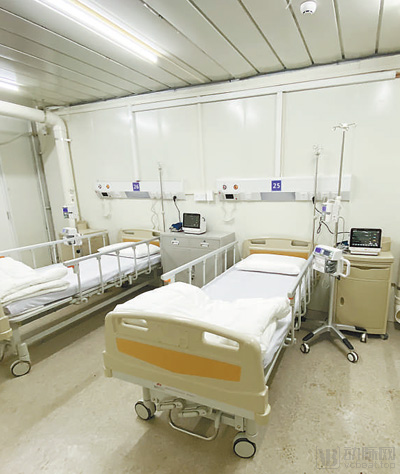
A Corner of the Ward Image Source: People's Daily Online
On the morning of the 2nd, Wuhan Huoshenshan Hospital held a handover ceremony. Zhou Xianwang, Mayor of Wuhan, and Deputy Commander Bai Zhongbin of the Joint Logistics Support Force signed the handover documents at Wuhan Huoshenshan Hospital, marking the official delivery of the hospital to medical personnel of the People's Liberation Army.
On the day of the handover, Senior Colonel Zhang Sibing, the hospital president, made a public appearance. Public records indicate that Mr. Zhang, born in 1969, has previously served as Director of the Medical Affairs Division at the Chinese PLA General Hospital, Director of the Medical Services Department at the Hainan Branch of the Chinese PLA General Hospital, Deputy Director and later Director of the Medical Affairs Department at the Chinese PLA General Hospital, and Head of the Health Service Support Department at the Chinese PLA General Hospital.
Meanwhile, the military assembled a team of 1,400 medical personnel to assume medical treatment responsibilities at the Wuhan Huoshenshan Hospital, a specialized facility for novel coronavirus pneumonia, starting from February 3. The hospital primarily treats confirmed cases, with a capacity of 1,000 beds. It includes intensive care units, critical care wards, and general wards, along with auxiliary departments such as infection control, laboratory medicine, special diagnostics, and radiology.
The medical personnel deployed this time were drawn from various medical units across the entire military. Among them, 950 personnel were selected from hospitals under the Joint Logistics Support Force, while the 450 personnel who arrived earlier from the Army Medical University, Navy Medical University, and Air Force Medical University were integrated into a unified organizational structure. In addition, a joint expert panel comprising 15 specialists was formed by drawing experts from the Chinese PLA Center for Disease Control and Prevention and the Academy of Military Medical Sciences of the Academy of Military Sciences to provide on-site guidance for epidemic prevention and control efforts at the hospital.
It is reported that many medical staff members previously participated in the mission to combat SARS at Xiaotangshan Hospital, as well as in aid missions to Sierra Leone and Liberia to fight the Ebola epidemic, thereby possessing extensive experience in the treatment of infectious diseases.
In a 10-day, 10-night race against time, thousands of construction and installation workers worked around the clock since January 23. The facility was delivered on schedule on February 2, began admitting patients on February 3, and was then deployed to another “war.”
Deconstructing Key Project Stakeholders
Constructing a hospital of such scale within 10 days requires rapid execution of civil engineering works, including site leveling, backfilling, connection to external roads, relocation and modification of pipelines, and installation of outdoor utility networks. Following the civil engineering phase, subsequent works include decoration, plumbing and fire protection systems, power supply and distribution systems, lighting and monitoring, ventilation and air conditioning systems, telecommunications and low-voltage systems, medical gas engineering, cleanroom engineering, outdoor and municipal supporting facilities, and sewage treatment facilities.
Huoshenshan Hospital is a specialized infectious disease hospital. All ward medical equipment is configured to international standards, with all wards being negative-pressure rooms. The facility is equipped with more than ten systems, including medical gas systems, intelligent control systems, sewage treatment systems, disinfection systems, and waste incineration systems. Consequently, the air duct system within the wards is highly complex, with a ratio of air duct surface area to floor area reaching 1.5:1, which is more than three times that of ordinary hospitals.
"Amidst day-and-night intensive efforts, multiple construction stakeholders participated and collaborated closely, creating a world miracle in hospital construction."
Anti-seepage membrane
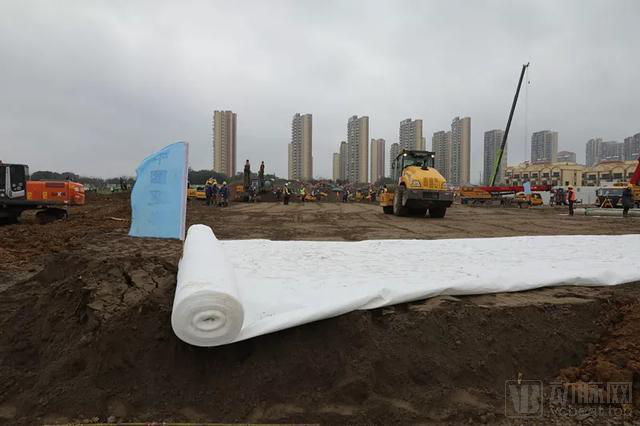
HDPE Anti-Seepage Membrane
HDPE impermeable membranes have been frequently mentioned in news reports. A certain environmental technology joint-stock company based in Haidian District, Beijing, undertook the anti-seepage construction project for the hospital. During the construction process, Gaoneng Environment followed landfill standards and used 30,000 square meters of HDPE impermeable membrane to outfit the 25,000-square-meter underground foundation of the Huoshenshan Hospital site with a “protective suit,” preventing even a single drop of sewage from seeping into the ground.
The structural design adopted for the Huoshenshan Hospital construction features a “two-geotextile-one-membrane” configuration, comprising two layers of geotextile and one layer of HDPE impermeable membrane. The HDPE impermeable membrane, also known as high-density polyethylene geomembrane, is an impermeable material characterized by excellent anti-seepage performance, resistance to acids and alkalis, corrosion resistance, high tensile strength, and long service life. HDPE impermeable membranes are suitable for engineering applications such as general seepage control, sewage pond lining, landfill lining, tailings treatment facility lining, and solid waste landfill lining. The use of HDPE impermeable membranes at Huoshenshan Hospital ensures that sewage and waste cannot infiltrate into the ground, while rainwater is fully collected and disinfected, thereby preventing pollution of the surrounding environment and lakes.
Negative Pressure Ventilation
Chongqing Hairun Energy-Saving Technology Co., Ltd. is a supplier and service provider of professional hospital ventilation systems and air safety quality solutions, offering one-stop services for the design and construction of complete ventilation system products and air safety quality solutions for negative-pressure wards, infectious disease wards, general wards, and medical utility rooms.
On January 23, Hairun Company received notification that it would participate in the construction of the negative-pressure ventilation system for the 1,000-bed negative-pressure isolation wards at Wuhan Huoshenshan Hospital. On January 24, Hairun Company further received a request from Central South Architectural Design Institute, the design entity for Wuhan Leishenshan Hospital, to provide the negative-pressure ventilation system for the hospital’s 1,500 beds.
Negative-pressure isolation rooms are hospital wards in which the air pressure is maintained lower than that of the surrounding areas. This is a critical requirement specifically emphasized by the World Health Organization (WHO) for the care of patients with severe acute respiratory syndrome (SARS), yet many hospitals struggle to meet this standard. “Conventional ventilation systems primarily provide cooling, allowing viruses to easily recirculate and be re-inhaled, thereby leading to cross-infection. In contrast, specialized isolation wards impose stringent requirements on air quality, including high standards for cleanliness, PM2.5 levels, humidity, and temperature. Even adjacent wards may have entirely different air-quality specifications. Hairun’s professional ventilation system offers sterilization, antibacterial protection, balanced temperature, humidity, and oxygen levels, as well as heat recovery for high energy efficiency, thereby effectively ensuring the safety and quality of air in patient wards,” stated a representative from Hairun Company.
Hairun Company rapidly engaged in the design work for two hospitals, urgently recalling employees to their posts and establishing task forces for temporary ward ventilation systems, ventilation retrofitting of temporary infectious disease wards, and after-sales service. In response to the demand for temporary isolation wards and temporary negative-pressure wards in Wuhan, the company developed relevant products, strengthened material allocation and inventory management, and implemented three-shift operations to accelerate production, ensuring a ready supply of these critical emergency materials.
On the morning of the 29th, a total of 2,500 negative-pressure ventilation systems were shipped from Chongqing to Wuhan.
Wastewater Treatment System
The wastewater treatment at Huoshenshan and Leishenshan Hospitals employs biochemical processes, including contact disinfection, septic tanks, equalization tanks, MBBR tanks, high-efficiency sedimentation tanks, and final disinfection, before being discharged into the municipal sewage network.
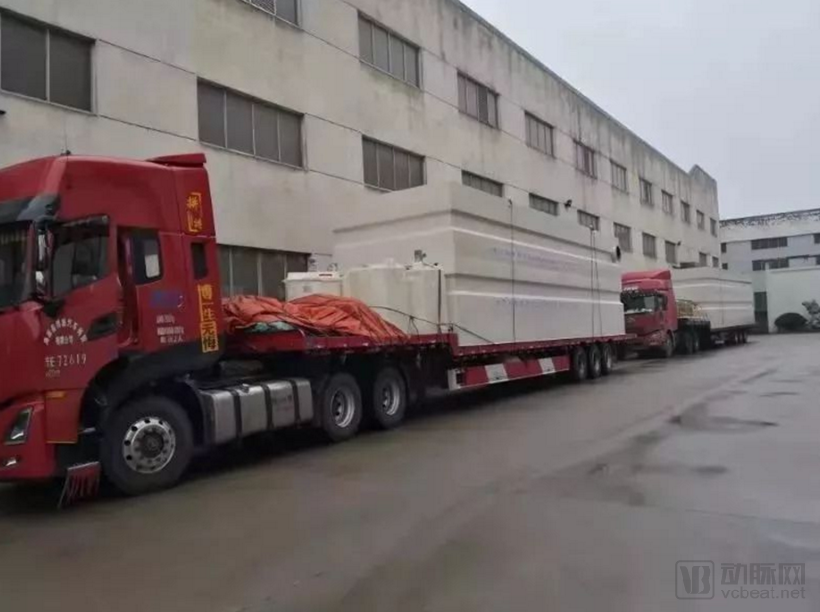
On the evening of January 24, Chinese New Year’s Eve, Yinjiang Environmental Protection, as a supplier of integrated decentralized wastewater treatment solutions, officially received the assignment to participate in the construction of the wastewater treatment systems for Wuhan Huoshenshan and Leishenshan Hospitals, providing two sets of medical wastewater treatment equipment with a capacity of 2,000 tons per day each. On January 27, four wastewater treatment units supplied by Yinjiang Environmental Protection were loaded onto trucks and scheduled for shipment to Wuhan Huoshenshan Hospital that night, ensuring the hospital’s operational readiness by February 3.
Clean Air Conditioning Unit
On the noon of January 26, Jiangsu Taicang Bona Environmental Equipment Co., Ltd. received a call from China Construction Third Engineering Bureau, the contractor for Huoshenshan Hospital: there was an urgent need for a large number of professional purification air conditioning units for operating rooms, requesting support!
There are 12 sets of large-scale professional air conditioning units in stock that can be urgently deployed to the Wuhan epidemic area. These units were manufactured by Bona Company under commission from Shandong Qilu Pharmaceutical Group, and were originally scheduled for shipment to Jinan on February 5 this year.
Bona Company requested Qilu Pharmaceutical to temporarily transport the equipment to Wuhan, and Qilu Pharmaceutical promptly agreed to cooperate. Although these 12 sets of equipment can effectively inactivate the novel coronavirus in the exhaust air system, the air handling units were custom-built for pharmaceutical workshops. Their specific parameters, such as airflow volume and opening dimensions, did not meet the requirements for isolation negative-pressure wards at Huoshenshan Hospital. Furthermore, considering the hospital’s environmental conditions, the units would need to be retrofitted before they could be put into direct use.
The construction of Huoshenshan Hospital was imminent, leaving only two days for equipment retrofitting. On January 27, the third day of the Lunar New Year, Bona Corporation organized internal technical exchanges to finalize the retrofitting plan.
After 18 hours of round-the-clock efforts, the retrofitting of 12 air conditioning units was successfully completed. On the afternoon of January 29, a truck bearing a banner that read “Bona Environment Joins Hands with Qilu Pharmaceutical to Support the Construction of Huoshenshan Hospital” departed from Taicang. The purified air conditioning units, assembled through collaborative efforts by multiple parties, were dispatched to Wuhan’s Huoshenshan Hospital at the fastest possible speed.
Information System
On the evening of January 24, Chinese New Year’s Eve, DHC Medical, a subsidiary of DHC Software, was designated as the primary contractor for the information system of Huoshenshan Hospital. DHC Medical established a 30-member command center to coordinate project construction, facilitating the rapid completion and operational launch of Wuhan Huoshenshan Hospital.
Huoshenshan Hospital, with approximately 1,000 beds and 20 wards, was dedicated to treating patients with novel coronavirus infection transferred from other hospitals within Wuhan. Under normal circumstances, building an information system of this scale would require two to three months. Seventy-eight employees from Donghua Medical voluntarily stepped forward to participate in the IT construction of Huoshenshan Hospital, while 34 non-Wuhan-based staff members actively applied for deployment to the frontline. Meanwhile, 20 local medical engineers in Wuhan were fully prepared to provide optimal support in products, technologies, and expert personnel tailored to epidemic prevention and control efforts.
CT Equipment
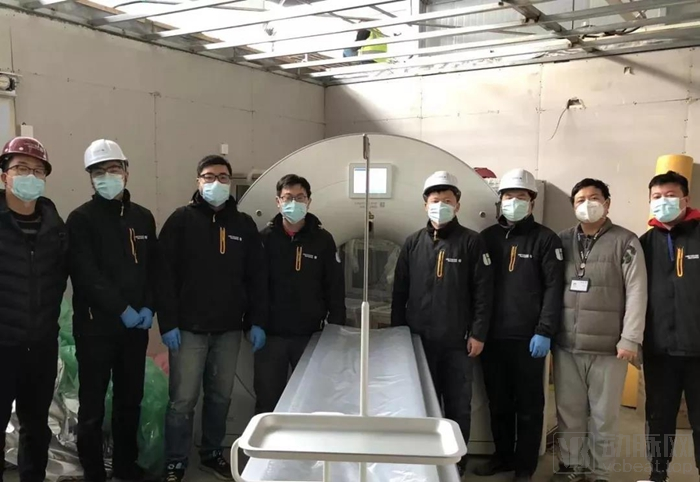
At 8:00 a.m. on February 1, the United Imaging “Warriors” engineering team completed the installation of the first CT scanner after an all-night effort.
On January 30, such a scene was witnessed in the live broadcast: before the hospital’s main structure had even been topped out, large-scale, high-end medical equipment had already been installed. The containers held three high-end CT scanners supported by United Imaging and urgently dispatched from Shanghai.
To support this urgent “epidemic battle” initiative, United Imaging Healthcare urgently established a “Special Project Team” spanning R&D, manufacturing, sales, logistics, service, and training. The company significantly increased its human and material resources and worked backward from the non-negotiable deadline of delivery on February 1. Production time, which normally takes 8–10 days, was compressed to just four days; transportation, previously requiring two days, was reduced to 16 hours.
Within the final 36 hours, United Imaging engineers were also required to complete the installation and commissioning of three CT scanners. Under normal circumstances, installing a single CT scanner takes four days. To race against time and accomplish this “impossible” mission, United Imaging engineers from across China, including Xinjiang and the Northeast, formed the “Huoshenshan Warriors Team,” with an average age of just 27. They worked in six-person teams, rotating in three shifts to continuously carry out the installations. “Once work begins, it will not stop until completion,” said the team leader. After 36 hours of relentless effort, only the final commissioning steps remained before delivery.
In Vitro Diagnostics and Mobile DR
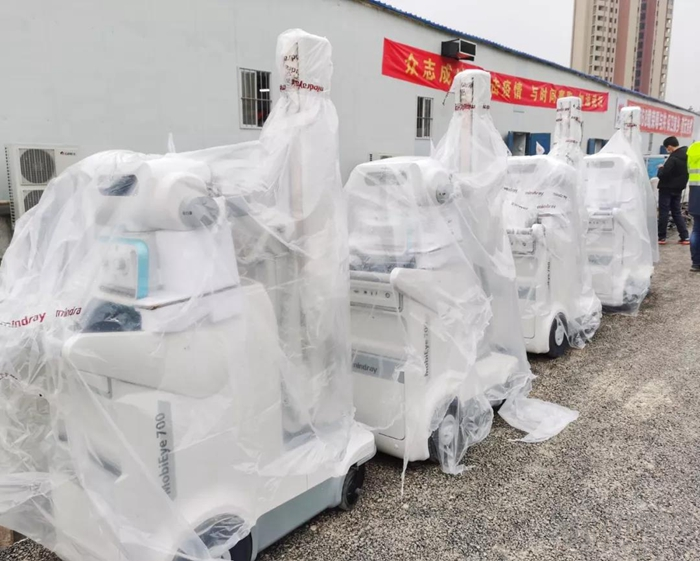
Mobile DR on Standby
Mindray’s in vitro diagnostic solutions became the primary equipment in the laboratories of Huoshenshan Hospital. In addition, Mindray’s mobile DR systems, intelligent ventilators, intelligent patient monitors with central station systems, infusion pumps, as well as anesthesia machines and operating tables required for operating rooms, also served as critical equipment at Huoshenshan Hospital.
On January 29, the Mindray team arranged for production and coordinated equipment transportation, with all devices scheduled to arrive at the Huoshenshan Hospital construction site by January 31. Facing a tight schedule for on-site equipment preparation and installation, Mindray staff worked in shifts, ensuring that no fewer than 50 engineers were present per batch to maintain installation progress. “On-site, I want to get the equipment ready as quickly as possible; we cannot afford to waste even a minute,” said one engineer. By February 2, after working through the night, nearly 1,000 infusion pumps, hundreds of ventilators, and patient monitors had been installed.
Remote Consultation
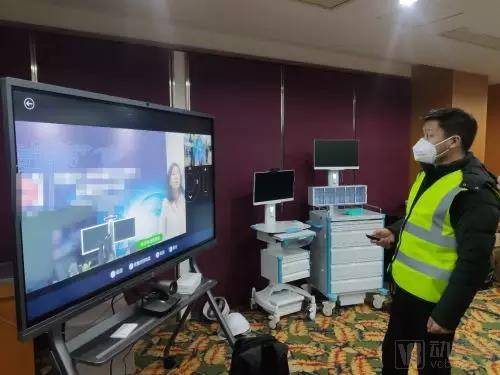
Huawei-Backed “Remote Consultation Platform” at Huoshenshan Hospital Successfully Commissioned | Image Source: Hubei Daily
Behind the successful construction of the hospital, the contributions of telecommunications professionals were also indispensable. After the task of building the hospital was assigned, companies such as Huawei, China Mobile, China Unicom, China Telecom, and China Tower swiftly deployed to the site to lay 5G networks. By January 26, Huoshenshan Hospital had already activated 3G, 4G, and 5G communication networks, with the first 5G network line being operational in less than two days.
5G communication technology has also begun to be applied in telemedicine scenarios. The first “Remote Consultation Platform” at Huoshenshan Hospital, supported by Huawei’s technology, is officially being put into use. This newly launched platform utilizes gigabit fiber-optic cables, but the system is already equipped with a 5G network backup. In the future, depending on actual medical needs, the 5G network will fully support remote consultations at Huoshenshan Hospital.
It is reported that this platform was jointly developed by Huawei and China Telecom. Through this platform, high-quality medical experts based in Beijing can conduct remote consultations with frontline medical staff at Huoshenshan Hospital via video conferencing to diagnose and treat patients.
This telemedicine system features several key highlights. First, it incorporates the TE20 all-in-one HD video conferencing terminal and management platform donated by Huawei, which ensures seamless telemedicine operations even under extreme network conditions with bandwidth as low as 512 Kbps. Second, the system supports 1080p high-definition video quality. This is particularly critical in remote medical consultation scenarios, where medical experts at different locations may need to share patients’ medical records, such as CT scans, via auxiliary streams for diagnostic purposes.
It is reported that Huoshenshan Hospital has also procured medical carts equipped with mobile cameras, which can enter patient rooms to capture close-up footage of patients’ conditions. If needed in the future, the video feeds from these carts can be integrated into the remote consultation system.
Negative Pressure Ambulance
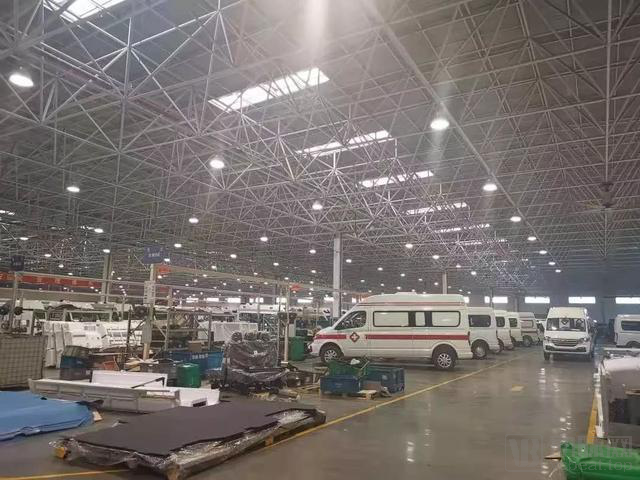
On Chinese New Year’s Eve, SAIC Motor received a “special order” from the Ministry of Industry and Information Technology (MIIT) to produce 60 negative-pressure ambulances between January 24 and February 5. The production of each negative-pressure ambulance involves two main stages: manufacturing the base vehicle and subsequent modification. Building on the base vehicle, the process further includes foam insulation treatment, wiring, interior installation, electrical system setup, medical equipment installation, and negative-pressure system installation, among other steps.
The two-step production process originally took one month. SAIC Maxus Automotive Co., Ltd.’s Wuxi branch fully mobilized its internal resources, compressing the original one-month production cycle to approximately 10 days, ensuring the delivery of 60 negative-pressure ambulances on February 5.
Key Issues
On February 2, the Wuhan Municipal Health Commission responded to issues concerning the handover and outpatient department setup at Huoshenshan Hospital. Although the hospital has been delivered for use, the public remains confused about several focal points. According to Xinhua News Agency, answers were provided to address these concerns:
Focus 1: Can the two major hospitals meet the demand?
“The newly built Huoshenshan Hospital and Leishenshan Hospital can provide approximately 2,300 beds,” said Zhou Xianwang, Mayor of Wuhan, at a press conference on January 26. He added that, in addition to the Huoshenshan and Leishenshan Hospitals under construction, Wuhan would also upgrade six hospitals in its outer districts to add around 10,000 beds, ensuring timely admission of confirmed cases.
To address the new situation of the epidemic, Wuhan decided on January 29 to increase the number of beds at the Leishenshan Hospital under construction from the originally designed 1,300 to approximately 1,600.
Focus 2: How Was a Hospital Built in Just 10 Days?
At 11:00 p.m. on January 31, while many people were drifting off to sleep, Li Jian, the project manager from China Construction Third Engineering Bureau, was still standing on the brightly lit construction site of Huoshenshan Hospital, wearing a mask and directing workers in their vigorous construction efforts. According to the plan, Huoshenshan Hospital was scheduled to be completed on February 2, meaning that the entire construction period—from the commencement of work on January 23 to completion—was only 10 days.
In contrast, Leishenshan Hospital was built at an even more “miraculous” speed. Since construction officially commenced on January 26, over 60% of the overall progress had been completed in just five days.
“Behind this speed lies the innovation of China’s construction technology,” said Wu Hongtao, Party Secretary of the First Company of China Construction Third Engineering Bureau, who was directing operations on-site at Leishenshan Hospital. The construction of both hospitals adopted the industry’s most advanced prefabricated building technologies, maximizing the use of assembled industrialized components to significantly reduce on-site workload and save considerable time. Meanwhile, after external assembly, overall hoisting was conducted, with on-site construction and overall hoisting carried out in an interleaved manner to achieve maximum efficiency.
Focus 3: How to Mobilize a Large Workforce of Construction Workers in the Short Term?
The project involves more than 2,000 workers and nearly 1,000 units of various types of large-scale mechanical equipment and transport vehicles, operating on a 24-hour rotating shift basis. As it coincides with the Spring Festival holiday, many migrant workers have already returned to their hometowns for the celebrations. How can such a large workforce be mobilized in such a short period of time?
Ye Jian, Manager of the Technology Department at China Construction Third Engineering Bureau General Contracting Company, which was responsible for the construction of Huoshenshan Hospital, stated that on the evening of January 23, when the team entered the site, China Construction Third Engineering Bureau rapidly mobilized more than 1,400 workers from five construction projects in Wuhan that were operating overtime, enabling site leveling and other tasks to commence swiftly.
Meanwhile, China Construction Third Engineering Bureau also issued a widespread call for workers, rapidly mobilizing labor through subcontracting firms. Fu Jianping, General Manager of Hubei Hanzhang Labor Service Co., Ltd., stated that after receiving notification on the evening of January 23, he led a bus directly to Enshi early the next morning, picking up workers along the way in Yichang, Jingmen, Jingzhou, Xiantao, and other locations. Simultaneously, he encouraged workers from rural areas surrounding Wuhan to travel together to the site.
“It was the Spring Festival holiday, and initially, some workers were reluctant to return. However, upon learning that they were coming to build a hospital dedicated to treating patients with novel coronavirus (2019-nCoV)-infected pneumonia, many agreed. ‘They also hoped to complete the hospital as soon as possible to bring the epidemic under control at the earliest,’ said Fu Jianping. On the night of the 24th, they led more than 300 workers onto the site to begin construction.”
Focus 4: How to Prevent Nosocomial Cross-Infection?
The isolation ward model room features a transfer chamber constructed with double-layered glass and an ultraviolet (UV) system. Patient meals and medications are delivered through this chamber, where they are disinfected by the internal UV system to prevent infection. Each ward is equipped with two beds and includes an en-suite bathroom.
“We must strictly prevent contamination of the surrounding environment while rigorously controlling nosocomial cross-infection,” said Yang Jianhua, chief designer of the Leishenshan Hospital project and Deputy Secretary of the Party Committee at Zhongnan Architectural Design Institute. He explained that the hospital adheres to the principles of “separation of clean and contaminated flows, separation of medical staff and patients, and separation of people and goods.” It adopts a strict “three zones and two corridors” design, with work areas arranged according to the workflow of “clean zone–semi-contaminated zone–contaminated zone” for medical personnel. Upon entering each successive zone, the staff corridors are completely separated from patient corridors, providing a safe and reliable working environment for healthcare workers.
Focus 5: Will it cause pollution to nearby lakes?
“It will not pollute nearby lakes.” Li Yongfeng, technical director at the Installation Company of China Construction Third Engineering Bureau, explained that hospital wastewater undergoes seven rigorous processes from discharge to compliant treatment. It first goes through fully enclosed collection and pre-disinfection within the hospital premises, then is pumped to the sewage treatment station for biochemical treatment. Only after passing system inspections is it discharged into the municipal pipeline network.
Li Yongfeng calculated that each hospital generates a maximum of 800 to 1,000 tons of wastewater per day, while the maximum wastewater treatment capacity of each hospital can reach 80 tons per hour. “This means that each hospital can treat up to 2,000 tons of wastewater per day, indicating that the existing treatment capacity is more than sufficient.”
Even rainwater was not “spared.” Zhang Songmin, a waterproofing designer at Zhongnan Architectural Design Institute, explained that to prevent rainwater from infiltrating underground, all ground surfaces within the isolation zone were fully hardened. A three-layer protective system—comprising a concrete base layer, an impermeable membrane, and a reinforced concrete surface layer—was implemented to ensure no rainwater percolation. The collected rainwater was directed into an on-site retention tank, disinfected, and then discharged into the municipal sewage system.
Focus 6: Will it impact the health of residents living near the hospital?
“Both hospitals are located downwind of Wuhan’s prevailing winds throughout the year,” Yang Jianhua introduced. The Houguan Lake and Huangjia Lake areas, where the two hospitals are situated, are both downwind locations, and exhaust air from all rooms is discharged at high altitude only after undergoing disinfection, sterilization, and high-efficiency filtration to meet national standards.
Yang Jianhua stated that the vast majority of medical technical rooms in the hospital are negative-pressure rooms, and that fresh air volumes in wards and ICUs have been increased in accordance with relevant standards. This ensures that the air pressure inside the rooms is lower than that outside, effectively preventing viruses from being transmitted outdoors via airflow and contaminating the external environment.
Focus 7: How to Use After Delivery? Is It a Temporary Structure or for Long-Term Use?
It is understood that after the completion of Huoshenshan Hospital, it will be handed over as a whole to relevant units of the People’s Liberation Army for management. As a specialized hospital, it will be used for the centralized treatment of patients with pneumonia caused by the novel coronavirus infection.
Huoshenshan Hospital was constructed using container units, while Leishenshan Hospital was built as a temporary steel-frame structure. Regarding whether these two hospitals will continue to be retained and utilized after the pandemic, a relevant official from the Wuhan Municipal Bureau of Urban-Rural Construction stated that such decisions would be made following further study and deliberation after the outbreak subsides.
Wu Hongtao introduced that, functionally, the two hospitals will meet the needs of long-term use after completion. Meanwhile, due to their standardized and modular design, all buildings can be rapidly dismantled, and their components can be reused after disinfection and processing.
During the peak construction period of Huoshenshan Hospital, more than 4,000 construction workers were busy on site, with nearly 1,000 units of large-scale mechanical equipment and vehicles deployed, and construction proceeded around the clock without interruption. Meanwhile, hundreds of millions of online users became “cloud supervisors,” closely monitoring the construction progress in real time.
Not only that, but Huanggang City, located 75 kilometers from Wuhan, transformed a 180,000-square-meter hospital within 48 hours, completing the entire process from construction to power supply and finally putting it into operation. Starting from January 26, Zhengzhou will complete the construction of isolation wards for the novel coronavirus within 10 days, with completion and handover for use scheduled for February 5. Across China, more "Xiaotangshan" hospitals will be established.
The so-called “infrastructure maniacs” are, in fact, a group of kind, courageous, and passionate builders who strive day and night, bearing heavy burdens as they press forward.
The information in this article is referenced and compiled from media sources including Xinhua News Agency, People's Daily, CCTV News, The Paper, Hubei Daily, and Chutian Metropolis Daily.