

One Medical IPO Soars 57.64% on Nasdaq Debut Amid Hybrid Clinic-Digital Healthcare Model

One Medical
Digital Basic Medical Service Provider
On January 31, Eastern Time, One Medical (parent company: 1Life Healthcare), a star enterprise in the membership-based primary care clinic chain sector, officially listed on the NASDAQ after a 13-year journey. The IPO price was $14 per share, with 17.5 million shares issued, raising $245 million. JPMorgan and Morgan Stanley served as underwriters.
It is worth noting that One Medical has yet to turn a profit, reporting a net loss of $34.2 million in the first three quarters of 2019. Previously valued at over $1.5 billion, the company has attracted investment from private equity firms such as The Carlyle Group and Oak Partners, as well as venture capital firms including Benchmark and Google Ventures.
On January 3, 2020, One Medical officially announced that it had filed a registration statement with the U.S. Securities and Exchange Commission (SEC) for its initial public offering, which listed on the Nasdaq on January 31 under the ticker symbol “ONEM.”
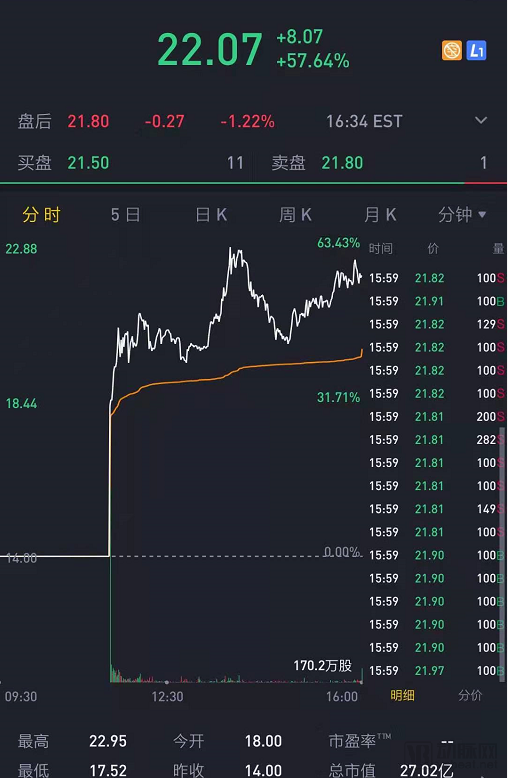
1Life Healthcare surged 57.64% at the close on January 31
One Medical is a membership-based primary care platform that integrates physical clinics with an online digital platform. The highlights of its business model can be summarized as follows: By paying an annual membership fee of $199, patients gain access to same-day appointments and 24/7 digital support via telemedicine consultations, thereby making affordable healthcare services easily accessible.
As of September 30, 2019, One Medical had approximately 397,000 members, 77 brick-and-mortar clinics, and around 6,000 corporate clients across nine markets in the United States, including San Francisco, New York, and Chicago.
One Medical was founded by Tom Lee in 2007 and is headquartered in San Francisco, USA. With a background as a physician, Lee believes that “healthcare should be a long-term collaborative process between doctors and patients, rather than a brief few-minute conversation during an outpatient visit.” In light of this, One Medical has innovated and optimized the primary care service model within the healthcare industry. What enabled this unicorn company to win investor favor and ultimately complete its IPO at this juncture? VCBeat (WeChat ID: vcbeat) provides an analysis.
Online Clinics and Digital Applications Address Two Major Pain Points in Primary Care
In the United States, patients seeking medical care at a hospital typically need to schedule appointments with physicians well in advance, securing consultation slots based on the doctors’ availability. After waiting for weeks or even months, patients arrive at the hospital as scheduled, only to endure lengthy queues at the front desk and complete cumbersome paperwork involving personal information and medical history forms before finally seeing the doctor.
Long appointment wait times, prolonged clinic waiting periods, noisy environments, and high costs are common pain points in the U.S. healthcare industry. One Medical, a U.S.-based membership primary care company, is attempting to address these challenges through its service offerings.
At One Medical, patients can schedule appointments with physicians anytime and anywhere, even securing same-day visits. When visiting the comfortably designed clinics, patients wait no longer than five minutes but enjoy extended consultation times with their doctors. For minor issues such as skin allergies, patients can also access telemedicine services 24/7 through the One Medical website or mobile app.
Membership-Based Model Establishes Stable Medical Relationships
One Medical’s care model allows patients to access primary care physicians and services for an annual fee of $199, including texting their doctors, scheduling same-day appointments, and logging into the company’s digital platform to store all their health information.
Core users are working professionals residing in urban centers such as New York and San Francisco, who obtain health insurance through their employment.
In the U.S. market, One Medical’s rise has been driven by a growing recognition of primary care as an untapped opportunity within the healthcare sector, with the potential to reduce costs and improve health outcomes. One Medical seeks to address two major pain points in the traditional U.S. primary care market: poor patient experience and frustrating working conditions for physicians, which contribute to higher rates of burnout in conventional healthcare settings.
Therefore, One Medical addresses the aforementioned pain points through a combination of offline physical clinics and an online digital application. Offline, One Medical adopts a strategy of extensive placement and high coverage by establishing clinics in high-traffic locations such as shopping malls, office buildings, and residential communities, thereby bringing services closer to members and minimizing their travel costs.
Unlike other healthcare institutions in the United States, physicians at One Medical clinics see approximately 16 patients per day, below the industry standard of 25. As a result, members receive significantly more consultation time at One Medical than at other clinics, with some even able to communicate with their appointed physician throughout the day. “This approach improves the doctor-patient relationship, allowing physicians more time to answer patients’ questions and enabling both parties to engage in thorough discussions about various medical options,” said Tom Lee.
Meanwhile, One Medical leveraged its robust IT systems to replace manual labor, reducing the number of physicians per clinic from the industry standard of 4.5 to 1.5. This shift not only lowered management costs but also enhanced operational efficiency.
Possessing its own electronic medical record system and medical team
On the other hand, the reduction in the number of physicians and outpatient visits at One Medical clinics does not necessarily imply a decline in overall patient volume. Online, One Medical also maintains a professional virtual care team that provides medical services to members around the clock. For certain non-urgent issues that do not require an in-person clinic visit, members can seek assistance through One Medical’s website or mobile app. One Medical has independently developed and established its own telemedicine platform and Electronic Health Record (EHR) system, enabling members to access online appointment scheduling, patient billing, virtual healthcare services, video consultations, in-app messaging (such as sharing electronic medical records), mental health services, and other offerings.
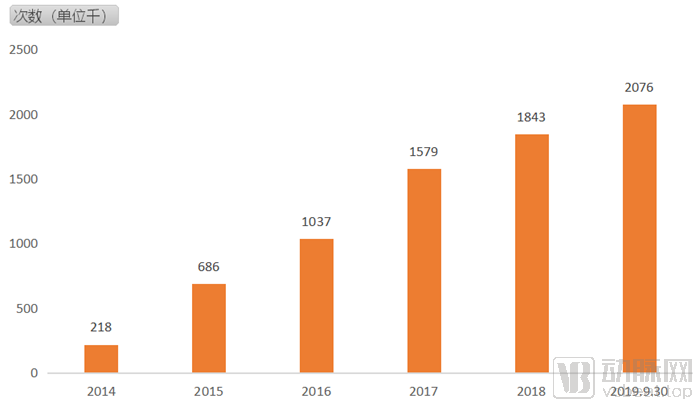
One Medical Patient Online Visit Data (in thousands)
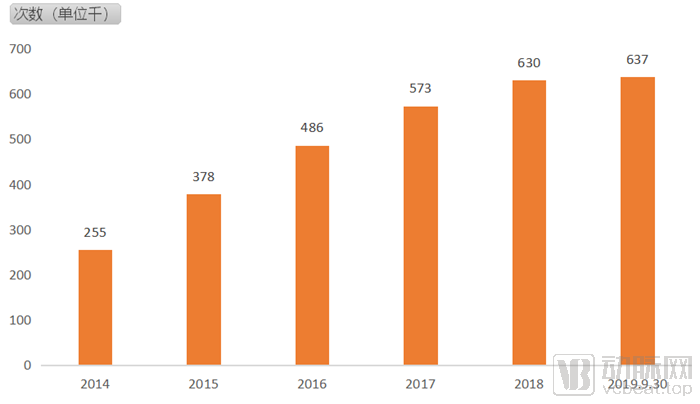
One Medical Patient In-Person Clinic Visit Data (in thousands)
Based on this model, from December 31, 2014, to September 30, 2019, One Medical’s membership increased by 324%. For the twelve months ended September 30, 2019, net revenue grew by 265% compared with the twelve months ended December 31, 2014. Online visits by members surged by 852%, while clinic visits by members rose by 173%. Meanwhile, during the twelve months ended September 30, 2019, One Medical achieved a retention rate of 97% among enterprise clients and 89% among consumer members. According to patient visit data disclosed in the prospectus, online visits grew rapidly; in the first three quarters of 2019, there were 2.07 million online visits, more than three times the number of offline visits.
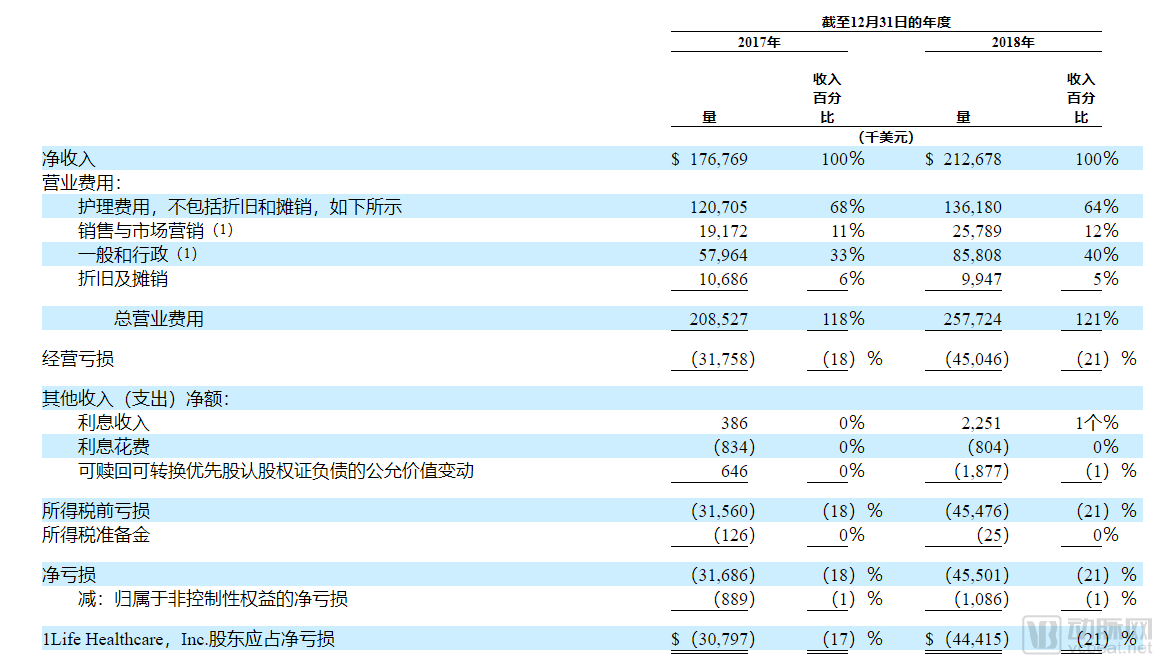
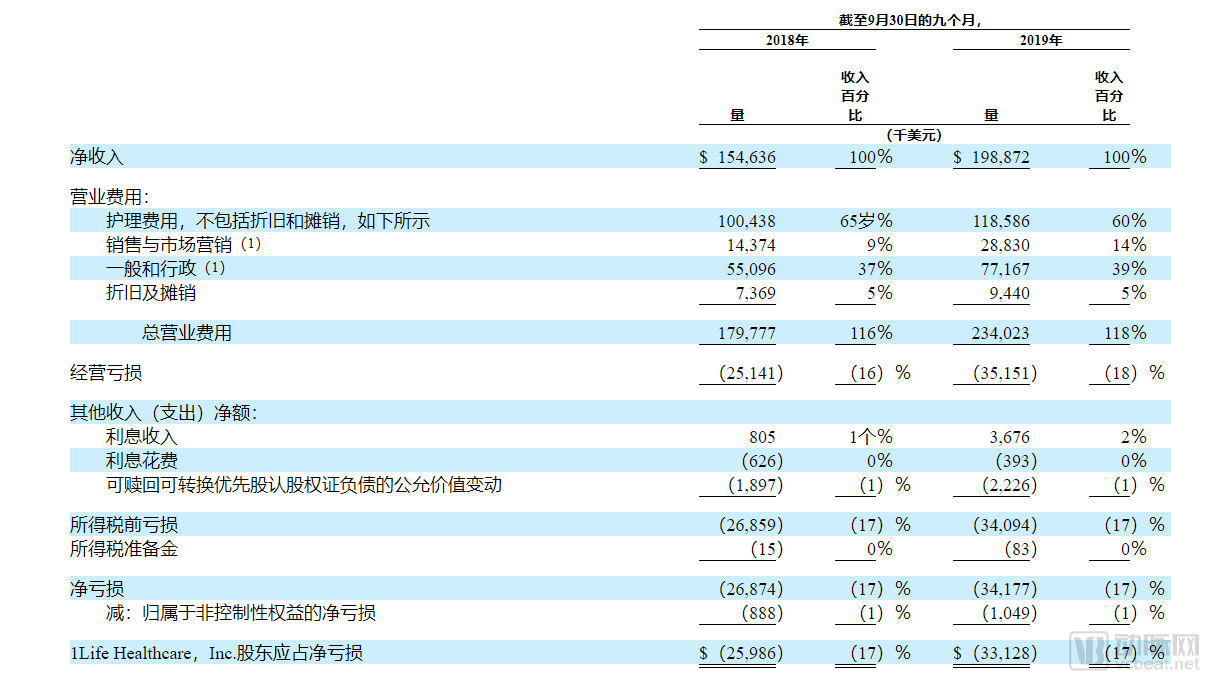
One Medical’s revenue consists of three components: membership revenue from annual employer and consumer subscription fees, PMPM partnership revenue from health networks, and revenue from in-person visits obtained from health insurers and patients. Net revenue increased by 20%, from $176.8 million in 2017 to $212.7 million in 2018, and rose by 29%, from $154.6 million for the nine months ended September 30, 2018, to $198.9 million for the nine months ended September 30, 2019. This growth was primarily driven by a 23% (or 74,000) increase in membership, which grew from 323,000 to 397,000, making members the key driver of net revenue.
However, One Medical has yet to achieve profitability. In summary, One Medical’s rapid growth can be attributed to its innovations in technology and business model centered on customer experience and service, as well as its primary revenue stream derived from a low-cost membership model. According to its prospectus, the company’s Net Promoter Score (NPS) reached 90, surpassing that of major internet companies; generally, an NPS of 50 is sufficient to generate positive word-of-mouth.
Since its inception, One Medical has completed multiple rounds of financing in the capital markets, achieving unicorn status and establishing itself as a major recipient of investment. This also indirectly demonstrates the recognition of its business model by investors. Among its backers are many top-tier institutions, such as GV, J.P. Morgan, and Oak Investment Partners.
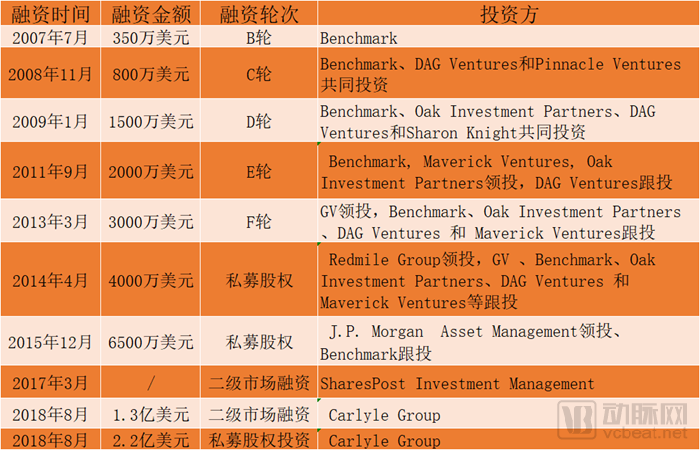
One Medical’s Funding History, Data Source: Crunchbase
Issues to Address for Sustainable Development
At its inception, One Medical primarily offered primary care services to individual members. Approximately five years later, the company significantly expanded its target demographic to include corporate employers, who began covering membership fees for their employees. This shift gained particular momentum in 2013, when Google Ventures invested in One Medical. Google remains One Medical’s largest corporate client, accounting for nearly 10% of its revenue.
Today, companies such as Airbnb, Adobe, and Twitter have partnered with One Medical by incorporating its services into their employee health benefits packages. This provides employees with comprehensive access to convenient primary care, 24/7 virtual care, and even on-site care, helping them improve their health outcomes, avoid serious illnesses or emergency room visits, and thereby reduce costly medical expenditures for their employers.
Corporate clients have strong demand for One Medical’s solutions and services, and the customer acquisition cost is lower compared to individual consumers. Amir Dan Rubin, CEO of One Medical, stated that One Medical has helped enterprises reduce their overall healthcare expenditures by 8%. However, it is important not to overlook the risk of overreliance on a few large corporate clients, as One Medical continues to face long-term challenges in acquiring new customers.
Furthermore, although the market has recognized the critical role of primary care in effectively reducing costs by helping patients better manage chronic diseases, thereby preventing severe illness and avoiding the need for more expensive care settings such as emergency rooms or urgent care centers, it remains challenging for startups like One Medical to recruit and retain primary care talent.
One Medical stated that its main competitors include other primary care providers and brick-and-mortar clinics established by employers, primarily health insurance companies and pharmacy chains. For instance, Amazon and CVS Health have already launched similar physical clinics. Competition in the primary care market is expected to intensify in the future.
Related Reading:
[Case Study] A U.S. Model for Community Healthcare: One Medical Disrupts the Patient Experience