

China Announces Eight Key Measures to Support Mask Manufacturers and Pandemic-Impacted Enterprises
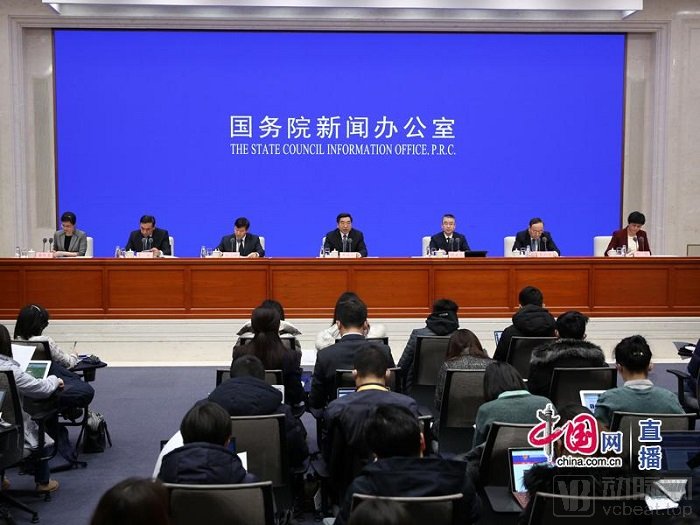
On February 3, the Joint Prevention and Control Mechanism of the State Council for Responding to the Novel Coronavirus Pneumonia Epidemic held a press conference. Officials from the National Development and Reform Commission, the Ministry of Industry and Information Technology, the Ministry of Commerce, the National Health Commission, and the State Administration for Market Regulation provided updates on the supply guarantee of key medical materials for epidemic prevention and control.
Promoting the Resumption of Work and Production for Enterprises Involved in Epidemic Prevention and Control, Medical Supplies, and Related Sectors
Lian Weiliang, Vice Chairman of the National Development and Reform Commission:Based on the current situation, the total supply of essential daily necessities in Wuhan City and Hubei Province is secured. After a phase of increase, prices have begun to decline. The supply in other regions across China is also relatively ample and guaranteed.
The next steps for safeguarding measures mainly include:
First, further increase supply. For example, coordinate with vegetable-producing regions such as Shandong, Jiangsu, Anhui, Hunan, and Guangxi to strengthen supply-demand docking with Hubei Province and increase the supply of fresh vegetables; coordinate with COFCO Group, Sinograin, and China National Salt Industry Group to increase the supply of rice, flour, edible oil, meat, and salt; coordinate with key quick-frozen food manufacturers to ramp up supply; and allocate a certain amount of central government frozen pork reserves for release at any time as needed.
Second, under the premise of strictly implementing prevention and control measures, resume work and production in an orderly manner.Promote the resumption of work and production for enterprises involved in epidemic prevention and control, energy supply, transportation and logistics, urban operations, medical supplies and daily necessities, as well as other sectors critical to national welfare and people's livelihood., and accelerate the resumption of work and production for major projects, major engineering initiatives, and eligible enterprises across various industries.
Third, ensure unimpeded transport and logistics channels. To guarantee the smooth entry of various supplies supporting Hubei and effectively reduce the risk of cross-infection, the transportation department utilized five existing logistics parks to establish road transport transit service stations for emergency supplies entering Hubei, enabling rapid unloading and quick return of transport vehicles. Strengthen the construction of provincial green channels for transportation, improve coordination efficiency, accelerate material distribution, and resolve last-mile bottlenecks. For the transport of medical supplies and daily necessities, prioritize capacity allocation, and implement a “no stop, no inspection, no fee” policy for relevant vehicles to grant them priority passage.
Fourth, strengthen factor guarantees. Assist in coordinating and resolving difficulties faced by enterprises resuming work and production in areas such as labor, energy supply, financing, and industrial chain support. Enhance the scheduling of coal, electricity, oil, gas, and transportation in Hubei Province, help coordinate and resolve issues related to resources and logistics, and ensure safe and stable supply.
Fifth, strengthen monitoring and coordination. Conduct twice-daily assessments (morning and evening) of the supply status of daily necessities across all regions, enhance market monitoring of staple consumer goods such as vegetables and food in key areas including Hubei Province, and promptly coordinate to resolve any issues affecting supply.
Sixth, strengthen reserve capacity. Ensure the effective release of winter and spring vegetable reserves in major northern cities. Implement and improve the government’s temporary reserve system, adhering to the principle of “better to have and not need than to need and not have,” and “better to over-prepare than under-prepare,” so as to maximize the security of supply for all essential daily necessities.
Four Measures to Ensure the Supply of Medical Materials
Tian Yulong, Member of the Leading Party Members Group and Chief Engineer of the Ministry of Industry and Information Technology:As the lead agency of the Medical Supplies Guarantee Group under the State Council’s Joint Prevention and Control Mechanism for Epidemic Response, the Ministry of Industry and Information Technology (MIIT) is primarily responsible for ensuring the production of key medical supplies—including medical protective suits, medical goggles and face shields, medical masks, disinfection products, negative-pressure ambulances, and infrared thermometers—and for coordinating the allocation of urgently needed materials.
During the more than 10 days of emergency medical supply assurance, which coincided with the Spring Festival, most medical material manufacturers and logistics systems were on holiday, operating at reduced capacity or halted production entirely, making resumption of work and production extremely difficult. The Ministry of Industry and Information Technology, in coordination with relevant parties, implemented four measures to effectively ensure the supply of medical materials.
Mobilizing Enterprises to Accelerate Resumption of Work, Production, Capacity Restoration, and Expansion: Since January 21, seven consecutive unclassified telegrams have been issued to make specific arrangements for the supply and guarantee of epidemic prevention and control materials across all provinces and municipalities, urging and mobilizing medical supplies manufacturers to resume work and production as soon as possible, and strengthening unified management and allocation of key medical supplies.
# Dispatching Special Commissioners to Enterprises to Strengthen Production Supervision and CoordinationIn accordance with the requirements of the State Council, special commissioner teams led by 30 department-level officials have been dispatched to key medical supply enterprises, including those producing medical protective clothing. Working in conjunction with local industry and information technology departments as well as drug administration authorities, these teams are making every effort to help enterprises coordinate and resolve issues related to raw materials and logistics transportation, thereby rapidly increasing effective supply.
Construction of a National Key Medical Supplies Guarantee and Dispatch Platform: Primarily used for collecting, compiling, analyzing, monitoring, and dispatching data on production capacity, output, inventory, and transportation of various supplies, leveraging information technology to enhance the effectiveness and timeliness of medical supplies guarantee.
Actively Expand International Procurement Channels: To address the shortfall in domestic production capacity for scarce supplies, special international procurement initiatives were organized with strong support from relevant authorities. Many enterprises also procured substantial quantities of critical medical supplies from multiple countries through various means, including international purchases and donations. Meanwhile, in collaboration with the National Health Commission and the National Medical Products Administration, efforts were accelerated to align and mutually recognize foreign and Chinese standards, enabling export products compliant with EU, Japanese, U.S., and other standards to be utilized in certain sectors within China.
Major Chinese E-commerce Companies Conduct Cross-Border Procurement of Scarce Supplies
Wang Bingnan, Vice Minister of the Ministry of Commerce:E-commerce is one of the important ways for Chinese residents to consume. The main characteristic of e-commerce is online transactions and offline delivery. After the outbreak of the epidemic, online shopping can not only meet the needs of residents' lives but also reduce the risk of personnel gathering.
Since the outbreak of the epidemic, the Ministry of Commerce has proactively mobilized 11 major domestic e-commerce enterprises to play a unique and active role in ensuring market supply, primarily focusing on the following aspects:
First, we actively increased supply. Multiple e-commerce enterprises, such as JD.com, Wumart, and SF Express, leveraged global supply chain resources to conduct cross-border procurement of scarce materials, including face masks, protective suits, and goggles. They also strengthened cooperation with upstream suppliers to facilitate the emergency resumption of production by manufacturers, thereby boosting material supplies. Consumers were able to purchase many of these scarce items online.
Second, distribution channels were streamlined. Coordination between e-commerce and logistics express services was further strengthened, with many delivery couriers working on the front lines to ensure supply stability for e-commerce. During the Spring Festival holiday, online platforms remained operational while offline deliveries were made in a timely manner. In particular, a number of fresh-food e-commerce companies leveraged distinctive models such as forward warehouses and home delivery from physical stores to meet residents’ daily needs.
Third, ensure consumer safety. To guarantee safety during the delivery process, many e-commerce platforms have introduced a new “contactless delivery” service model. Customers and delivery personnel agree on a designated drop-off location for the goods, thereby achieving contact-free delivery and reducing the risk of transmission. This model has been promoted from Hubei Province to the rest of China.
Medical Protective Gowns and N95 Masks Are in a State of "Tight Balance"
Tian Yulong, Member of the Party Leadership Group and Chief Engineer of the Ministry of Industry and Information Technology:As of 24:00 on February 2, the Ministry of Industry and Information Technology (MIIT) had coordinated with domestic manufacturers to dispatch a cumulative total of 154,500 sets of medical protective clothing to Hubei Province, of which 131,200 sets had arrived; 133,600 N95 respirators had been shipped, with 130,000 delivered; and 82 fully automatic infrared thermometers had been dispatched, with 62 units arriving at their destination.
It is particularly important to emphasize that Hubei’s production capacity has recovered very rapidly. Specifically, the output of medical supplies such as medical protective suits and goggles in Hubei has significantly increased. As Hubei is a key national production base for medical supplies, this recovery has greatly alleviated the shortage of medical supplies at the frontline. Of course, medical protective suits and N95 respirators currently remain in a state of “tight balance.”
Regarding diagnostic reagents, health authorities and hospitals currently procure directly from manufacturers. In theory, there should be no issues with the guaranteed supply of test kits; however, minor difficulties arose earlier due to timing constraints and challenges in resuming production. Currently, production capacity has been restored.By February 1, the daily production capacity of diagnostic reagents had reached 773,000 test kits, equivalent to 40 times the number of suspected cases, indicating that overall supply has basically met demand."Of course, production capacity has not yet fully recovered, reaching only 60% to 70%. The subsequent work will mainly focus on restoring production capacity."
Regarding face masks, China’s total daily production capacity exceeds 20 million units, making it the largest in the world. As for the N95 respirators and medical surgical masks mentioned earlier, overall production capacity will require some time to recover.
Opening a Green Channel for Mask Manufacturers to Obtain Licenses
Gan Lin, Deputy Director of the State Administration for Market Regulation:The State Administration for Market Regulation promptly issued an urgent notice to its entire system, released a public announcement on maintaining market price order for epidemic prevention supplies, and introduced guidelines for investigating and punishing illegal price-gouging practices, thereby clarifying the standards and scope of law enforcement.
As of February 1, a total of 390,000 person-times of price enforcement officers were deployed across the entire system, and 1,413 cases of price-related violations were filed and investigated. Two typical examples are cited as follows: First, the market regulation authorities in Fengtai District, Beijing, penalized a pharmacy for price gouging on N95 respirators, imposing a fine of RMB 3 million. Second, the market regulation authorities in Jinnan District, Tianjin, issued a RMB 3 million fine to a pharmacy for price gouging on face masks.
The overall price order in the market is currently stable. Beyond pricing, quality issues are of critical importance, particularly for epidemic prevention products such as face masks and essential livelihood goods including rice, flour, cooking oil, vegetables, and fruits. On the evening of February 2, the Zhejiang Provincial Administration for Market Regulation investigated and handled a case involving the online sale of substandard face masks, with an involved amount of RMB 9.12 million; the case has now been transferred to public security authorities. Regulatory efforts to ensure market quality and safety for epidemic prevention products, such as problematic face masks, must continue to be strengthened.
In addition, to ensure supply and stabilize prices, market regulation authorities have also undertaken innovative initiatives to support the production and supply of epidemic prevention products and daily necessities:
With face masks in short supply, some regions are ramping up new production capacity.The entire system adopts special procedures and opens a green channel; for all eligible entities, dedicated task forces are established to expedite the issuance of business licenses and production permits in the shortest possible time, enabling enterprises to commence production immediately.For instance, Haidian District in Beijing has already implemented such measures. Additionally, Shenzhen is accelerating the process of redirecting exports to the domestic market. Masks originally intended for export that meet the medical standards of the importing countries can be registered and filed with the market regulation authorities; once registered, they are affixed with Chinese labels and immediately made available for sale in the domestic market.
Enterprises ramp up production to full capacity; surplus mask output post-pandemic is purchased and stockpiled by the government.
Lian Weiliang, Deputy Director of the National Development and Reform Commission:To address the shortage of face masks, efforts must be made in two areas: first, increasing supply, which is fundamental; and second, ensuring scientific and rational usage.
In terms of increasing supply, full efforts are being made to expand production capacity around the clock, and significant progress has been achieved. Taking medical N95 respirators, which have drawn the most public attention, as an example, the aggregated demand from various sectors is substantial, with many entities adopting a worst-case scenario mindset—preparing generously while using conservatively. Nevertheless, by the evening of February 2, production capacity had already been organized at more than double the original scale, raw materials were secured, and measures to boost production and supply were initiated.
Many enterprises are concerned about potential overcapacity in the future. In the post-pandemic era, the government will purchase and stockpile surplus production. As long as products meet the required standards, enterprises can operate at full capacity. Regarding utilization, scientific and rational use is also crucial; that is, products should be used according to need and function, avoiding excessive consumption. In particular, general protective measures should not deplete precious medical resources.
Li Bin, Deputy Director of the National Health Commission:To support the prevention and control of the novel coronavirus pneumonia epidemic, relevant departments—including the Ministry of Finance, the Ministry of Human Resources and Social Security, the National Healthcare Security Administration, and the National Health Commission—have issued policies concerning patient treatment, subsidies for medical personnel, and the supply of epidemic prevention materials.
Regarding patient treatment, the subsidy policy for treatment costs has been clarified. For medical expenses incurred by confirmed patients, after payments are made in accordance with regulations through basic medical insurance, critical illness insurance, and medical assistance, the portion borne by individuals will be subsidized by central and local fiscal authorities.
Regarding personnel subsidies, temporary work allowances shall be issued to medical personnel and epidemic prevention workers participating in prevention and control efforts. Central and local governments shall allocate funds in accordance with prescribed standards. It is explicitly stipulated that, in the prevention, control, and treatment of the novel coronavirus pneumonia (COVID-19) outbreak, medical staff and related personnel who contract novel coronavirus pneumonia in the course of performing their job duties shall be recognized as having suffered work-related injuries and shall enjoy work-related injury insurance benefits in accordance with the law.
Regarding the supply of epidemic prevention materials, funds required for the procurement of specialized equipment for protection, diagnosis, and treatment, as well as rapid diagnostic reagents needed by medical and health institutions to carry out epidemic prevention and control work, shall be arranged by local finances, with central finances providing support as circumstances dictate.
On January 23, the Ministry of Finance urgently allocated RMB 1 billion in subsidy funds to Hubei Province for the prevention and control of the novel coronavirus pneumonia outbreak, supporting the province’s epidemic control efforts. Subsequently, the Ministry of Finance urgently pre-allocated RMB 4.4 billion in subsidy funds for the prevention and control of the 2020 novel coronavirus pneumonia outbreak nationwide, supporting epidemic control work across China. Of this amount, an additional RMB 500 million was allocated to Hubei Province.
In addition, the National Development and Reform Commission (NDRC) allocated RMB 300 million from the central budget to support the construction of new hospital projects in Wuhan, Hubei Province, with a primary focus on procuring essential medical equipment. Furthermore, the Ministry of Finance and the National Health Commission pre-allocated RMB 60.33 billion to support localities in delivering basic public health services and strengthening grassroots epidemic prevention and control efforts. Of this amount, all newly added subsidy funds were directed to rural areas and urban communities, primarily to bolster prevention and control measures against the novel coronavirus pneumonia (COVID-19) outbreak.
Lian Weiliang, Deputy Director of the National Development and Reform Commission:From the current situation, the epidemic's impact on the economy, particularly on consumption, is intensifying. The service consumption sectors—especially transportation, cultural tourism, hotels and catering, and film and entertainment—have been significantly affected. Currently, during the Spring Festival travel rush, passenger volumes across all modes of transportation have declined markedly, while box office revenues, tourism income, and catering revenue have also seen significant year-on-year drops. Meanwhile, new digital economy formats such as online shopping, food delivery, and online entertainment remain highly active.
The magnitude of the pandemic’s impact on the economy depends on the progress and effectiveness of epidemic prevention and control measures. It is important to emphasize that this impact is phased and temporary, and will not alter the fundamental long-term positive trajectory of China’s economy.
How to Counter the Economic Impact of the Epidemic?At present, under the premise of strictly implementing epidemic prevention and control measures, efforts should be made to promote the resumption of work and production for enterprises involved in epidemic prevention and control, energy supply, transportation and logistics, urban operations, medical supplies, daily necessities, and other sectors critical to national welfare and people's livelihood. Additionally, the resumption of work and production should be advanced for major projects, key infrastructure initiatives, and enterprises that meet the necessary conditions. Policies and measures to mitigate the impact of the epidemic should be formulated and introduced on a case-by-case basis, with particular emphasis on providing maximum assistance to industries and enterprises significantly affected by the outbreak.
Relevant authorities have already introduced numerous policies and measures in this regard, and further proactive measures will be rolled out in an orderly manner. More importantly, efforts should be made to turn crises into opportunities by addressing the problems, particularly the weaknesses, exposed during epidemic prevention and control. With greater intensity and precision, we must shore up these shortcomings and strengthen weak areas, thereby fostering and expanding new drivers of economic growth.
Source: Official Website of the National Health Commission