

Serenax Breaks Key Technical Barriers to Enable More Accurate and Accessible Next-Generation Non-Invasive Prenatal Testing
Due to adjustments in fertility policies, more than 15 million newborns are born annually in China. As a country with a high prevalence of birth defects, China has seen infectious disease incidence and perinatal mortality rates decline; consequently, birth defects and genetic disorders have become the primary threats to children’s health and key factors affecting population quality. Prenatal screening and diagnosis serve as effective means to predict whether a fetus has genetic disorders or congenital malformations, thereby promoting eugenics and healthy childbirth while preventing the birth of infants with defects.
Prenatal diagnosis and testing are categorized into invasive and non-invasive methods. Invasive diagnostic techniques—such as chorionic villus sampling, amniocentesis, and percutaneous umbilical cord blood sampling—were introduced earlier but are associated with significant drawbacks, including substantial maternal trauma, a high risk of miscarriage, and later gestational timing for testing. The emergence of non-invasive prenatal testing (NIPT) effectively addresses the limitations inherent in existing invasive prenatal diagnostic technologies.
NIPT technology refers to the detection of cell-free fetal DNA or fetal cells in maternal peripheral blood, followed by analysis and assessment of whether the fetus has chromosomal or genetic abnormalities. Among these, detecting fetal cells is a more accurate approach; however, due to current technological limitations, it is not possible to accurately identify and analyze fetal cells. Therefore, current practice primarily relies on the detection of cell-free DNA. Furthermore, when analyzing cell-free DNA, existing technologies are based on random sequencing methods, which cannot selectively enrich DNA associated with genetic diseases nor accurately determine the proportion of detected DNA that originates from the fetus. This leads to increased costs and compromises the accuracy of the test.
In this case, SerenaR&Dtwo technologies. First, AssureDx, which is based on fetal cell analysis, this technology can accurately identify and isolate fetal cells from maternal blood, enabling precise detection.Second, AssuriT based on cell-free DNA analysisThis technology addresses the pain points of random sequencing methods by employing a targeted approach to select and enrich cell-free DNA loci associated with genetic diseases that can distinguish between maternal and fetal origins. This eliminates blind screening, enhances detection accuracy, significantly reduces costs, and facilitates wider adoption of non-invasive prenatal testing.
According to Dr. Zhang Haichuan, founder of Serena (China) Medical Technology Co., Ltd.,The company’s next-generation NIPT technology has passed the technical review by the National Institutes for Food and Drug Control (NIFDC), and clinical trials for product registration are progressing rapidly.
Breakthrough in Key Technical Challenges of NIPT
Providing Affordable Testing Solutions
Serena is a company equipped with advanced genetic testing technologies, primarily focusing on the field of reproductive health. Its technologies and products include two novel NIPT technologies, AssuriT and AssureDx, the next-generation flow cytometer Sparrow, and various self-developed test kits.
In the peripheral blood of pregnant women, cell-free fetal DNA and a small number of fetal cells are present, both of which can be used for non-invasive prenatal genetic testing. Dr. Zhang Haichuan introduced that current NIPT technologies on the market all involve sequencing cell-free DNA in maternal peripheral blood, primarily detecting numerical abnormalities in chromosomes 21, 13, and 18.
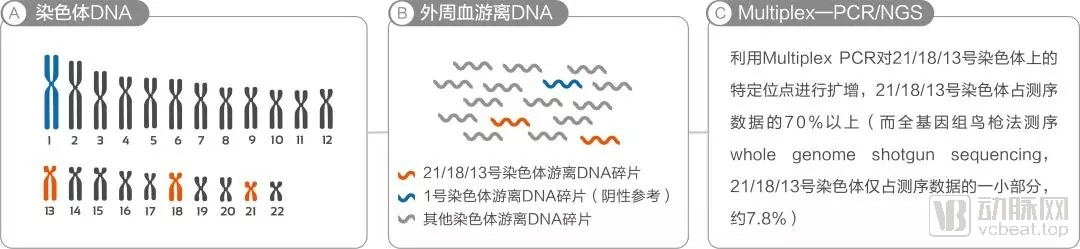
Dr. Zhang Haichuan stated, “Chromosomes 21, 13, and 18 account for less than 8% of the human genome. Current NIPT technologies cannot specifically target these three chromosomes in advance; instead, they rely on random sequencing to detect all chromosomes, followed by comparison with databases to isolate information on these three chromosomes. This approach is labor-intensive, inefficient, and costly.”
Serena has developed the AssuriT technology based on cell-free DNA analysis. This technology employs multiplex PCR during the library preparation stage to target and screen cell-free DNA fragments from chromosomes 21, 18, and 13, and identifies fetal-derived DNA components through SNP loci.This enables the three chromosomes to account for over 70% of the sequencing data, representing a nearly tenfold improvement over random sequencing methods, thereby significantly reducing costs while enhancing detection accuracy.Furthermore, this technology encompasses a comprehensive suite of technical solutions ranging from blood collection to data analysis, with multiple components having been granted technical patents.
Dr. Zhang Haichuan stated that, in addition to cell-free DNA, fetal cells can also be used for non-invasive prenatal testing (NIPT), and the DNA from fetal cells is more intact, resulting in higher diagnostic accuracy. “However, the identification and analysis of fetal cells pose significant technical challenges.” To address this, Serena developed another technology—AssureDx, which is based on fetal cell analysis.This technology leverages advanced cell separation and high-throughput single-cell analysis techniques to enable accurate identification and DNA analysis of fetal cells.
Currently, two NIPT technologies under Serena are undergoing clinical trials and are expected to enter the market in the near future.
Furthermore, flow cytometers are widely used in various fields, including prenatal diagnosis. Based on the conditions of the Chinese market, Serena (China) Medical Technology Co., Ltd. has conducted a series of validations and optimizations on flow cytometers, developing Sparrow, a new-generation, low-cost, and inclusive flow cytometer.
“Unlike the U.S. market, China faces a relative scarcity of medical resources and professionals; therefore, Chinese customers place significant emphasis on equipment pricing and ease of operation,” stated Dr. Zhang Haichuan. “Flow cytometers comprise multiple systems, including optics, electronics, and fluidics. Through extensive research and analysis,”Serena has achieved a series of breakthroughs and optimizations in component selection for its devices, system integration solutions, and intelligent data analysis.”
The Sparrow flow cytometer features a compact design, enables rapid startup, and eliminates the need for cumbersome parameter adjustments and settings.The device is priced at only 1/2 to 1/3 of similar foreign products.Moreover, the supporting software and instruments are user-friendly and easy to master, thereby reducing the professional competency requirements for laboratory operators.Staff members can become proficient in operation after just one hour of training.
According to reports, Sparrow obtained certification in the first half of 2019 and has been deployed in numerous medical institutions and testing centers. Its compact design and user-friendly operation have garnered widespread acclaim from customers. The device is expected to launch in overseas markets in 2020.
The Potential of the Chinese Market
Providing the Most Comprehensive Testing Products for Reproductive Health
Dr. Zhang Haichuan, founder of Serena (China) Medical Technology Co., Ltd., earned his Ph.D. in Precision Instruments and Mechanics from Tsinghua University in 1997. After completing his doctoral studies, Dr. Zhang moved to the United States, where he accumulated extensive experience in high-tech research and development as well as corporate management. To date, Dr. Zhang holds more than 50 patents.
In 2006, Serena was established in the United States to conduct research and development on novel NIPT technologies, securing numerous technical patents. Although the company was founded in the U.S., it has maintained close exchanges with many Chinese enterprises. Dr. Zhang Haichuan stated, “The Chinese market has undergone tremendous changes over the past decade or so, with residents’ attention to health and related investments increasing year by year. We hope to better combine the technological advantages of the United States with the market opportunities in China.”
Commercializing NIPT technology requires more clinical validation and data. China’s population is significantly larger than that of the United States, and it has a greater number of large-scale medical institutions, making it more conducive to product commercialization. Therefore, in 2013, Serena established its headquarters in Chengdu, gradually shifting product commercialization efforts to China, while the U.S. team primarily provides support for technological research and development.
Dr. Zhang Haichuan candidly remarked, “Returning to China was a huge unknown. When I first came back, I was unfamiliar with the Chinese market and related policies, and I encountered numerous difficulties.” Today, after years of development,Serena has established comprehensive bases in China for scientific research, technology transfer, production, and services, and has cultivated an experienced team of technical and marketing professionals. Currently, the company employs over 100 staff members and has forged close collaborations with numerous renowned enterprises and experts both domestically and internationally.
Dr. Zhang Haichuan stated, “China is developing rapidly; returning to the country was both a coincidence and an inevitability.” In the future, Serena (China) Medical Technology Co., Ltd. aims to continuously improve its products and become the enterprise capable of providing the most comprehensive testing solutions in the field of reproductive health.