

Beam Therapeutics Prices IPO at $17 per Share, Raising Over $180 Million as Founders Ring Nasdaq Bell
Beam Therapeutics
Gene Technology Developer
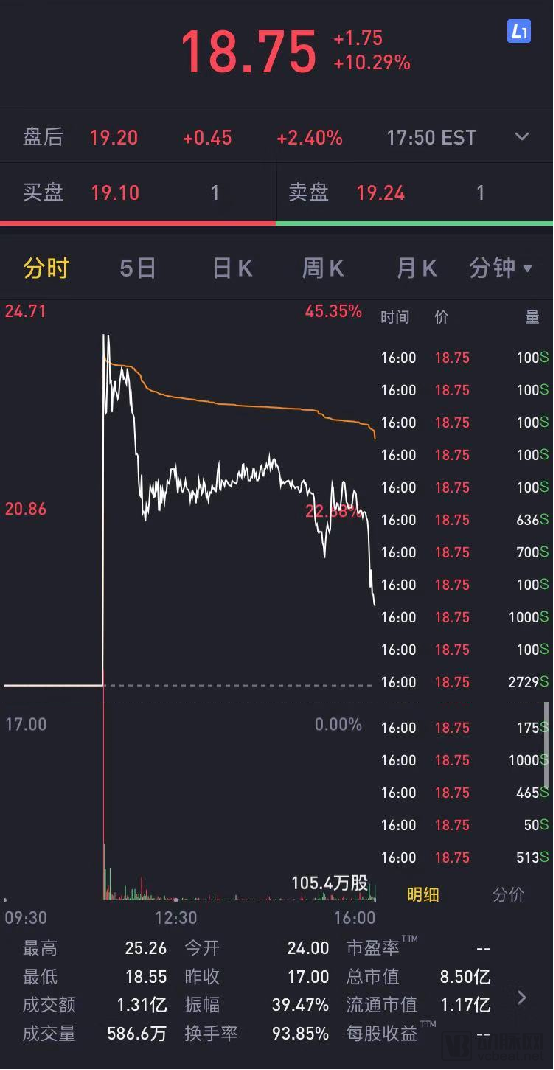
VCBeat learned that on February 6, 2020, U.S. time, Beam Therapeutics listed on the Nasdaq. Feng Zhang, David Liu, and J. Keith Joung rang the Nasdaq opening bell together for the second time in nearly four years.Market Bell. Beam Therapeutics issued a total of 10,637,500 shares at an offering price of $17, the top end of its pricing range, raising over $180 million. On its first day of trading, the stock opened at $24, up 41.18% from the offering price. Beam’s share price ultimately closed at $18.75, marking a first-day gain of 10.29%.
(Chart source: Tiger Brokers)
In 2013, the advent of the CRISPR-Cas9 system revolutionized the previously inefficient landscape of gene editing, sparking a surge in development within the field of gene therapy. Amid this fervor, Feng Zhang, as a leading figure in CRISPR-Cas system research, became synonymous with the pinnacle of achievement in gene editing. Consequently, the company he founded naturally attracted widespread attention from all sectors.
While both Beam Therapeutics and Editas Medicine focus on gene editing for oncology and genetic disorders, making Beam appear at first glance to be a clone of Editas, its core technology extends beyond the conventional CRISPR-Cas9 system. Furthermore, Beam has adopted a three-pronged R&D strategy that leverages the distinct advantages of various delivery systems. These innovative approaches may well position Beam for greater long-term success.
It is uncommon for a single research team to provide foundational technical support to two different publicly listed companies. For a researcher, it is already no small feat to leverage their lifelong expertise to enable a single company to achieve the commercialization of scientific achievements. Yet gene editing is precisely such an extraordinary field. As many as eight companies are directly linked to the three principal founders of Beam Therapeutics, underscoring their substantial technological accumulation in the field of gene editing. Beyond their scientific prowess, the U.S. patents secured by Feng Zhang and the Broad Institute behind him in a fierce patent battle have further solidified the technological foundation of Beam Therapeutics.
As the immune system of bacteria, the CRISPR system was discovered as early as the 1990s; however, for nearly two decades thereafter, scientists failed to identify the correct method for harnessing it. It was not until 2012, when Doudna’s team published a paper in Science demonstrating successful gene editing in prokaryotic cells using the CRISPR/Cas9 system, that the potential of the CRISPR system began to be fully realized.
In early 2013, three laboratories successively demonstrated that the CRISPR/Cas9 system could efficiently edit the human genome: the Doudna team at the University of California, Berkeley; the George Church team at Harvard Medical School; and the Feng Zhang team at the Broad Institute. Among these, the Zhang laboratory further achieved simultaneous, precise multi-site genomic editing by employing multiple distinct guide RNAs in a single experiment, representing a more advanced capability than those demonstrated by the other two teams.
The CRISPR/Cas9 system has demonstrated remarkable capabilities far surpassing those of previous gene-editing systems, quickly placing the patents for this technology at the center of attention. Faced with such substantial commercial value, neither the Doudna team nor the Zhang Feng team yielded; both presented their research processes and data in an effort to prove that they had completed the relevant studies earlier than the other.
Ultimately, the U.S. Patent and Trademark Office granted the patent for CRISPR editing of eukaryotic genomes to the Broad Institute. In other regions worldwide, such as China and Europe, the relevant patents are held by the University of California, Berkeley.
In fact, prior to the onset of patent disputes, Feng Zhang, George Church, and Jennifer Doudna jointly founded Editas Medicine, hoping to resolve patent conflicts through collaboration. David Liu and J. Keith Joung also participated in the founding of Editas at the same time. Unfortunately, the patent battle between Doudna and Zhang erupted shortly thereafter. Doudna left Editas and established Intellia Therapeutics, which went public on the NASDAQ in May 2016.
Beam’s founding team is nearly identical to that of Editas, with Feng Zhang, David Liu, and J. Keith Joung all remaining among Beam’s founders, except for George Church. In addition, Beam’s founding team has brought in John Evans, an investor from ARCH Venture Partners, who also serves as Beam’s CEO. Previously, Mr. Evans held executive positions at Agios Pharmaceuticals, where he facilitated the collaboration between Agios and Celgene, helping Agios secure over $600 million in partnership revenues.
Editas’ technological foundation is the earliest discovered CRISPR/Cas9 system. Beam’s technological basis differs slightly from Editas; in addition to the CRISPR-Cas9 system, its gene-editing technologies include Cas12b nuclease-based DNA editing and Cas13a nuclease-based RNA editing. Beam has obtained exclusive licenses for the patents related to these two technologies from Harvard University.
Cas12b and Cas9 both belong to the CRISPR system, with Cas9 classified as Class II and Cas12b as Class V. In January 2019, Feng Zhang’s team published an article in Nature Communications that first disclosed a stable CRISPR-Cas12b cleavage system and identified Cas12b proteins suitable for use in human physiological environments. Compared with Cas9, the Cas12b protein re-engineered by Zhang’s team exhibits higher cleavage efficiency and a lower off-target rate. Furthermore, Cas12b has a smaller molecular weight, facilitating its delivery into cells.
RNA editing systems were discovered earlier; in October 2017, Feng Zhang’s team published a related article in Science, successfully performing RNA editing using an engineered Cas13b protein. Subsequently, building on this research, his team improved the RNA editing system and achieved both A-to-I and C-to-U editing.
According to disclosures in Beam Therapeutics’ prospectus, Beam and Editas Medicine have engaged in certain patent licensing arrangements. This licensing agreement allows each party to access a portion of the other’s licensed patents. Under this agreement, Beam paid Editas an upfront fee of $180,000 and issued to Editas approximately 1.83 million shares of Series A-1 Preferred Stock and approximately 1.22 million shares of Series A-2 Preferred Stock. The two companies maintain intricate ties through connections among their founding teams, which may give rise to further collaborative opportunities in the future.
The CRISPR-Cas system forms the technological foundation of Beam Therapeutics. Nuclease-based gene editing technologies empower Beam to address certain genetic diseases that currently lack clinical solutions. At the cellular level, gene editing using the CRISPR-Cas system is already relatively mature. However, in the translation from research to commercial products, selecting an appropriate delivery method to ensure that the base editing system can efficiently enter target cells and exert its therapeutic effect is a core concern for Beam Therapeutics during product development.
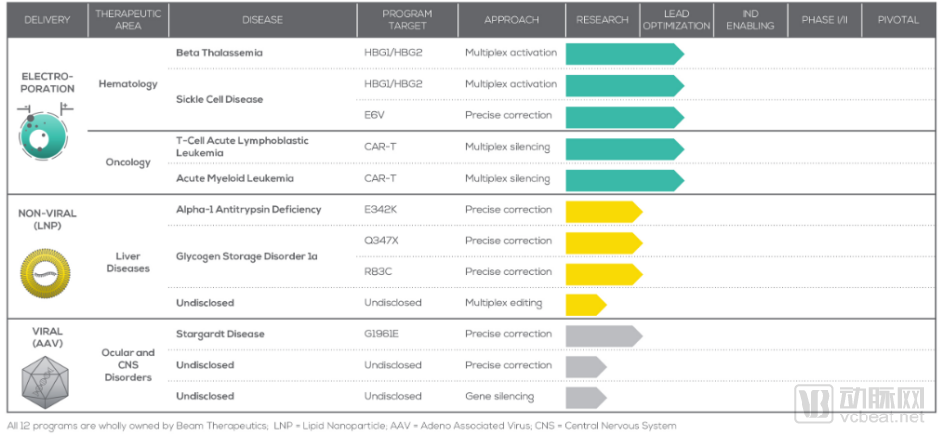
Beam Therapeutics' Key Product Pipeline
Based on the different delivery methods, Beam has established three main business lines: blood disease treatment and tumor cell therapy using electroporation, liver disease treatment using non-viral transfection (also known as chemical transfection), and ophthalmic and central nervous system disease treatment using adeno-associated virus (AAV). These three distinct delivery methods form a modular R&D platform, enabling Beam to effectively manage its risks and enhance its capability to develop similar products.
For most pharmaceutical R&D companies, each drug is a standalone product, with limited common modular components across different drugs. Consequently, R&D experience is often not transferable to the development of new drug candidates. However, in the field of gene editing, differences in treating various diseases primarily lie in the specific modification sites, while there is significant overlap in delivery methods, manufacturing processes, and other aspects. Therefore, once lead products have been validated, the associated expertise can be directly applied to the development of new products, thereby saving substantial costs and time.
Leveraging this cost advantage, Beam’s simultaneous advancement of its “three-pronged” strategy has further enhanced the stability of its R&D efforts. Electroporation, non-viral transfection, and adeno-associated virus (AAV)-mediated transfection are currently the predominant methods used in cell transfection, yet each has its limitations. By applying different technical approaches tailored to specific disease types, Beam has successfully circumvented the drawbacks of these individual techniques, allowing each method to play to its strengths.
Electroporation utilizes high-intensity electric fields to instantaneously increase cell membrane permeability, thereby facilitating the uptake of exogenous molecules from the surrounding medium and ultimately enabling the intracellular delivery of macromolecules such as DNA, RNA, and proteins.
Electroporation offers high transfection efficiency but is limited to ex vivo applications. Therefore, Beam Therapeutics applies electroporation in the development of therapies for blood disorders and tumor cell treatments. After completing gene editing of hematopoietic stem cells or immune cells ex vivo, these cells are transplanted back into patients to achieve therapeutic cures.
The development of products using electroporation is the fastest-advancing segment of Beam’s current pipeline, having moved beyond early-stage research into process optimization. This product category represents the primary focus of Beam’s pipeline efforts, with plans to conduct in vivo proof-of-concept studies for select products in 2020 while simultaneously initiating Investigational New Drug (IND) applications for others.
Beam is currently focusing on sickle cell disease and beta-thalassemia in the field of hematologic disorders. For these severe genetic diseases, Beam offers two distinct therapeutic approaches, corresponding to three respective products.
The first approach is similar to Zynteglo, which was approved in 2019, and works by increasing HbF expression levels to compensate for hemoglobin deficiency. However, while Zynteglo directly overexpresses the HbF gene in cells, Beam Therapeutics aims to reactivate HbF expression by using gene editing to mutate the binding sites of cytokines that suppress HbF protein expression.
Another solution offered by Beam is the direct editing of disease-causing mutations in the β-globin gene. In vitro experiments have demonstrated that their technology can repair 40–70% of functional mutations, while relevant studies indicate that a 20% mutation repair rate is sufficient to cure the disease.
In the field of cell therapy, Beam is addressing the current limitations of CAR-T therapy by developing allogeneic, off-the-shelf cell therapy products. By employing electroporation in combination with multiple guide RNAs, Beam can simultaneously edit three genes—β2M, TRAC, and PD-1—to prevent alloimmune rejection, enhance T-cell receptor surface expression, and counteract immunosuppression.
The non-viral delivery methods mentioned by Beam Therapeutics primarily refer to lipid nanoparticle (LNP) delivery. LNP-based nucleic acid delivery systems are currently a relatively mature platform. mRNA is highly susceptible to degradation by RNases in the human physiological environment and faces challenges in cellular uptake. LNPs encapsulate mRNA encoding gene-editing components, providing protection against degradation while facilitating intracellular delivery into target cells via endocytosis.
Beam is preparing to develop a leading nano-liposomal formulation for the precise delivery of mRNA encoding gene-editing components into hepatocytes.
Nano-liposomal formulations also have their drawbacks, primarily high production costs that hinder repeated dosing, as well as significant limitations on the size of cargo molecules. Consequently, Beam Therapeutics has focused its hepatocyte therapy efforts mainly on Alpha-1 Antitrypsin Deficiency and Glycogen Storage Disease Type Ia. Both diseases have well-defined pathogenic mutations: the former involves only one major mutation site, while the latter involves two. For such editing tasks requiring modifications at few sites, the cargo capacity of nano-liposomes is fully sufficient to achieve therapeutic effects after a single dose. This approach effectively circumvents the issues of high cost and limited cargo capacity associated with nano-liposomal formulations.
Adeno-Associated Virus (AAV) is a small, non-pathogenic virus that can carry therapeutic genes, making it an ideal vector for gene therapy. Scientists have been studying adeno-associated viruses for many years. Different AAV variants can deliver gene fragments to various tissues or organs, including the eyes, liver, muscles, lungs, and central nervous system.
Because the DNA base editor used by Beam exceeds the ~4.5 kb packaging limit of adeno-associated virus (AAV) vectors, the company employed a novel split-intein technology to divide the editor between two viral vectors, subsequently using co-infection with both viruses to enable cellular expression of the full-length base editor. According to Beam’s experimental results, this approach achieves editing efficiency comparable to that of the full-length editor.
Beam is currently using this approach to develop gene therapies for the treatment of Stargardt disease. This rare disorder is typically caused by autosomal recessive mutations in the ABCA4 gene, leading to abnormal accumulation of lipofuscin (a yellowish fatty pigment) in retinal cells and ultimately resulting in photoreceptor death. The most common mutation in the ABCA4 gene is the G1961E point mutation.
Adeno-associated viruses (AAVs) have played a pivotal role in the treatment of other ophthalmic diseases; however, due to the large size of the ABCA4 gene, it cannot be packaged into a single viral vector, rendering conventional overexpression-based therapies ineffective. In contrast, gene editing technologies are not constrained by gene size and can directly correct mutation sites within the ABCA4 gene.
The limitations of adeno-associated virus (AAV) lie in its immature manufacturing process, which makes it difficult to ensure consistent product quality during large-scale production. Ophthalmic therapeutic products are characterized by low dosage requirements, thus imposing less stringent demands on large-scale manufacturing. This aligns well with the current technological constraints of AAV, effectively circumventing its key bottlenecks.
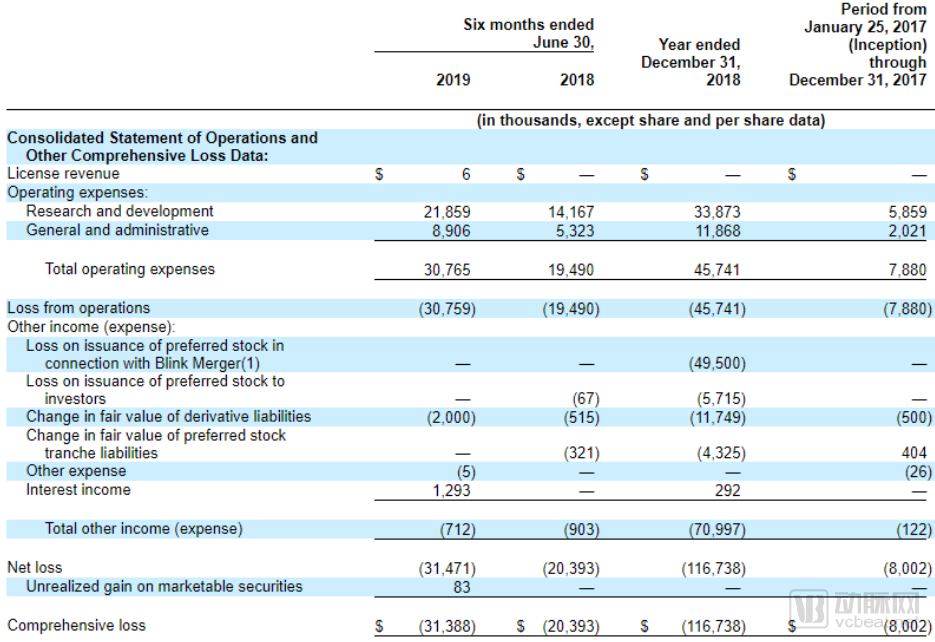
Key Financial Data of Beam Therapeutics
All of Beam Therapeutics’ products are currently in the preclinical stage, but its R&D investment has begun to take shape. In 2018, Beam invested a total of $33.87 million in R&D, with $14.167 million spent in the first half of the year. By the first half of 2019, Beam’s R&D expenditure had risen to $21.859 million.
The funds raised by Beam in this offering will also be continued to be invested in the research and development progress of products, including proof-of-concept for existing products, IND filings, and the exploration and launch of other potential projects.
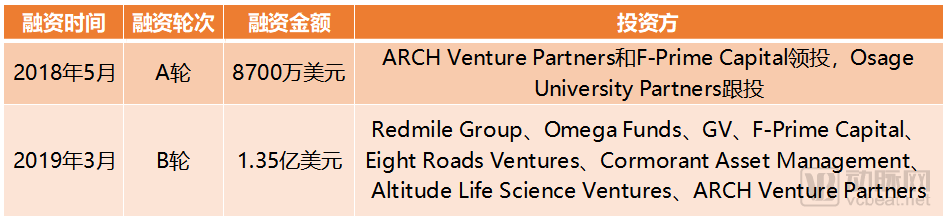
Beam Therapeutics' Pre-IPO Financing Journey
However, Beam’s financial position remains very healthy at present. The two funding rounds prior to its IPO raised a total of $222 million. Among the investors, prominent firms ARCH Venture Partners and F-Prime Capital participated in both rounds, while GV, Eight Roads Ventures, and other institutions joined in the second round.
Gene editing technology offers therapeutic possibilities for many previously untreatable genetic disorders, prompting numerous healthcare-focused investment institutions both in China and abroad to closely monitor the development of the gene therapy sector related to gene editing. According to statistics from VCBeat, gene therapy has become one of the fastest-growing segments within the healthcare industry.