

Schrödinger IPO Soars 68.47% on Nasdaq Debut, Backed by Bill Gates, Google, WuXi AppTec, and Qiming Venture Partners
Schrodinger
Supplier of molecular simulation and enterprise software solutions
On February 7, 2020, Eastern Time, Schrödinger (hereinafter referred to as “Schrödinger”), a global leader in molecular simulation technology and enterprise software solutions backed by continuous investments from Bill Gates, officially listed on the NASDAQ under the ticker symbol SDRG. Real-time trading data from Tiger Brokers’ U.S. stock platform showed that SDRG’s share price surged sharply after the opening, reaching an intraday high of 82.35%. With active trading, the stock ultimately closed at $28.64, representing a gain of 68.47%.
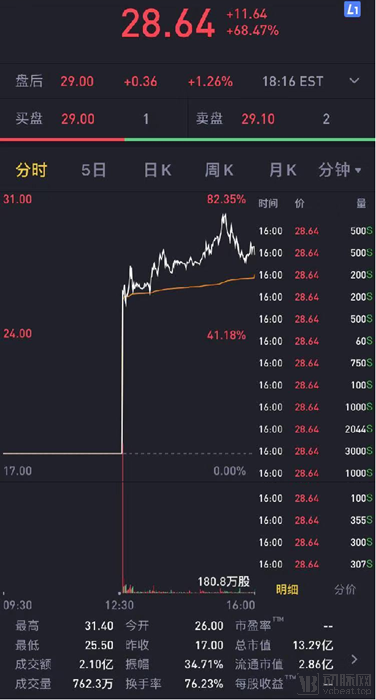
SDGR’s First-Day Stock Price Trend Data source: Tiger Brokers
Under the IPO plan, Schrödinger will offer 10 million shares of common stock at a midpoint price of $15 per share, raising approximately $150 million in total, excluding the option to purchase additional shares from the underwriters. The IPO underwriters include Morgan Stanley, BofA Securities, Jefferies, and BMO Capital Markets. Prior to its public listing, Schrödinger had already completed multiple rounds of financing in the primary market, cumulatively amounting to hundreds of millions of dollars.
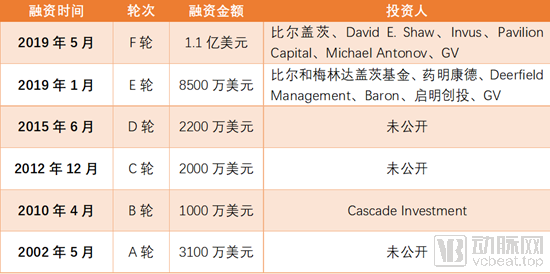
Overview of Schrodinger’s Primary Market Financing — Data Source: VCBeat Knowledge Base and Crunchbase
Since 2010, Bill Gates has led four consecutive rounds of investment in Schrödinger. “Schrödinger’s practice has demonstrated that precise molecular design can significantly accelerate drug discovery and yield unexpected solutions, thereby benefiting patients,” pointed out Bill Gates. “We are keen to support Schrödinger’s continued development.”
Li Ge, Chairman and Chief Executive Officer of WuXi AppTec Group, also stated regarding the investment in Schrödinger, “We are deeply impressed by Schrödinger’s ability to drive new drug development through innovative approaches. We look forward to this investment accelerating progress for patients suffering from serious diseases.” Early intervention by external capital has enabled Schrödinger to rapidly expand the capabilities of its widely adopted computational platform for drug discovery and materials research, while increasing its team of scientists and developers to build a robust product pipeline.
Schrödinger, founded by Richard Friesner and Bill Goddard in 1990, is dedicated to developing and applying advanced computational methods to transform how scientists design therapeutics and materials. Richard Friesner is a Professor of Chemistry at Columbia University and Director of the Center for Biomolecular Simulation at Columbia. He is a member of the National Academy of Sciences and the American Academy of Arts and Sciences, and has received a Sloan Foundation Fellowship, the Camille and Henry Dreyfus Teacher-Scholar Award, and an NIH Research Award.Currently, Schrödinger has nearly 300 employees, with operations in the United States, Europe, Japan, and India, as well as commercial partners in China and South Korea.
Over the past 30 years, through the collaborative efforts of hundreds of scientists and software engineers, Schrödinger has developed a physics-based computational platform capable of predicting key molecular properties with high precision, and leverages artificial intelligence to compress the time required to explore billions of molecules down to just a few days. Schrödinger combines physics-based and machine learning-based scoring methods to create an active learning approach that enables machine learning models to prioritize molecular interactions identified through physics-based analyses.
Currently, Schrödinger can run machine learning models with extremely high precision, enabling its molecular screening capabilities to approach laboratory-grade performance. In a prior peer-reviewed study encompassing nearly 3,000 molecules across approximately 90 distinct projects, the error profile of this method demonstrated that its predictions of protein-binding affinity closely match the accuracy achieved by researchers in experimental laboratory settings.
Unlike the currently popular computational drug discovery technologies (i.e., “AI + Drug Discovery”), Schrödinger employs computational chemistry techniques. As a cutting-edge branch of traditional chemistry, this field focuses on applying computer simulations to help solve chemical problems. Theoretically, when a drug molecule binds to its target protein, the binding affinity directly influences the extent to which the protein’s function is modulated. Therefore, accurately predicting the binding affinity between drug molecules and target proteins can significantly accelerate the discovery of new effective drugs.
However, accurately calculating the binding affinity between drug molecules and proteins is extremely complex, requiring a comprehensive characterization of all physical interactions involved in the binding process. This includes the entire complex period from small-molecule conformational changes and the displacement of water molecules within the protein’s binding site to the final formation of the protein–molecule complex, encompassing all interactions achieved between the molecule and the protein.
Schrodinger’s solution is named “FEP+.” FEP is based on the “Free Energy Perturbation” method, which continuously and with high precision evaluates the contribution of physical interactions at every stage to the binding of drug molecules to proteins. Free Energy Perturbation refers to the process of perturbing or transforming an initial molecule into a target molecule; by assessing the changes in binding affinity resulting from this perturbation, the protein-binding affinity of the molecule is determined.
In FEP+, Schrödinger runs a computationally efficient molecular dynamics engine on GPUs, integrating classical molecular mechanics force fields and automated workflows with efficient, enhanced sampling methods to enable automatic atom mapping and interaction map assignment, thereby ensuring the accuracy of free energy perturbation calculations.
Compared with traditional drug discovery methods, the technical advantages of FEP+ lie in its ability to shorten drug discovery timelines, reduce costs, and increase the likelihood of success. Typically, FEP+ can evaluate within hours the molecular weight that would take weeks to synthesize and analyze under laboratory conditions, whereas traditional drug discovery methods can only synthesize approximately one thousand molecules per year. This figure is far lower than the potential for novel molecules offered by the FEP+ platform, which explicitly evaluates billions of molecules per week.
According to Schrödinger’s IPO prospectus, in 2018, all of the global top 20 pharmaceutical companies became its clients, generating $22 million in revenue, which accounted for 33% of its annual total. Researchers at more than 1,250 academic institutions worldwide have installed Schrödinger’s drug discovery software, and the company has been attracting a growing number of emerging biotechnology firms and materials science manufacturers as users.
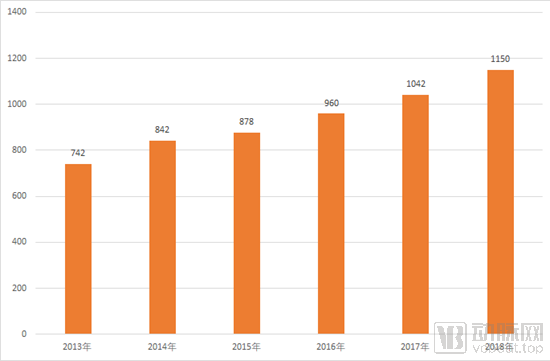
Number of Software Customers, 2013–2018 Data Source: sec.gov
Schrödinger’s customer base is relatively dispersed and exhibits high stickiness. In 2018, the top 10 software customers accounted for 24% of total revenue, with no single software customer contributing more than 5%. During the reporting period ended December 31, 2018, and over the preceding five fiscal years, the retention rate for users with an Annual Contract Value (ACV) exceeding $100,000 was above 96%. Notably, the number of users with ACV greater than $100,000 and those with ACV greater than $1 million maintained steady growth during this period.
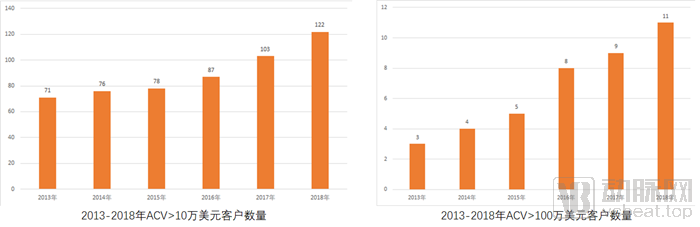
Number of Customers with ACV > $100,000 and ACV > $1 Million, 2013–2018 Data source: sec.gov
Data show that the world’s top 20 pharmaceutical companies purchasing Schrödinger’s software have used it for an average of more than 15 years, making it to some extent a standard tool for drug discovery at these firms. Beyond drug discovery, Schrödinger is also working to broadly apply FEP+ to address industrial challenges in molecular design across sectors such as aerospace, energy, semiconductors, and electronic displays.
Just as many new drug R&D service providers consider extending downstream to more profitable but riskier segments once their business stabilizes, Schrödinger has rapidly built dozens of drug pipelines in development through internal and collaborative drug R&D. However, this very segment, which Schrödinger views as a future growth driver, is regarded by investors in the U.S. capital markets as a risk that could impact investment returns.
In-house Drug R&D
Since 2018, Schrödinger has been progressively building its own proprietary drug pipeline, leveraging its in-house computational platform to rapidly advance the early discovery of first-in-class therapies. The initial focus of its internal programs was on the discovery and development of inhibitors targeting pathways involved in the DNA damage response and targets in genetically defined cancers.
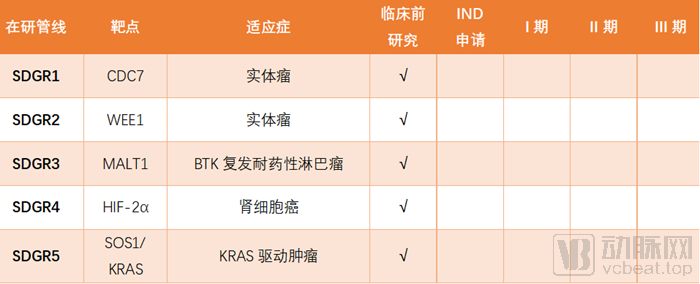
Internal Drug R&D Pipeline Data Source: sec.gov
Despite Schrödinger’s assertion that its selection of novel drug targets is grounded entirely in comprehensive analyses of human targets and drug discovery programs, and that new pipeline additions are prioritized based on thorough evaluations of industry dynamics, commercial interests, and clinical utility—with a focus on candidates exhibiting high commercial and therapeutic potential—external observers still perceive a certain degree of risk associated with its new drug development business. Some analysts have pointed out that Schrödinger should concentrate on its core competency in software development.
It is worth noting that in its prospectus, Schrödinger specifically emphasized that more than half of its over 400 employees hold Ph.D. degrees, and that it has established a multidisciplinary internal drug discovery team comprising more than 70 experts with specialized knowledge in preclinical and early-stage clinical research across the fields of protein science, biochemistry, biophysics, pharmaceuticals, and computational science. This underscores the company’s strong commitment to advancing new drug research and development.
Collaborative Drug Development
Currently, Schrödinger is collaborating with more than ten biopharmaceutical companies on 25 drug development programs. The therapeutic areas under investigation include, but are not limited to, oncology, antifungal diseases, fibrosis, inflammatory bowel disease, metabolic disorders, autoimmune diseases, various immuno-oncology programs, cardiopulmonary diseases, and tuberculosis.
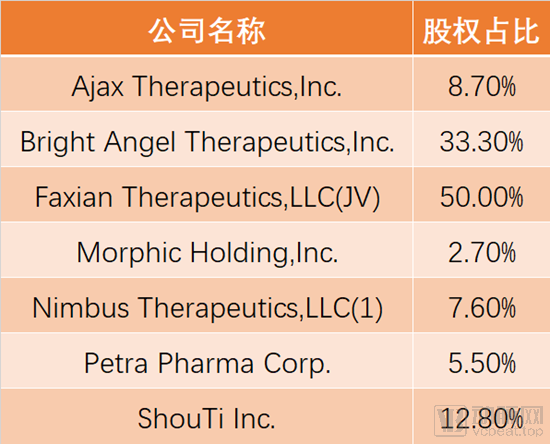
Collaborative Drug R&D Projects Data Source: sec.gov
Co-development is an effective way to safeguard the return on investment in new drug development. For Schrödinger, as long as the new drug development pipeline is not abandoned, it will not incur any losses. Under the terms of the cooperation agreement, Schrödinger agrees to use its proprietary computational platform and technology to specifically design target-specific drugs for collaborative projects, while the entity leading the collaborative project retains the intellectual property rights associated with any molecules developed under such collaboration. Typically, Schrödinger is not required to provide non-public information, including clinical trial results (such as safety and efficacy data), regulatory communications, or commercialization plans and strategies.
For example, in 2009, Schrödinger participated in the founding of Nimbus, which later sold an investigational drug to Gilead for $1.6 billion in 2016. In clinical trial data released at the end of last month, this drug failed to meet its primary endpoints; nevertheless, Schrödinger received $46 million in upfront payments and $46 million in milestone payments from the deal. Additionally, Morphic, founded by Schrödinger in 2014, has gone public. These investments have generated additional revenue for Schrödinger based on successful drug development outcomes.
However, as its collaboration strategy evolves, Schrödinger is seeking more direct control and greater responsibility over various aspects of drug development projects, as well as a higher percentage of the value generated from completed programs.
For example, under the collaboration with Takeda, after reaching a consensus on targets of interest, Schrödinger’s drug discovery team will conduct all drug discovery research and pharmacological activities during the candidate development phase. In this partnership, Schrödinger controls the drug discovery process and retains all intellectual property rights to any candidates identified under the program until Takeda exercises its option to license the program. The collaboration with Takeda is expected to involve drug discovery research for up to six targets; to date, three programs have been launched in the areas of schizophrenia, oncology, and neurodegenerative diseases, resulting in multiple milestone payments.
A effective way to build brand awareness is to provide potential customers with full access to the product. For Schrödinger, this strategy serves a dual purpose: on one hand, it expands the application scenarios of its technology platform. In 2018, after serving more than 1,250 academic institutions worldwide, Schrödinger began extending its computational platform to materials science applications in fields such as aerospace, energy, semiconductors, and electronic displays; on the other hand, it deepens its presence in the vertical sector of new drug development by extending downstream, thereby diversifying revenue streams and reducing overreliance on any single source of income.