

Rising Domestic Brands vs. Century-Old Global Giants: A Comprehensive Review of Leading Mask Manufacturers Worldwide

3M
International Comprehensive Product Manufacturer
On January 20, 2020, after Academician Zhong Nanshan confirmed human-to-human transmission of the novel coronavirus, public awareness of the epidemic gradually increased. Feng Zijian, Deputy Director of the Chinese Center for Disease Control and Prevention, stated that the novel coronavirus is primarily transmitted through respiratory droplets, with possible indirect transmission via objects contaminated by respiratory secretions.
Drawing on the 2003 SARS outbreak, the rapid transmission of the virus via respiratory droplets proved difficult to control, whereas wearing masks can directly prevent the inhalation of virus-laden droplets. Masks filter out harmful aerosols—including dust, smoke, mist, bacteria, and toxic gases—by adsorbing and blocking them with filter media, thereby keeping hazardous substances at bay.
There is a wide variety of protective masks currently available on the market. Based on their intended use, masks are generally categorized into four main types: ordinary gauze masks, medical masks, daily-use protective masks, and industrial dust-proof masks. With regard to medical masks specifically, they are typically divided into three categories according to their protective efficacy and scope of application: general medical masks, medical surgical masks, and medical protective masks. However, there is no unified international standard for these different types of masks.
VCBeat (WeChat: vcbeat) has compiled a list of 12 prominent domestic and international companies in the mask industry, aiming to explore its origins, market landscape, mask types, and industrial trends both in China and abroad.
The earliest recorded “mask-like objects” appeared in the 6th century BC. In ancient Persian Zoroastrianism, the breath of laypeople was considered unclean; therefore, cloth was used to cover the face during religious rituals. Reliefs on the doors of ancient Zoroastrian tombs depict priests wearing “masks.”
# TranslationThe earliest recorded use of face masks dates back to the Yuan Dynasty in China. In *The Travels of Marco Polo*, it is documented that in the imperial palace of the Yuan Dynasty, “those who served food all covered their mouths and noses with silk cloth, so that their breath would not come into contact with the food.” This silk cloth used to cover the mouth and nose was the most primitive form of the face mask.
The true application of masks in medical settings dates back to the late 19th century, when a physician at a German clinic posited that airborne pathogens could cause wound infections and that bacteria-laden saliva expelled during speech could exacerbate wound deterioration. Consequently, he recommended that surgeons and nurses wear gauze-based coverings over their mouths and noses during operations. This measure proved effective, significantly reducing the rate of postoperative wound infections. Thereafter, physicians worldwide adopted this practice.
Florence Nightingale, the mother of nursing, once said, “Air, like water, can become contaminated.” Wearing a mask can block bacteria outside the gauze layers, preventing these harmful agents from entering and causing harm. A few years later, a French physician developed a six-layer gauze mask that was sewn onto the collar of surgical gowns; it was used by flipping up the collar. Later, the mask was suspended from the ears using a looped strap. Thus, the modern face mask was born.
Masks emerged from hospitals to become a common household item, a shift driven by the "Spanish Flu," the most reciprocally impactful infectious disease in history, during which mask-wearing was mandatory. Subsequent outbreaks, including SARS in 2003, the H1N1 influenza in 2009, and the Ebola virus in 2014, have kept masks—though not originally a daily necessity for residents—in the spotlight alongside concerns about influenza.
Recently, officials from relevant departments of the Ministry of Industry and Information Technology stated that “China is the world’s largest producer and exporter of face masks, with its annual output accounting for approximately 50% of the global total. China’s maximum daily production capacity for face masks exceeds 20 million units.” Based on this maximum capacity, VCBeat estimates that China’s maximum annual output (calculated over 365 days) reaches 7.3 billion units, while the global annual output amounts to 14.6 billion units.
According to data from CCID Consulting, China's mask industry experienced rapid development from 2015 to 2019, with an output value growth rate maintained at over 10%. In 2019, China's mask production exceeded 5 billion units, and the output value reached RMB 10.235 billion, among which medical masks capable of viral protection accounted for as high as 54%. Affected by the coronavirus epidemic in 2020, the output value of medical masks surpassed RMB 13 billion. The growth rate is expected to increase significantly (projected to reach 28%), driving the growth of the entire mask industry's output value, which will exceed RMB 13 billion for the year.
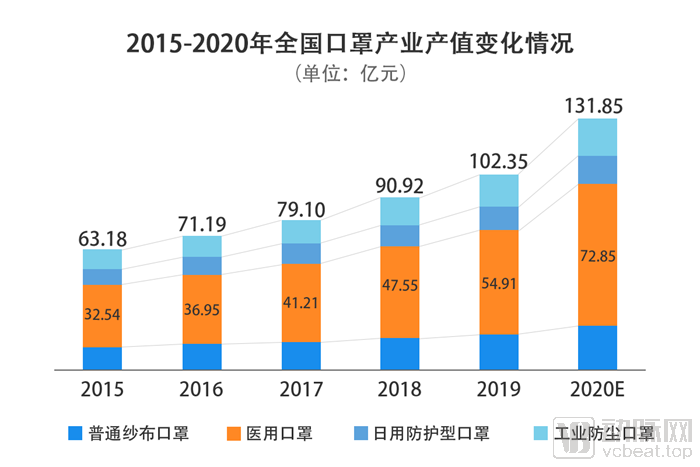 Source: CCID Consulting; Image edited by VCBeat
The rapid development of the mask industry has been driven by the supply of upstream raw materials, namely nonwoven fabrics, with China having become the world’s largest producer of nonwoven fabrics.
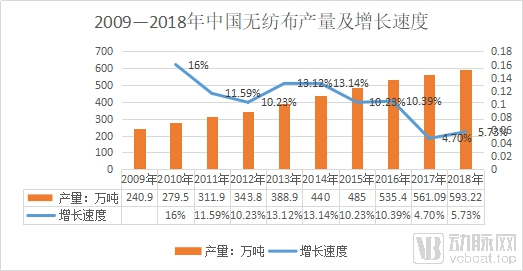 Data Source: Zhiyan Consulting | Chart by VCBeat
Nonwoven fabrics can be classified into spunlace, thermal-bonded, wet-laid, spunbond, and melt-blown types based on their manufacturing processes. Among these, melt-blown nonwoven fabric primarily uses polypropylene as its raw material, with fiber diameters ranging from 0.5 to 10 micrometers. These ultrafine fibers, characterized by a unique capillary structure, increase the number of fibers per unit area and the specific surface area, thereby endowing melt-blown fabric with excellent air filtration properties, making it a superior material for face masks.
According to data from Zhiyan Consulting, China's polypropylene production capacity reached 22.58 million metric tons per year by the end of 2018. For a long time, the polypropylene industry has been characterized by the dominant production capacities of two major groups: Sinopec and PetroChina. In recent years, with technological advancements and the entry of multiple private and joint-venture investors, polypropylene production capacity has been gradually increasing.
Currently, domestic manufacturers engaged in melt-blown production include Xinlong Holding (000955), Dawn Polymer (002838), TEDA Co., Ltd. (000652), Jiangsu Liyang New Material Co., Ltd. (831783), Jingfa Co., Ltd. (839716), Shandong Junfu Nonwoven Co., Ltd., Nantong Liyang Clean Material Co., Ltd., and Beijing Quantum Jinzhou Nonwoven Technology Co., Ltd., among others.
It is understood that one ton of melt-blown fabric can produce 1 million surgical masks or more than 500,000 N95-level masks. TEDA Shares, a leading enterprise in the industry, stated that its total annual production capacity of melt-blown fabric reaches 7,000 tons. This means that the company’s annual output alone is sufficient for mask manufacturers to produce 7 billion masks.
Regarding downstream sales channels, products in China are currently sold primarily through pharmacies and hospitals; wholesalers and retailers; and online shopping platforms such as Taobao and JD.com.
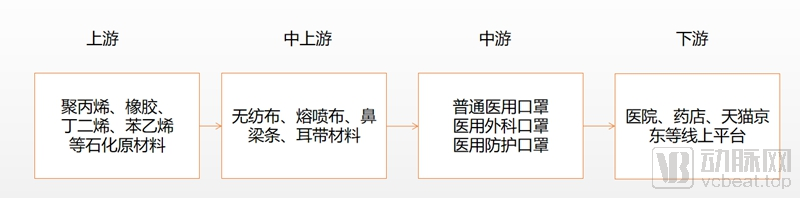
Chart by VCBeat based on public information
According to a report published by Grand View Research, the global market size for disposable masks was $753.3 million in 2018, with protective masks accounting for more than 35% of the total. The industry is highly competitive, with participants competing across multiple dimensions, including product types and pricing.
However, in this sector, growing consumer demand for innovation, high filtration efficiency, and specialized masks is expected to drive key players to enhance their core competitiveness through these avenues in the coming years. The volume of masks supplied for personal use is projected to achieve a compound annual growth rate (CAGR) of 6.4% from 2019 to 2025.
In terms of distribution channels, offline sales dominated the market in 2018, accounting for 80.8% of the total. Offline channels include retailers, distributors, supermarkets, convenience stores, brick-and-mortar stores, and direct sales. Driven by value-added services such as food delivery and cash-on-delivery, e-commerce is gradually becoming a primary sales channel, with online sales projected to grow at a compound annual growth rate (CAGR) of 6.3% from 2019 to 2025.
Although face masks are small, major enterprises must conduct fit testing on protective masks. After the test subject properly dons the mask, they are required to perform a series of actions, including normal breathing, deep breathing, head movements from side to side and up and down, speaking (counting from 1 to 100), making facial expressions (smiling while frowning), and bending over. Throughout this process, one end of the mask remains connected to a respirator fit tester, which displays the fit factor of the tested mask in real time. Only when the instrument indicates a passing result is the product deemed qualified for factory release and sale.
With the advancement of globalization, Chinese personal shoppers have become prevalent worldwide. The pandemic has prompted those previously engaged in purchasing goods from South Korea, the United States, and Europe to pivot toward the mask business. So, what are the requirements and standards for masks in different countries?
In the United States, N95 filtering-facepiece respirators (FFRs) and surgical masks are currently the two most widely used types of face masks. According to the official website of the U.S. Centers for Disease Control and Prevention (CDC), N95 filtering-facepiece respirators are one of seven types of particulate-filtering respirators certified by the National Institute for Occupational Safety and Health (NIOSH), achieving a filtration efficiency of over 95% for non-oily particles with a diameter of 0.3 μm.
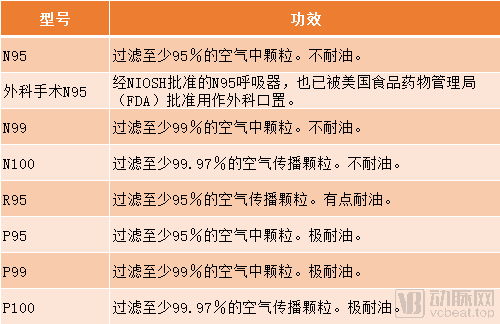 NIOSH-Approved Particulate Respirator Types
(Source: U.S. Centers for Disease Control and Prevention website; compiled by VCBeat)
95% is the minimum filtration level approved by NIOSH. The U.S. Department of Labor has recommended that healthcare workers use N95 respirators to prevent airborne microbial diseases such as influenza and tuberculosis. Disposable medical masks (DMMs) have lower requirements for filtration efficiency against particles and bacteria than N95 respirators, but due to their disposable nature and cost advantage, they remain the preferred choice in most hospitals.
In China, respirators with protection levels equivalent to N95 include medical protective masks compliant with the Chinese compulsory standard GB 19083-2010 and KN95-level protective masks compliant with GB 2626-2006. China classifies these masks into two categories: KN (for non-oily particulates) and KP (for oily particulates), each available in three filtration efficiency levels: 90, 95, and 100.
In South Korea, KF94 masks adhere to a standard established for domestically produced products. According to data from the official website of the Ministry of Food and Drug Safety (MFDS), masks meeting this standard achieve a filtration efficiency of greater than 94% for particles with a diameter of 0.4 μm. In other words, KF94-certified masks can filter out at least 94% of particles measuring 0.4 μm in diameter.
In the European Union, the standard for respiratory protective equipment certification established by the European Committee for Standardization (Comité Européen de Normalisation, CEN) classifies particulate filter media into two categories: protection against solid particles and protection against liquid particles. Qualified filter media for solid particle protection are categorized into three levels—P1 (FFP1), P2 (FFP2), and P3 (FFP3)—based on tested particle penetration rates. The minimum filtration efficiencies are as follows: P1: >80%; P2: >94%; P3: >97%.
In Japan, the Ministry of Health, Labour and Welfare’s “Specifications for Dust-Proof Masks” stipulates that disposable masks capable of filtering more than 95% of sodium chloride particles during testing are classified as DS2 masks, with dust-proofing efficacy similar to that of N95 masks.
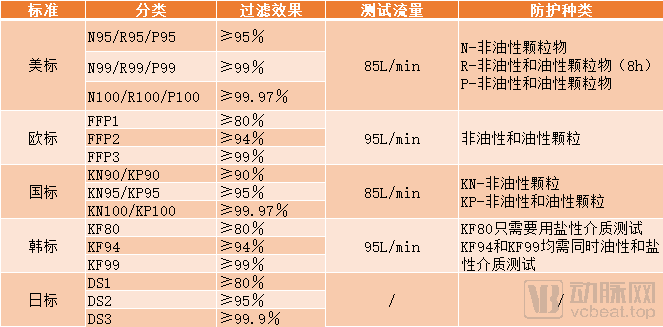 Mask Standards in Various Countries (Compiled by VCBeat from Public Sources)
When discussing Japanese face masks, it is essential to address the country’s mask-wearing culture. In Japan, it is a common sight to see people wearing masks in various settings. The reasons for doing so are diverse, including hay fever, influenza prevention, bad breath control, expression management, and covering facial acne. Upon reflection, the absence of major outbreaks of respiratory infectious diseases such as influenza in Japan in recent years may be partly attributed to this widespread practice of mask-wearing.
To gain a deeper understanding of mask sales in China, VCBeat selected leading mask brands for analysis. By examining dimensions such as the domestic establishment date, product types, and financing activities, we aim to further explore the landscape of China’s mask industry.
Based on publicly available ranking information from major websites, the leading domestic mask brands by sales volume are listed below:
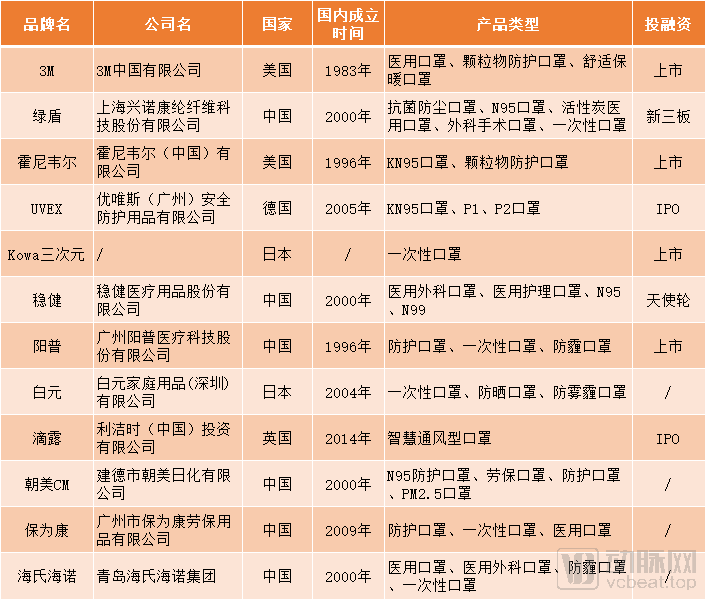 Sources: VCBeat Database, Crunchbase, company official websites; Graphic by VCBeat
Rising Share of Domestically Produced Mask Brands
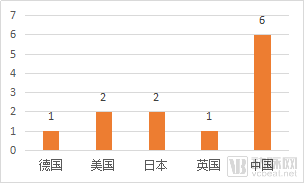
The development of China’s civilian mask industry started relatively late, tracing back to the 2003 SARS outbreak. In 2003, there were no standards for disposable medical masks, and the quantity and variety of civilian mask products were insufficient. It was in that same year that 3M shifted its focus from the industrial sector to the civilian market, producing and selling masks in China, where it captured a 90% market share. At that time, there were no well-known domestic mask brands, and brand equity had yet to be established.
As the novel coronavirus spreads, we have observed that major pharmacies and e-commerce platforms have begun selling domestically produced face masks, with Chinese brands such as Lvdun, Winner, and Haishi Hairuo gradually coming into public view.
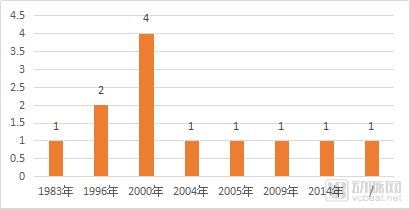
Most were established after 2000.
Among the six overseas companies, only Japan’s Kowa has not established a subsidiary in China; the other five brands have all set up subsidiaries in China to deeply penetrate the domestic market.
In terms of establishment date, 3M entered China the earliest, but its mask business in the country did not truly begin until 2003, the same year that Green Shield started to develop. Honeywell, which entered China in 1996, did not launch its mask business until after 2008. By 2000, domestic mask brands began to emerge. After the SARS outbreak, companies from Japan, Germany, and other countries successively entered China and established branch offices.
Listed Companies and Non-Financed Enterprises Account for a Large Proportion
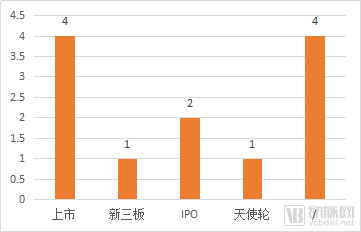
Among the aforementioned domestic mask manufacturers, only Guangzhou Improve Medical Instruments Co., Ltd. is listed on the A-share market; Shanghai Xingnuo Kanglun Fiber Technology Co., Ltd. is listed on the NEEQ (New Third Board); and Winner Medical plans to conduct an initial public offering (IPO) on the A-share market. The other companies have not secured any financing.
Among the aforementioned foreign companies, with the exception of Hakugen, which has never raised financing, most of the others are publicly listed or have undergone initial public offerings (IPOs).
118-Year-Old 3M
3M is now a company with a market capitalization of nearly $100 billion.
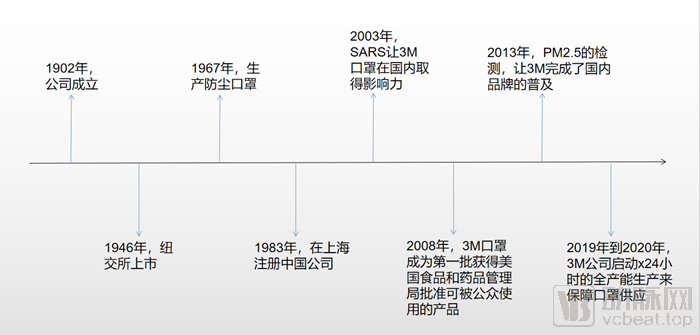
3M Company (full name: Minnesota Mining and Manufacturing Company) was founded in 1902, during the Guangxu reign of the Qing Dynasty in China. Over the past century, 3M has developed nearly 70,000 products and secured 100,000 patents, equivalent to an average of 1.7 new product developments per day.
Recently, 3M released its financial report for the fourth quarter of 2019, showing that the revenue for the fourth quarter was $8.11 billion. Among this, the consumer goods business, to which masks belong, contributed $1.27 billion, accounting for only 15.66%. Consumer goods are further divided into six major categories, and the sales of masks under the protective products category have a minimal impact on 3M's performance. However, in China's mask market, 3M holds nearly 90% of the share.
 VCBeat, compiled from public sources
Reviewing 3M’s century-long development, we find that the company participated in every major epidemic in China, leveraging these public health crises to penetrate the Chinese market. 3M masks first came into the public eye during the 2003 SARS outbreak. At that time, the masks, protective suits, and medical disinfectants used by doctors in hospitals were almost exclusively from 3M. As physicians are regarded as authorities in the eyes of the general public, this period marked the beginning of 3M’s establishment of brand recognition in the consumer protective equipment sector.
However, it was not until the smog crisis swept across China in 2013 that 3M truly entered the daily lives of the general public. At that time, people were gripped by fear of smog, and 3M masks once again became a common choice for ordinary consumers. Relevant data show that sales of 3M masks in China exceeded US$100 million in 2013.
According to data from the official website of the U.S. Centers for Disease Control and Prevention (CDC), there are 48 N95 respirator models among 3M masks, eight of which are FDA-cleared surgical masks: 1860, 1860S, 1870, 1805, 1805S, 1870+, 1804, and 1804S.
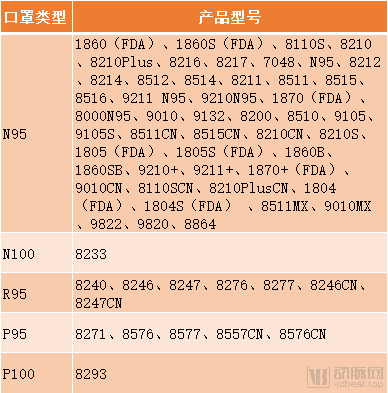
Source: Official website of the U.S. CDC; compiled by VCBeat
All disposable protective masks manufactured by 3M use polypropylene as the filtration material, with a surface protective layer composed of a polypropylene-polyester composite. A relevant representative from 3M China previously stated that 3M masks employ 3M’s proprietary high-efficiency electrostatic filter cotton technology. Compared to traditional filtration materials, this technology enhances the efficiency of particulate filtration without increasing breathing resistance.
“3M’s electrostatic electret filter media technology utilizes electrostatically charged fibers that attract and capture small particles like a magnet, creating high-efficiency, low-resistance filters. Thanks to this technology, our masks not only deliver high filtration efficiency but also provide exceptional comfort for wearers. On the right is the filter media from an air purifier; after three days of use in Shanghai, the material on the right still demonstrated excellent filtration performance,” said Cheng Ming, Vice President of R&D for 3M Greater China and General Manager of the 3M China Research & Development Center, during a speech.
Although face masks are small, they embody sophisticated craftsmanship, reflected in details such as material fit, filtration efficiency, breathability resistance, and mold precision. A deviation in any one of these aspects can render the entire product non-compliant.
Honeywell
In 1927, Honeywell was founded, primarily manufacturing voltage regulators. By 1935, Honeywell had already established its first distributor in Shanghai. For business sectors outside its existing portfolio, Honeywell typically adopts an acquisition strategy.
Recently, Honeywell released its fourth-quarter financial report, with revenue reaching $9.5 billion. Currently, Honeywell has three major business segments: Aerospace, Industrial Automation, and Performance Materials & Technologies and Petrochemicals. Face masks are a “by-product” of Honeywell’s Industrial Automation segment.
As the last line of defense in reducing casualties and occupational disease incidents in safety production and medical work, the reliability and safety of masks are crucial. Therefore, in addition to the quality and functionality that customers often focus on, Honeywell takes a more comprehensive approach, considering factors such as how long the product can last under extremely harsh conditions and whether its performance will change after prolonged use, to ensure true stability and reliability. It is understood that Honeywell’s eight comprehensive professional laboratories, equipped with advanced domestic and international instruments, can simulate severe conditions to conduct multi-angle, in-depth evaluations and tests on personal protective equipment, including masks, ensuring comprehensive safety for users.
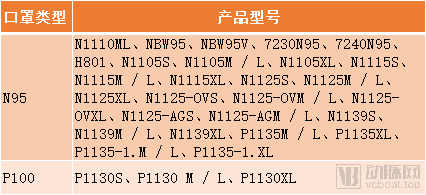
Source: CDC Official Website; Compiled by VCBeat
UVEX
UVEX positions itself as a "protector," with all its business lines centered around "protection." Its operations are primarily divided into two segments: safety products for sports venues and safety products for workplaces.
As a workplace safety product, UVEX offers a highly detailed range of respirators, enabling customers to select the appropriate model based on their specific work and risk profiles. In addition to being classified according to Chinese, European, and American standards into categories such as P1, P2, P3, and N95, their products are further organized into distinct series.
All UVEX masks are N95-certified. They are segmented into product lines such as the uvex silv-Air High Performance series, which features minimal breathing resistance and an integrated ventilation system; the uvex silv-Air c series, which emphasizes safety, fit, and comfort; and the uvex silv-Air e series, designed for the Chinese market with high cost-effectiveness and compatibility with uvex safety glasses.
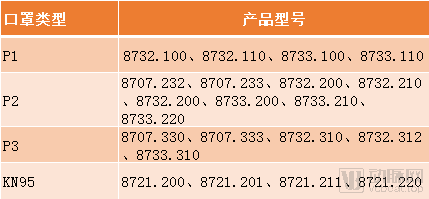
Uvex silv-Air Product Image Source: UVEX Official Website Compiled by VCBeat
UVEX masks feature a 360° exhalation valve that effectively reduces breathing resistance and minimizes the buildup of heat and moisture inside the mask. They are equipped with all-around sealing comfort pads to ensure an excellent seal and a snug fit against the face. Additionally, soft sealing pads are provided for the nose and chin, along with a comfortable nose clip, all designed to enhance wearer comfort.
Kimberly-Clark
Although Kimberly-Clark’s masks did not make it into the top ten domestic sales rankings, the company is indeed highly renowned in the fields of feminine care and infant care products.
Kimberly-Clark is a global leader in the health and hygiene care sector. Founded in 1872, the company operates production facilities in 35 countries and regions worldwide and employs 41,000 people. Its three core businesses are personal health care products, household paper products, and commercial consumer products, with annual sales exceeding $18 billion and products sold in more than 175 countries and regions.
Although Kimberly-Clark’s product portfolio is not as comprehensive as that of brands like 3M, its primary applications are in the medical sector. While Kimberly-Clark missed the opportunity in 2003, it donated masks and other personal health care supplies to the disaster-stricken areas during the 2008 Wenchuan earthquake.
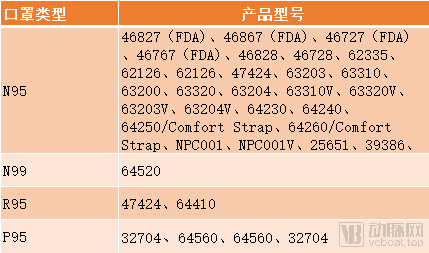
Source: CDC Official Website; Compiled by VCBeat
To meet the diverse needs of the public, in 2017, Kimberly-Clark partnered with Mundipharma China to launch the Kleenex Extraordinary Series of face masks. Designed specifically for Asian families, the Kleenex Extraordinary Series includes anti-haze, 3D, 3D humidifying, and black mask variants to cater to different usage scenarios. The anti-haze series offers a filtration efficiency of ≥95%, effectively protecting the respiratory system from particulate hazards such as sand, dust, and fine particles.
Shigematsu Japan
Shigematsu, founded in 1917 and formally known as Shigematsu Works Co., Ltd., is one of Japan’s leading manufacturers of professional respiratory protective equipment. Former Japanese Prime Minister Shinzo Abe wore a Shigematsu protective mask during his inspection of the Fukushima Daiichi Nuclear Power Plant accident site, and Chai Jing regularly uses the DD11V mask in her daily life.
On February 28, 2015, the smog investigation documentary “Under the Dome” was released. This 103-minute and 55-second film provided the Chinese public with a comprehensive lesson on smog. As the documentary sparked heated discussion, Japanese Shigematsu masks gained popularity, as the female journalist who filmed the documentary wore this brand.
Shigematsu, a renowned Japanese manufacturer of personal protective equipment (PPE), is best known for its gas masks. The company offers a diverse range of products, including facepieces, respirators, and gas masks.
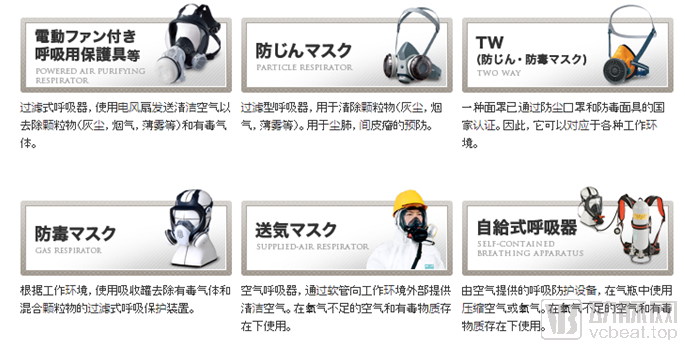 Shigematsu Various Masks (Image source: Shigematsu official website)
Unlike the companies mentioned above, Shigematsu offers only N95-series masks, with just four models: DD02-N95-2K, DD02V-N95-2K, DD01-N95-2K, and DD01V-N95-2K.
Shigematsu masks feature a headband-style design, which is more ergonomic and helps prevent chafing behind the ears. It is understood that the Shigematsu DD11V is a mask particularly suitable for wear during physical exercise.
Steady
Amid the backdrop of the COVID-19 pandemic, Winner Medical Co., Ltd. (hereinafter referred to as “Winner Medical”), which has just applied for its initial public offering, has attracted significant attention.
Winner Medical was officially established in 2000 and has twenty years of experience in the production of medical hygiene materials and medical dressings. The prospectus submitted by Winner Medical in December 2019 showed that its distributors for the domestic hospital market had covered more than 2,000 hospitals across over 30 provinces (municipalities and autonomous regions) in China; distributors for the retail pharmacy market had covered nearly 40,000 retail pharmacies in more than 20 provinces (municipalities and autonomous regions) nationwide; and customers and distributors for its overseas medical business had reached more than 70 countries and regions, including Europe, Japan, and the United States.
During the epidemic, data disclosed by Winner Medical showed that over a period of more than one month from December 20, 2019, to January 26, 2020, the company supplied 108.9 million masks and 114,700 sets of protective clothing to society. Li Jianquan, Chairman of Winner Medical, stated that 90% of the masks produced during the Spring Festival holiday were supplied to hospitals.
How has such a responsive and high-yield enterprise performed in the capital market?
Looking back at Winner Medical’s capital market history, the company actually achieved an indirect overseas listing as early as ten years ago. In 2005, Winner Medical completed a reverse merger with LVRC, a company quoted on the U.S. OTCBB market, thereby gaining a listing on the OTCBB. It later transferred to the NASDAQ in 2010, and completed its privatization and delisting two years thereafter.
After delisting from the U.S. market, Winner Medical set its sights on listing on China’s A-share market. In 2014, Winner Medical secured RMB 1 million in angel funding from Sequoia Capital. By 2016, the company’s net profit had reached RMB 400 million, and it filed for an A-share IPO, only to be rejected by the Issuance Examination Committee in 2017. The case sparked considerable controversy within the industry, with East Money Publishing attributing the rejection to “numerous accounting errors and concerns over internal control systems.”
According to the latest prospectus of Winner Medical, its revenue has grown steadily. From 2016 to 2018, Winner Medical’s operating revenues were RMB 2.560 billion, RMB 3.498 billion, and RMB 3.839 billion, respectively, while its net profits were RMB 410 million, RMB 428 million, and RMB 425 million, respectively. In the first half of 2019, Winner Medical reported revenue of RMB 2.105 billion and net profit of RMB 230 million.
Winner Medical operates three major business segments: medical dressings, healthy living consumer products, and industrial intermediate goods consisting of full-cotton spunlace nonwoven fabrics. Among these, the revenue share of the medical dressings segment, which includes masks, has been gradually declining in recent years. Since 2016, its revenue proportion decreased from 37.43% to 31.86% in 2017, further down to 30.71% in 2018, and reached 29.17% by June 2019.
Although the proportion of the medical dressing segment has decreased, Winner Medical maintains stringent technical requirements for this field. The company has established mature operational standards for incoming material inspection, in-process inspection, and finished product inspection. For critical processes and special procedures, the company has specifically set up product validation roles to implement rigorous process qualification and validation, ensuring the effectiveness and stability of quality in these critical processes and special procedures. The quality control process for the company’s medical dressing segment is illustrated in the figure below:
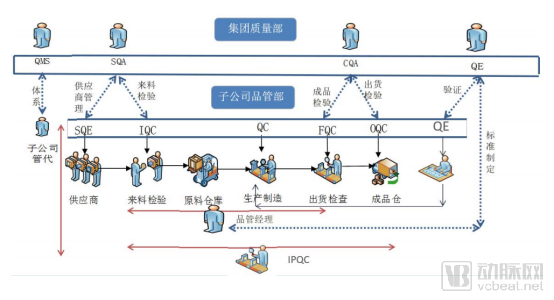 Image source: Winner Medical's prospectus
In terms of products, Winner Medical’s mask offerings are categorized into medical-grade and daily-use masks, covering PM2.5 protective masks, medical nursing masks, and daily-use masks.
In terms of sales, Woven primarily distributes its medical dressings through offline channels, supplemented by online sales via brand flagship stores on B2C platforms such as Tmall and JD.com.
During the pandemic, Winner Medical received considerable acclaim for its rapid response and high production capacity. Whether this positive reception will accelerate its A-share IPO process remains to be seen.
SINOVO
SIVO masks are a series of personal protective products under Beijing SINOVO Technology Co., Ltd. Founded in 2008, this Chinese Class III medical device company has been dedicated to product research and development as well as infection control solutions in China’s medical infection prevention and control field for over a decade.
SINOVO has successively provided personal protective equipment and comprehensive environmental control solutions to more than 160 specialized tuberculosis hospitals and TB prevention and control institutions across China, two national-level TB laboratories, the National Major Science and Technology Project during the 12th Five-Year Plan period, the Bill & Melinda Gates Foundation, the Eli Lilly project, and the Damien Foundation.
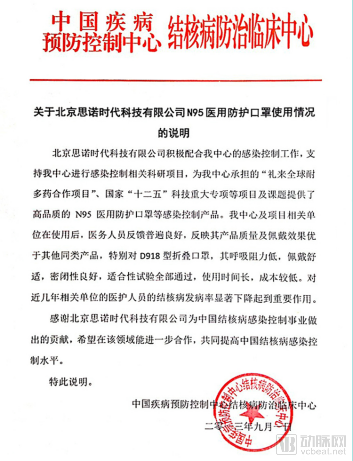
Guided by the brand philosophy that “filtration is about restoring your naturally pure self,” SINOVO has been committed from the outset to developing professional masks centered on users and meeting the widespread consumer demand for air filtration. In 2013, SINOVO masks entered the consumer market as a high-quality, professional product line, applying medical-grade standards to its civilian series and extending the same premium protection afforded to healthcare workers to general consumers, while researching and developing masks better suited for everyday wear.
It is reported that before the launch of the first SINOVO mask, the SINOVO team had invested over RMB 6 million in the research and development of a protective mask featuring three combined performance attributes. “We gradually realized that a truly effective protective mask is essentially the sum of numerous continuously refined details,” Yao Jia, founder of SINOVO, told VCBeat. To ensure a secure fit, the R&D team specifically incorporated a three-dimensional ergonomic support structure inside the SINOVO mask, which props up the internal space in a three-dimensional manner, significantly increasing the available breathing area.
In response to market demand, SINOVO has launched three professional protective masks: Eco9, Pro7, and Mini5. These models are named based on their respective characteristics and inhalation resistance. The national compliance standard requires an inhalation resistance of less than 350 Pa (35 mm H₂O). The inhalation resistance of the Eco9, Pro7, and Mini5 is approximately 9 mm, 7 mm, and 5 mm H₂O, respectively, significantly surpassing the national standard.
The effectiveness of a mask depends on the “filtration performance” of its materials and the “fit” of the mask body, while the primary indicator of comfort is whether the “breathing resistance” is sufficiently low.
In the civilian mask sector, SINOVO’s civilian series adopts the high-cost patented frame structure used in its medical-grade series. To align with consumer usage habits, the SINOVO civilian series underwent more than twenty meticulous rounds of pattern modification and optimization. The outer sealing ring automatically forms a tight seal upon contact with the face. Internally, the SINOVO civilian series employs electrostatic filter media, which leverages the attraction between opposite charges to capture particles as small as 1/40th the diameter of a human hair onto the fibers, thereby achieving higher filtration efficiency and precision. Testing has demonstrated that SINOVO’s professional protective civilian masks achieve a PM2.5 filtration efficiency exceeding 95%.
During the pandemic, SINOVO’s commitment to allocating medical protective masks to where they were most needed, rather than adopting a “highest bidder wins” approach, was admirable. As this company has yet to make its mark in the capital markets, we await its next moves with keen interest.
Following the outbreak of the COVID-19 pandemic, masks became a scarce resource. In addition to traditional mask manufacturers, companies in sectors such as energy, automotive, mobile phone assembly, and apparel—provided they had certain production capabilities—began diversifying into the production of masks and protective suits. According to incomplete statistics from VCBeat, numerous companies have crossed industry boundaries to manufacture masks in the fight against the epidemic, including BYD, SAIC-GM-Wuling, Foxconn, Sinopec, Changying Precision Technology, Zhongguangdian Te, Daddy Baby, Tuoye Robotics, Sinlean Technology, OPPO, vivo, C&S Paper, Hongdou Shares, and Shenghong Group.
Previously, according to the Ministry of Industry and Information Technology (MIIT), China’s mask production capacity was approximately 20 million units per day. It is understood that companies diversifying into mask production have also achieved substantial output volumes; for instance, BYD produces 5 million masks daily, Foxconn 2 million, Changying Precision 1 million, Zhongguangdian Te 10 million, and Tuoye Robotics 2.6 million.
In the past, the high-end mask market, including KN95 masks, was dominated by century-old overseas enterprises such as 3M and Honeywell. The outstanding performance of domestic brands during this pandemic is believed to bring opportunities to China’s mask industry, and Chinese high-end mask brands are likely to rise gradually in the future.
This article draws on and compiles information from Tiandi Wenshi, CCID Consulting, Cailianshe, CNKI, Shijie, Sina Finance, Zhengshang Canyue, Moore Financial, ZOL, and other sources.
Cover image source: 123rf