

Novavax Leverages Recombinant Gene Editing Core Technology to Develop Vaccines Against Global Infectious Disease Threats
Novavax
Innovative Vaccine Developer
Since the first case appeared in Wuhan in December 2019, the Wuhan pneumonia virus has infected more than 30,000 people and caused over 600 deaths within less than two months, according to official statistics, and has rapidly spread to more than 20 countries overseas.
Currently, the treatment of COVID-19 relies solely on isolation and supportive care. The complexity and difficulty of epidemic control are further exacerbated by the disease’s symptom similarity to influenza and the common cold, as well as the emergence of asymptomatic infections. In response, research teams worldwide have joined the fight against the pandemic, dedicating their full efforts to the development of effective vaccines and therapeutic drugs.
It is well known that vaccine development often takes months, or even more than a year. Therefore, before the epidemic causes greater losses, the development of effective related vaccines or antiviral drugs has clearly become a race against time between scientists and the virus.
However, there is a U.S. biotechnology company with an extensive history and rich experience in coronavirus research and candidate vaccine development, including for MERS and SARS. It even synthesized a candidate vaccine against the influenza A(H7N9) virus in just 28 days, advancing it into clinical trials—a development speed that is truly remarkable.
It is Novavax (NASDAQ: NVAX), headquartered in Maryland, USA. On January 21, 2020, Novavax announced that it would join the effort to develop a vaccine for Wuhan pneumonia, following the U.S. National Institutes of Health (NIH), with the aim of achieving results within 90 days.
Behind these achievements, what capabilities does Novavax truly possess? What are its core production pipelines and medical technologies? Next, let’s take a closer look together with VCBeat (WeChat ID: vcbeat).
Novavax is a clinical-stage vaccine development company dedicated to the development and commercialization of vaccines for the prevention of infectious diseases. By leveraging its proprietary novel recombinant nanoparticle vaccine technology, the company produces highly effective vaccine candidates to combat the threat of known and emerging infectious diseases worldwide.
It is understood that the recombinant nanoparticle vaccine technology employed by Novavax produces vaccine nanoparticles in Sf9 insect cells. This cell line was isolated from the ovaries of the fall armyworm (Spodoptera frugiperda) in the 1970s and acquires the ability to survive almost indefinitely upon infection with baculovirus (BV).
Novavax utilizes this cell system to enhance antibody production through recombinant protein nanoparticles. Researchers have introduced specific modifications to internal molecules to ensure stability, and have also engineered the recombinant F protein to self-assemble into nanoparticle structures, thereby augmenting the immune response. They believe that this approach based on recombinant gene editing can provide potent immunogenicity and may be applied in the future to the development of vaccines against a broader range of pathogens, including viruses, bacteria, and parasites.
Furthermore, this unique genetic technology differs from traditional influenza vaccine production methods; the company does not need to culture actual influenza viruses but instead manufactures nanoscale virus-like particles (VLPs), thereby eliminating the 4–6 months required to culture new viral strains.
In addition to recombinant nanoparticle vaccine technology, Novavax has also developed the Matrix-M adjuvant based on immunostimulatory saponins. This adjuvant reduces the required antigen dosage and enhances humoral and cellular immune responses via local lymph nodes, thereby providing sufficient protection against rapidly emerging diseases that require large amounts of antigen, such as Ebola and influenza.
Supported by its core R&D technologies, Novavax boasts a robust pipeline, with its lead candidates including ResVax, a vaccine against human respiratory syncytial virus (RSV), and NanoFlu, a vaccine against seasonal influenza.
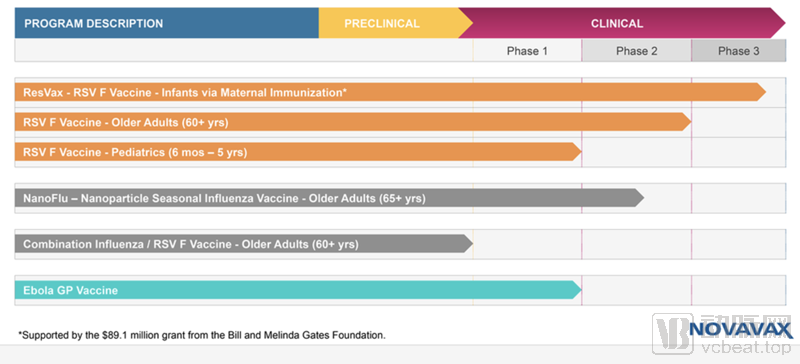
Novavax R&D Pipeline (Image from Official Website)
ResVax Vaccine
Globally, respiratory syncytial virus (RSV) is the leading cause of lower respiratory tract infections (LRTIs) and the primary viral cause of severe LRTIs in infants and young children, capable of causing interstitial pneumonia and bronchiolitis. It is estimated that RSV-associated acute LRTIs result in 1.4 million hospitalizations annually among children under 6 months of age, with approximately 27,000 in-hospital deaths, imposing an annual global economic burden of up to $6.2 billion.
Novavax’s ResVax is a recombinant nanoparticle vaccine based on the respiratory syncytial virus (RSV) fusion (F) protein, adjuvanted with aluminum phosphate. The company is currently developing an immunization strategy that involves vaccinating pregnant women to confer RSV resistance to their infants. They believe this approach may be the optimal means of protecting newborns from RSV disease during the first few months of life.
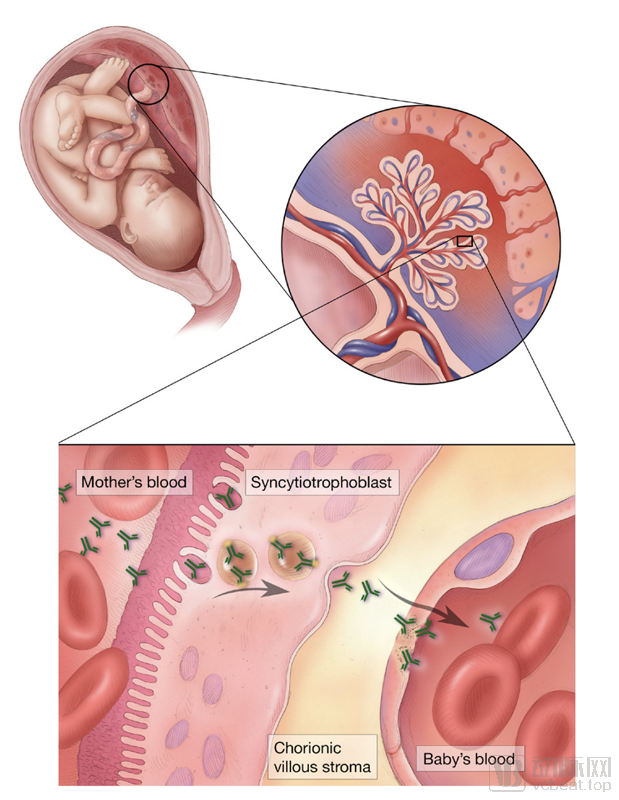
Maternal Immunity (Official Image)
On February 28, 2019, Novavax publicly announced the final results of the Phase III clinical trial of its ResVax vaccine for maternal immunization. Although the trial received an $89.1 million grant from the Bill & Melinda Gates Foundation, the results showed that the vaccine had only 39% efficacy against the primary endpoint of RSV-associated lower respiratory tract infection (LRTI), failing to meet the significant primary objective in preventive medicine. Following the announcement, the company’s stock price plummeted by 66.9% on the same day.
However, the ResVax vaccine demonstrated two notable highlights in secondary endpoints: a significant reduction in RSV-related hospitalizations and a decrease in severe RSV-induced hypoxemia. This makes it the first RSV vaccine to demonstrate efficacy in a Phase III clinical trial. Novavax plans to discuss the feasibility of these secondary endpoints with regulatory authorities.
NanoFlu Vaccine
Seasonal influenza is a global infectious disease. According to estimates by the World Health Organization, influenza causes approximately 3 to 5 million severe cases and leads to about 1 million deaths worldwide each year. The organization recommends that all children aged 6 months to 5 years, as well as adults aged 65 and older, receive the seasonal influenza vaccine annually.
However, the U.S. Centers for Disease Control and Prevention (CDC) noted in a report that influenza vaccine efficacy among older adults was only 12% during the 2018–2019 period, underscoring an urgent need for the introduction of new, effective vaccines. Nanoflu, developed by Novavax, is a quadrivalent seasonal influenza vaccine specifically designed for individuals aged 65 and older.
It is reported that Novavax initiated the Phase III clinical trial of its Nanoflu vaccine in the fall of 2019, with clinical data results expected to be released in the first quarter of 2020. Phase II clinical results demonstrated that the vaccine exhibited superior efficacy in the elderly population compared to Sanofi’s Fluzone High-Dose influenza vaccine, the best-selling product on the market.
On January 15, 2020, Novavax announced that the U.S. Food and Drug Administration (FDA) had granted Fast Track designation to its NanoFlu vaccine (for patients aged 65 and older) to accelerate its development and market approval process. Following the announcement, the company’s stock price rose by more than 10% on the same day.
Ebola Vaccine
Ebola virus (EBOV) is a highly virulent pathogen that causes Ebola hemorrhagic fever (EBHF) in humans and other primates, with a case fatality rate ranging from 50% to 90%. Novavax has developed an experimental Ebola vaccine, the Ebola GP Vaccine, utilizing the EBOV Makona strain.
Preclinical trials of the vaccine demonstrated a 100% protection rate in vaccinated chimpanzees. In July 2015, Novavax announced the results of its Phase I clinical trial, showing that the vaccine exhibited high immunogenicity in 230 healthy adults, both with and without the Matrix-M adjuvant. The geometric mean response induced by the two-dose regimen was 500–750 times higher than baseline levels.
As evident from the company’s R&D pipeline, Novavax has not yet launched any vaccines for commercial sale. Although the clinical results of its lead candidate have been disappointing, the market remains optimistic about the company’s prospects. This confidence stems not only from trust in the professionalism of the company’s management but also from positive expectations regarding the market performance of its ResVax and NanoFlu vaccines.
Founded in 1983, Novavax has undergone several generations of management changes during its nearly 30-year development history. The current President and CEO, Stanley Erck, has been in office since 2011. With an MBA from the University of Chicago Booth School of Business, Erck boasts extensive industry experience. He has held executive positions at multiple pharmaceutical companies, led the merger of another biotech firm, IOMAI, with the Austrian vaccine company Intercell, and spearheaded the development of its late-stage infectious disease candidate drugs.
Gregory Glenn, M.D., from the University of Oklahoma College of Medicine, serves as President of Research and Development at Novavax. With 25 years of experience in vaccine and adjuvant development, he leads teams in the development of conceptual products, including RSV vaccines, seasonal influenza vaccines, and Ebola vaccines. Dr. Glenn has co-authored over 100 medical articles and was awarded a Medical Research Fellowship by the Walter Reed Army Institute of Research.
With its excellent management team and proprietary R&D technology, Novavax was once hailed as a dark horse in the vaccine industry. In June 2018, the pharmaceutical market research firm EvaluatePharma released a research report forecasting the five investigational vaccine products with the greatest commercial potential, among which Novavax accounted for two. In addition to ResVax, the other candidate vaccine on the list was an influenza-RSV combination vaccine still in the preclinical stage.
It is projected that if the ResVax vaccine successfully reaches the market, its sales in 2024 could reach $668 million, while future sales of the influenza-RSV combination vaccine are expected to soar to $1.821 billion.