

Winning the Psychological Defense Battle in the Critical Stage of the Pandemic
Faced with sudden public health emergencies such as the COVID-19 pandemic, which are characterized by infectivity and lethality, both infected individuals and the general public under home quarantine inevitably experience varying degrees of psychological confusion, discomfort, anxiety, and panic.
During this period, recovered COVID-19 patients have been continuously discharged from hospitals across China. Interviews with these patients reveal that their anxiety primarily stems from concerns about the disease and stress induced by the unfamiliar hospital environment. Therefore, it is essential for medical staff to conduct regular daily consultations, closely monitor changes in patients’ conditions, promptly adjust treatment plans, refine care measures, and simultaneously strengthen nutritional support and psychological counseling.
Similarly, since the outbreak of the COVID-19 pandemic, many healthcare workers have persisted on the front lines, enduring long-term overwork and close contact with patients; their mental health warrants attention. Factors such as depression, lack of connection with family, and exposure to patients’ negative emotions can lead to psychological issues among healthcare workers, thereby impairing their attention, comprehension, and decision-making capabilities. Safeguarding the mental well-being of healthcare workers is crucial not only for their overall health but also for the success of epidemic control efforts.
On January 27, the National Health Commission issued the "Guiding Principles for Emergency Psychological Crisis Intervention in the Epidemic of Novel Coronavirus Infection," which included medical staff and related personnel, in addition to confirmed and suspected patients, markingChina Officially Launches Guidelines for Providing Mental Health Protection to Healthcare Workers。
Amid the sudden outbreak, whether you are healthcare workers on the front lines of epidemic control, patients and their families, or ordinary citizens under home quarantine, if you experience insomnia, low mood, or anxiety, you should seek professional psychological crisis intervention or mental health services. You can call psychological assistance hotlines or access online mental health services; in areas with adequate resources, face-to-face psychological crisis intervention may also be available.
However, we are still in a critical phase of epidemic prevention and control. The virus is highly transmissible, medical resources are strained, and strict isolation policies are enforced across regions. Access to medical care is constrained by time and space. Therefore, how to provide reasonable and timely psychological counseling has become a crucial component in winning the battle against the epidemic.
Policy Orientation, Classification, and Graded Intervention
To win the battle of psychological epidemic prevention, it is first necessary to promptlyIncorporate psychological interventions into the overall deployment of epidemic prevention and control,Meanwhile, the focus of psychological interventions should be adjusted in a timely manner according to the progress of epidemic prevention and control efforts. From the perspective of national policies, we have outlined the overall timeline for implementation:
January 27: "Guiding Principles for Emergency Psychological Crisis Intervention in the Epidemic of Novel Coronavirus Infection" Released
On January 27, the National Health Commission issued a notice on the “Guiding Principles for Emergency Psychological Crisis Intervention in the Epidemic of Novel Coronavirus Infection” (hereinafter referred to as the “Guiding Principles”), formally incorporating psychological crisis intervention into the overall deployment of epidemic prevention and control. This move provides robust guidance for all regions to strengthen psychological intervention and counseling in a scientific, standardized, and orderly manner. Meanwhile, local authorities are required to arrange work and develop schedules based on the scope and size of the target populations as well as the number of available psychological crisis intervention personnel.
In the Guidelines, we consider a key component to be the assessment of the target population and the formulationClassification-Based Intervention Plan. Specifically, it involves assessing the mental health status of the target population to promptly identify and differentiate between high-risk groups and the general population; psychological crisis intervention is conducted for high-risk groups, while mental health education is provided to the general population.
The population affected by the novel coronavirus pneumonia epidemic is classified into four tiers. Intervention efforts should begin with the first-tier population and gradually expand. General health education and publicity should coverLevel 4 Population。
Tier 1 Population: Confirmed cases of pneumonia caused by novel coronavirus infection (severe and critical patients requiring hospitalization), frontline healthcare workers, disease control personnel, and management staff involved in epidemic prevention and control.
Tier 2 Population: Mild cases under home isolation (close contacts, suspected cases); febrile patients seeking medical care at hospitals;
Tier 3 Population: Individuals associated with Tier 1 and Tier 2 populations, such as family members, colleagues, and friends; as well as rear-area responders involved in epidemic response efforts, including on-site commanders, organizational and management personnel, and volunteers.
Level 4 Population: Individuals in epidemic areas affected by epidemic prevention and control measures, susceptible populations, and the general public.
February 2: “Notice on Establishing Psychological Assistance Hotlines for Epidemic Response” Released
On February 2, to enhance psychosocial services for the prevention and control of the novel coronavirus (2019-nCoV) outbreak, and to guide localities in providing standardized psychological support and counseling to the public, the Joint Prevention and Control Mechanism of the State Council in Response to the Novel Coronavirus Outbreak issued the "Notice on Establishing Psychological Assistance Hotlines for Epidemic Response," requiring all regions to set up dedicated psychological assistance hotlines for epidemic response in addition to their existing ones. Key contents:
First, provincial (prefecture-level) health administrative departments shall coordinate mental health service resources within their jurisdictions, establish technical expert groups for hotlines, and set up dedicated lines based on existing hotlines to provide free pandemic-related psychological assistance services to the public. Each hotline shall operate at least two seats and provide 24-hour free psychological services according to local public needs. Local governments shall provide appropriate financial subsidies to the institutions hosting these hotlines;
Second, by publicizing hotline numbers through television and other media channels, increase public awareness of these hotlines to facilitate access for those seeking assistance.
Third, the hotline’s organizing entity shall establish a working team and provide training, technical support, and supervision to its staff;
Fourth, it is required that the host organizations of the hotlines strengthen hotline management, standardize service processes, adhere to ethical principles, and conduct assessment and preliminary judgment of inquiries received via telephone.
February 3: Press Conference on Psychosocial Services in Epidemic Prevention and Control Work
At 15:00 on February 3, the National Health Commission held a press conference in the news briefing hall of its Xizhimen Office Area.Ms. Wang Bin, Deputy Director of the Bureau of Disease Prevention and Control under the National Health Commission; Mr. Yang Fude, President of Huilongguan Hospital; and Ms. Chen Xuefeng from the Institute of Psychology, Chinese Academy of Sciences, centered their discussion on the theme—“Psychosocial Services in Epidemic Prevention and Control Work,”An Introduction to Social Psychological Services, Including Online Platforms and Telephone Hotlines, in the Prevention and Control of Novel Coronavirus Pneumonia
Ms. Wang Bin, Deputy Director of the Bureau of Disease Prevention and Control under the National Health Commission, stated that during the critical period of epidemic prevention and control, as the outbreak evolved, there was a strong public need for psychological counseling and strategies to foster positive emotions.A summary of the phase-based achievements was presented at the meeting.:
To alleviate public psychological confusion and distress, a panel of experts has developed the "Guidelines for Emergency Psychological Crisis Intervention in the Novel Coronavirus Pneumonia Epidemic." These guidelines outline potential psychological issues that may arise among various groups—including the general public, individuals under home quarantine, close contacts, suspected cases, confirmed patients, and frontline epidemic prevention workers—and provide strategies for intervening in these issues.
Under these guiding principles, experts have also researched and discussed to propose guidelines for public psychological self-help and counseling. These guidelines provide direction for different groups to engage in scientific and reasonable psychological self-help and counseling, facilitating self-regulation.
To further facilitate public access to timely counseling services, recent directives require all provinces to coordinate and integrate multi-departmental and multi-sectoral resources for psychological hotline services, building upon existing platforms. This includes consolidating psychological assistance hotlines previously dispersed across education, civil affairs, social organizations, and social work entities. These teams are to be organized systematically, with enhanced training and supervision provided to hotline personnel, thereby ensuring the delivery of standardized psychological assistance services to the public.
Meanwhile, universities have student psychological counseling and guidance centers. In the context of epidemic prevention and control, it is hoped that universities will make full use of these centers to provide psychological crisis intervention and counseling for students.
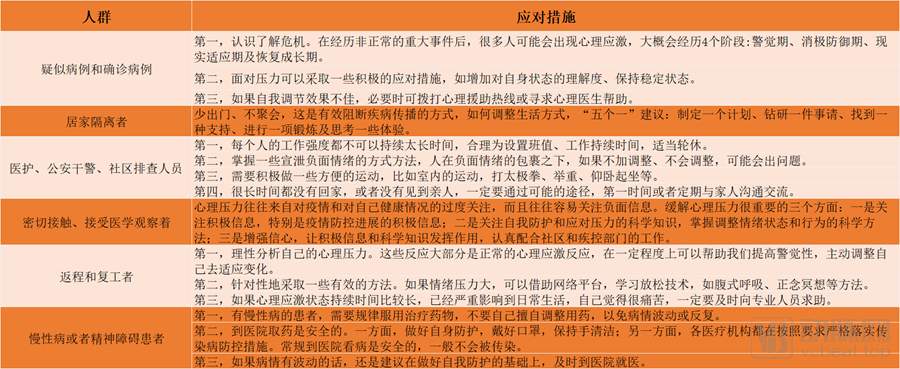
Recommendations for Different Groups on Responding to the Epidemic, as Provided at the Press Conference
February 2–Present: Provinces and municipalities have formulated emergency psychological crisis intervention plans for the pneumonia epidemic, and psychological assistance hotlines have been established in many regions across China.
The Guidelines explicitly state that psychological crisis intervention efforts shall be under the unified leadership of the joint prevention and control mechanisms (leading groups or command centers) for the novel coronavirus pneumonia epidemic in each province, autonomous region, and municipality directly under the Central Government, which shall also provide necessary organizational and financial support. National associations and societies related to mental health and psychological well-being shall mobilize experts with experience in post-disaster psychological crisis intervention to form expert teams for psychological rescue, providing technical guidance. Under the unified coordination of health administrative departments, emergency psychological crisis intervention and psychological counseling services shall be carried out in an orderly manner.
Following the release of the Guidelines, provinces and municipalities concurrently began formulating emergency psychological crisis intervention work plans for the pneumonia epidemic.
On the afternoon of February 2, Hangzhou held its seventh press conference on the prevention and control of the novel coronavirus pneumonia epidemic. Since the first case of novel coronavirus pneumonia was identified in Hangzhou, the Municipal Health Commission has promptly incorporated psychological crisis intervention into the overall deployment of epidemic prevention and control measures.
On February 5, the Health Commission of Zhejiang Province released the Notice on Issuing the “Work Plan for Emergency Psychological Crisis Intervention in Response to the Novel Coronavirus Pneumonia Epidemic in Zhejiang Province (Trial).”
On February 10, the Hubei Provincial Command Center for Novel Coronavirus Pneumonia Prevention and Control issued the “Implementation Plan for Emergency Psychological Crisis Intervention in Response to the Novel Coronavirus Pneumonia Epidemic in Hubei Province,” which stipulates the implementation of categorized psychological crisis interventions for different population groups while strictly safeguarding the personal privacy of individuals receiving assistance.
Psychological support services across various regions primarily target healthcare workers and patients (i.e., Tier 1 and Tier 2 populations), while also addressing the needs of the general public and other groups classified as Tier 3 and Tier 4 populations.
Currently, psychological assistance hotlines for the pandemic have been successively launched across China, providing 24-hour free psychological services tailored to local public needs. It is worth highlighting thatOne force comprises numerous universities across China, to facilitate psychological crisis intervention, pandemic-related psychological support services have been launched for the general public across China or for faculty and students of this university.
On January 27, Beijing Normal University took the lead in launching a psychological support hotline and online counseling services for the general public across China. Since the launch of these services, the hotline has been receiving approximately 200 calls per day, peaking at 300, while the online counseling service, matched via questionnaires, has been serving around 60 individuals daily, with a maximum of 110. The largest group seeking consultation was not frontline medical staff but ordinary citizens, accounting for more than 50%, followed by those under quarantine. Frontline healthcare workers and patients already exhibiting symptoms constituted a relatively smaller proportion, approximately 7% to 10%.
On January 28, the Ministry of Education issued a notice requiring provincial-level education authorities to actively promote the practices of Beijing Normal University, taking into account local epidemic developments and the actual capacity of psychological counseling teams. They are to select, at an appropriate time, a university with the strongest psychology discipline or the most effective psychological counseling and services, and on this basis, mobilize relevant resources from other universities to form specialized teams and launch psychological support hotlines and online counseling services. Meanwhile, universities with the necessary conditions—particularly their psychology departments (schools) and national demonstration centers for psychological counseling and services—are encouraged to independently establish psychological support hotlines and online counseling services.
There Are Three Battlefields at the Core of Psychological Crisis Intervention
As of 2:32 PM on February 14, the number of existing confirmed cases of novel coronavirus pneumonia (COVID-19) in China reached 70,638, indicating that the country is still in a critical period of epidemic prevention and control. When confronted with sudden crises, individuals inevitably experience varying degrees of anxiety and panic, with different population groups exhibiting distinct psychological stress responses.
In addition to policy guidance at the national level and the continuous launch of psychological assistance hotlines for the pandemic across China, new hospitals, enterprises, and institutions have leveraged their own resources and technological advantages during the control period, aiming to achieve ultimate victory in psychological crisis intervention for the pandemic. Through our analysis, we have categorized them into the following three types:
First, Online Psychological Counseling Clinics in Physical Hospital Networks
With hospitals as the primary entities, medical institutions across various regions have launched online psychological counseling clinics tailored to local conditions. Taking West China Hospital as an example, on January 26, the hospital launched the “Special Psychological Intervention Online Clinic for the Epidemic” mini-program. Relying on the Sichuan Provincial Psychological Society and the Sichuan Provincial Committee for Psychological Crisis and Intervention, the hospital recruited 480 professionals province-wide to provide hotline support and online consultations.
Within two days of its launch, the platform recorded over 2,100 consultations. The majority of these cases involved physical discomfort triggered by anxiety and panic, the onset of psychological disorders, or delusions of having been infected.
To provide psychological counseling and crisis intervention services for the novel coronavirus pneumonia epidemic, the Hunan Provincial Mental Health Center will leverage the comprehensive hospital advantages of Xiangya Second Hospital to establish an integrated “physical–psychological–rehabilitation” treatment model for confirmed patients, implementing multidisciplinary, multi-center remote consultations. In addition, the Hunan Provincial Mental Health Center offers professional psychological counseling services to people across China through online platforms, including the official websites of Xiangya Second Hospital of Central South University, Hunan Brain Hospital, and Hunan 12320, as well as the Health 320 APP and WeChat official accounts.
On February 5, the Shandong Mental Health Center officially launched an online psychological counseling clinic through the “Healthy Shandong Service Account” web-based outpatient platform, providing free online psychological counseling services to the public.
On February 10, Yunnan Provincial Psychiatric Hospital established an online psychological assistance team to provide free online medical consultation services to the public. Tailored to different populations, the team offers counseling and support through online consultations, web-based advice, and psychological hotlines. Currently, the online team comprises 17 experts from the hospital. Citizens can access these services via the hospital’s official WeChat account and website, as well as through platforms such as the Kunming Crisis Research and Intervention Center website and Dian Yi Tong.
Second, Online Hospital Consultations for COVID-19
According to statistics from the Internet Hospital Branch of the Chinese Research Hospital Association, more than 200 internet hospitals and related enterprises and institutions across China have launched online consultation platforms for COVID-19.Offering free psychological counseling consultations, online medical consultations, and follow-up visit prescription renewal services is the most common solution type among internet hospitals for COVID-19-related inquiries., and emotional and psychological issues are among the most frequently consulted categories by users.
On January 27, the Internet Hospital of The Second Affiliated Hospital of Zhejiang University School of Medicine launched an online psychological counseling service platform, with a team led by senior psychiatric experts providing users with assistance such as psychological crisis intervention.
On January 30, Heilongjiang Provincial Hospital’s Internet Hospital launched a “Psychiatry and Psychology” service, aiming to assist individuals with psychological disorders in alleviating mental stress and facilitating easier work and daily life. It places particular emphasis on supporting healthcare workers and their families who are experiencing psychological challenges, enabling them to engage more effectively in the fight against the novel coronavirus (COVID-19) epidemic.
On February 1, Jiangsu Province Hospital launched an online psychological clinic for epidemic prevention through its Internet Hospital. This new service aims to address anxiety and stress related to the pandemic among residents, with psychiatrists providing timely interventions and solutions. It is reported that since January 30, the Internet Hospital of Jiangsu Province Hospital has handled more than 1,000 online consultations.
Third, online consultation and diagnosis/treatment by internet healthcare enterprises
This epidemic has confined medical consultations to the home, making online healthcare services an essential need for the public. Currently, tech giants such as Alibaba, Tencent, JD.com, and Ping An Group, along with digital health companies like WeDoctor, Haodafu, and Chunyu Yisheng, have begun to address mental health issues by collaborating with relevant resource partners to provide psychological counseling services and technical support.
Furthermore, companies such as Miaoshou Doctor, Haoxinqing, Siruiming, YiXinLi, Yidianling, Jiandan Xinli, Zhaoyang Doctor, Anken Medical, Xinning Doctor, Nuanxin Yiliao, Yali Psychology, and KnowYourself have launched specialized psychological counseling services. In terms of timeliness of care, tens of thousands of physicians providing online services help ensure that patients receive timely consultations and treatment.
Demand-Side Perspective on Psychological Intervention
Reporters learned from the Haixinqing platform that, as of February 12, the top five concerns among users accounted for approximately 25% of the total consultation volume. The top five issues were ranked as follows: 1. Bipolar disorder; 2. Cold and cough, with concerns about coronavirus infection; 3. Severe insomnia; 4. Depression; 5. Emotional sensitivity and fragility.
According to data from the WeDoctor platform as of February 11, anxiety disorders accounted for approximately 50% of online psychological consultations, somatic symptom disorder for 20%, depression for 10%, and obsessive-compulsive disorder (OCD) for 1–2%, with the remaining cases comprising sleep disorders and onset of severe mental illnesses.
According to data from the Chunyu Doctor platform as of February 17, psychological counseling-related inquiries accounted for approximately 10% of the total volume of consultations related to novel coronavirus pneumonia (COVID-19), a proportion higher than usual.
It can be observed that the most frequently asked questions regarding COVID-19 primarily concern anxiety, depression, and obsessive-compulsive tendencies, such as anxiety stemming from fear of infection or repetitive behaviors like excessive handwashing.
During the pandemic, multiple platforms reported that among the users served, those from Hubei Province showed the fastest growth in geographic distribution. This aligns with the current distribution of patients.
Having briefly outlined the major categories of platforms for psychological intervention, how can these be implemented from the demand side in terms of popularizing scientific knowledge, providing online medical consultations, and facilitating patient navigation and medication purchases?

From the demand side, the functions of online platforms
1. Psychological Knowledge and Science Popularization
This segment primarily addresses the public’s demand for popular science knowledge, focusing on meeting the needs of consumer-end (C-end) users and leveraging internet-based approaches to alleviate public anxiety. Typical representatives include platforms such as Tencent, YiXinLi, JianDan XinLi, and KnowYourself.
Tencent Medical Encyclopedia has assembled a team of science communication experts to provide users with authoritative and trustworthy information. In response to the growing public anxiety, it has specially invited Professor Zhang Kan, former director of the Institute of Psychology at the Chinese Academy of Sciences, to contribute content on psychological counseling, helping the public alleviate their anxiety.
In response to pandemic-related panic, Simple Psychology urgently launched the "Guardian Hotline" project, providing a free psychological support hotline for those affected by the epidemic. Over 100 professional counselors are available online from 6:00 PM to midnight daily, offering one-on-one listening services and emotional counseling via voice calls. Meanwhile, the platform continuously updates popular science articles on emotional self-help during the pandemic and has introduced psychological assessment tools.
On January 25, upon learning of the severity of the Wuhan epidemic, YiXinLi immediately established a specialized psychological support team and launched the “Backbone” Initiative to provide free, professional, and systematic psychological assistance to the public. Meanwhile, in collaboration with a volunteer team of Chinese students in North America, it produced and released the Psychological Support Handbook for COVID-19. Its “Life Q&A Hall” section also rolled out a Trauma and Stress Companion Group, recruiting more than 400 respondents who leveraged their professional psychological expertise to comfort and help those seeking assistance overcome psychological distress.
As of February 10, the “Back Support” Initiative had collaborated with more than 80 brands, including People’s Daily Online, Toutiao, Tencent Medical Dictionary, Zhihu, and Sina Health, providing psychological counseling services to nearly 3,000 healthcare workers, patients, and their families, and helping over 3 million users understand their own mental health status.
Second, Diagnosis, Treatment, and Psychological Counseling
Amid strained medical resources and patients’ reluctance to seek in-person care due to fear of cross-infection, internet-based healthcare has maximized its advantages in efficiency and cost during this epidemic prevention and control effort.
Peking University Sixth Hospital, in collaboration with JD Health, has launched the “Fighting the Epidemic: Online Support” special zone to provide professional and scientifically grounded online psychiatric and psychological counseling services to the general public experiencing mental health issues such as anxiety and depression during the epidemic. This initiative facilitates access to care for individuals unable to visit hospitals due to transportation restrictions, helping them maintain a calm and balanced mindset.
Meanwhile, to help frontline medical staff alleviate psychological stress, the section has also launched a “Dedicated Channel for Psychological Support to Anti-Epidemic Medical Personnel,” inviting renowned experts to provide online psychological protection and counseling services. This initiative aims to help them relieve anxiety and other emotions stemming from heavy workloads, high risk of infection, and significant psychological pressure.
Since January 22, Miaoshou Yisheng, the internet hospital brand under Beijing Yuanxin Technology Co., Ltd., has launched a “24/7 Free Fever Clinic,” providing free consultation and advisory services on fever-related issues to patients with fever.
On February 2, Miaoshou Doctor, in collaboration with the Psychosomatic Medicine Committee of the Chinese Medical Doctor Association, officially launched its “Free Psychological Counseling Clinic.” For Miaoshou Doctor’s previously launched “Free Fever Clinic,” 98% of consultation responses were delivered within 3–5 minutes. All physician consultations were required to adhere to the latest clinical practice guidelines, and staff members conducted post-service quality reviews of every consultation response.
Following the launch of free consultations by over 30,000 physicians, WeDoctor Internet General Hospital, in collaboration with the China Disaster Prevention Association, the China Health Management Association, and the Chinese Mental Health Association, initiated the “Weixin Anti-Epidemic” public welfare project in the early hours of January 27. A dedicated psychological assistance zone was also launched, offering mental health services such as self-assessment and preliminary screening, as well as expert consultations.
Currently, over 1,000 mental health experts from Wenzhou Kangning Hospital Group, the Zhejiang Mental Health Promotion Association, and the Mandefu MindPower Psychological Volunteer Team have launched a dedicated online section, providing psychological counseling services 24/7. This newly launched team of 1,000 mental health professionals primarily consists of psychiatrists and psychological counselors, with more than 50% being clinical practitioners, offering free consultations to all internet users. As of February 15, self-administered psychological assessment scales had been completed by more than 50,000 individuals.
Good Mood Platform, established in 2015, is an online mental health medical and chronic disease management service platform based on intelligent data. It currently covers more than 80% of psychiatrists, neurologists, and psychologists in public hospitals across China, making it a leading online medical platform in the field of psychiatry.
Haoxinqing, in collaboration with People's Daily Online Health, Health Times, and Guoguang Huineng, jointly launched free mental health clinics for patients and healthcare workers. The Haoxinqing free clinic campaign ran until February 12, having served over 300,000 consultations since the onset of the pandemic. During the epidemic period, the number of individuals served saw a significant increase, with a year-on-year growth of 500%–600%.
Zhiyun Health Launches Major COVID-19 Welfare Initiative: Nationwide One-Stop Consultation Service. By accessing the Zhiyun Health official WeChat account and mobile app, users can receive free consultations on COVID-19-related issues. Experts from Zhiyun Health’s Medical Department provide health education on COVID-19, epidemic prevention and control guidance, and psychological counseling services. Within just three days of launch, the service reached an average daily volume of 1,000 consultations.
As a platform dedicated to the diagnosis and optimized treatment of complex psychiatric and psychological disorders in China, Siruiming has also launched a national initiative to deliver essential mental health education to the public during the pandemic. Furthermore, it provides an internet healthcare platform—where patients can register by searching for the “Siruiming Doctor” WeChat mini-program—and offers a pro bono consultation platform for compassionate psychiatric and psychological experts.
On February 16, the People’s Daily Health Client and Health Times, in collaboration with Medlinker, an internet healthcare platform specializing in chronic disease management, jointly launched the “National Chronic Disease Patient Assistance Channel.” This initiative aims to provide online public welfare assistance to patients who face difficulties in visiting hospitals for diagnosis and treatment, are at high risk of cross-infection, or are on the verge of running out of medication.
Third, medical guidance and medication purchase
As the epidemic spread, some hospitals suspended their regular outpatient services, making it difficult or inconvenient for patients with chronic diseases to obtain prescriptions; meanwhile, traffic control measures led to stock shortages or closures at some community pharmacies.Shortages of Antipsychotic, Antidepressant, and Anxiolytic Medications. Online consultation for prescription renewal has become the choice of patients.
On the Haohaoxin Qing platform, after consulting with doctors online, patients who require medication can obtain electronic prescriptions and have their medications delivered to their doorstep, thereby avoiding the risk of cross-infection associated with hospital visits.
Patients can also use the Zhiyun Health platform to find suitable specialists for consultations, obtain online prescriptions or refills, and place orders through the online store. Zhiyun has launched 24-hour logistics services to ensure timely delivery of medications to patients across China.
Through the “National Chronic Disease Relief Channel” launched by Medlinker, patients with eligible chronic conditions can access a comprehensive chronic disease management service package. This includes free medical consultations, nutritional dietary advice, psychological support, and prescription renewal with home delivery of medications, all provided by a dedicated patient health team comprising physicians, dietitians, psychologists, and medical assistants.
To enable patients with chronic diseases to receive medical consultations without leaving home, 1Yao Wang Internet Hospital has launched free prescription renewals and home delivery services for chronic disease patients across China, bringing much-needed relief to patients. Previously, on Chinese New Year’s Eve, 1Yao Wang Internet Hospital urgently established a free online consultation green channel for Wuhan, and on January 24, expanded the scope of its “free online consultations” to cover the entire Hubei Province.
Physicians at 1Yao Wang’s Internet Hospital can provide health education, medication guidance, and issue electronic prescriptions based on patients’ conditions, with medications delivered via offline pharmacies to patients’ residential communities or homes, thereby making medication purchases more convenient and secure for patients.
According to reports, 111.com’s Internet Hospital provides online consultations from 8:00 AM to 10:00 PM daily, with the number of daily consultations exceeding 10,000. The majority of users are located in Shanghai, Guangdong, Jiangsu, Beijing, Hubei, and other provinces and municipalities.
On February 6, Alibaba Health, a subsidiary of Alibaba Group, launched the “Medicine Delivery Without Leaving Home” service on the Taobao app. This internet-based healthcare solution enables patients with chronic diseases to purchase their required medications safely and conveniently from home through online consultations, e-prescriptions, and home delivery of medicines.
On February 13, nearly 50 leading domestic and international pharmaceutical manufacturers joined forces with Ali Health to further launch the “Chronic Disease Benefit Program” on Tmall’s “Stay-at-Home Medication Purchase” platform. This initiative aims to ensure the online supply of medications for chronic diseases during the epidemic period and provide online chronic disease management services to patients who face difficulties in visiting pharmacies in person.
Certainly, at this stage, pharmaceutical suppliers continue to face challenges related to product variety and logistics. Pharmaceutical manufacturers, drug distribution companies, chain pharmacies, internet healthcare providers, and e-pharmacy platforms across society have all joined efforts to facilitate access to medical care and medications, aiming to promptly address urgent medication needs.
On January 26, Yaoshibang issued an “Urgent Resumption of Work” initiative to thousands of supply chain merchants on its platform, calling on them to resume operations urgently and return to work early to ensure supplies for frontline pharmacies, and to maintain price stability for essential medicines and supplies needed for epidemic prevention.
Within three days of issuing the call to resume operations, 101 pharmaceutical wholesale companies had resumed work, actively organizing the supply of anti-epidemic medications and ensuring timely delivery of medicines ordered by pharmacies. As of February 14, nearly 400 suppliers on the Yaoshibang platform had normally resumed operations. Since the outbreak began, nearly 1 million orders have been processed, with deliveries completed for over 120,000 pharmacies and clinics.
Summary
Psychological defense has become one of the battlefields in the fight against the epidemic. Both the general public and frontline healthcare workers require professional pharmacological guidance and psychological counseling. In most cases, psychological issues arise primarily from an inadequate and incomplete understanding of the disease.
In the fight against the epidemic, mental health has been prioritized by governments, hospitals, enterprises, and institutions across China. Resources and personnel have been mobilized to provide psychological counseling and treatment for patients. Psychiatrists and psychological counselors from all over the country have rushed to the front lines. When necessary, frontline medical staff have provided psychological comfort, while patients have received remote stress-reduction counseling.
In traditional brick-and-mortar hospitals, alleviating patient anxiety in unfamiliar environments and enclosed spaces is undoubtedly a significant challenge. As one of the core battlegrounds in epidemic prevention and control, cabin hospitals exemplify this effort by immediately establishing psychological counseling teams upon commencing official patient care, delivering support through hotlines and online platforms.
Xiao Jinsong, a senior psychological counselor at Zhongnan Hospital of Wuhan University and President of the Hubei Provincial Association of Psychological Counselors, along with his team, compiled the “Psychological Intervention Manual for the Novel Coronavirus Pneumonia Epidemic,” which provides detailed guidance on psychological interventions and stress-reduction measures for various populations during the epidemic. The manual was distributed to multiple makeshift hospitals.
Beyond hospitals, online diagnosis and treatment platforms and information systems have also played a significant role in providing free consultation clinics, online medical consultations, and follow-up prescription renewal services. Just as the 2003 SARS outbreak spurred the rise of Taobao, the rapidly spreading COVID-19 pandemic will greatly accelerate the development of China’s healthcare information systems, remote diagnostics, online consultations, and pharmaceutical e-commerce.
During the COVID-19 pandemic, driven by the need to minimize person-to-person contact, protect healthcare workers, and enhance medical efficiency, we witnessed extensive application of futuristic technologies—such as internet-based healthcare, telemedicine, and cloud healthcare—in disease diagnosis, treatment, and prevention. Meanwhile, healthcare informatization and internet hospitals have broken through numerous constraints and begun to accelerate their development.
In the future, screening may be conducted remotely or online in collaboration with physicians. Meanwhile, internet-based solutions can also facilitate remote consultations among physicians for complex and difficult cases, as well as distance education and training across healthcare systems.