

Keju Bio Focuses on Microfluidics and Immunochromatographic POCT Platforms, Secures Over 50 Medical Device Registrations and Files IPO Prospectus
“Ignorance is bliss” is the self-deprecating remark of Li Zhou, founder of Keju Bio (NEEQ: 872334). However, after learning about Li Zhou’s early experiences, “selflessness knows no fear” better encapsulates his pure and passionate life.
Reflecting on his early entrepreneurial journey, it was fraught with hardships. The company teetered on the brink of bankruptcy several times, but through perseverance and tenacity, it finally ushered in the rebirth of “Keju Bio.” Li Zhou spoke candidly, “I used to be a typical bookworm. Being able to share these experiences now is truly thanks to my entrepreneurial journey in China, which has fostered my growth and enriched my life.”
In 1992, Li Zhou graduated from the Graduate School of Peking Union Medical College with a major in Biochemistry and Molecular Biology, and joined the Institute of Hematology at the Chinese Academy of Medical Sciences to engage in basic research. In 1994, Li Zhou, who had originally planned to pursue postdoctoral studies at the University of Washington in the United States, was hired by a U.S. biotechnology company as a researcher focused on technology development, marking the beginning of his career transition from basic research to product development.

Li Zhou, Co-founder and General Manager of Keju Bio (Photo provided by the company)
After five years of experience as the R&D Department Manager, Li Zhou achieved outstanding results and accumulated robust research and development capabilities. In 1999, Li Zhou led his team to successfully develop a diagnostic reagent for the rapid detection of HIV, which was a highly advanced testing product at the end of the 20th century. In 2001, the company decided to promote its HIV testing reagents in China and established Tianjin Keju Biomedical Technology Co., Ltd. in Tianjin, which is the predecessor of Keju Biology.
Upon its launch in the Chinese market, the rapid HIV test kit created a significant sensation, becoming the first domestically developed product with independent intellectual property rights that year and obtaining a National Class II New Drug Certificate. Subsequently, in 2003, Tianjin Newscen Coast Bio-Pharmaceutical Co., Ltd., jointly established with investment from Zhongxin Pharmaceutical, received support from the National Development and Reform Commission for the “Industrialization Demonstration Project Base for Rapid Diagnostic Reagents for Major Diseases such as AIDS and Hepatitis,” along with special funding exceeding RMB 10 million. This sufficiently demonstrated the state’s recognition of and emphasis on the company at that time.
Li Zhou, the unsung hero who brought fame and honor to the company, was at that time primarily focused on further technological R&D in the United States. Perhaps due to the drawbacks of this “remote management,” deep-seated risks were sown within the company. The result was that Newscen Coast Bio-Pharmaceutical Co., Ltd. started strong but quickly declined, facing bankruptcy liquidation just two years later, shocking everyone. Recalling this turbulent period, Li Zhou sighed with emotion: “Our domestic team had serious problems! They maliciously drained the company’s assets, pushing it to the brink of bankruptcy. I found it difficult to control the situation at the time, so the investors reported the case to the Tianjin Public Security Bureau.” Later, the case was classified as a criminal offense by the Second Major Crimes Division of the Tianjin Public Security Bureau. It is lamentable that those once trusted to steward the company ended up in such a manner, reflecting poor judgment in character assessment and the ironies of fate. However, in order to allow these individuals to have a complete future, Li Zhou ultimately chose not to sign off on the case, thereby dropping the charges.
By that time, Li Zhou had already settled in the United States. However, amid the turmoil, he resolutely decided to relinquish his equity stake in his U.S. company at the end of 2005 and return to China full-time to take full charge of Tianjin Newscen Coast Bio-Pharmaceutical Co., Ltd. “It’s not about any particular sentiment,” Li said with a smile. “I was simply left with no choice; I just wanted to breathe new life into Newscen Coast Bio-Pharmaceutical.”
Keju Biologics subsequently embarked on a new journey amidst challenges. In 2008, it pioneered the launch of the first dual-antigen rapid test kit for HCV. The company has maintained continuous profitability since 2009. In 2010, it introduced an innovative universal compatible immunochromatographic reader. In 2014, it launched an internet-integrated management POCT system (MI-POCT) to support the establishment of China’s tiered diagnosis and treatment system. Starting in 2016, it began distributing and promoting microfluidic products. In 2017, it was listed on the National Equities Exchange and Quotations (NEEQ). In 2018, it initiated the introduction and localization of microfluidic technology. In 2019, the first domestic automated and intelligent production line for microfluidic chip reagents officially commenced operations...
In the extraordinary year of 2020, Newscen Coast Bio-Pharmaceutical Co., Ltd. rose to the challenge, responded to the national call, and accelerated the research and development of auxiliary diagnostic products for COVID-19 under extremely difficult circumstances, striving to contribute to the fight against the pandemic.
“Looking back on my decision to return to China full-time, it was actually quite foolish. If Newscen Coast Bio-Pharmaceutical couldn’t be revived, I would truly have been left penniless,” Li Zhou joked.
At the onset of the novel coronavirus pneumonia (NCP) outbreak, Newscen Coast Bio-Pharmaceutical Co., Ltd. (Coast Bio), a leading enterprise in the in vitro diagnostics (IVD) sector, immediately embarked on the research and development of COVID-19 testing-related products. According to Li Zhou, Co-founder and General Manager of Coast Bio, the company is developing antibody and antigen screening reagents for SARS-CoV-2 based on a microfluidic platform, which can serve as an adjunct to nucleic acid testing for COVID-19 diagnosis.
A key feature of Keju Biotechnology’s diagnostic products is their ability to facilitate stratified patient management, which stems from the integration of two distinct detection chips. The first chip is designed to detect whether a patient is infected with viruses or bacteria; the second chip further determines whether the infection source in patients already identified as infected in the first step is the novel coronavirus.
Li Zhou explained in detail: “Our testing principle is based on the body’s own immune response. During the initial screening, if a patient’s serum amyloid A (SAA) level is elevated, it indicates a viral infection; if the C-reactive protein (CRP) level is elevated, it suggests a bacterial infection. Patients with bacterial infections are ruled out for novel coronavirus infection, so we only proceed to secondary testing for patients with elevated SAA levels.”
“The second-level test detects whether antibodies against the novel coronavirus are present in the patient’s body; their presence indicates infection with the novel coronavirus, while their absence suggests no infection,” Li Zhou added. “If immunoglobulin M (IgM) is detected, it indicates an early stage of infection; if substantial amounts of immunoglobulin G (IgG) are detected, it suggests that the patient has progressed to the middle or late stages of the disease.”
This auxiliary test can be completed in just 3–5 minutes, significantly reducing the time patients spend waiting in line for consultations. It also enables precise stratification of patient populations, facilitating tiered management across healthcare institutions at all levels.
Currently, Newscen Coast Bio-Pharmaceutical Co., Ltd. has completed the prototype of its detection product on its microfluidics platform and has begun clinical validation at the Tianjin CDC and infectious disease hospitals.
In addition to the novel coronavirus, Newscen Coast Bio-Pharmaceutical Co., Ltd. has expanded its infectious disease testing portfolio to cover HIV, syphilis, hepatitis B, tuberculosis, and Helicobacter pylori. Notably, its HIV and hepatitis C tests have obtained the highest-risk-level CE certification from the European Union, enabling accurate detection of specific infectious diseases with just a single drop of capillary blood.
Infectious disease testing served as the foundation for Newscen Coast Bio-Pharmaceutical Co., Ltd. (Keju Biology). The company’s current test portfolio has expanded to cover multiple areas, including cardiovascular and cerebrovascular diseases, anemia in women and children, and renal function. It has obtained nearly 50 medical device registration certificates, encompassing the majority of tests required in primary healthcare settings and meeting the diverse diagnostic needs at the grassroots level.
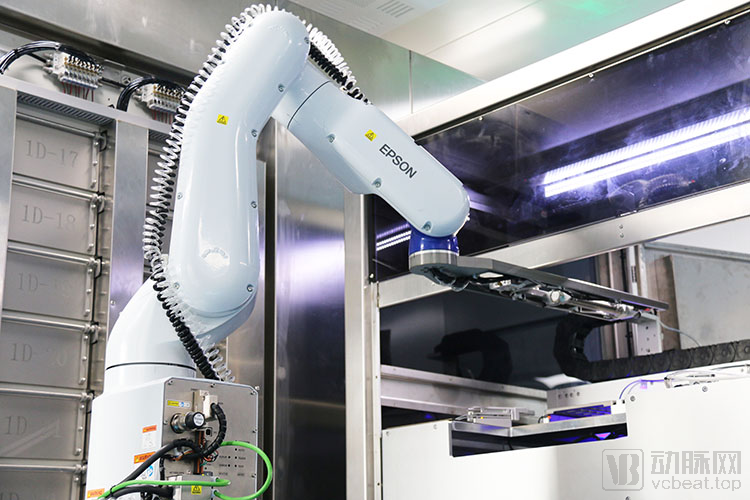
Microfluidic Automated and Intelligent Production Line (Image provided by the company)
The universally compatible immunochromatographic result interpretation system developed by the company is applicable to most immunochromatographic products on the market, enabling qualitative, semi-quantitative, and quantitative interpretation. It meets the testing needs of many primary care indicators. Furthermore, through the integrated Management-style POCT (MI-POCT) system, it enables unified backend management of testing data from primary healthcare institutions, providing technical support, quality control, and other services to ensure accurate primary medical technologies. This series of products was developed on one of Newscen Coast Bio’s two major platforms: the Primary Care POCT Technology Platform.
If immunochromatography is considered a method for preliminary quantification, then Newscen Coast Bio-Pharmaceutical’s second major precision POCT microfluidic technology platform enables precise quantification (with a coefficient of variation [CV] of approximately 5%).
Microfluidics is an advanced international technology introduced by the company in recent years. It not only ensures the rapid and accurate characteristics of point-of-care testing (POCT) but also reduces raw material costs. A major barrier to the industrialization of microfluidic chips lies in their complex design, difficulties in achieving large-scale domestic production, and excessively high manufacturing costs. In contrast, Newscen Coast Bio-Pharmaceutical Co., Ltd. employs more cost-effective synthetic materials for its microfluidic chips. The amount of biological raw materials used per chip is only 1/20 to 1/10 of that required for immunochromatography. Furthermore, the automation and intelligent manufacturing of chip production further ensure product quality and enable scalable mass production.
Currently, Keju Bio’s microfluidic chips enable multiplexed, multi-channel testing, further driving down costs. Li Zhou, the company’s founder, stated that any assays currently performed using immunochromatography can be conducted on their microfluidic platform. The company plans to gradually upgrade from immunochromatographic methods to the more precise and rapid detection offered by microfluidics, thereby achieving technological iteration in point-of-care testing (POCT). Notably, Keju Bio has already obtained five registration certificates for its microfluidic technology products.
It is reported that Newscen Coast Bio-Pharmaceutical Co., Ltd. is currently undergoing Series B financing. The proceeds will be primarily used to scale up the mass production of its microfluidic products, and to vigorously advance product development, regulatory registration, marketing, promotion, and sales, thereby increasing market share.