

Weigong Technology Files IPO Prospectus: Pioneering Domestic Flow Fluorescence Detection and Breaking International Monopoly on Fluorescent Microsphere Encoding Core Technology
Recently, the rampant spread of the novel coronavirus has captured the attention of the entire nation. In this battle against the epidemic, numerous in vitro diagnostic (IVD) companies have mobilized, playing a crucial role in areas such as the development of testing reagents.
To support epidemic prevention and control, Shenzhen Wellgrow Biotechnology, a wholly-owned subsidiary of Shenzhen Wellgrow Technology Ltd, donated 1,000 T-lymphocyte detection kits to Shenzhen Samii Medical Center. This donation aims to facilitate rapid and accurate diagnosis of novel coronavirus infection and bolster the medical center’s epidemic control efforts.
Wellgrow Technology is a high-tech enterprise dedicated to the research and development of in vitro diagnostic equipment and reagents, and one of the few companies in China with independent intellectual property rights for flow fluorescence detection platforms.The company has achieved numerous breakthroughs in core technologies such as fluorescently encoded microspheres and flow cytometry. Its research outcomes are poised to break the long-standing global monopoly held by the U.S.-based Luminex Corporation, ushering flow fluorescence detection into a new era characterized by high quality and low cost.Introducing the flow fluorescence detection platform, with its advantages of high throughput and multiplex testing, into the field of routine immunoassays, establishing it as a new force in immunoassay following chemiluminescence and POCT.
Breaking the Dependency on Foreign Technology in Flow Fluorescence
China’s immunodiagnostic technologies have undergone multiple stages of development, evolving from radioimmunoassay and enzyme-linked immunosorbent assay (ELISA) to colloidal gold immunoassay, and finally to chemiluminescence. Owing to its high sensitivity, excellent specificity, and superior precision, chemiluminescence has rapidly become the dominant technology in immunodiagnostics.
Since the beginning of the 21st century, flow fluorescence technology has begun to attract attention in the medical industry. Flow fluorescence, also known as suspension array or liquid-phase chip, is an emerging multi-analyte combined diagnostic technology in recent years,It not only inherits the advantages of high sensitivity and high precision of chemiluminescence, but also has the advantages of high throughput, high speed, and multiple indicator joint detection, overcoming the shortcoming of chemiluminescence that can only detect one indicator at a time.It can meet the growing demand for clinical testing and is expected to complement, or even replace, chemiluminescence.
Flow cytometry-based fluorescence technology has been increasingly applied in clinical diagnostics, genetic analysis, drug development, biomedicine, pharmacogenomics, and bacterial detection for biological warfare. However, high-throughput flow cytometry-based fluorescence detection platforms currently available in China are predominantly imported, with no independently developed domestic alternatives yet realized.Wellgrow Technology was founded to change the situation where key technologies are controlled by others and to break the monopoly of foreign companies on flow fluorescence detection platforms.
Dr. Li Weigong, founder of Wellgrow Technology, has many years of experience in the field of in vitro diagnostics (IVD). Dr. Li previously served as Chief Engineer at the IVD R&D Center of Beckman Coulter, where he led and spearheaded multiple core teams in the development of several high-end hematology analyzers and flow cytometers. He possesses profound insights into the current landscape and future technological trends of high-end hematology and flow cytometry instruments.
After returning to China, Dr. Li Weigong joined Shenzhen Mindray, where he led and completed multiple national-level projects, including the Ministry of Science and Technology’s 863 Program project titled “New Generation High-Performance Five-Part Differential Cell Analysis System.” In 2014, Dr. Li Weigong led Mindray’s R&D team in launching China’s first clinical-grade flow cytometer, breaking the absolute monopoly held by foreign companies in the field of flow cytometric analysis.
In 2016, Dr. Li Weigong founded Shenzhen Wellgrow Technology Ltd., continuing to explore fields related to fluorescence immunoassay technologies, such as flow cytometry and fluorescently encoded microbeads. After several years of development, Wellgrow Technology has established an experienced R&D and production team. The core R&D members have an average of 15 years of experience in developing in vitro diagnostic (IVD) products. Key team members have led or participated in the development of multiple IVD products, including China’s first five-part differential hematology analyzer with fluorescence detection, China’s first automated blood smear stainer, and China’s first clinical-grade flow cytometer, demonstrating strong R&D capabilities.
Proprietary Fluorescently Encoded Microsphere Technology Breaks Foreign Monopoly
Wellgrow Technology is committed to developing next-generation high-throughput fluorescence detection platform technologies, establishing its core competitiveness through R&D, application, and commercialization systems, and widely applying these solutions in fields closely related to public welfare, including life sciences, clinical medical diagnostics, and food safety.
Flow cytometry fluorescence technology, centered on fluorescently encoded microsphere technology, integrates flow cytometry, laser analysis, covalent cross-linking, and other technologies. Shenzhen Wellgrow Technology Ltd has achieved breakthroughs in core technologies and possesses the capability to develop complete solutions for flow cytometry fluorescence detection platforms.
Fluorescently encoded microspheres are a core technological component of flow fluorescence technology. Currently, although some domestic companies have achieved breakthroughs in flow cytometry, very few possess the capability to independently develop fluorescently encoded microsphere technology. “To be precise, a complete flow fluorescence detection platform comprises a flow cytometry system and multiplex assay reagents based on fluorescently encoded microsphere technology,” said Dr. Li.
Fluorescently encoded microsphere technology incorporates one or more fluorescent dyes or quantum dots at varying concentrations into microspheres, thereby endowing them with distinct fluorescence intensities. Since each type of microsphere can be used to detect a specific analyte, multiple differently encoded microspheres can react simultaneously within the same reaction system without mutual interference, enabling the multiplexed detection of multiple analytes.
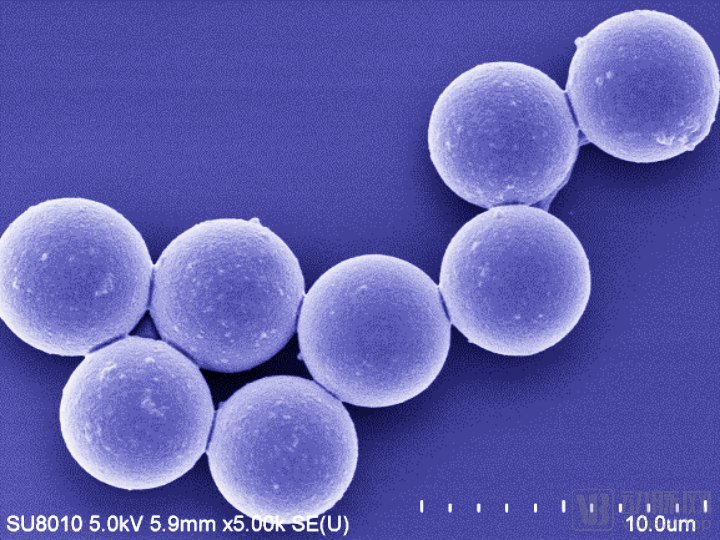
Microsphere SEM Images
Shenzhen Wellgrow Technology Ltd. has developed magnetic encoding microspheres with independent intellectual property rights, becoming one of the few suppliers worldwide capable of providing such products and filling a domestic gap in China.The company’s encoded microspheres are compatible with mainstream dual-laser, 2- to 6-color flow cytometers, supporting the development of multiplex assay kits for at least 30 analytes, thereby helping to reduce clinical testing costs and improve detection efficiency.
Currently, the company’s multiplex cytokine detection kits based on magnetic encoding microspheres and other products obtained registration certificates in the second half of 2019 and have been launched for commercial sales.
A recent paper published in The Lancet, co-authored by experts from Wuhan Jinyintan Hospital, China-Japan Friendship Hospital, Peking Union Medical College, Beijing Ditan Hospital, Wuhan Tongji Hospital, Wuhan Central Hospital, Zhongnan Hospital of Wuhan University, Peking University First Hospital, and Peking University People’s Hospital, titled “Clinical Characteristics of 2019 Novel Coronavirus Infection in Wuhan,” pointed out that novel coronavirus pneumonia is similar to SARS and MERS, with “cytokine storm” also observed in some critically ill patients.
“Cytokine storm” refers to the massive release of pro-inflammatory cytokines (such as IL-6, TNF, and IFN-γ) in the body following infection, which activates or recruits additional immune cells to combat inflammation. The excessive accumulation of immune cells and pro-inflammatory cytokines can lead to tissue congestion, edema, fever, and damage, ultimately resulting in multi-organ failure and death.Therefore, monitoring cytokines is crucial for patients with severe infections, and multi-cytokine assays can promptly alert clinicians to initiate targeted therapy.
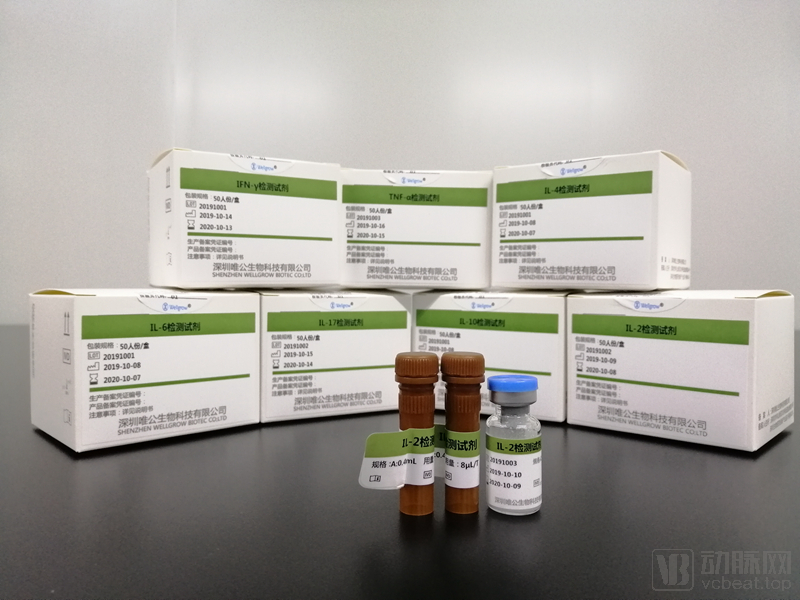
Cytokine Reagents
Dr. Li stated, “With the commercial launch of multi-cytokine reagents, numerous related companies both domestically and internationally have expressed their interest in collaborating with us.” Meanwhile, Shenzhen Wellgrow Technology Ltd has completed the registration of multiple antibody reagents for cellular immune detection (including the donated lymphocyte T-cell detection reagents). The company’s independently developed dual-laser 2–6 color flow cytometer (flow fluorescence detection platform) and flow cytometry-based sperm detection reagents are also nearing completion of clinical registration in China.
Open Collaboration, Jointly Expanding the Domestic Flow Cytometry Fluorescence Detection Market
Currently, Wellgrow Technology has emerged as a leader in the field of flow fluorescence detection, garnering favor from investment institutions such as Sinovation Capital, Hechuang Capital, and Fenxiang Investment. In 2018, the company was ranked among the Top 300 Most Investable Enterprises (Venture 50 Sprout List Top 300) by renowned Chinese venture capital firms. In 2019, it secured third place in the finals of the China Medical Device Innovation and Entrepreneurship Competition.
Next, Wellgrow Technology will continue to focus on the development of flow cytometry-based fluorescence detection platforms,Recently complete the R&D of a fully automated sample preparation platform and a fully automated flow cytometer, thereby ending the long-standing reliance on manual sample pre-processing in the field of flow cytometry. Subsequently, develop a fully automated flow fluorescence detector and a broader range of companion combination-test reagents, thus enriching and perfecting the product portfolio for flow fluorescence and flow cytometry.
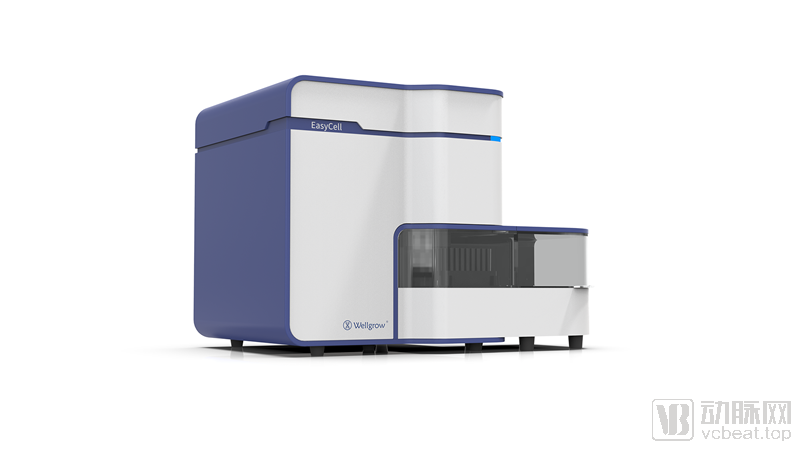
Flow Cytometer (Autosampler Model)
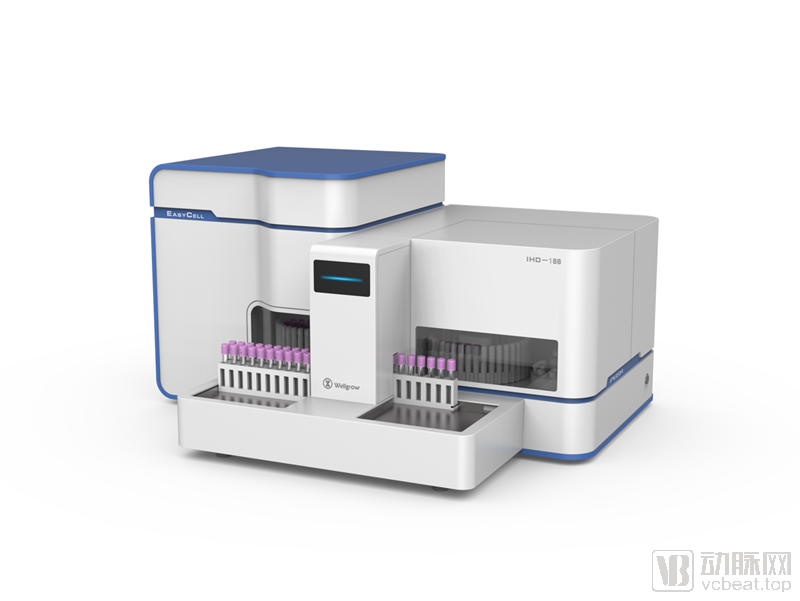
Fully Automated Flow Cytometer
The Blue Book of China’s Pharmaceutical and Healthcare Industry indicates that the market size for in vitro diagnostics (IVD) in China is projected to reach approximately RMB 73 billion in 2019, with a compound annual growth rate (CAGR) of about 18.7%. Among this, the chemiluminescence immunoassay market is estimated at around RMB 28 billion, with a CAGR of approximately 28%. Additionally, the market size for traditional flow cytometers stands at RMB 3 billion. “The flow fluorescence testing market encompasses both the traditional flow cytometry market and a segment of the chemiluminescence market, and it is poised to become a substantially large market in the future.”
Dr. Li Weigong stated, “Flow fluorescence detection technology is in a stage of rapid development, with much work to be undertaken. In particular, given the wide variety of supporting reagents for flow fluorescence detection platforms, it is difficult to independently complete the development of all flow fluorescence multiplex reagents for immunoassays within a short period of time,”The company will adopt an open mindset, providing partners with instruments and fluorescently encoded microsphere technology, collaborating on the development of supporting reagents, and jointly exploring the domestic flow fluorescence detection market.”