

Jesai Biopharma Advances Global First-in-Class Oncology Pipeline with Dual-Engine Strategy: ERK Inhibitor JSI-1187 and Aurora A Inhibitor VIC-1911 Entering Phase 1b/2a Trials
At the start of the new year, JSI (Jiesi Yingda Biopharmaceutical Technology (Shanghai) Co., Ltd.) received its first piece of good news: JSI-1187, an orally administered small-molecule inhibitor of extracellular signal-regulated kinase 1/2 (ERK1/2) independently developed by the company, has obtained Investigational New Drug (IND) approval from the U.S. Food and Drug Administration (FDA). Dr. Zhang Jintao, founder of JSI, stated, “2019 was a harvest year for JSI. We submitted clinical trial applications for new drugs to both China’s National Medical Products Administration (NMPA) and the U.S. FDA, and successfully licensed in an original anti-cancer novel drug candidate for clinical development.”
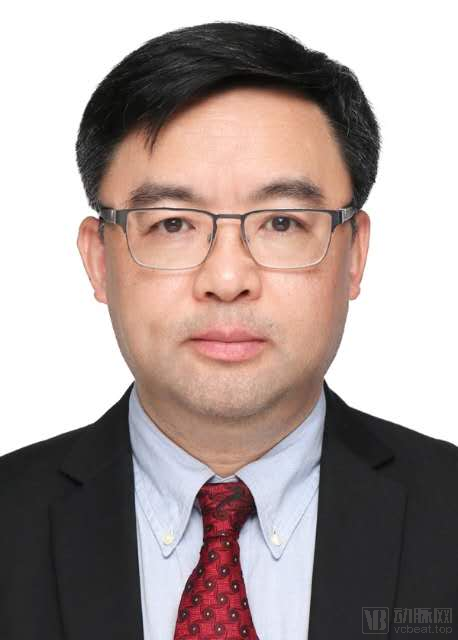
Dr. Zhang Jintao, Founder of JSI
Dr. Zhang Jintao, the founder of JSI, earned his degree from the Shanghai Institute of Organic Chemistry, Chinese Academy of Sciences. He subsequently conducted postdoctoral research in the Department of Chemistry at the University of Chicago and worked at the Ben May Institute for Cancer Research at the University of Chicago. Dr. Zhang was a recipient of the First Prize of the National Natural Science Award of China in 2002. Prior to launching his own venture, he served as a Division Director at MediChem Research and DeCode Genetics, both listed on the NASDAQ, and as the Co-founder and CEO of Shanghai Medicilon, a company listed on the STAR Market. After leaving Shanghai Medicilon, he embarked on his second entrepreneurial journey by founding JSI, a new drug research and development enterprise.
Dr. Zhang Jintao stated in an interview: “Transitioning from founding a contract research organization (CRO) to establishing a new drug development company is a highly challenging shift. There are several successful examples in the industry of companies making this transition, such as Array BioPharm, which was acquired by Pfizer for $11.6 billion in 2019 and had previously engaged in CRO services in the United States; the founders of BeiGene also came from a CRO entrepreneurial background. Of course, CRO services and innovative drug R&D represent two distinct business models. The CRO model thrives on scale—‘the more, the better’—with benefits derived from having more clients and more employees. In contrast, innovative drug R&D requires an experienced management team capable of rapidly and efficiently building its own product pipeline.”
Undoubtedly, as a research and development enterprise dedicated to developing novel small-molecule anti-tumor drugs, the key factor determining the caliber of JSI’s R&D pipeline is the R&D management capability of its drug development team. JSI’s senior R&D leadership team is a core group of experts who not only possess successful entrepreneurial experience and extensive experience in new drug development and management at multinational corporations, but also demonstrate strong capabilities in project selection and strategic direction of R&D, along with outstanding international business development expertise.
Dr. Li Qun, Executive Vice President of R&D at the Company, brings 29 years of experience in the research, development, and management of novel small-molecule drugs. He has led or participated in the development of 10 clinical candidate drugs in the United States and China, with one new drug currently undergoing Phase III clinical trials in the U.S. These new drug candidates span multiple therapeutic areas, including targeted oncology, tumor immunology, and metabolic diseases. Dr. Li earned his Ph.D. from Peking University and subsequently conducted postdoctoral research in the Department of Chemistry at Boston College in Massachusetts. He previously held senior positions such as Senior Director in the Pharmaceutical Products Division of Abbott Laboratories in the U.S., and Chief Scientific Officer (CSO) at Shanghai Bailu Pharmaceutical and WiseChem Discovery.
Dr. Wang Shaohui, Vice President of the Company, brings 24 years of experience in biological research and new drug development. He has led and participated in novel therapeutic development programs in oncology, neuroimmunology, and regenerative medicine, with multiple projects advancing into clinical trials. Notably, an IDH1/2 inhibitor he helped develop has received U.S. FDA approval for market launch. Dr. Wang earned his bachelor’s degree from Peking University, obtained his Ph.D. from the University of Rochester in the United States, and completed postdoctoral research at the University of Colorado and the University of Notre Dame. His previous roles include Deputy Director of the R&D Center at GSK (China), Executive Director of the Chemistry and Biology Department at WuXi AppTec, and Senior Scientist at Anadys Pharmaceuticals in the United States.
Dr. Myers, the Chief Medical Officer (CMO) responsible for U.S. clinical development, is a board-certified hematologist and oncologist with 38 years of experience in clinical development. He has led or participated in more than 250 clinical trials, six of which resulted in FDA-approved products. Dr. Myers has previously held senior positions, including Vice President, in the clinical development departments of multiple large and mid-sized biopharmaceutical and pharmaceutical companies.
Dr. Paradiso, Chief Development Officer responsible for U.S. clinical development, brings 32 years of experience in clinical development. To date, he has successfully secured approval for more than a dozen Investigational New Drug (IND) applications, and among the clinical development projects he has participated in or managed, 11 products have received marketing approval from the U.S. Food and Drug Administration (FDA). Dr. Paradiso has previously held mid- to senior-level positions in the clinical development departments of several large and medium-sized biopharmaceutical and pharmaceutical companies in the United States.
JSI remains committed to a development path centered on the R&D of original anti-cancer novel drugs. In an interview, Dr. Zhang Jintao stated that amid increasingly fierce competition in new drug development, sustained innovation and exploratory capabilities are the source of the company’s vitality. Therefore, JSI has adopted a “dual-wheel drive” business model: prioritizing independent R&D to ensure the sustainability of its innovative drug development, while simultaneously introducing overseas clinical-stage novel drug products to enrich its product pipeline and accelerate business growth.
In less than three years, the company successfully advanced its independently developed ERK1/2 kinase inhibitor, JSI-1187, into clinical development. Currently, global leaders in the development of novel ERK1/2 inhibitors remain in Phase 1b/2a clinical trials, targeting malignant solid tumors such as RAS- or RAF-mutant non-small cell lung cancer, melanoma, and colorectal cancer. JSI’s JSI-1187 has a strong opportunity to achieve international leadership in the development of certain indications. Furthermore, JSI has two additional innovative drug projects poised to enter candidate drug nomination. The company has fully demonstrated its R&D team’s extensive professional expertise, robust execution capabilities, and strong management proficiency in terms of the quality, speed, and volume of new drug development.
While advancing its independent R&D initiatives, the company has also observed that in recent years, with the widespread adoption of gene sequencing and the continuous discovery of novel oncology targets, pharmaceutical companies and research institutions have invested substantial resources in cancer translational medicine research to explore new biomarkers and combination therapy regimens. These latest research achievements have enabled the industry to more precisely select patients for enrollment in clinical trials from a new perspective, bringing unprecedented opportunities to new drug development. Accordingly, JSI has established its goal of becoming one of the earliest companies to capture such opportunities in new drug development and commercialization. Guided by this strategy, through one year of concerted efforts by its business development and R&D teams, the company successfully introduced an international first-in-class clinical product: the selective cell cycle-related kinase inhibitor JSI-1534 (overseas development code: VIC-1911).
Over the past decade, most major pharmaceutical companies have pursued the development of inhibitors targeting this site, with more than 20 products entering clinical trials. However, the vast majority of these trials ultimately ended in failure. Recent studies indicate that the primary reason for these failures was insufficient product selectivity, leading to myelosuppressive toxic side effects. Currently, there are only two clinically developed inhibitors worldwide that exhibit high selectivity and no significant myelosuppressive toxicity: one Phase I clinical candidate was acquired by a multinational pharmaceutical company in 2018 for over $500 million, primarily for the development of new drugs for small cell lung cancer and breast cancer; the other Phase I clinical candidate is JSI-1534, introduced by JSI.
JSI-1534 has completed Phase 1a clinical trials in the United States, demonstrating no significant myelosuppressive side effects and securing a uniquely advantageous position globally with no close competitors. More encouragingly, research published in prestigious international journals over the past year indicates that JSI-1534 holds broad clinical potential in treating myelofibrosis and overcoming resistance to osimertinib and KRAS G12C inhibitors.
Mutations in the oncogenic protein KRAS occur in approximately 25% of cancer cases and are associated with extremely poor disease prognosis. The development of new drugs targeting KRAS has long been a significant challenge in international pharmaceutical R&D. In 2019, the announcement of encouraging Phase I clinical data by companies such as Amgen rekindled industry hope for KRAS inhibitors. In January 2020, Merck & Co. announced a $2.5 billion strategic collaboration on KRAS inhibitors, further underscoring pharmaceutical companies’ expectations for the druggability of the KRAS target. Through in-depth research into mechanisms of action, JSI is comprehensively advancing novel drug development for KRAS-mutant malignant solid tumors, employing diverse strategies that include different mechanisms of action, monotherapy, and combination therapies. Adopting a dual-drive business model combining independent R&D with product in-licensing, JSI’s pipeline has rapidly demonstrated synergistic advantages where 1+1 > 2.
Dr. Zhang Jintao stated that 2020 would be a year of rapid development for JSI, with JSI-1534 initiating Phase 1b/2a clinical trials in the United States for multiple indications, and JSI-1187 commencing Phase 1 clinical trials in the United States. Meanwhile, clinical trial applications for both JSI-1534 and JSI-1187 were also launched in China.
Fortunately, JSI has invited top US clinical experts to lead and oversee clinical trials in areas such as lung cancer, melanoma, and myelofibrosis. Most of these experts are the original discoverers of the mechanisms of action for the relevant drugs. This provides JSI’s R&D team with opportunities to learn from, communicate with, and share insights alongside these experts at the international forefront of new drug development, thereby ensuring that clinical trials are conducted with high quality and smooth progress. This also reflects, from one perspective, the industry’s recognition and support for JSI’s new drug development philosophy and its pipeline projects.
In terms of funding, the company has been fortunate to receive support from renowned investment firms such as Boyuan Capital. At the end of the interview, Dr. Zhang Jintao shared his vision: “New drug research is a race against time. In the coming year, we look forward to partnering with more collaborators alongside JSI to advance new drug R&D projects with high quality and efficiency.”