

Junlian Healthcare New Drug Bulletin Issue 5, 2020: Key Updates on Oncology, Gynecology, and Gastrointestinal Therapeutics Amid COVID-19 Pandemic
Feb 17, 2020 19:36
CST Updated
19:36

This week, there were 9 new drug data entries, including 7 in oncology, 1 in gynecology and reproductive health, and 1 in the digestive system.
❖Regarding COVID-19, as of February 16, the cumulative number of confirmed cases in China reached 70,548, with 7,264 suspected cases, totaling 77,812 cases. Currently, the epidemic curves inside and outside Hubei Province differ slightly: within Hubei, there were 1,933 newly confirmed cases, an increase of 90 from the previous period, with a severe case rate of 16.8%, a fatality rate of 2.91%, and a discharge rate of 11.4%; outside Hubei, there were 115 newly confirmed cases, marking the 13th consecutive day of decline, with a current severe case rate of 6.8%, a fatality rate of 0.60%, and a discharge rate of 34.0%. Overall, the anti-epidemic situation within Hubei remains relatively complex. Given the large total number of confirmed and severe cases, medical resources still need to be prioritized for this region, with elite personnel being continuously deployed from various regions to provide support. Outside Hubei, the epidemic has been gradually brought under control. If the number of new confirmed cases continues to decline steadily one week after the upcoming return-to-work surge, the previously identified inflection point trend can be basically confirmed; nevertheless, vigilance must not be relaxed.
❖The U.S. FDA has accepted Novartis’s New Drug Application (NDA) for the MET inhibitor capmatinib, intended for the treatment of patients with advanced non-small cell lung cancer (NSCLC) harboring MET exon 14 skipping mutations. MET exon 14 skipping mutations occur in approximately 3% of lung adenocarcinomas but in up to 22% of pulmonary sarcomatoid carcinomas. Currently, there are no highly selective MET inhibitors approved globally; crizotinib (targeting c-Met and ALK fusions) is primarily used, albeit with suboptimal efficacy. Capmatinib was licensed by Incyte to Novartis in 2009. Under the agreement, Incyte is eligible for over $500 million in milestone payments upon achievement of various endpoints, as well as royalties on global sales by Novartis. As a key competitor, Merck’s tepotinib is currently in Phase II clinical trials. In China, Chia Tai Tianqing and Guang’an Tang are actively pursuing development in this area.
Epizyme Announces U.S. FDA Acceptance of Supplemental New Drug Application for Its EZH2 Inhibitor for the Treatment of Patients with Relapsed or Refractory Follicular Lymphoma
Epizyme Announces U.S. FDA Acceptance of Supplemental New Drug Application for Tazverik, an EZH2 Inhibitor Developed by the Company, for the Treatment of Patients with Relapsed or Refractory Follicular Lymphoma (FL)
Tazverik is an inhibitor of the histone-lysine N-methyltransferase EZH2. By inhibiting EZH2 activity, it enables B cells to continue differentiating or undergo apoptosis, thereby controlling tumor growth.
In a Phase 2 single-arm trial, patients with follicular lymphoma (FL) harboring either wild-type or mutant EZH2 genes received monotherapy with Tazverik.
Tazverik treatment achieved an ORR of 69% in patients with EZH2 mutations, compared with 35% in the wild-type EZH2 subgroup. The median PFS was 14 months in patients with mutant EZH2 and 11 months in those with wild-type EZH2.
FDA Approves Pizensy, an Oral Lactitol Therapy Developed by Braintree Laboratories, for the Treatment of Adults with Chronic Idiopathic Constipation
U.S. FDA Approves Braintree Laboratories’ Oral Lactitol Therapy, Pizensy (lactitol), for the Treatment of Chronic Idiopathic Constipation (CIC) in Adults
Pizensy is an oral lactulose analog. It is an osmotic laxative that promotes the influx of water into the intestines, thereby exerting a laxative effect in the colon.
In a clinical trial involving 807 patients with chronic idiopathic constipation (CIC), the efficacy of Pizensy was evaluated using the endpoint of complete spontaneous bowel movements (CSBMs) compared to baseline.
Compared with the placebo group, 25% of patients in the Pizensy treatment group achieved at least three complete spontaneous bowel movements (CSBMs) in a given week or an increase of at least one CSBM from baseline, whereas the proportion of patients meeting this criterion in the placebo group was 13%.
Seattle Genetics Announces FDA Acceptance of NDA for Its HER2 TKI in Combination with Trastuzumab and Capecitabine for the Treatment of Advanced Breast Cancer
Seattle Genetics Announces FDA Acceptance of New Drug Application (NDA) for Its HER2 TKI in Combination with Trastuzumab and Capecitabine for the Treatment of Patients with Unresectable Locally Advanced or Metastatic HER2-Positive Breast Cancer
Tucatinib is an oral tyrosine kinase inhibitor with high selectivity for HER2, but it does not exhibit significant inhibitory activity against EGFR, which also belongs to the human epidermal growth factor receptor family.
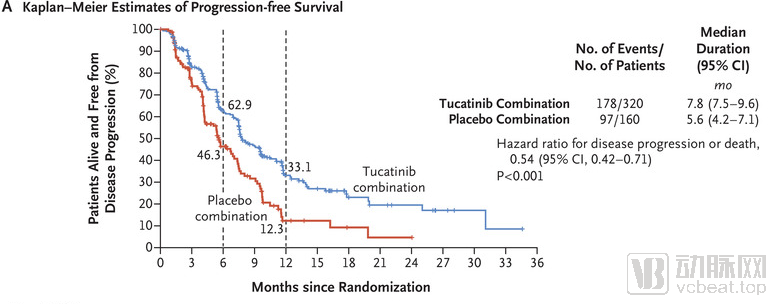
In the Phase 3 trial, the efficacy and safety of tucatinib in combination with trastuzumab and capecitabine versus trastuzumab and capecitabine alone were evaluated in patients with locally advanced unresectable or metastatic HER2-positive breast cancer, 47% of whom had brain metastases.
The experimental group significantly improved patients' PFS, reducing the risk of disease progression or death by 46%, and also improved OS, reducing the risk of death by 34%. In the subgroup of patients with brain metastases, the experimental group reduced the risk of disease progression or death by 52%.
Clinical Outcomes (PFS) of Tucatinib
Data source: NEJM
Deciphera Announces FDA Acceptance of NDA for Ripretinib, a KIT and PDGFRα Kinase Inhibitor, for Fourth-Line Treatment of Patients with Advanced Gastrointestinal Stromal Tumors
Deciphera Announces FDA Acceptance of NDA for Ripretinib, a KIT and PDGFRα Kinase Inhibitor, for the Treatment of Patients with Advanced Gastrointestinal Stromal Tumors (GIST) Who Have Previously Received Imatinib, Sunitinib, and Regorafenib
Ripretinib is a KIT or PDGFRα kinase inhibitor used to treat KIT- or PDGFRα-driven cancers, including gastrointestinal stromal tumors (GIST), systemic mastocytosis (SM), and other malignancies.
In the Phase 3 trial, 129 patients were randomized in a 2:1 ratio to receive either ripretinib or placebo, with the aim of evaluating the efficacy of ripretinib in patients with advanced gastrointestinal stromal tumors (GIST) who had previously been treated with imatinib, sunitinib, and regorafenib.
Ripretinib met the primary endpoints of improving progression-free survival (PFS) and overall survival (OS) in patients. The PFS was 27.6 weeks in the treatment group compared to only 4.1 weeks in the placebo group. The OS was 15.1 months in the treatment group versus 6.6 months in the placebo group, demonstrating a clinically significant improvement.
BMS Announces U.S. FDA Acceptance of BLA for Its CAR-T Therapy for the Treatment of Patients with Relapsed/Refractory Large B-Cell Lymphoma, Including DLBCL
BMS Announces FDA Acceptance of BLA for CAR-T Therapy Lisocabtagene Maraleucel (liso-cel) for the Treatment of Patients with Relapsed/Refractory Large B-Cell Lymphoma, Including DLBCL
Liso-cel is an autologous CAR-T therapy targeting the CD19 antigen. Its uniqueness lies in the controlled ratio of CD8-positive to CD4-positive T cells within the CAR-T product, thereby enabling better management of the therapy’s toxic side effects.
In the TRANSCEND NHL 001 clinical trial, 256 patients were enrolled, representing the largest study to date supporting CD19-targeted CAR-T therapy.
The patient's ORR reached 73%, with 53% of patients achieving CR.
Seattle Genetics Announces Positive Data from Phase 2 Study of Its ADC Drug Padcev in Combination with Immunotherapy for Patients with Advanced Urothelial Carcinoma
Seattle Genetics Announces Positive Data from Phase 2 Study of ADC Drug Padcev Combined with Immunotherapy Pembrolizumab as First-Line Treatment for Patients with Advanced Urothelial Cancer
Padcev is an antibody-drug conjugate (ADC) generated by linking an anti-Nectin-4 monoclonal antibody to the microtubule-disrupting agent MMAE.
In the Phase 1b/2 clinical study named EV-103, Padcev was combined with pembrolizumab to treat patients with advanced or metastatic urothelial carcinoma who were ineligible for first-line cisplatin-based chemotherapy.
At a median follow-up of 11.5 months, the combination therapy achieved an overall response rate (ORR) of 73% in patients, including a complete response (CR) rate of 15.6% and a partial response (PR) rate of 57.8%.
Myovant Sciences Announces That Its Investigational Relugolix Combination Therapy Met the Primary Efficacy Endpoint in a Phase 3 Extension Clinical Study in Patients with Uterine Fibroids
Myovant Sciences Announces That Its Investigational Relugolix Combination Therapy Met the Primary Efficacy Endpoint in the LIBERTY Phase 3 Extension Clinical Study for the Treatment of Patients with Uterine Fibroids
Relugolix combination therapy: Each tablet contains relugolix (40 mg), estradiol (1.0 mg), and norethindrone acetate (0.5 mg).
Phase III Expanded Clinical Study
Relugolix combination therapy achieved an 87.7% response rate within one year while preserving patients’ bone mineral density (response was defined as menstrual blood loss of less than 80 mL, or a reduction of more than 50% in menstrual blood loss during the last 35 days of the treatment cycle compared with baseline).
Kite Announces U.S. FDA Acceptance of BLA for CAR-T Therapy KTE-X19 for the Treatment of Patients with Relapsed/Refractory Mantle Cell Lymphoma (MCL)
Kite Announces U.S. FDA Acceptance of BLA for CAR-T Therapy KTE-X19 for Patients with Relapsed/Refractory Mantle Cell Lymphoma (MCL); If Approved, Kite Will Become the First Company with Multiple Commercialized CAR-T Therapies
KTE-X19 is an autologous CAR-T therapy targeting CD19. It utilizes the XLP manufacturing process, which incorporates T-cell selection and lymphocyte enrichment.
In the Phase II clinical study, 60 enrolled patients with mantle cell lymphoma (MCL) had previously received five lines of prior therapy, including chemotherapy, anti-CD20 monoclonal antibody therapy, and the BTK inhibitors ibrutinib or acalabrutinib, but developed drug resistance or experienced disease relapse.
The overall response rate (ORR) was 93%, with 67% of patients achieving a complete response (CR). At a median follow-up of 12.3 months, 57% of patients maintained their response. Among the initial cohort of 28 patients (with at least 24 months of follow-up), 43% remained alive.
Novartis Announces U.S. FDA Acceptance of NDA for MET Inhibitor Capmatinib for the Treatment of Patients with Advanced NSCLC Harboring MET Exon 14 Skipping Mutations
Novartis Announces U.S. FDA Acceptance of New Drug Application (NDA) for MET Inhibitor Capmatinib (INC280) for the Treatment of Patients with Advanced NSCLC Harboring MET Exon 14 Skipping Mutations
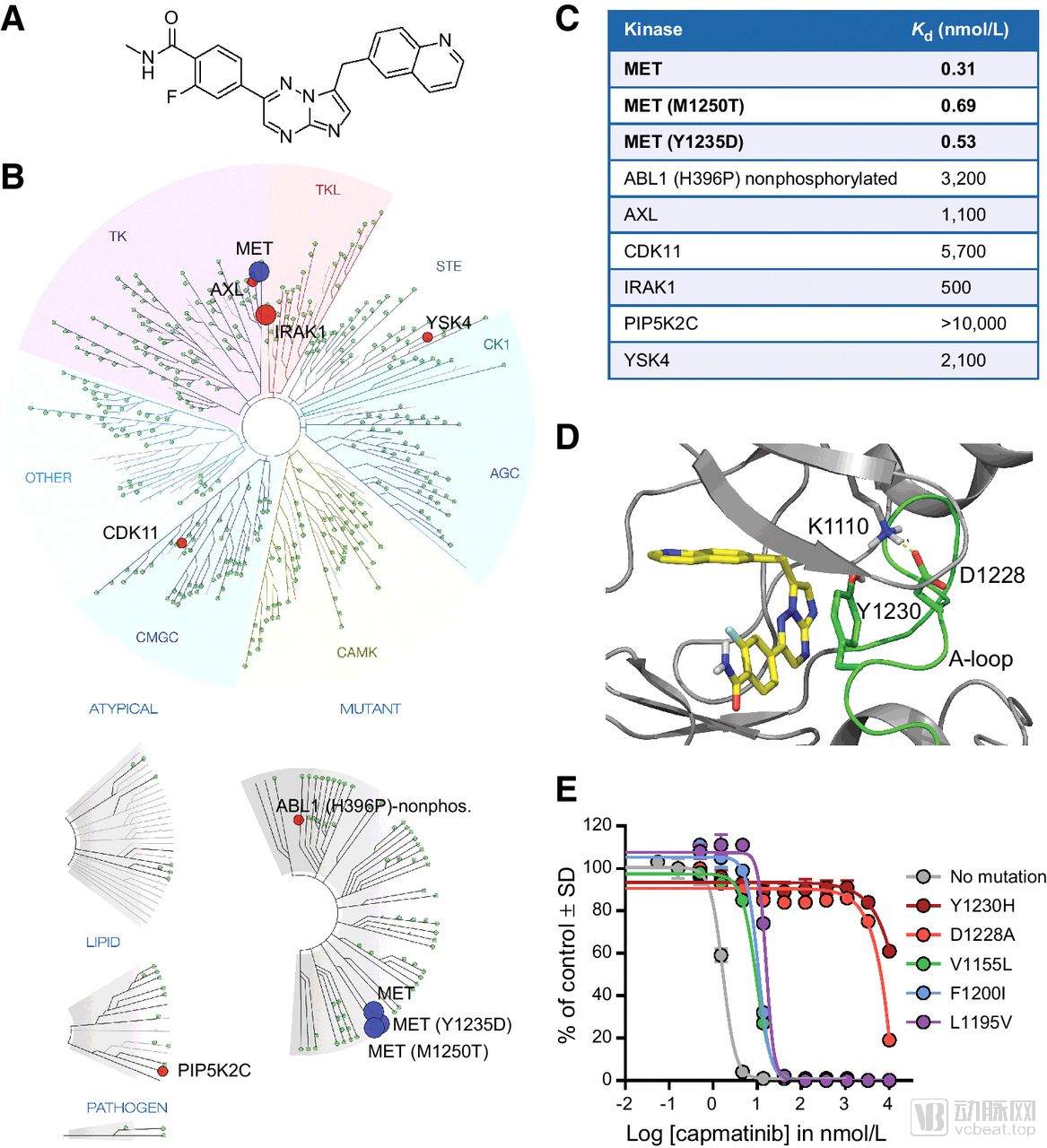
Capmatinib is an oral, highly selective small-molecule MET inhibitor initially discovered by Incyte, with Novartis obtaining the license for its development and commercialization in 2009. Previously, the FDA had granted capmatinib Breakthrough Therapy Designation.
The Phase II clinical trial enrolled 97 patients with advanced or metastatic NSCLC harboring MET exon 14 skipping mutations.
The overall response rates to capmatinib were 67.9% in treatment-naïve patients and 40.6% in previously treated patients. The median duration of response was 11.14 months and 9.72 months, respectively.
Enzymatic Characteristics of Camatinib
 Data source: Novartis
❖ AboutCOVID-19: As of February 16, there were 57,934 confirmed active cases in China (including 10,644 severe cases), a cumulative total of 10,844 recovered and discharged cases, a cumulative total of 1,770 deaths, a cumulative total of 70,548 confirmed cases, and 7,264 current suspected cases.
❖AstraZeneca Announces 2019 Financial Results: Total Revenue Reaches $24.384 Billion, a 10% Year-on-Year IncreaseAstraZeneca announced its 2019 financial report, with total revenue reaching $24.384 billion, representing a 10% year-on-year increase. Among this, revenue from the China region amounted to $4.880 billion, a 35% year-on-year growth, accounting for 20.7% of AstraZeneca’s global total revenue. AstraZeneca has become the foreign pharmaceutical company with the best performance in the Chinese market and is expected to continue setting new records.
❖Roche announced its 2019 financial results, with total revenue reaching CHF 61.466 billion, an 8% year-on-year increase. Pharmaceutical sales amounted to CHF 48.516 billion (+10%), while Diagnostics sales totaled CHF 12.950 billion (+1%). Revenue in China reached CHF 3.1 billion, representing a 36% growth.
❖Dendreon Pharmaceuticals Announces First Real-World Study Data: Retrospective Analysis of Medical and Pharmacy Claims from Over 6,000 Medicare Beneficiaries Shows That Adding Provenge to Zytiga® (abiraterone acetate) or Xtandi® (enzalutamide) at Any Point in the mCRPC Treatment Regimen Reduces Risk of Death by 45% and Extends Overall Survival by 14.5 Months
❖Janssen Pharmaceuticals, a subsidiary of Johnson & Johnson, announced interim data from the Phase IIIb STARDUST study evaluating the anti-inflammatory drug Stelara (ustekinumab) for the treatment of Crohn’s disease. The data showed that after receiving one 6 mg/kg intravenous (IV) infusion and one 90 mg subcutaneous (SC) injection of Stelara, 79% of patients achieved clinical response and 67% were in clinical remission at Week 16.