PwC China Files Prospectus for 'Accelerating Digital Transformation to Strengthen Healthcare System Building'
Editor’s Note: This article is reprinted from PwC China’s “Pandemic Response: PwC Accelerates Digital Transformation to Drive Healthcare System Development,” with authorization granted to VCBeat for republication.
The COVID-19 pandemic was not the first major infectious disease outbreak China has encountered. Since 2000, China has experienced three severe infectious disease epidemics: SARS in 2003, the H1N1 influenza in 2009, and COVID-19 in 2020. The SARS outbreak lasted for three months, with a cumulative total of approximately 5,400 confirmed cases; the H1N1 influenza outbreak lasted for four months, resulting in 130,000 cumulative confirmed cases. Many experts predict that China may still face new epidemics in the future. Therefore, in addition to mobilizing nationwide resources to win this battle against the epidemic, we must also consider how to optimize the healthcare system in the future to better protect public health.
Seizing Opportunities in Crisis, Meeting Challenges through Transformation: We have observed that pharmaceutical and medical device companies are actively taking various measures to respond to the pandemic in areas such as R&D and regulatory registration, production and supply chain, and marketing and promotion. Notably, numerous digital innovation initiatives have emerged around the patient journey, spanning disease diagnosis and treatment consultation, medication sourcing and delivery, patient and public education, and patient information management.
1. [Disease Diagnosis and Treatment Consultation] Internet Hospitals Are Poised to Break Through Existing Restrictions on Scope of Practice
China’s “Internet + Healthcare” sector operates under three basic models: lightweight online consultations, internet hospitals, and remote diagnosis and treatment between medical institutions. To mitigate medical risks, the lightweight consultation model is prohibited from making definitive diagnoses or prescribing medications. Internet hospitals are positioned to provide follow-up care for common and chronic diseases, while remote diagnosis and treatment must be initiated by hospitals rather than individual patients. Strictly speaking, screening for infectious diseases such as influenza falls outside the scope of services provided by internet hospitals.
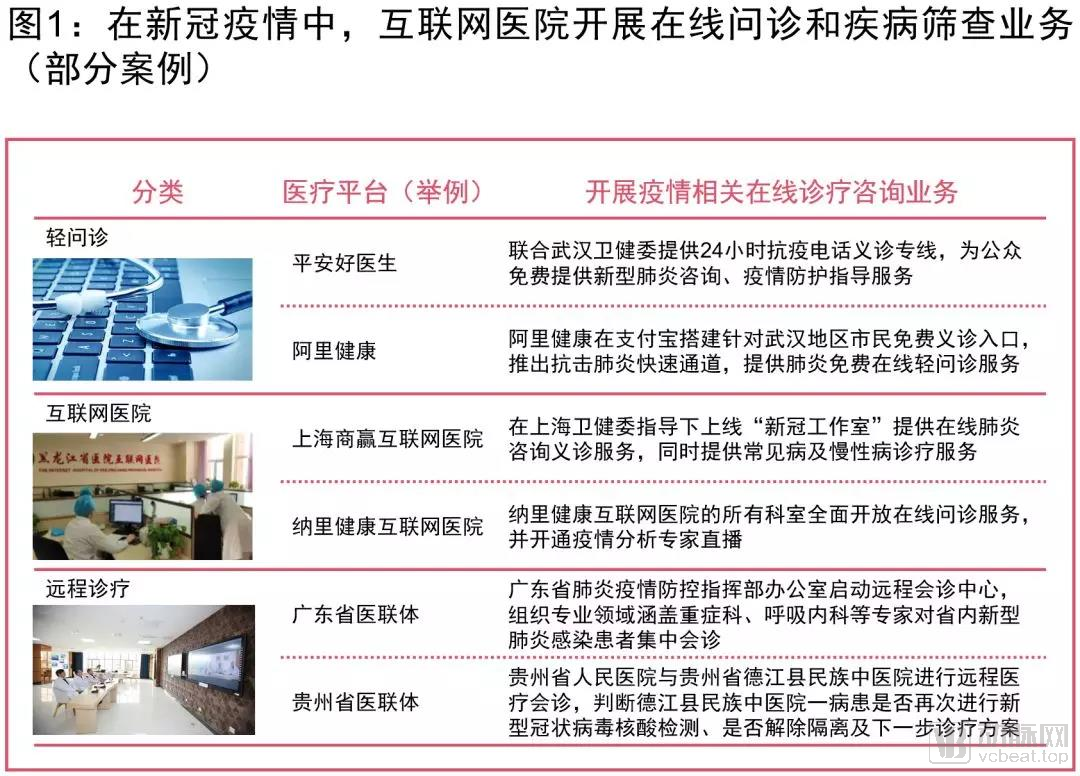
Amid the epidemic, a large number of patients have flocked to physical hospitals. Fever clinics in hospitals are overcrowded, increasing the risk of cross-infection and further exacerbating the shortage of diagnostic and therapeutic supplies as well as intensifying doctor-patient tensions. Under the guidance of local Health Commissions, some medical institutions have leveraged internet hospitals to provide free clinical consultations to the public (see Figure 1). On one hand, online consultations can effectively reduce the risk of cross-infection caused by crowd gatherings; on the other hand, by screening diseases and stratifying patients according to risk levels, high-risk suspected cases are guided to offline facilities for confirmed diagnosis, thereby optimizing the allocation of medical resources and alleviating operational pressure on hospitals. This initiative has received widespread support and acclaim from patients, hospitals, and physicians.
Sudden large-scale public health emergencies are likely to exert a pulse-like impact on policymakers’ risk appetite and user behavior. Due to public fear of cross-infection, there is a tendency to utilize internet hospitals supported by local Grade A tertiary hospitals. Meanwhile, the government has promptly acknowledged and encouraged the practice of providing online consultations for patients with fever. On February 5 and 7, 2020, the National Health Commission consecutively issued the Notice on Strengthening Information Technology Support for the Prevention and Control of Novel Coronavirus Pneumonia and the Notice on Doing a Good Job in Internet Diagnosis and Consultation Services During Epidemic Prevention and Control. These documents encourage medical institutions at all levels to expand the scope of online medical services to alleviate pressure on offline outpatient departments, and require local health commissions to organize and mobilize local hospitals to provide internet-based diagnosis and treatment services for patients with fever. These two documents may provide policy guidance for the further expansion of the scope of diagnosis and treatment by internet hospitals in the future. In connection with the Guiding Opinions on Improving the Pricing and Medical Insurance Payment Policies for “Internet+” Medical Services issued by the National Healthcare Security Administration in September 2019, once internet healthcare is included in the scope of medical insurance payment, users’ awareness, acceptance, and subjective willingness to choose internet healthcare may be significantly strengthened in the future.
2. [Medication Search and Delivery] Medication search and delivery software enhance the convenience for citizens to purchase epidemic prevention drugs and medical devices
During the pandemic, demand for antiviral medications, disinfectants, and protective medical devices surged, frequently leading to stockouts in pharmacies. The public urgently needed information platforms to identify sales channels for medicines and other epidemic prevention supplies. According to data from the “Zhangshang Yaodian” (Mobile Pharmacy) app, its new user registrations increased by as much as 2,648.74% on January 31 alone. Prior to the pandemic, the Shanghai Municipal Food and Drug Administration and the Beijing Municipal Medical Products Administration had respectively launched the “Shanghai Pharmacy” and “Jingyaotong” apps. These platforms enabled users to search for nearby pharmacy locations, medical insurance accreditation status, business hours, and drug inventory information, thereby helping to enhance consumers’ and patients’ awareness of medication procurement channels.
After users complete the process of searching for and purchasing medications online, service providers such as Dingdang Kuaiyao and Ele.me offer professional and rapid home delivery services for pharmacies, reducing the risk of infection associated with crowds gathering at offline pharmacies. According to news reports, from January 20 to 26, Dingdang Kuaiyao delivered medications to homes in cities including Wuhan, Beijing, Shanghai, Shenzhen, and Hangzhou a total of 1.28 million times, with an average delivery time of approximately 28 minutes. Unmanned medication cabinets and community express pickup lockers have enabled a "contactless medication delivery" service model, further reducing the risk of infection caused by the movement of couriers during deliveries.
Innovations in e-commerce for prescription drugs are emerging continuously. However, large-scale implementation has yet to be achieved due to concerns regarding prescription traceability, quality assurance during drug delivery, and the security of medical insurance funds. Recently, Tencent’s “Personal Electronic Medical Insurance Card” may serve as a link connecting patients’ electronic medical records, prescriptions, and pharmacy purchase information, thereby unifying data on individuals, orders, and products. This integration assists regulators in verifying prescription sources, auditing medical insurance fund usage, and cross-checking drug delivery records. The combination of internet hospitals, electronic medical insurance cards, medication search apps, and drug delivery services may create a new experience for Chinese patients: “online prescription – dispensing by partner pharmacies – home delivery – online medical insurance payment.”
3. [Patient/Public Education] Patient education platforms with brand influence have become scarce resources
Prior to the COVID-19 pandemic, there were already successful cases of leveraging the internet for patient and public education in the field of influenza. “Kelui,” an anti-influenza medication under HEC Pharm, focused on children—a highly susceptible population—and disseminated knowledge on influenza prevention through edutainment approaches. In addition to traditional offline marketing activities, HEC Pharm leveraged social media and internet healthcare platforms to build a trustworthy brand image among parents of children. The demand-pulling effect of patient education, combined with HEC Pharm’s extensive coverage across tertiary hospitals, primary care markets, and retail channels, enabled Kelui to achieve sales revenue of RMB 2.93 billion in the first half of 2019, representing a nearly six-fold increase compared to the same period in 2016.
The proliferation of social media and self-media has provided the public with diverse information; however, one-sided or even misleading content can easily trigger widespread panic and blind conformity. Professional patient education platforms have demonstrated significant brand influence in guiding the public toward scientific prevention and control measures and in debunking rumors. For instance, with the support of the National Health Commission, the Health Communication Working Committee of the Chinese Medical Doctor Association and Tencent News jointly launched a real-time rumor-refutation platform for COVID-19. This platform labels each search result as “true,” “false,” or “unverified,” accompanied by evidentiary explanations and credentials of verifying medical professionals, playing a crucial role in curbing the spread of misinformation.
In future patient education initiatives launched by pharmaceutical companies, in addition to tailoring content to the target audience, selecting credible channels for information dissemination will be of paramount importance. Information platforms that have demonstrated exceptional performance during major public health emergencies, and that possess credibility and influence, represent a scarce resource and will play a pivotal role in the future pharmaceutical and healthcare industry.
4. [Patient Information Management] The digital services company promptly established an epidemic information-sharing platform to provide a scientific basis for decision-making by governments, enterprises, and individuals.
In the early stages of the outbreak, information sources regarding the number of COVID-19 infections were rather chaotic, creating an urgent need among governments, businesses, and the general public for accurate patient statistics. On January 21, DXY launched a “COVID-19 Map” and “Real-Time Updates,” aggregating authoritative data from China’s National Health Commission, the Chinese Center for Disease Control and Prevention, and healthcare institutions across most provinces and municipalities. Within one week of its launch, the platform had garnered 476 million views. Additionally, Alibaba collaborated with the Zhejiang Provincial Health Commission to develop a comprehensive “COVID-19 Joint Prevention and Control Platform” on January 27, featuring four modules—resident services, community and subdistrict management, medical and disease control, and government administration—to facilitate digital epidemic prevention and control. As of February 6, 29 provinces, autonomous regions, and municipalities directly under the central government had partnered with Alibaba to establish “Digital Epidemic Prevention Systems.”
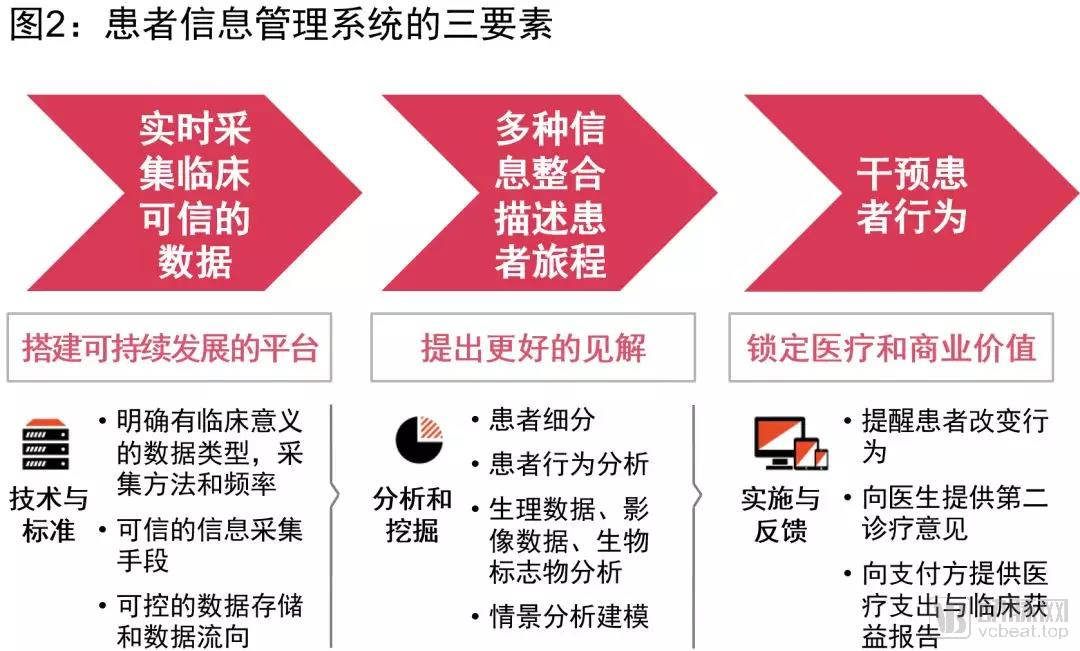
In recent years, leading pharmaceutical companies have actively explored patient information management in areas such as chronic diseases and cancer through digital means; however, successful cases appear to be few. Practice has shown that an effective patient information management system must possess three key elements (see Figure 2). Taking a popular feature in Alibaba’s digital epidemic prevention system as an example, by integrating diagnostic case data from the healthcare industry with passenger information from the transportation sector, the public can check whether they have traveled alongside COVID-19 patients, enabling centers for disease control and prevention to quickly take action based on these leads to block further transmission routes.
Based on the above observations, we have reason to believe that this epidemic will greatly promote the exploration and practice of digital transformation in the pharmaceutical and healthcare industry. However, the path to transformation is not easy. In this regard, PwC offers three recommendations.
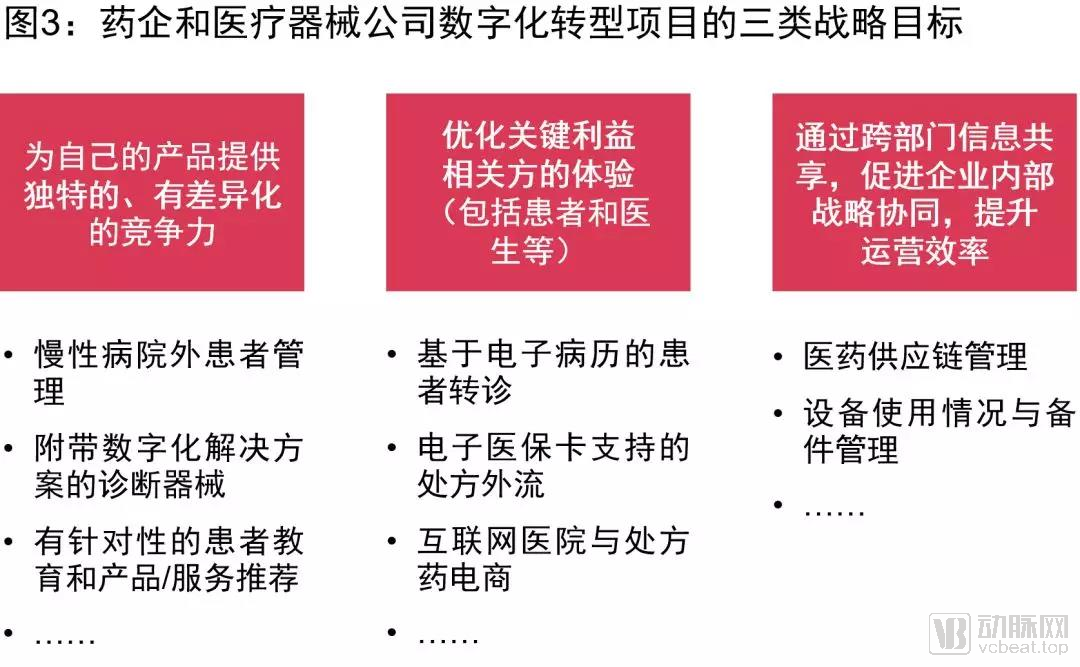
In recent years, the surge in the digital economy and the boom in digital health startups have significantly influenced the management of traditional pharmaceutical and medical device companies. An increasing number of executives now hold unprecedented expectations for “digitalization, informatization, and intelligentization.” Our project experience indicates that when evaluating the value of digital transformation initiatives, managers should consider whether these novel high-tech approaches can achieve the following three objectives (see Figure 3).
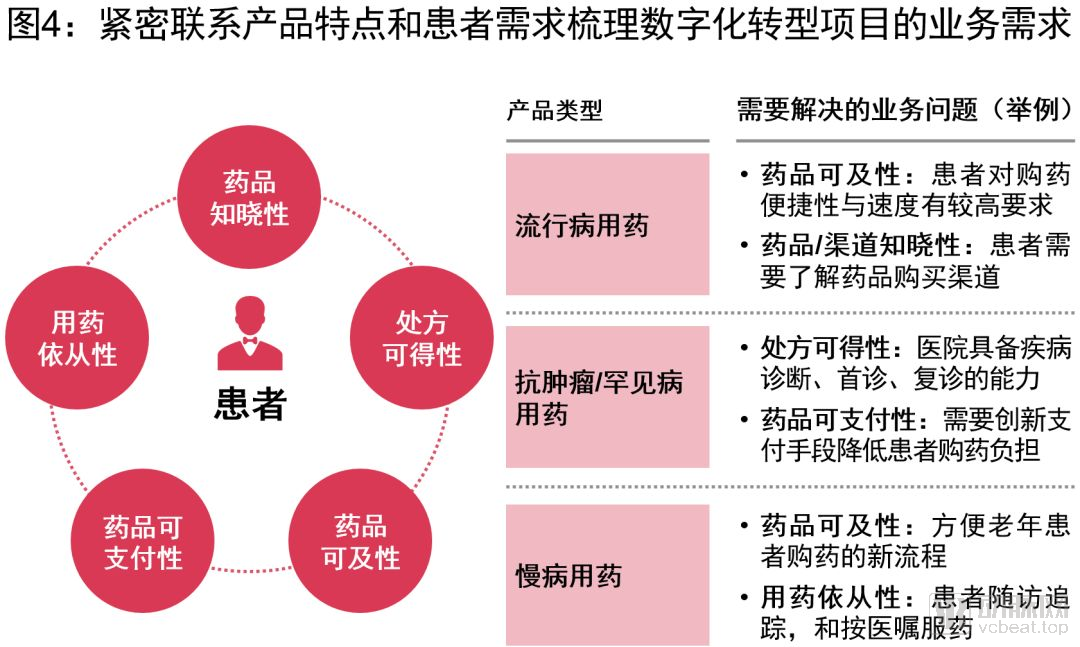
Secondly, even when the general direction is clear, the design of project objectives must still be closely aligned with product characteristics and avoid vague generalizations. For instance, in patient-centric innovative business models, pharmaceutical companies assess unmet needs by evaluating patient awareness of medications, prescription accessibility, drug availability, affordability, and medication adherence. It is easy to imagine that business requirements differ significantly among innovative drugs, generic drugs, chronic disease medications, oncology drugs, and epidemic-related treatments. Only through a deep understanding of these business needs can truly suitable digital innovation solutions be developed for the specific product (see Figure 4).
Furthermore, senior management at traditional pharmaceutical companies and medical device manufacturers must pay close attention to the costs associated with the adoption of new technologies. After clarifying business requirements, enterprises may also need to develop a blueprint for future IT infrastructure development. This involves defining application, data, and integration architectures, as well as mapping out an implementation roadmap for IT initiatives. By providing data on initial investment, management, and operational costs, this approach supports executive decision-making.
The application of new technologies may pose challenges to the operational models of the existing pharmaceutical and healthcare systems. For instance, the aforementioned use of internet hospitals to screen for influenza cases represents a breakthrough in the traditional scope of practice for such platforms. Industry leaders should not passively wait for regulatory liberalization; instead, they should proactively engage with regulatory authorities to secure policy support and gain a first-mover advantage. The entire process can be broadly divided into three stages:
1. During the project design phase, enterprises need to adopt a perspective-taking approach to identify the value propositions of digital projects for regulators, hospitals, healthcare professionals, patients, payers, and the enterprises themselves, and specify the metrics used to measure these values.
2. Collect data from small-scale pilots to reflect changes in these indicators, thereby validating the feasibility of the project design.
3. Let the data speak: objectively present the benefits and costs of digital transformation projects, analyze risks from the regulator’s perspective, and provide recommendations for risk prevention and control measures.
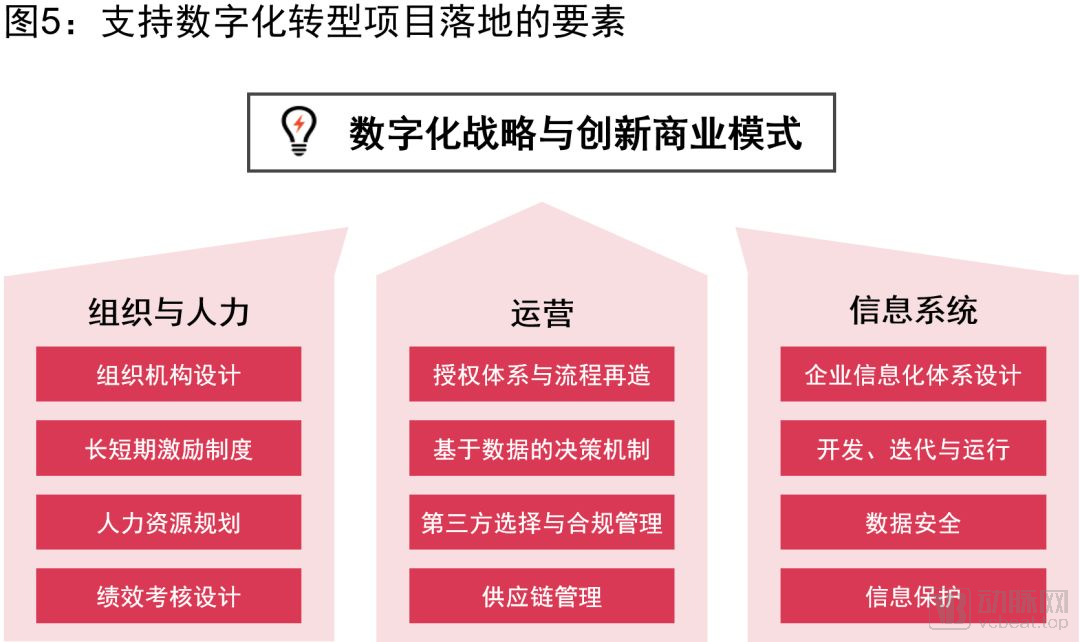
The implementation of digital transformation requires systematic safeguards across multiple dimensions, including organization, talent, and processes, to facilitate connectivity between business and technology departments (see Figure 5). A common question is whether the digital technology implementation team should merely be a secondary unit subordinate to the traditional IT department, or whether dedicated technical implementation teams should be established within various functional departments (such as Marketing, Medical Affairs, and Commercial Operations) to support their respective digitalization initiatives. Another prevalent issue is that many traditional pharmaceutical and medical device companies lack professionals with an in-depth understanding of the healthcare system. This deficiency causes these enterprises to remain product-centric when innovating their business models, resulting in insufficient consideration of the needs of healthcare professionals and patients. Alternatively, they may place undue faith in the notion that certain new technologies can “disrupt” the existing healthcare system, thereby easily eroding trust among external stakeholders during communications.
Effective communication between business and technical departments is also one of the key success factors for digital transformation projects. Given that their knowledge systems are relatively independent and replete with industry-specific terminology, achieving mutual understanding can be challenging. It is therefore particularly important to define the project management team and working groups at the outset of the project. The project management team should include both pharmaceutical and healthcare industry experts as well as digital technology professionals, while establishing clear communication protocols and reporting mechanisms for each working group. Furthermore, incorporating more employees into digital training programs at appropriate stages will help enhance the capabilities of the entire organization.
When building new core competencies, enterprises need to fully consider external partners and jointly promote business model innovation and digital transformation. During the pandemic, internet giants and digital service startups demonstrated their capabilities, showcasing the reliability of their products and their teams' emergency response abilities. Traditional pharmaceutical and medical device companies should thoroughly understand these emerging enterprises in the digital economy and collaborate with them after carefully considering each party's interests and concerns.
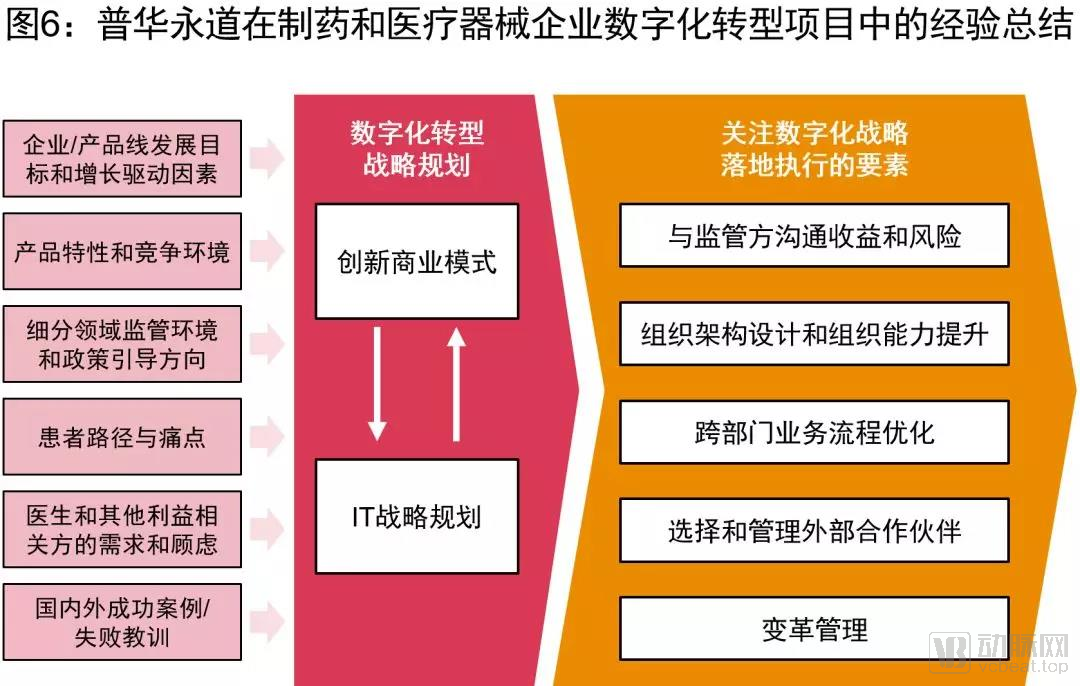
In summary, the COVID-19 pandemic may have accelerated the digital transformation of the pharmaceutical and healthcare industries. Drawing on its extensive project experience, PwC provides a suite of services to pharmaceutical and medical device companies, including strategic planning, strategy implementation, and change management, thereby helping them innovate their business models (see Figure 6).