

YouDi Bio Launches Highly Automated 8-Channel Thromboelastography Analyzer to Meet High-Throughput Clinical Demand
Currently, most thromboelastography (TEG) analyzers on the market are dual-channel instruments. Large medical institutions in China need to process hundreds of samples daily; however, dual-channel TEG analyzers rely entirely on manual operation and have a low throughput, handling at most 10–20 samples per day. This capacity is insufficient to meet the sample processing demands of large medical institutions.
To address this clinical need, Udi Bio has accelerated its R&D efforts and introduced an eight-channel thromboelastography (TEG) analyzer. Mr. Ai Feng, founder of Udi Bio, stated, “Large medical institutions need to install 10 to 20 two-channel instruments to meet clinical demand. Our eight-channel TEG analyzer far surpasses two-channel products in both testing capacity and efficiency.”
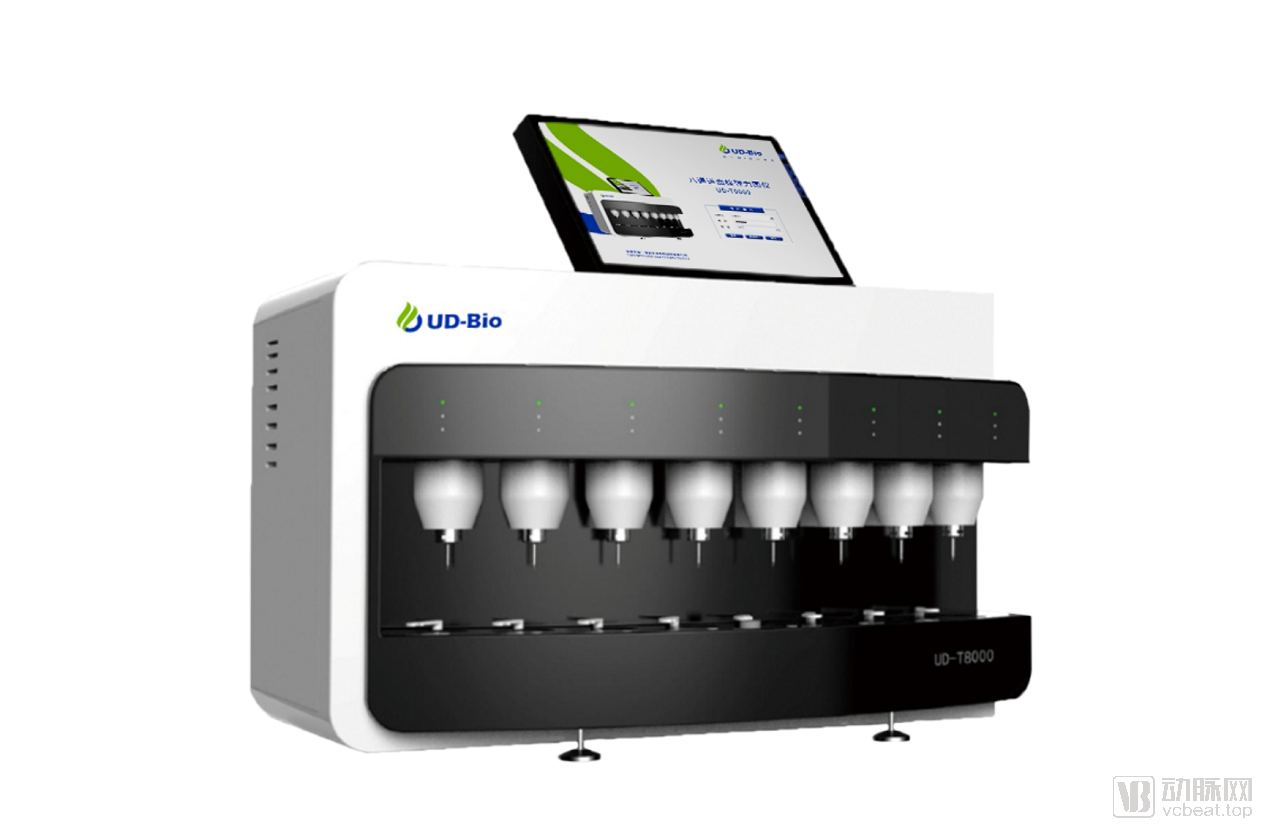
UdiBio Eight-Channel Thromboelastography Analyzer
Fighting the Epidemic, Striving for a Healthy China
In 2020, as COVID-19 spread rampant across China, the nation launched a comprehensive campaign to combat the epidemic. UdiBio rapidly mobilized its resources to join the fight. Research revealed that coagulation dysfunction serves as an early and critical indicator for assessing disease severity in patients infected with COVID-19. Thromboelastography (TEG) analyzers enable dynamic monitoring of parameters such as coagulation factors, fibrinogen, and platelets, providing a comprehensive assessment of patients’ hemostatic, thrombotic, and fibrinolytic status, as well as their risk of thrombosis. This information aids in evaluating the severity of the patient’s condition and guiding therapeutic interventions. Furthermore, specific protein assays, particularly C-reactive protein (CRP) levels, are significant indicators for determining the severity of COVID-19 infections.
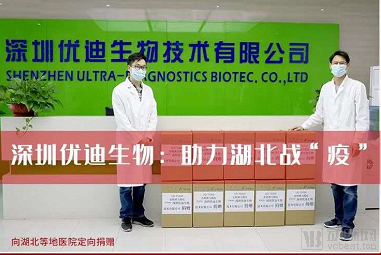
Thromboelastography analyzers and specific protein analyzers were essential “weapons” in the fight against the epidemic. UDI Biology immediately organized overtime production and donated a batch of thromboelastography analyzers, specific protein analyzers, and supporting reagents to designated hospitals in Hubei Province, contributing to the anti-epidemic efforts.
Innovation, for the Rise of China's National Medical Industry
After obtaining his master’s degree from the Second Military Medical University in Shanghai, Mr. Ai Feng, founder of UDI Biotech, joined a leading domestic medical device company, where he successively held senior positions in R&D, marketing, sales, and subsidiary management, thereby accumulating extensive expertise in research and development technology, product planning, and industry insights.During this period, the team led by Ai Feng developed multiple diagnostic products and successfully brought them to market, breaking the absolute dominance of international brands. This achievement earned recognition for domestic brands among major hospitals, significantly reducing product prices and patients’ diagnosis and treatment costs.This has further strengthened Ai Feng's resolve to strive for the rise of China's national healthcare industry.
In 2016, riding the wave of the national “Mass Innovation and Entrepreneurship” initiative, Ai Feng founded UDI Biotech. The name “UDI” embodies the company’s vision: to pioneer new technologies in thrombosis and hemostasis diagnostics by leveraging outstanding talent, strong industry expertise, and an excellent product portfolio, thereby enabling physicians at hospitals of all levels, community health centers, and township health clinics to diagnose conditions more accurately, rapidly, and conveniently.
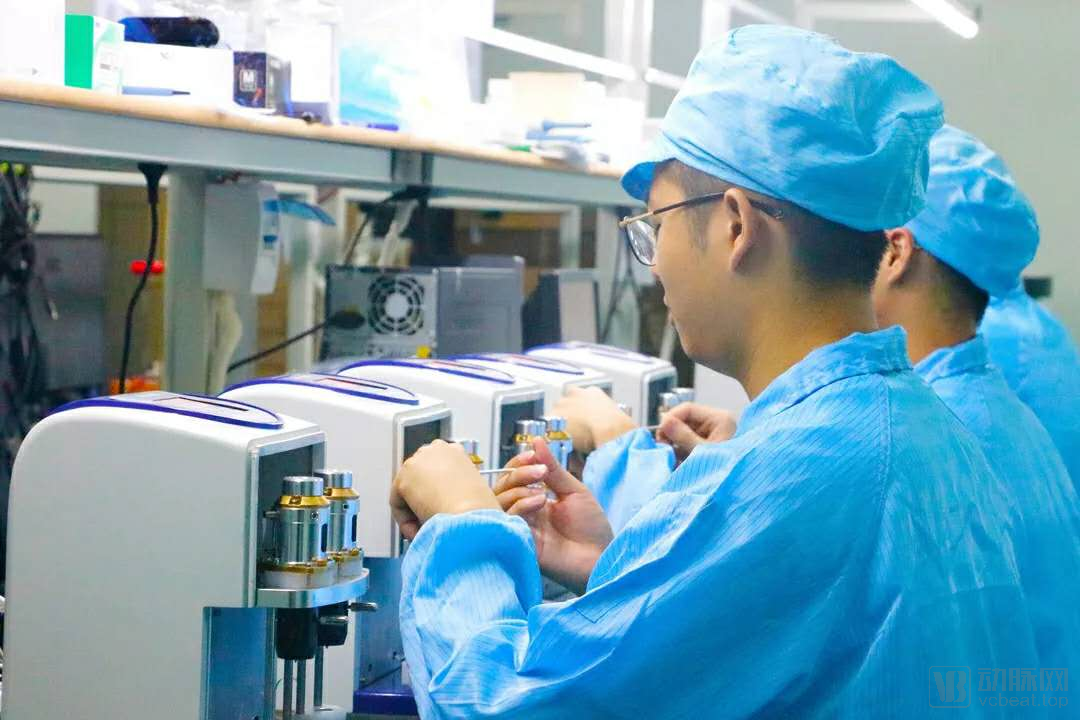
UDI Biotech has remained dedicated to the R&D, manufacturing, and sales of in vitro diagnostic (IVD) instruments and supporting reagents, striving to provide comprehensive solutions for thrombosis and hemostasis diagnostics. After several years of rapid development, UDI Biotech currently boasts nearly 5,000 square meters of GMP-certified cleanrooms and laboratories meeting Class 100,000 and Class 10,000 standards. The company employs a highly skilled, multidisciplinary team of nearly 100 professionals, with over 30% holding doctoral or master’s degrees. Core team members possess 10 to 20 years of extensive experience in the field of IVD coagulation testing. It has launched to the marketLingmou Series Thromboelastography Analyzer, Mingmou Series Coagulation Analyzer, Specific Protein Analyzerand its supporting reagent product series. Its diagnostic products and services have been adopted in clinical practice at Grade 3A hospitals in North, East, South, Southwest, and Northwest China, and are exported to countries in Europe and Southeast Asia.
Eight-Channel Design, Meeting the Demand for High-Volume Specimen Processing
Thromboelastography (TEG) is an analytical method that simulates and records the dynamic interactions among coagulation factors and platelets under conditions mimicking the human in vivo blood environment. It helps clinicians gain a comprehensive understanding of a patient’s coagulation status, rapidly assess coagulation function, identify the causes of coagulation abnormalities, guide component blood transfusion, monitor anticoagulant therapy, and evaluate thrombotic risk. TEG analyzers are widely used and highly recognized in clinical practice across multiple departments, including transfusion medicine, clinical laboratory, health examination centers, orthopedics, neurosurgery, and emergency medicine.
According to Ai Feng, the UD-T5000 two-channel thromboelastography analyzer launched by UdiBio is suitable for medical institutions with smaller specimen processing volumes. The product entered the market in 2019, and its installation base has been steadily increasing, receiving positive feedback from the market. However, the company found that the two-channel system could not adequately support the high-volume testing demands of large medical institutions, and thus decided to rapidly develop an eight-channel thromboelastography analyzer.
The eight-channel thromboelastography analyzer developed by UDI Biotech features high throughput and a high degree of automation. Unlike the two-channel model,Equipped with a built-in screen, it eliminates the need for an additional computer configuration. It expands the channel capacity from two to eight channels, meeting the clinical demand for high-volume specimen processing and addressing the pain points of existing thromboelastography instruments, such as low automation levels and the need for manual leveling.Greatly enhances the ease of product operation and quality stability.
In healthy individuals, blood coagulation time typically ranges from 3 to 4 minutes, whereas in patients, it may be as short as a few dozen seconds. How fully automated instruments can complete sample loading within the shortest possible time while ensuring precision has always been a key technical focus for UDI Biology.Currently, Udi Biotech has developed a complete technical solution for fully automated thromboelastography instruments and has completed validation of all key technical components.
The greatest technical challenge in developing an eight-channel thromboelastography (TEG) analyzer lies in ensuring precision. UdiBio employs gyroscope technology for wireless data transmission, which reduces the instrument’s weight and enables sensitive detection of minute angular changes, thereby measuring variations in blood viscosity to achieve accurate testing. As UdiBio’s flagship product, the UD-T8000 eight-channel TEG analyzer automates both cup loading and unloading processes, eliminating the risk of sample contamination from manual handling and effectively reducing labor costs.
Adhere to the Integration of Instruments and Reagents to Build a Stable Testing System
Since its inception, UDI Bio has adhered to the “two-pronged” strategy, firmly believing that only by combining instruments with reagents (including calibrators) can a stable testing system be established. This integration enables traceability to the highest international reference materials or reference methods, ensuring that test results are comparable to international standards.
Under this philosophy, the company’s reagents and instruments maintain a high degree of consistency with imported brands, rapidly establishing three core business segments: thromboelastography analyzers, coagulation testing, and specific protein analysis.To date, it has obtained over 10 registration certificates for thromboelastography and coagulation analyzers and reagents, as well as more than 30 technical invention patents and software copyrights.
Udi Bio’s coagulation reagent portfolio covers the routine seven-item panel, featuring high sensitivity and a wide linear range, with a correlation coefficient of 0.99 against the most advanced international counterparts. Its four-channel specific protein analyzer is paired with a one-step whole-blood CRP reagent that requires no dilution or calibration, enabling accurate results directly from whole blood samples and ensuring direct traceability to WHO reference materials.
Meanwhile, building on its existing instrument platform, UDI Biology closely aligns with clinical needs and actively expands its reagent portfolio. The rapid kaolin reagent for thromboelastography completes testing within 10 minutes, making it the preferred choice for emergency care. The heparinase cup employs a unique lyophilization process that significantly enhances product stability. The platelet aggregation function reagents are sensitive to two distinct activation pathways—platelet arachidonic acid metabolism and adenosine diphosphate (ADP)—and demonstrate high concordance with imported reagents, thereby effectively guiding precise clinical medication.
UD Biotech Two-Channel Thromboelastography Analyzer
Going forward, continue to deepen our expertise in the coagulation and thrombosis testing product line.
The domestic blood coagulation testing market in China is relatively mature, with a market size of RMB 6 billion. Thromboelastography (TEG) analyzers represent an emerging market, with the total domestic market capacity ranging from RMB 800 million to RMB 1 billion.
Ai Feng believes that in the future, thromboelastography (TEG) testing will become a routine component of coagulation analysis alongside standard coagulation tests, thereby enabling precision medicine.This also means that the volume of samples for coagulation and hemostasis testing will increase exponentially, driving growing demand for high-throughput, highly automated thromboelastography (TEG) analyzers. “The TEG analyzer market is expected to maintain a compound annual growth rate (CAGR) of over 25%, with its market size reaching RMB 3 billion within the next 5 to 10 years.”
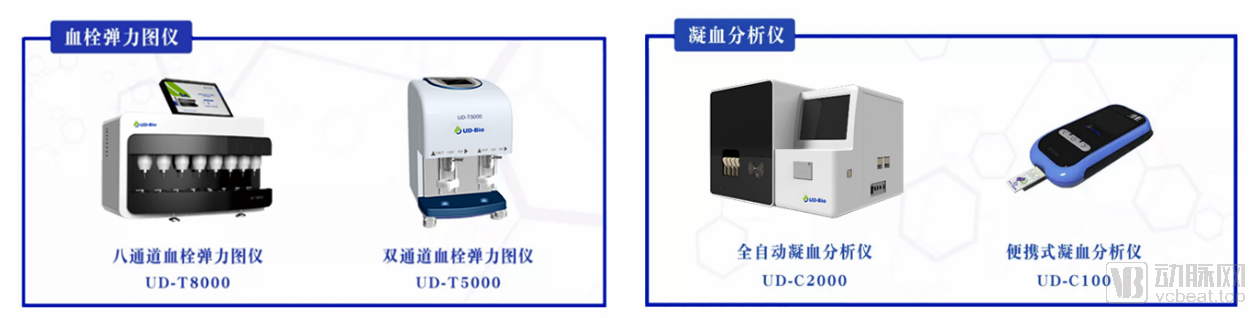
UdiBio will continue to increase its R&D investment, deepen its development in the field of thrombosis and hemostasis diagnostic products, focus on its coagulation and thrombosis testing product line, apply cutting-edge technologies from clinical laboratories, accelerate industrialization and commercialization, and enable more advanced technologies and products to serve clinical practice, playing a more significant supportive role in the diagnostic process.