

Tsinghua University's Dual-Academician-Backed Jingzhen Technology Launches AI-Powered Multimodal Diagnostic System for COVID-19 in Respiratory Clinics
The COVID-19 pandemic caught everyone off guard.
As of February 19, China had reported a cumulative total of 74,279 confirmed cases, 5,248 suspected cases, 14,463 recoveries, and 2,009 deaths. From the initial isolated cases to over ten thousand confirmed infections; from Wuhan alone to nationwide spread—the transmission speed of the novel coronavirus has far exceeded that of SARS 17 years ago.
In this smokeless “war against the epidemic,” not only have tens of thousands of medical personnel rushed to the front lines to provide support, but a group of Chinese domestic medical enterprises and research institutions have also been silently supporting and assisting in the fight against the pandemic behind the scenes. One such example is the AI company Jingzhen Technology.
Recently, Beijing Jingzhen Technology Co., Ltd., in collaboration with the academician teams of You Zheng and Dong Jiahong from Tsinghua University, Tsinghua Changgung Hospital, Zhongnan Hospital of Wuhan University, Tianyou Hospital Affiliated to Wuhan University of Science and Technology, the First Hospital of Jilin University, the Institute for Interdisciplinary Information Sciences at Tsinghua University, the Nanjing Turing Institute, the Xi’an Institute for Interdisciplinary Core Studies, and the Alibaba Cloud team of Alibaba Group, among other research, clinical, and technical institutions, launched an “Intelligent Diagnostic System for COVID-19 Based on Multimodal Clinical Data,” designed to provide intelligent auxiliary diagnosis using CT scans and clinical data related to the novel coronavirus.
The system integrates three core functions: one-stop intelligent imaging diagnosis, clinical diagnosis, and clinical classification. It is designed to assist clinicians in infectious diseases and respiratory medicine with rapid disease assessment, thereby helping primary care and community hospitals with limited diagnostic expertise address the practical challenges encountered at the frontline of patient care.
How Was This System Developed? What Benefits Will It Bring to Clinical Diagnosis During the Pandemic? VCBeat Conducted Exclusive Interviews with Wang Bo, Founder of Jingzhen Technology, and Dr. Jin Shuo, a Physician from Academician Dong Jiahong’s Team at Beijing Tsinghua Changgung Hospital, Who Participated in the R&D, to Provide the Following Insights.
As revealed by the disclosed epidemic data, the large base of suspected COVID-19 cases has placed immense pressure on frontline clinical diagnosis and treatment. It is therefore crucial to screen a high volume of suspected cases within a short timeframe, enhance the diagnostic efficacy for novel coronavirus pneumonia, reduce the workload of clinicians, and enable patients to receive early diagnosis and timely treatment.
On January 28, with the support of Academician You Zheng’s team and Academician Dong Jiahong’s team at Tsinghua University, as well as Beijing Tsinghua Changgung Hospital, the AI team at Jingzhen Technology began to develop an intelligent diagnostic system for COVID-19 based on multimodal clinical data.
As an AI enterprise, Jingzhen Technology has upheld “addressing genuine clinical needs” as its core value since its establishment in 2018. Within just two years of operation, the company developed a deep learning-based intelligent fully quantitative decision support system for hepatobiliary surgery, which is currently being deployed in several renowned Grade III Class A hospitals.
“After the outbreak, we began to consider what we could do to combat the epidemic and support clinicians—specifically, how to fully integrate technology with clinical practice to proactively address clinical challenges,” said Wang Bo, founder of Jingzhen Technology.
He pointed out that after confirming the plan for developing an intelligent diagnostic system for COVID-19, Jingzhen Technology collaborated with clinical experts from Tsinghua Chang Gung Hospital and frontline anti-epidemic hospitals in Wuhan, Jilin, and other regions to rapidly carry out project assessments and data retrieval. The technical team overcame challenges such as remote work and data transmission, efficiently completing the entire development process, including data collection, annotation and processing, algorithm training, product development, and testing and packaging.
“Our system is not limited to imaging analysis; it also incorporates, in real time, the epidemiological, laboratory, and clinical criteria outlined in the Sixth Trial Edition of the Diagnosis and Treatment Protocol for Novel Coronavirus Pneumonia issued by the National Health Commission,” said Wang Bo.
Protocol design, R&D, and the collection and analysis of clinical data from over 1,000 cases within ten days... On February 10, the system successfully passed the acceptance review for the first batch of clinical R&D projects for “COVID-19 Prevention and Treatment.”
As is well known, common diagnostic methods for the epidemic include routine RT-PCR testing, rapid IgM antibody test kits, and imaging examinations. Among these, radiological diagnosis plays a crucial role in the clinical management of pneumonia caused by the novel coronavirus (2019-nCoV).
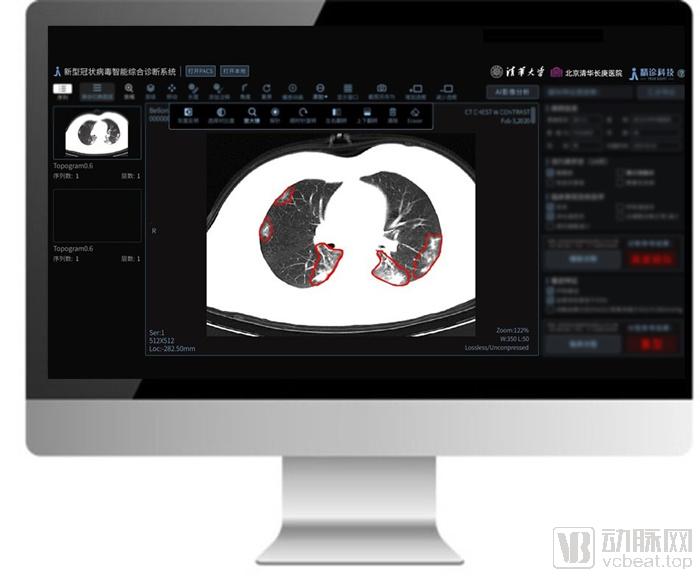
Intelligent Diagnostic System for COVID-19 Based on Multimodal Clinical Data: Leveraging Patient Lung CT Images, Epidemiological History, Laboratory Tests, and Clinical Features to Assist Clinicians in Infectious Diseases and Respiratory Medicine Departments in Rapidly Evaluating Disease Severity, Quantitatively Assessing and Predicting Disease Progression, Thereby Enabling More Precise and Efficient Patient Management.
Dr. Wang explained that for intelligent system diagnosis, they have implemented a classification system with three-tiered directives: “exclusion,” “mild suspicion,” and “severe suspicion.”
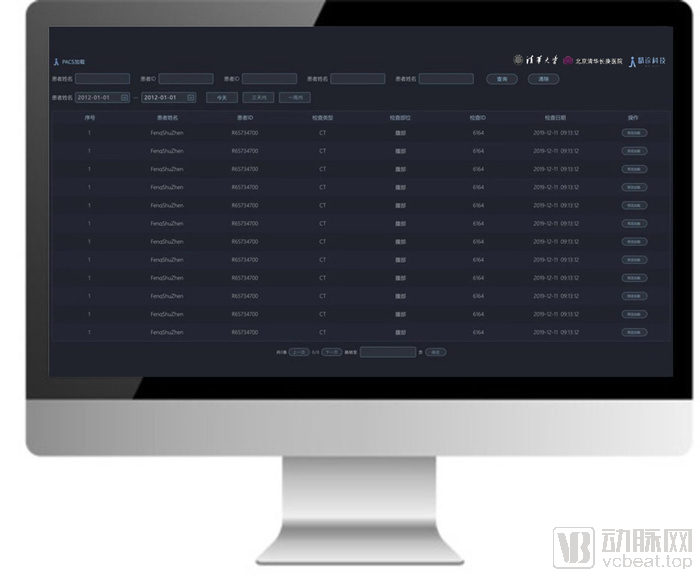
“The core strengths of our system are, first, the authentic sources of our data; second, we have not only advanced technology but also a strong team of clinicians who monitor clinical progress and needs in real time; and finally, we go beyond a one-sided integration of imaging by incorporating multiple indicators that have been updated in real time to align with the sixth edition of the guidelines,” said Dr. Wang.
The epidemic has affected a wide geographic area. In addition to the immense pressure on tertiary hospitals, primary care facilities are also facing severe challenges due to their lack of experience.
Dr. Jin Shuo, a member of Academician Dong Jiahong’s team at Beijing Tsinghua Changgung Hospital who participated in this research and development effort, stated that the intelligent auxiliary diagnostic system for COVID-19 can rapidly screen chest CT scans of a large number of suspected cases, conduct comprehensive analyses integrating clinical and imaging findings in accordance with guidelines, improve the diagnostic efficiency for Novel Coronavirus Pneumonia (NCP), and hold significant value in alleviating the diagnostic and treatment pressures faced by frontline clinical staff.
“Furthermore, this system empowers primary care hospitals and community health centers, enhancing primary care physicians’ diagnostic capabilities for Novel Coronavirus Pneumonia (NCP) and promoting standardization in the diagnosis and treatment of this emerging infectious disease across healthcare institutions at different levels. Moreover, the system enables precise stratification based on disease severity, facilitating triaged patient management and rational allocation of medical resources,” said Jin Shuo.
Finally, Dr. Wang informed VCBeat that this project is one of the key initiatives supported by Tsinghua University and Beijing Municipality’s emergency special program for combating Severe Acute Respiratory Infection (SARI), and it has passed the interim acceptance review. Under the leadership of Academician You Zheng and Academician Dong Jiahong from Tsinghua University, efforts will be intensified to expand data collection and optimize the system. Currently, the equipment has been shipped to hospitals in multiple regions of Hubei Province and other provinces, where it will be uniformly installed and deployed in coordination with relevant healthcare institutions.