

United Imaging Intelligence AI Deployed in Huoshenshan and Leishenshan Hospitals to Analyze Lung Segments for COVID-19 Detection | Tech in the Fight Against Pandemic
Since the pandemic alarm was sounded, technological forces for epidemic prevention and control have flocked to Wuhan. The temporarily constructed Huoshenshan Hospital and Leishenshan Hospital served not only as central hubs for epidemic containment but also as a proving ground where a decade’s worth of medical technology transitioned from blueprint to reality.
Artificial intelligence technology has been widely applied in this epidemic prevention campaign, ranging from knowledge graph-based self-assessment for residents, to assistance in medical imaging, and to big data monitoring by disease prevention and control centers, with AI playing a significant role throughout.
United Imaging Intelligence’s AI system focuses on the radiology department. The uAI Intelligent Auxiliary Analysis System for COVID-19, designed specifically for the novel coronavirus, was already deployed and operational at frontline hospitals such as Huoshenshan Hospital, Leishenshan Hospital, Wuhan Tongji Hospital, Union Hospital, and Zhongnan Hospital. In the early stages of the epidemic, the time required for CT image interpretation was reduced from 5–10 minutes to just one minute, with the majority of radiology report writing now handled by AI, a tireless assistant.
Meanwhile, certain tasks of radiologic technologists have also been delegated to artificial intelligence. Taking the “Smart Eye” system as an example, its capabilities for 360-degree full-body motion capture and automatic generation of 3D human models enable technologists to perform scans remotely without frequently entering and exiting isolation rooms to adjust patient positioning. For radiologic technologists who work more than 12 hours a day, this not only reduces the risk of infection but also provides invaluable physical relief.
All research and development and optimization began on the first day of the 2020 Spring Festival; as families reunited, those who went against the tide had already quietly set out on their journey.
On the first day of the Lunar New Year, there were no customary social visits or lively reunion dinners. Several employees from United Imaging Intelligence spontaneously contacted designated hospitals in Wuhan for treating novel coronavirus pneumonia (COVID-19), proactively assessed the needs of radiologists, and sought to provide assistance.
The situation is more severe than anticipated. Due to a surge in medical demand, many patients, even after arriving at the hospital, are left waiting anxiously in outpatient areas and other locations due to a shortage of nursing guidance and physician care. The situation in the radiology department is slightly better: inside isolation rooms, doctors clad in heavy protective gear methodically position patients for CT scans; outside these rooms, physicians responsible for image analysis wear less cumbersome protective equipment but must maintain intense concentration for extended periods to identify suspicious “white spots” among hundreds of imaging slices.
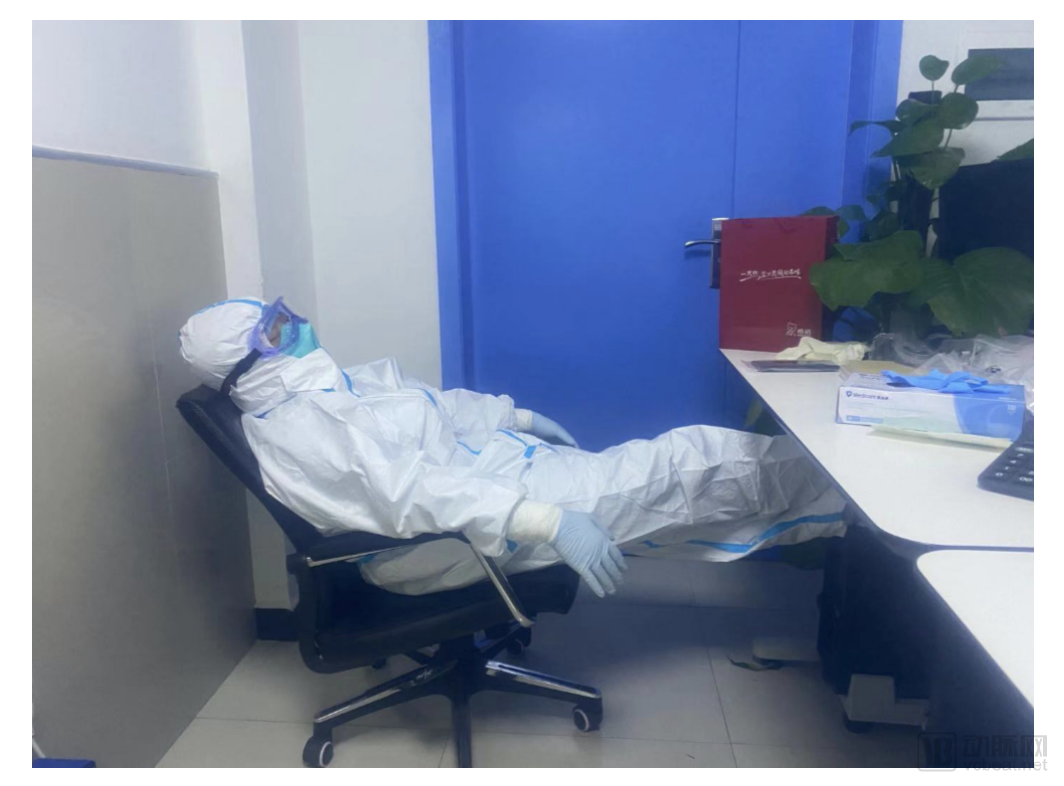
Wuhan Tongji Hospital: A Radiologist Fell Asleep Before Even Removing Their Protective Suit
After initial discussions with physicians, they found that the needs of the Radiology Department at Tongji Hospital were not as complex as anticipated. This can be examined from two perspectives: first, there was a shortage of supplies, as the hospital had not previously maintained substantial reserves of protective gowns, and the allocation of these resources required time; second, the patient volume was overwhelming. Physicians hoped to diagnose patients in the early stages of the disease, but despite many doctors working around the clock, countless imaging studies still awaited review. Zhan Yiqiang, COO of United Imaging Intelligence, told VCBeat, “Our artificial intelligence should be able to effectively address the second issue.”
After establishing its objectives, the United Imaging team made multiple visits to the Shanghai Public Health Clinical Center, which houses Shanghai’s top-tier medical research capabilities and treated the majority of the city’s COVID-19 cases. There, building on its existing “AI+CT” technology and leveraging United Imaging Group’s self-developed “SkyEye” CT system, United Imaging Intelligence launched targeted research and development efforts.
On February 8, United Imaging’s first version of the “AI+CT” intelligent auxiliary analysis system for COVID-19 was officially completed. In this initial release, the software is capable of accurately identifying subtle lesions and automatically outlining them; it employs deep learning algorithms to segment lung CT images and automatically generate reports for physicians, thereby supporting the entire workflow from diagnosis to treatment.
“In addition to improving efficiency, artificial intelligence can also help physicians enhance diagnostic accuracy. In clinical practice, some patients are identified early in the course of infection as having an epidemiological history and obvious clinical indications, but they may lack access to sufficient nucleic acid testing kits, or their initial nucleic acid test may yield a negative result. In such cases, we aim to use CT imaging to further assess the patient’s condition. However, in actual diagnostic practice, early-stage COVID-19 patients often present with small ground-glass opacities on lung CT scans—subtle findings that are easily overlooked by physicians but are precisely where AI excels.”
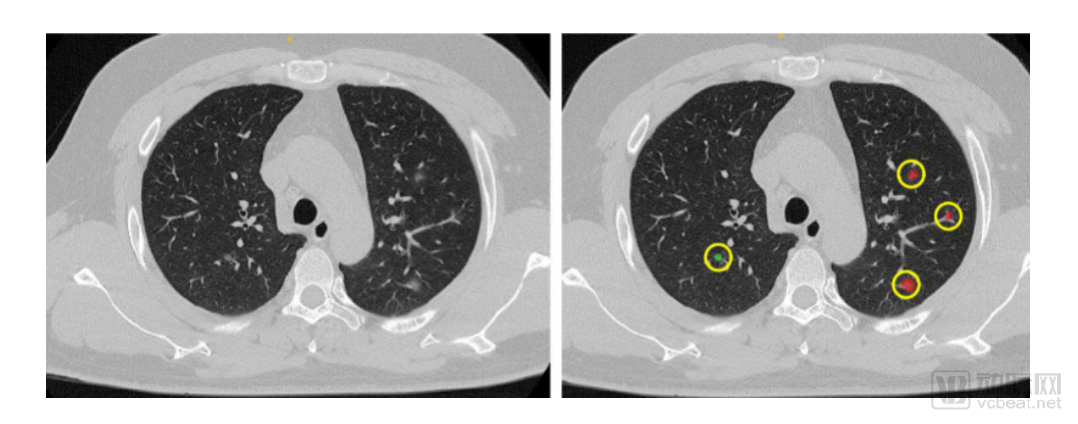
Ground-Glass Opacity Delineation Map
“Secondly, AI can assist physicians in evaluating patients’ disease progression and optimizing medical resources. Currently, in regions with high prevalence of COVID-19, medical resources (such as nucleic acid testing equipment and hospital beds) remain scarce—we need to support clinicians in promptly discharging individuals confirmed to be healthy or already recovered.”
“To confirm a patient’s diagnosis, a primary approach is repeated testing using assay kits; however, given the complementary nature of CT imaging and nucleic acid testing in diagnostic efficacy, CT-based diagnosis was included in the ‘National Health Commission’s Guidelines for the Diagnosis and Treatment of Novel Coronavirus Pneumonia (Fifth Edition).’ The incorporation of CT imaging not only enhances diagnostic accuracy but also enables monitoring of lesion changes, such as the resolution of ground-glass opacities. In this regard, AI can quantitatively analyze lesions and visually compare changes across multiple CT scans of the same patient, offering significantly greater precision than the previous reliance on visual assessment by the naked eye.”
Based on usage data from Grade A tertiary hospitals in Shanghai and frontline hospitals in Wuhan, United Imaging Intelligence’s AI system for COVID-19 has demonstrated the capability to detect suspected lesions in patients’ CT scans with an accuracy exceeding 90%, while delineating them with a segmentation error of less than 1%. However, this represents only the initial step in addressing the challenge, as further difficulties have subsequently emerged.
Since the beginning of the new year, although provinces across China have successively established multiple layers of checkpoints, Wuhan remains unparalleled in the strictness of its population mobility controls.
“How to provide rapid support to Wuhan was the first challenge we encountered. Faced with strict city-wide lockdown orders, our colleagues obtained entry permits only after multiple applications. The second issue concerned server logistics. Due to the pandemic, shipping times were significantly longer than usual. To ensure timely delivery of servers to Wuhan, our colleagues drove across provincial borders to pick up the equipment directly from suppliers, guaranteeing that servers equipped with the uAI COVID-19 application reached the areas most critically affected by the outbreak as soon as possible.”
“The next challenge was deployment. Unlike in the past, we had to adopt a different approach for hospital deployments. For hospitals with relatively well-developed information technology systems, staff could directly install workstations on-site, which is a more traditional method. However, for temporarily constructed facilities such as makeshift hospitals, where IT infrastructure is not yet fully established and the risk of infection is high, we relied on United Imaging Cloud for cloud-based deployment. This shifted software parameter tuning, as well as the storage, computation, and analysis of imaging data, entirely to the cloud. This approach significantly reduced safety risks for deployment engineers and enabled our algorithm engineers to deliver the latest and most advanced models to the frontline without delay.”
Cloud deployment offers numerous advantages; for United Imaging, adopting a cloud-based model during this period significantly mitigates safety risks for personnel. With on-site deployment, staff would inevitably need to repeatedly debug equipment in response to changing physician requirements, necessitating frequent visits to various hospitals. In contrast, cloud deployment requires only a single initial visit to the hospital, allowing limited staff to complete debugging without shuttling back and forth between multiple facilities.
For hospitals, this model presents both risks and benefits. The benefits stem from its convenience; when many new hospitals (particularly primary-care institutions) seek to deploy it, the model can significantly accelerate the deployment process.
The risk stems from data security concerns. To this day, many hospitals remain reluctant to adopt cloud-based management, preferring to keep their data within on-premises server rooms due to fears of data breaches.
On February 11, the uAI Intelligent Assistant Analysis System for COVID-19, developed by United Imaging Intelligence, was first deployed at Wuhan Huoshenshan Hospital and quickly put into use. As of February 19, the system had been installed at frontline hospitals in Wuhan’s fight against the epidemic, including Wuhan Tongji Hospital, Wuhan Union Hospital, Zhongnan Hospital of Wuhan University, and Leishenshan Hospital.
If the sole objective is to enhance physicians’ work efficiency and alleviate the workload burden on hospital radiology departments, Union Imaging Intelligence’s artificial intelligence solutions have indeed delivered satisfactory results. However, physicians seek a more precise approach to enable early detection of whether patients are infected.
On February 3, an article debating the merits of nucleic acid testing versus CT scanning for pneumonia rapidly sparked controversy within the industry, as experts and scholars voiced differing opinions on which method is more effective in assessing SARS-CoV-2 infection status.
Xia Liming, Director of the Department of Radiology at Tongji Hospital in Wuhan, once told VCBeat: “Although nucleic acid testing is the gold standard for diagnosing COVID-19, pharyngeal swab tests have a positive rate of only 30–50%. Furthermore, current medical capabilities also limit the effectiveness of nucleic acid testing to some extent. Due to healthcare workers’ limited experience with test kits, it is often difficult to collect saliva samples from the upper respiratory tract, leading to false-negative results in patients. Additionally, if a patient is in the early stages of infection, the viral load in the sample may be too low, which can also result in false negatives (missed diagnoses). Moreover, PCR testing places very high demands on laboratory facilities, testing equipment, and operational personnel. In many primary-care hospitals, even when test kits are available, healthcare staff may be unable to collect valid samples due to limitations in their technical proficiency.”
“In contrast, CT images offer high clarity and can diagnose early-stage minor lesions. However, if the lesions are confined to the pharynx, trachea, or bronchi, with no significant involvement of the lung parenchyma or interstitium, chest CT findings may be negative. Additionally, COVID-19 is a type of viral pneumonia, and during this season, other viral pneumonias are also common.”
Therefore, neither approach is perfect; a better strategy is to integrate the two. Consequently, radiologists hope that CT can play new roles in the fight against the epidemic.
On February 14, Hubei Province included clinically diagnosed cases in the newly reported cases of COVID-19 for the first time, defining suspected cases with characteristic imaging findings within the province as “clinically diagnosed cases.” However, even through CT imaging, physicians could not directly determine whether patients were infected with the novel coronavirus.
Can AI directly assist physicians in determining the type of pneumonia from CT images? Unfortunately, existing AI products on the market are not yet capable of fulfilling this critical task. However, United Imaging Intelligence has identified subtle patterns through subsequent data analysis. Currently, the uAI Intelligent Auxiliary Analysis System for COVID-19 has achieved a certain degree of capability in differentiating between “viral pneumonia” and “bacterial pneumonia.”
“CT images of patients with novel coronavirus infection show predominantly ground-glass opacities, whereas CT scans of bacterial pneumonia typically reveal more consolidative lesions and are frequently accompanied by pleural effusion. Based on this distinction, we have processed large volumes of data to generate probabilistic assessments of pneumonia types. In Wuhan during this special period, after excluding bacterial pneumonia, the remaining cases of viral pneumonia have a relatively high probability of being COVID-19,” summarized Zhan Yiqiang regarding recent research findings.
Furthermore, there are some interesting details that also warrant careful consideration. “Our AI-assisted analysis system can divide the lungs into different segments, delineate the lesions within them, and calculate the infection ratio in each segmental lesion area, thereby providing a reference for diagnosing infections.”
Although there is currently no clear standard for differentiating COVID-19 from other viral pneumonias, if AI algorithms can accurately calculate the distribution of infected areas across different lung lobes and segments, we may be able to identify certain patterns for differential diagnosis through big data analysis. Furthermore, such precise quantitative analysis holds promise for stratifying COVID-19 patients by disease severity (mild, moderate, or severe), thereby enabling the formulation of personalized isolation and treatment protocols, and optimizing the allocation of scarce medical resources and patient care—to which lies the potential value of artificial intelligence.
The unique nature of the epidemic has made social rescue efforts equally distinctive. As of February 15, nine makeshift hospitals in Wuhan had been opened, requiring not only physicians for diagnosis but also diagnostic equipment for their use.
In the past, preparing a CT scanner room in a hospital often took more than a month, with stringent environmental requirements. It not only required adequate radiation shielding and load-bearing foundations but also had to address various complex issues such as surrounding signal interference. As temporarily repurposed civilian facilities, makeshift hospitals do not have ready-made rooms that meet these requirements. In such scenarios, United Imaging’s mobile CT “Emergency Radiology” solution proves invaluable.
“This ‘Emergency Radiology Department’ is a comprehensive, end-to-end radiology solution custom-built by United Imaging Healthcare for cabin hospitals. It includes essential facilities such as an independent scanning room, control room, and ultraviolet disinfection devices. The standalone ‘container-style’ design not only facilitates rapid disassembly, transportation, and relocation but also allows for plug-and-play operation. Furthermore, its waterproof, heat-insulating, and all-season temperature-controlled features enable it to perform reliably under extreme conditions, ready to be deployed at the forefront of epidemic response or disaster relief efforts. Meanwhile, the CT scanners are equipped with the ‘SkyEye Intelligent Platform,’ which can intelligently recognize facial and whole-body positioning information without requiring patients to remove their masks, thereby achieving intelligent positioning and setup. This allows physicians to complete scans without any physical contact with patients.”
During traditional scanning procedures, radiologists must maintain close contact with patients across multiple steps, including selecting the imaging position, positioning the patient, and defining the scan range. The “SkyEye Intelligent Platform” enables automatic positioning, real-time tracking of patient movement, and dynamic adjustment of positioning protocols, allowing physicians to perform precise CT scans without entering the operation room. For imaging technologists who often work more than 12 hours a day, this not only reduces the risk of infection but also provides significant physical relief. Furthermore, the “SkyEye Intelligent Platform” shortens the duration of each CT scan, thereby reducing patient waiting times and the likelihood of cross-infection.
By enhancing the mobility of CT equipment and leveraging the remote intelligent image interpretation capabilities of its imaging platform, United Imaging was able to rapidly equip makeshift hospitals in epidemic areas with effective diagnostic imaging capabilities, thereby alleviating the shortage of medical resources and radiology specialists in Wuhan.
Looking back on the entire process, despite numerous challenges encountered during requirements assessment, product R&D, equipment installation, and parameter configuration, United Imaging Intelligence ultimately persevered. Zhan Yiqiang prioritized employee safety above all else.
“Wuhan itself was a high-risk area. Many of our employees, who were based in Hubei, proactively joined the fight against the epidemic. Another group of employees, although not located in Hubei, voluntarily accompanied medical equipment from other regions into the epicenter of the outbreak. Their spirit of sacrifice is truly commendable.”
“There is an even greater challenge: with strict quarantine measures implemented across the country, once our deployment teams went to Wuhan, it became difficult for them to be redeployed elsewhere. The severely disrupted logistics also prevented us from delivering equipment to hospitals as quickly as needed. In response, we activated emergency logistics plans and organized self-initiated equipment deliveries. Fortunately, the epidemic is gradually being brought under control, and we hope this trend will continue.”
Spring has gradually spread along the streets, and even the pandemic cannot hinder the continuation of life. Technology shares a similar trajectory; with each hardship we endure, there are those who gather experience like kindling, raising the banner of the fight against the epidemic. Medical personnel have built a safety line for us on the front lines, while technological experts have forged powerful tools for them through all-night efforts. Every contribution in the battle against the epidemic is worthy of remembrance.