

Epson Health Technologies: Disinfection Robots Aid Wuhan, AI-Powered Pathology and Medical Robotics Drive Innovation
At the end of 2019, an epidemic of pneumonia caused by the novel coronavirus emerged across China. The Chinese Center for Disease Control and Prevention reported that, as of February 11, a total of 3,019 healthcare workers had been infected with the novel coronavirus (including confirmed cases, suspected cases, clinically diagnosed cases, and asymptomatic infections, among which 1,716 were confirmed cases). Some of these infections may have resulted from non-occupational exposure. Tragically, six healthcare workers died.
Since the outbreak of the epidemic, medical professionals across the country have risen to their mission by advancing against the tide. On the front lines, they have forged a secure defense against the virus through their professional expertise and indomitable courage.
It is regrettable that healthcare workers became infected during the fight against the pandemic. In this outbreak, we have also witnessed medical robots, as a technological force, being deployed to the clinical frontline to help alleviate the workload of healthcare personnel and reduce cross-infection.
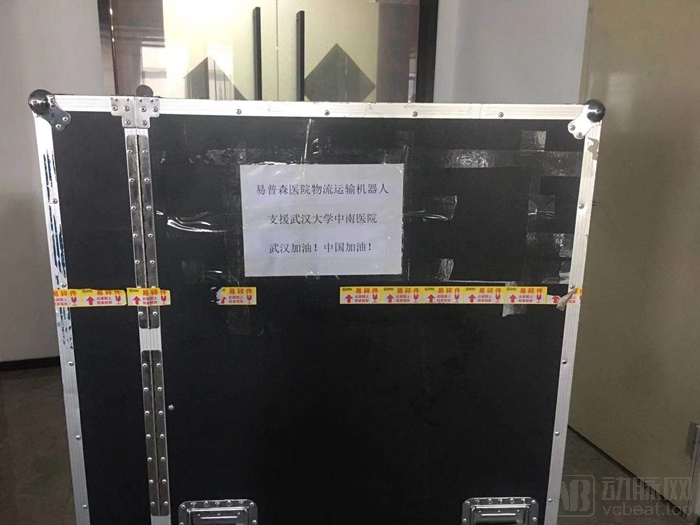
On January 30, 2020, Epsom Smart Health received a request for protective supplies from Zhongnan Hospital of Wuhan University, which urgently needed one logistics disinfection robot. Following the initial donation, on February 8, 2020, Epsom received another request from Zhongnan Hospital of Wuhan University for eight hospital logistics disinfection robots. Upon receiving this urgent frontline demand, Epsom immediately arranged for engineers to work overtime to install and test the equipment.
What roles can hospital robots play in the current epidemic? In the aftermath of this outbreak, what changes will the hospital robotics industry undergo? VCBeat interviewed Li Xiaojun, Chairman of Epsom Group.
For healthcare workers on the front lines of the pandemic response, delivering supplies, medications, and consumables is a high-frequency daily task necessitated by the large patient population and intense workload. However, relying on manual delivery increases the risk of infection among healthcare personnel and consumes significant energy. Furthermore, cross-contamination during material distribution poses a substantial risk of secondary transmission.
The deployment of hospital logistics and disinfection robots enables the autonomous delivery of medical consumables, pharmaceuticals, and instruments. This reduces the need for healthcare workers to enter isolation areas for manual deliveries, effectively lowering the risk of cross-infection between patients and staff, thereby safeguarding the safety of both parties. Additionally, these logistics robots can transport items such as laboratory specimens, medical waste, and meals, minimizing unnecessary contact and reducing the probability of viral transmission and spread.
Li Xiaojun introduced, “Our logistics robot, ‘Qingfeng,’ comes with built-in disinfection capabilities, enabling both scheduled and on-demand disinfection. After setting the disinfection area and time, it can autonomously drive, navigate while avoiding obstacles, take elevators to designated areas, and initiate automatic disinfection operations.”
In addition to logistics robots with built-in disinfection functions, Epsom’s triage robots in Guangdong hospitals are alleviating the workload of information desks in hospital lobbies. While answering patients’ inquiries, these robots also feature built-in infrared temperature measurement, providing more efficient and comprehensive support for epidemic prevention and control.
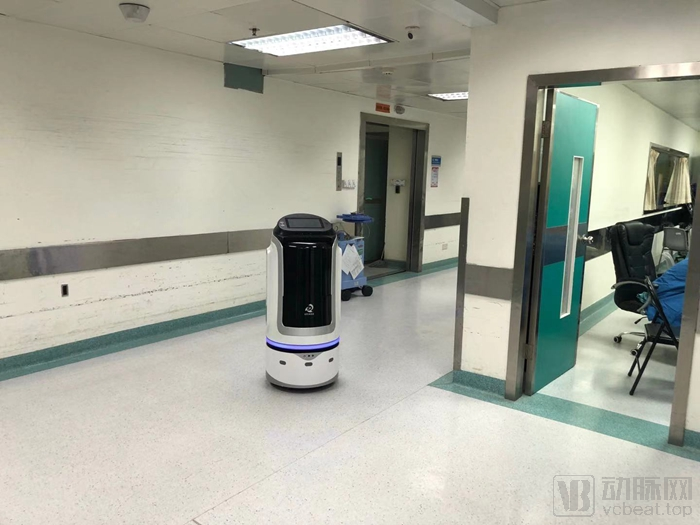
Epson robots atFor Use at Guangdong Provincial People's Hospital
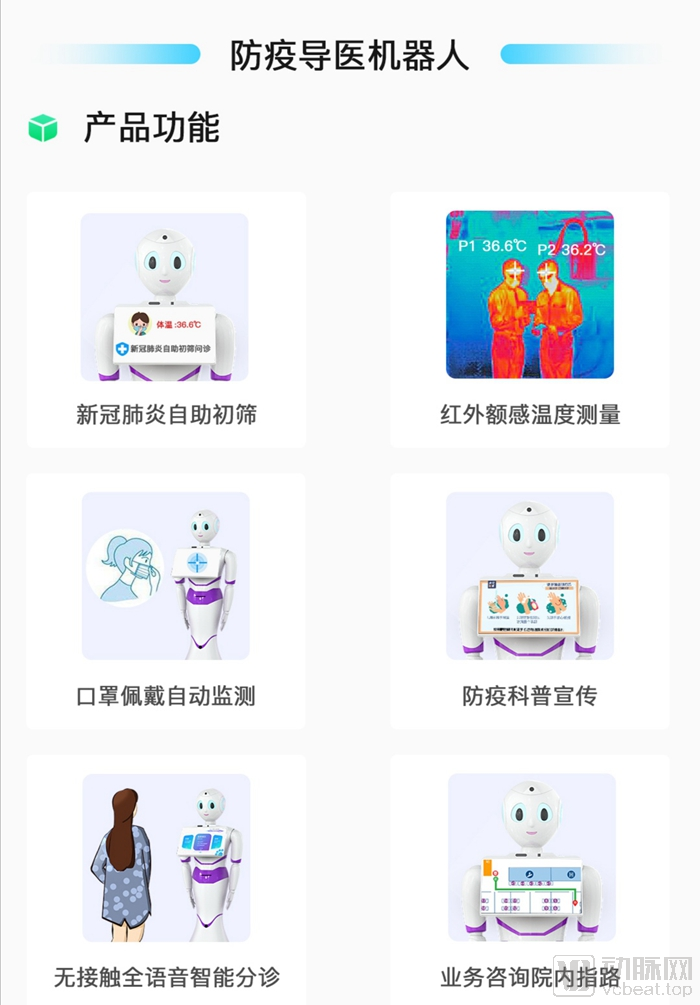
Epson Epidemic Prevention Triage Robot Interface
During this epidemic, logistics robots with disinfection functions met the needs of frontline clinical staff for delivery and disinfection.
In fact, hospital robots can not only alleviate labor shortages during emergencies but also play a significant role in various areas of daily hospital operations and management.
Li Xiaojun believes that the development of hospital robots is an indispensable link in the informatization and automation of the public health system.
“Although hospitals currently have hospital-acquired infection (HAI) control systems in place, there are still many processes that can be optimized. Areas within the hospital environment that are unsuitable for human presence can potentially be served by automated logistics equipment. However, given the complexity of hospital settings, simply replicating automation solutions from other industries is not feasible for implementation in hospitals. Through years of dedicated expertise, we have developed tailored solutions adapted to various critical scenarios in hospitals.”
For example, operating rooms require the use of a large volume of high-value medical consumables. However, many hospitals still employ extensive,粗放式 (rough) management practices for these items. To address this, Epsom has designed the “RuiXing” and “ZhiXing” high-value medical consumable management robots. These robots are specifically engineered for the distribution of high-value consumables, enabling precise RFID-based item tracking and helping hospitals optimize workflows and cost management.
In the healthcare sector, the cost of trial and error is exceptionally high. Given the highly complex hospital environment, it is difficult for products to gain acceptance without two to three years of dedicated investment and thorough groundwork.
Li Xiaojun stated, “Hospitals cannot solve their problems simply by deploying basic AGV (Automated Guided Vehicle) transport robots. I believe that the implementation of logistics robots in hospitals is not merely a product issue, but an engineering project. Horizontally, it requires seamless interoperability with various relatively closed systems, such as hospital information systems, medication management systems, and billing systems. Vertically, it demands a deep understanding of the diverse needs across different hospital scenarios. These insights have been uncovered by our R&D personnel through long-term, in-depth engagement within hospitals.”
The sudden outbreak of this epidemic has provided hospitals with an opportunity to test and refine their robotic systems. Li Xiaojun believes that this presents both an opportunity and a challenge.
He stated, “The value of logistics robots has been highlighted during this epidemic. Frankly speaking, many hospital robots currently deployed in hospitals—whether they are triage guidance robots or logistics robots—are sitting idle and gathering dust. The role played by hospital robots during this epidemic has enabled people to truly understand their value, assessing it from the perspective of optimizing hospital management rather than merely as a substitute for human labor.”
In 2019, Epsen formed a strategic partnership with Sinopharm, implementing its solutions in more than 50 Grade IIIA hospitals. When asked why the company initially chose to enter the hospital robotics sector, Li Xiaojun stated that this decision was closely tied to Epsen Group’s AI-powered pathology business.
Founded in 2011, Epsion initially focused on paperless business hall solutions, specializing in the development of intelligent channels and services for industry-specific clients. After years of growth, it has successfully delivered mature solutions to customers across multiple sectors, including telecommunications, electric power, finance, and healthcare.
In the medical field, in addition to its hospital robotics business, Epsom also offers a full suite of AI-powered auxiliary diagnostic solutions for cervical and breast cancer screening.
In 2016, after recognizing the substantial unmet demand in the field of cervical and breast cancer screening in China, Epsen Group decided to expand into the AI pathology business.
“The shortage of pathologists is a major weakness in the healthcare system. Even in Guangdong, a province with a population exceeding 100 million, there are only about 700 licensed pathologists. Traditional hospitals have historically prioritized diagnostic testing over pathology. Leveraging our paperless operations, we have developed robust capabilities in information platform development. Additionally, we have assembled a strong medical R&D team. Against this backdrop, we have chosen to enter this market.”
It is reported that Dr. Zhou Xu, Head of Pathology AI at Epsen, studied under Professor Ma Yi (an IEEE Fellow). Dr. Zhou previously taught at ShanghaiTech University, where he instructed doctoral courses on deep learning, and has served as a reviewer for journals such as IEEE Transactions. Liu Ke, Head of Consumables and the Pathology Center, brings over 10 years of experience in the operation and sales of pathology centers.
Over four years of research and development, Epsom has independently developed depth-of-field extension technology, successfully addressing the issue of cell stacking in scanning imaging. Leveraging deep learning techniques based on convolutional neural networks, it enables rapid screening and localization of pathological cells.
The Epsen team has also been deeply involved in the formulation of the National Health Commission’s “Standards for the Application of Artificial Intelligence in Medicine,” closely tracking the most advanced international technologies and actively responding to the latest national policies. It has accumulated vast amounts of data and established core technological moats in intelligent diagnostic systems for liquid-based cytology pathology and histopathology.
Once the R&D challenges of applying AI to pathological diagnosis are resolved, the greater hurdle lies in industrialization and commercialization.
In Li Xiaojun’s view, standalone AI-powered pathology diagnostic systems are difficult to commercialize. Only by completing the layout of the entire industry chain can a viable business model be achieved.
Guided by this approach, Epsen has developed a comprehensive suite of products for its AI-assisted diagnostic system for cervical and breast cancer screening by extending its product chain. This full-range offering includes consumables for cervical cytology testing, an integrated liquid-based cytology processor and stainer with automated workflow, and an AI-powered screening system for cervical and breast cancer that covers the entire process from sample collection to laboratory testing and slide interpretation.
Currently, Ipsen has covered more than 50 Grade A tertiary hospitals in provinces and cities including Beijing, Shanghai, Guangdong, Hainan, Sichuan, Yinchuan, Jiangsu, and Zhejiang.
Throughout four years of vertical specialization in the healthcare sector, Epsen has consistently adhered to a steady and pragmatic strategy. Having endured the period of cultivation, the company is now poised to enter its harvest phase. Reflecting on its original mission, Li Xiaojun stated, “We pay tribute to every medical professional fighting on the front lines of the pandemic. We have always been committed to providing genuinely effective products that address their challenges, creating tools that healthcare workers truly love.”