

Alibaba Health: Beyond Pharma E-commerce — A Comprehensive Layout Tested by the Pandemic

AliHealth
Medical and Health Services Network Service Provider
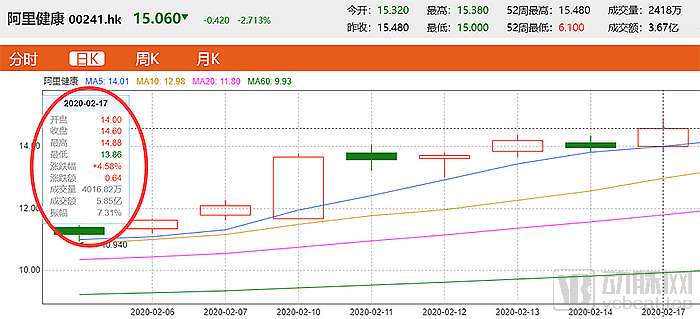
On February 17, 2020, AliHealth (00241.HK) announced the acquisition of 100% equity interest in Ali JK ZNS Limited, a direct wholly-owned subsidiary controlled by its parent company, Alibaba (09988.HK). The scope of the acquisition included designated businesses on Tmall, Tmall Supermarket, and Tmall Global, the merchants operating within these businesses, as well as related management, marketing, and operational personnel. The total consideration for the transaction amounted to HK$8.075 billion. Following the announcement, AliHealth’s closing share price rose slightly by 5% to HK$14.58 on the day, compared with the previous trading day’s close of HK$13.94.
The business injected into AliHealth through this acquisition covers three categories of products: 1. Pharmaceuticals (OTC drugs and prescription drugs) and foods for special medical purposes sold on Tmall and Tmall Supermarket. 2. Medical devices, adult products, health care products, medical and health services, and "Blue Hat" certified health supplements sold on Tmall Supermarket. 3. Pharmaceuticals (OTC drugs and prescription drugs), medical devices, health care products, foods for special medical purposes, and medical and health services available on Tmall Global. According to the official acquisition announcement, as of January 31, 2020, the newly injected business had more than 530 merchants selling products and services.
According to the interim results announcement released by AliHealth on November 26, 2019, the gross merchandise volume (GMV) of the Tmall Medical platform operated by the company exceeded RMB 37 billion. Revenue from consumer healthcare services, covering multiple sectors such as medical aesthetics, dentistry, vaccines, and health check-ups, increased by 274.4% year-on-year. Over the past 12 months, the annual active consumers on the Tmall Medical platform surpassed 160 million, representing an increase of 30 million over six months. The number of annual active consumers for its online self-operated stores grew by 10 million in six months, reaching over 37 million.
This is just one of many moves made by AliHealth so far this year, fulfilling its commitment to strengthen its layout in innovative businesses such as consumer healthcare, internet healthcare, and smart healthcare. As per convention, AliHealth will soon release its annual report for the fiscal year 2020. Prior to that, VCBeat (WeChat ID: Vcbeat) has also reviewed AliHealth’s strategic layout for this fiscal year, as well as its related actions during the epidemic.
"Epidemic Emergency: AliHealth Provides Urgent Aid"
WorkAs an internet giant, Alibaba is hereDemonstrating a strong sense of social responsibility during the epidemic, they provided substantial support to the fight against the outbreak. Alibaba’s AliHealth was no exception, responding swiftly in the early stages of the epidemic.
A representative from AliHealth stated that despite the suddenness of the situation and many employees already beginning their leave, cross-regional remote collaboration enabled multiple departments to promptly form online virtual teams for communication, with key allocations of technical, product, and operational resources. Meanwhile, colleagues both on duty and on leave responded actively, eager to contribute to epidemic control efforts in their own ways, including several employees who remain in Wuhan.
VCBeat learned from communications with relevant executives at AliHealth that the company maintains a high level of attention to industry dynamics and public health emergencies, enabling cross-regional sharing and allocation of existing social pharmaceutical and healthcare resources. Therefore, whenever there is an opportunity or possibility to significantly enhance the convenience of patients’ medical consultations and medication purchases while ensuring professional safety, AliHealth responds rapidly internally without delay.
AliHealth’s first initiative was to partner with local O2O pharmacies to provide free masks to couriers in Wuhan, thereby offering robust support for logistics in the epidemic-affected areas. Subsequently, after the outbreak escalated on January 20, AliHealth committed that its “Express Medicine Delivery” service would remain operational during the Spring Festival holiday in the coming weeks.
Consumers in regions where this service is available can search for masks in stock at nearby offline pharmacies via the Taobao app and quickly purchase protective supplies, such as masks and disinfectants, through AliHealth’s “Emergency Medicine Delivery” service. At the time, some users indeed benefited from the convenience of this service, receiving epidemic prevention supplies in a timely manner.
In the subsequent phase of the pandemic, many regions across China implemented stricter control measures due to the worsening situation and urged residents to minimize outdoor activities to curb the spread of the virus. Under these circumstances, express delivery services became the primary means for many households to obtain daily necessities; for some families under home quarantine, it was even the sole option. In Wuhan, the epicenter of the outbreak, the occasional sight of delivery scooters traversing the empty streets offered a heartwarming scene amidst the cold winter of the epidemic.
The rapid spread of the epidemic in its early stages caught many people off guard, with a flood of mixed true and false information leaving everyone unprepared. AliHealth initially focused on providing accurate and reliable information. From January 21 to January 25, various internal business teams at AliHealth collaborated to sequentially launch a COVID-19 prevention guidance page, a real-time epidemic map, rumor-refutation services, and a series of popular science educational materials on COVID-19.
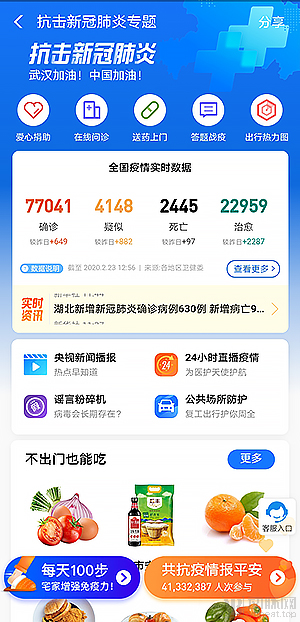
These science-based health education materials, certified by official institutions such as the Health Communication Center of the Chinese Center for Disease Control and Prevention, enable users to access dedicated pages directly through features like Taobao App’s “Dome Keywords” and external communication channels. This allows users to obtain the latest epidemic prevention knowledge, as well as guidance on identifying and purchasing preventive supplies. Meanwhile, these educational resources have been widely disseminated through Weibo, WeChat, Douyin (TikTok), Taobao Live, Tmall Genie, and the group’s new media matrix, achieving broad and positive public outreach.
On February 14, AliHealth launched the “Close Contact Inquiry” feature on Alipay. Users can utilize this feature to check whether they have traveled on the same transportation vehicle as confirmed or suspected cases, facilitating the timely adoption of targeted measures.
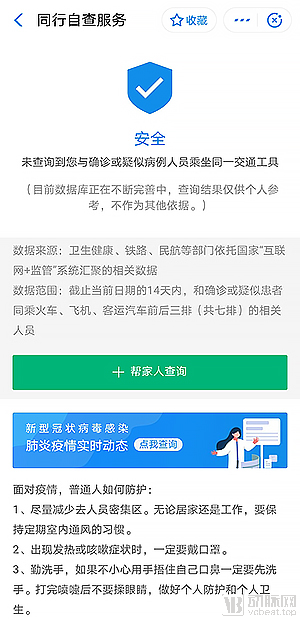
In response to the varying regulations for medical visits at different hospitals during the pandemic, AliHealth has recently launched the “Guide to Seeking Medical Care Outside” on Alipay. This feature consolidates “Essential Guidelines for Medical Visits During the Pandemic” from more than 300 hospitals across 14 major cities. It greatly facilitates patients in checking whether appointment registration is required for specific hospital departments and other important visit-related instructions, thereby helping achieve the goal of “at most one visit” and reducing the risk of infection when leaving home.
In the early stages of the outbreak, Hubei Province experienced a “run” on medical resources as an overwhelming number of patients flooded healthcare facilities, thereby heightening the risk of cross-infection. On January 24, AliHealth launched a free online medical consultation service on Alipay, specifically targeting residents of Hubei Province. The service was met with an enthusiastic response immediately upon its launch. On the afternoon of January 26, AliHealth urgently added another access point for free clinical consultations on the Taobao mobile app.
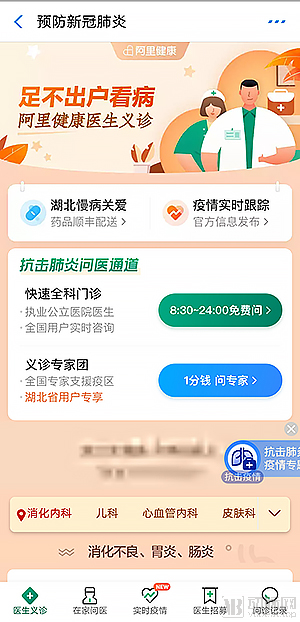
According to official statistics, as of 8:00 PM on February 10, AliHealth’s online medical consultation page had accumulated 11.16 million unique visitors, with the total number of online consultations exceeding 1.04 million. Since its launch, the average daily number of consultations per online physician has exceeded 100, with some physicians in the respiratory department handling more than 200 consultations per day on average.
Recognizing the significant role of internet healthcare in alleviating pressure on offline medical services, AliHealth has rolled out a series of initiatives in this field since January 31. On that day, AliHealth partnered with Taobao Live to launch “Professional Doctor Live Q&A,” where physicians from the AliHealth Ask-a-Doctor platform conducted live sessions and provided professional answers to questions from online users. According to AliHealth, a live stream by a doctor from Jiangxi Province attracted over 100,000 viewers. During the more-than-one-hour broadcast, he answered over 100 questions, enduring a workload comparable to performing a minor surgical procedure.
Also on January 31, AliHealth partnered with Alipay to launch a “Psychological Assistance Hotline,” providing psychological support to healthcare workers and patients. The initial batch of psychological services was specifically targeted at Hubei Province.
Subsequently, AliHealth launched the “Beijing Online Doctor Consultation Platform for Novel Coronavirus Pneumonia,” initiated by the Beijing Medical Association. Under the guidance of the Publicity Department of the National Health Commission, and in collaboration with Health News, Alipay, Amap, and UC, it rolled out a comprehensive suite of convenient services for epidemic prevention and control leveraging mobile internet technologies. These services included real-time epidemic data updates, release of authoritative information, navigation to fever clinics, and authoritative health education.
In China’s nationwide campaign against the COVID-19 pandemic, internet-based healthcare indeed played a pivotal role as a “second front” in epidemic prevention and control. With two rounds of policy encouragement issued by the National Health Commission, and active promotion by both physical hospitals and internet healthcare enterprises, the overall service volume of the industry has seen a substantial increase.
According to statistics, the number of registered users and online consultations on domestic internet healthcare platforms has reached several times, or even ten times, their usual levels. Access has been granted to hundreds of third-party platforms in total, with some internet healthcare platforms’ dedicated sections for epidemic prevention and control accumulating up to 1.8 billion page views.
A relevant official from AliHealth believes that online medical consultation platforms played a role in alleviating the operational pressure on physical hospitals within the healthcare system during the pandemic. This is mainly reflected in three aspects.
First, online medical consultations via internet hospitals can assist brick-and-mortar hospitals in conducting initial screening and triage, thereby alleviating the burden on physical facilities and preventing cross-infection in shared spaces.
Secondly, internet-based medical services enable patients with chronic diseases to manage their conditions online, including follow-up consultations and medication purchases. This reduces the need for repeated hospital visits and helps avoid cross-infection.
Finally, internet-based healthcare can facilitate the dissemination of epidemic-related preventive knowledge and the delivery of protective medications, thereby rapidly scaling up user services to better curb the spread of the epidemic.
However, for populations in urgent need of medical care, such as patients with chronic diseases who have already received a definitive diagnosis, internet-based healthcare relying on remote consultations fails to address the substantive issues. With stricter traffic controls and considerations to reduce the risk of infection, many chronic disease patients who require regular hospital visits for prescription refills have reduced their outings. The temporary shortage of medications for chronic conditions has become increasingly apparent, particularly in Hubei Province, the epicenter of the outbreak.
The pain point of “seeking medical care” within the user scenario of “seeking medical care and asking about medications” has been partially alleviated; naturally, the next step is to address the pain point of “asking about medications.” Since February 6, AliHealth has shifted its focus toward pharmaceutical e-commerce. It successively launched the “Buy Medicines Without Leaving Home” service on Taobao and Alipay. By adopting an internet-based healthcare model that combines online consultation and prescription with home delivery of medications, this service enables patients with chronic diseases to purchase their required medicines safely and conveniently from home. Within less than three days of its launch, the cumulative number of unique visitors to the service page approached 3 million.
On February 13, AliHealth, in collaboration with nearly 50 domestic and international pharmaceutical companies, launched the “Chronic Disease Welfare Program” on Tmall’s “Medicine Delivery Without Leaving Home” platform. This initiative aims to ensure the online supply of medications for chronic diseases during the epidemic and provide online chronic disease management services to patients who face difficulties in visiting pharmacies in person.
Meanwhile, AliHealth urgently launched a dedicated “Hubei Region Medicine Shortage Registration” section, mobilized platform and merchant resources, and issued an initiative calling on more social forces to join the effort to help chronic disease patients and their families in Hubei Province who are at risk of running out of medication locate scarce medicines.
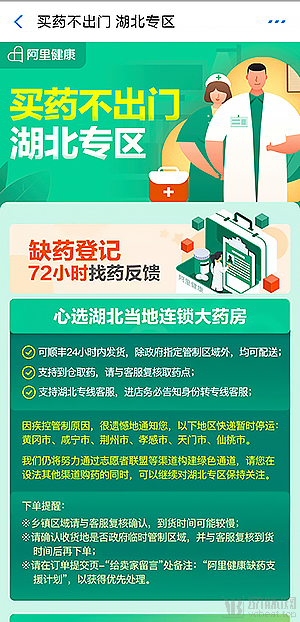
After patients submit their information, AliHealth will mobilize its nationwide pharmaceutical supply chain and local chain pharmacy resources in Hubei Province to locate urgently needed medications. Dedicated personnel will be assigned to process medication requests, with the goal of providing users with updates on the search progress within 72 hours, thereby striving to address the urgent needs of chronic disease patients in Hubei Province.
From any perspective, AliHealth’s actions during the current epidemic have been commendable, fully demonstrating the social responsibility and robust mobilization capabilities expected of an industry leader. Meanwhile, a larger number of users experienced the novel model of internet-based healthcare during this outbreak, thereby enhancing their recognition and acceptance of such services.
AliHealth has also gained significant insights. A representative from AliHealth stated that, as the builder and organizer of this online medical consultation platform, AliHealth encountered a shortage of available online doctors due to the rapid increase in the number of online consultations and a substantial surge in traffic throughout the process. This issue was not unique to AliHealth; other remote consultation platforms faced similar challenges.
To address this issue, AliHealth has recruited more professional doctors across China to join its platform for support through various channels. However, the number of doctors with prior online service experience—who can quickly and proficiently use internet tools to respond to patient inquiries—has been lower than expected. “This requires us to accelerate and strengthen the speed of qualification reviews and the efficiency of training before doctors go online,” said a relevant person in charge at AliHealth, sharing some ideas for the future.
Four Major Fields Advance in Tandem: Pharmaceutical E-commerce Is the Key
AliHealth’s actions during the pandemic aligned perfectly with the company’s strategic business focus over the past year, namely to continue strengthening its presence in pharmaceutical e-commerce and internet healthcare, particularly in pharmaceutical e-commerce.
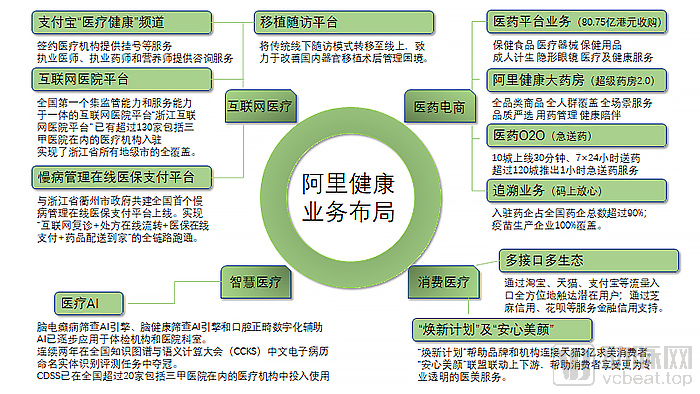
Pharmaceutical E-commerce
According to AliHealth’s interim financial report, the gross merchandise volume (GMV) generated by the Tmall Healthcare platform, operated on behalf of Alibaba by AliHealth, exceeded RMB 37 billion in the six-month period from April 1, 2019, to September 30, 2019. Revenue from consumer healthcare services—spanning multiple sectors including medical aesthetics, dental care, vaccines, and health check-ups—surged by 274.4% year-on-year.
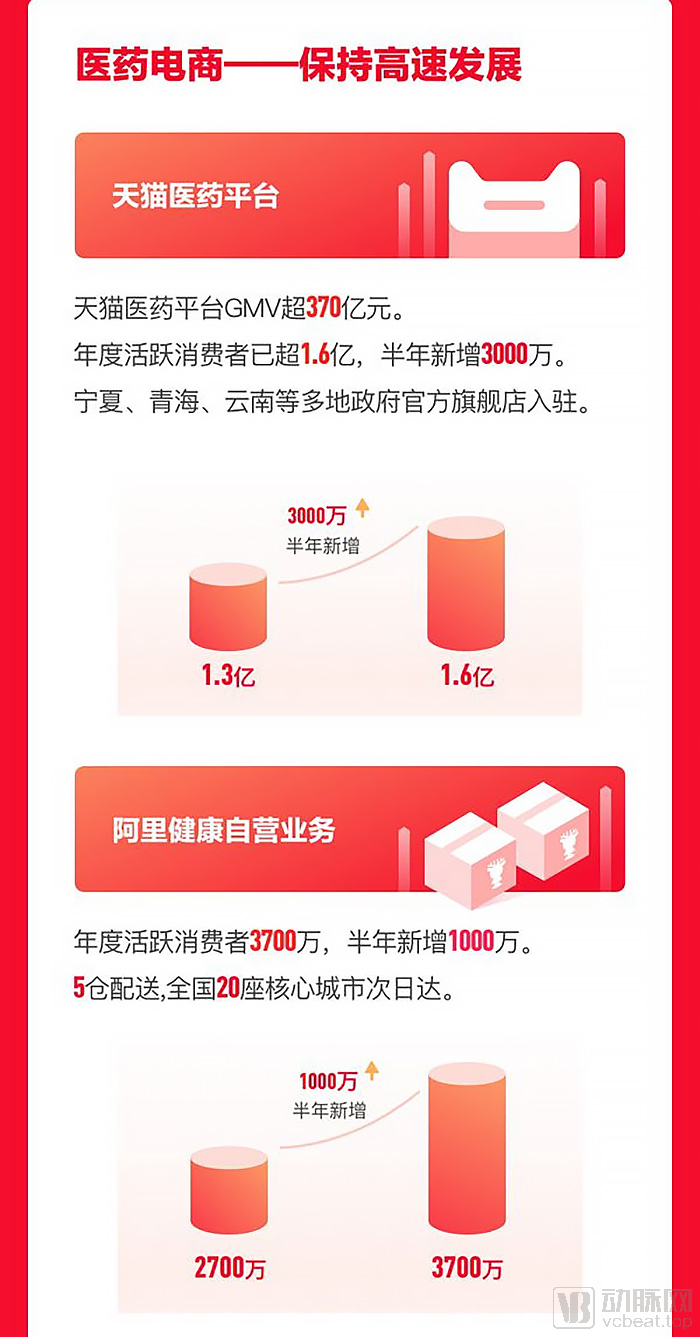
Over the past 12 months, the Tmall Health platform has surpassed 160 million annual active consumers, reflecting an increase of 30 million in just six months. The number of annual active consumers for its online self-operated stores rose by 10 million over the same six-month period, reaching more than 37 million.
Driven by robust growth in pharmaceutical e-commerce, AliHealth reported revenue of RMB 4.117 billion for the six months ended September 30, 2019, representing a year-on-year increase of 119.1%. The company achieved an operating profit of RMB 29.39 million during this period, marking a significant improvement from the operating loss of RMB 70.584 million recorded in the same period last year. Adjusted net profit amounted to RMB 140 million.
As AliHealth’s undisputed “cash cow,” it is only logical for the company to seek acquisition of the Tmall Pharmaceutical platform from its parent company. The revised Drug Administration Law, implemented in December 2019, conditionally permitted the online sale of prescription drugs. The remarkable performance of the “internet healthcare + pharmaceutical e-commerce” combination during the pandemic has been widely recognized, further underscoring the rationality and necessity of this acquisition.
A representative from AliHealth also stated that the pandemic has highlighted more user pain points, and the company will continue to enhance its services to meet consumer demands. He noted that during the peak of the pandemic, providing supplies to consumers through online channels (Taobao and Tmall) helped merchants better plan their overall supply, addressing the low efficiency in physical inventory allocation and preventing situations where services were available but products were out of stock. Meanwhile, online platforms can also play a role in monitoring overall prices, enabling the timely detection and restraint of unethical merchants whose pricing deviates significantly from market norms.
In fact, AliHealth has been gradually acquiring and integrating Tmall’s pharmaceutical platform business in recent years. In 2016, AliHealth signed an operational agency service agreement with Tmall for the Tmall Medicine Pavilion, securing exclusive operational rights to Tmall’s pharmaceutical business. In 2017, AliHealth acquired Tmall’s “Blue Hat” health food business; in 2018, AliHealth announced the acquisition of Tmall’s categories including medical devices and healthcare products.
Since entering 2019, AliHealth’s pharmaceutical e-commerce business has seen intensified activity. On September 12, coinciding with the third anniversary of AliHealth Pharmacy, the company unveiled the Super Pharmacy 2.0 standards, introducing six key criteria: comprehensive product categories, coverage for all population groups, and full-scenario services, while enhancing safety assurances through rigorous quality selection, medication management, and health companionship. Additionally, it launched “Lu Xiaojia” on Tmall Genie, upgrading its pharmaceutical retail platform into a family-centric health service platform.
As of November, AliHealth’s “Emergency Medicine Delivery” service, which promises 30-minute delivery and 24/7 availability, has expanded to cover 10 cities, including Beijing, Shanghai, Guangzhou, and Shenzhen. During the Double 11 shopping festival, its O2O order volume reached 2.65 times that of the same period last year.
Meanwhile, AliHealth has also made significant efforts in drug traceability. The proportion of drug manufacturing enterprises in China that have joined and renewed their contracts with its "Ma Shang Fang Xin" platform exceeds 90% of the total number of active drug manufacturers in the country; among them, the coverage rate of vaccine manufacturers has reached 100%.
This acquisition expands the pharmaceutical e-commerce landscape by incorporating a broader range of e-commerce merchants into the online healthcare community, thereby creating organic synergy with AliHealth’s four core business segments—internet healthcare, smart healthcare, and product traceability platforms—and enabling the company to achieve more stable and sustainable revenue growth.
Meanwhile, as the parent company, Alibaba Group also stated that it will continue to explore various cooperation models with AliHealth to support its development into a flagship platform in the broader healthcare sector.
Internet Healthcare
As living standards improve, public expectations for the quality of medical services have risen correspondingly. Internet-based healthcare products—exemplified by online appointment scheduling, payment and report retrieval, and remote consultations—have become urgently needed “service-oriented products.” Internet healthcare and smart healthcare can help enhance the quality, supply, and efficiency of these service-oriented offerings.
AliHealth has long established a platform for service-oriented products and effectively integrated its pharmaceutical product platform with its service trading platform, thereby creating a more comprehensive user experience. This strategy was implemented in an orderly manner in 2019.
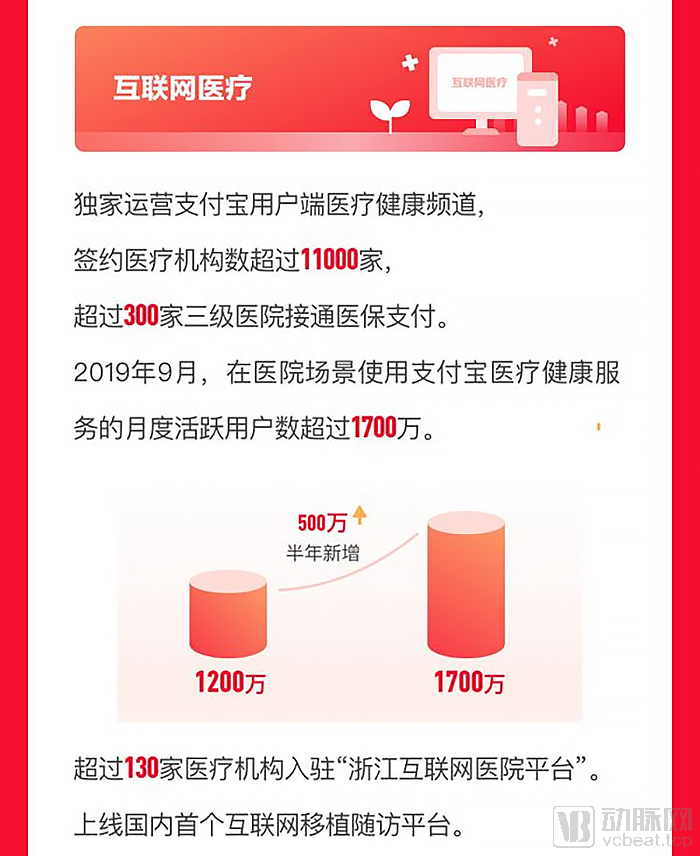
Since November 2018, AliHealth has been the exclusive operator of the medical and healthcare services channel on Alipay. As of March 2019, the monthly active users of the medical and healthcare services operated by AliHealth in hospital scenarios exceeded 12 million.
As of the end of September 2019, Alipay had signed contracts with more than 11,000 medical institutions and enabled health insurance payments at over 300 tertiary hospitals. By September 2019, the monthly active users of Alipay’s healthcare services in hospital settings exceeded 17 million, representing a year-on-year increase of more than 41.7% over the preceding six months.
In January 2019, Zhejiang Bianque, a subsidiary of AliHealth, built the "Zhejiang Internet Hospital Platform," the first internet hospital platform in China to integrate regulatory and service capabilities. Since its official launch, more than 130 medical institutions, including Grade A tertiary hospitals, have joined the platform, achieving full coverage across all prefecture-level cities in Zhejiang Province.
In July, AliHealth, in collaboration with top medical experts in the field of transplantation, launched a transplant follow-up platform. By transitioning traditional offline follow-up models to an online format, the platform is dedicated to addressing the challenges in post-organ transplant management in China and providing tangible benefits to both transplant patients and healthcare providers.
In October, China’s first online medical insurance payment platform for chronic disease management, co-established by AliHealth and the Quzhou Municipal Government of Zhejiang Province, was launched. The platform has successfully integrated the entire service chain, including “online follow-up consultations, electronic prescription circulation, online medical insurance payment, and home delivery of medications,” enabling patients with chronic diseases to complete the entire care process from home.
Consumer Healthcare
AliHealth also has its own strategic layout for the burgeoning consumer healthcare sector. As early as late May, AliHealth held closed-door meetings with leading companies in consumer healthcare segments such as medical aesthetics and dentistry, signaling its intention to increase investment in the increasingly hot consumer healthcare market.
In fact, the consumer healthcare market centered on the “beauty economy” has seen astonishing growth! According to data from Frost & Sullivan, China’s medical aesthetics services market exceeded RMB 200 billion in 2018 and is projected to grow at an annual rate of over 20% in the next five years. The industry’s total revenue is expected to reach RMB 360.1 billion by 2023, with non-surgical procedures experiencing the most rapid growth.
SoYoung, a well-known domestic medical aesthetics platform, also listed on the NASDAQ this year, raising $179.4 million in its initial public offering (IPO), which accounted for more than half of the total IPO proceeds raised by Chinese health and wellness companies listing in the U.S. in 2019. This offers a glimpse into the market potential of consumer healthcare. (Further reading:IPO Analysis of China’s Health and Wellness Companies Over the Past Year: Strong Momentum on the STAR Market, Pharmaceutical Firms Favor Hong Kong Listings, and Muted Performance in the U.S.)
AliHealth leverages its unique advantages to enter the consumer healthcare market: First, Alibaba’s services boast hundreds of millions of high-net-worth female users, for whom medical aesthetics are a necessity; appropriate demand guidance can effectively drive traffic and achieve business objectives.
Secondly, AliHealth can leverage Alibaba’s vast ecosystem to implement a unique ecosystem strategy exclusive to the Alibaba group, and utilize its robust cloud computing and big data analytics capabilities to organize user market information. This constitutes its greatest advantage.
Through traffic entry points such as Taobao, Tmall, and Alipay, AliHealth’s consumer healthcare services can comprehensively reach potential users; supported by financial credit services like Sesame Credit and Huabei, users can also complete payments; furthermore, addressing users’ strong concerns about authentic product traceability and anti-counterfeiting verification, AliHealth offers its own traceability and authentication tools, such as “Code for Peace of Mind.”
In September 2019, AliHealth, in collaboration with numerous medical aesthetics brands, healthcare institutions, and service providers, officially launched the Tmall Medical Aesthetics “Renewal Initiative” to help brands and institutions connect with Tmall’s 300 million beauty-seeking consumers. Meanwhile, AliHealth and its industry partners established the “Peace of Mind Beauty” Alliance, which leverages coordination across the upstream and downstream supply chain to enable consumers to access more professional and transparent medical aesthetic services.
These factors have significantly boosted AliHealth’s consumer healthcare business, with revenue increasing by 274.4% year-on-year. During the 2019 Double 11 shopping festival, the medical aesthetics sector—the mainstay of consumer healthcare—surpassed the previous year’s full-year gross merchandise value (GMV) in just 10 hours and 31 minutes, underscoring its substantial growth potential.
However, objectively speaking, the sudden outbreak of the epidemic may have a significant impact on consumer healthcare sectors such as medical aesthetics and dentistry, affecting both consumer willingness and confidence. Both potential consumers and industry practitioners may need some time to overcome the fear induced by the virus and the resulting decline in consumption willingness.
A relevant official from AliHealth also acknowledged this situation, stating that the company is considering various measures to support merchants, including waiving platform operating fees, partnering with Alipay Insurance to provide free “Business Interruption Insurance” for merchants resuming operations, and integrating online marketing resources to offer comprehensive support.
Smart Healthcare
AliHealth has also made significant strides in smart healthcare. By leveraging resources both within and outside Alibaba Group, AliHealth has been committed to developing medical AI systems with practical application scenarios. Among these, the AI engine for EEG-based epilepsy screening, the AI engine for brain health screening, and the digital assistance AI for orthodontics have been gradually promoted and applied in physical examination centers and hospital departments.
Meanwhile, AliHealth has won the championship in the Chinese Electronic Medical Record Named Entity Recognition evaluation task at the China Conference on Knowledge Graph and Semantic Computing (CCKS) for two consecutive years.
As of the end of October, the Clinical Decision Support System (CDSS), independently developed by AliHealth, has been deployed in more than 20 medical institutions across China, including Grade A tertiary hospitals.
During this epidemic, Alibaba DAMO Academy, in collaboration with Alibaba Cloud, rapidly developed AI-based diagnostic technology for the clinical diagnosis of COVID-19. Building on this foundation, AliHealth added more functional modules tailored to hospital usage scenarios and supplemented data to optimize the models.
The upcoming new features mainly include “Region of Interest (ROI) Detection” and “Similar CT Image Retrieval.” The system can intelligently analyze dozens to hundreds of CT slices from patients, pinpointing the specific locations of suspected radiological manifestations of COVID-19 with an accuracy rate exceeding 90%. This significantly improves physicians’ image interpretation efficiency, saving them 30–70% of their time and aiding in clinical assessment.
Furthermore, in light of the limited experience among primary care physicians in diagnosing COVID-19, AliHealth AI can compare cases against similar confirmed medical records in its imaging database to assist these physicians in making accurate diagnoses.
Final Thoughts
Objectively speaking, the unique circumstances of the pandemic have amplified the distinct advantages of internet healthcare and pharmaceutical e-commerce, allowing users to experience enhanced services driven by innovative technologies and business models. Key performance indicators for major industry players, including AliHealth, have shown significant improvement recently. Although AliHealth has yet to release its financial report for fiscal year 2020, a review of its 2019 activities by VCBeat suggests that delivering an impressive set of results is only to be expected.
Having grown alongside the “Internet + Healthcare” industry, AliHealth has established a comprehensive service chain encompassing “online + offline” integration, “diagnosis and treatment + health” services, and “pharmaceuticals + health products,” aligning with the industry’s trends toward diversification and convergence. Following its acquisition of the Tmall Pharmaceutical platform, AliHealth has built a strategic portfolio centered on pharmaceutical e-commerce, complemented by internet healthcare, consumer healthcare, and smart healthcare solutions. VCBeat will continue to monitor its developments and provide readers with first-hand reporting.
References
Eastmoney.com: AliHealth Acquires Tmall’s Pharmaceutical Sales Platform
Tianxia Wangshang: Amid the pandemic, Alibaba made a resounding call: On Taobao, Tmall, AliHealth, Ele.me, Cainiao...
Guangming Daily: This Doctor’s Livestream Attracts 100,000 Viewers
Beijing Business Today: AliHealth Launches Free Online Consultation Services, Prioritizing Hubei Region
Beijing Daily: Contactless Delivery Services, Online Classrooms... Alibaba Supports “Anti-Epidemic” Efforts
Health News: Health News & AliHealth | One-click navigation to fever clinics, real-time access to epidemic maps!
China News Service: Taobao’s “Medicine Delivery Without Leaving Home” Solves the Dilemma of Difficulty in Obtaining Prescriptions for Chronic Disease Patients
Beijing Youth Daily: AliHealth Joins Forces with Nearly 50 Leading Pharmaceutical Companies to Combat the Epidemic, Ensuring Drug Supply for Patients with Chronic Diseases
China News Service, Hubei: Alibaba Launches “Medication Shortage Registration” Service to Help Address Drug Shortages for Chronic Disease Patients in Hubei