Turning Crisis into Opportunity: Rendong Medical's Exemplary Response to the Pandemic and Corporate Evolution
Gloriousmed
Provider of Comprehensive Genetic Testing Solutions
On the flight from Los Angeles to Beijing, American Airlines cabin crew members wore tight-fitting masks and gloves. While making announcements about passenger guidelines, they also urged anyone with a fever to report it immediately. The aircraft had only a handful of passengers, presenting a stark contrast to the usual scenes of crowded boarding.
At this critical juncture, returning to China is hardly a wise decision. With 12,167 suspected cases, 8,169 confirmed infections, and 171 deaths, each rising figure serves as an invisible deterrent to Chinese nationals seeking to return home. Today is January 30, 2020, the seventh day since Wuhan’s lockdown and the peak of the outbreak. On this nearly empty international flight, Jin Ge anxiously awaits landing. The sudden COVID-19 pandemic has left her sleepless for three nights. Just five days earlier, she had been preparing to enjoy a wonderful holiday in the United States with her child...
Jin Ge is the founder and CEO of Gloriousmed. On January 27, 2020, while still on vacation in the United States, she received a message from the regional manager for Central China:
“Mr. Jin, the epidemic situation in Wuhan is very severe, so I’m afraid we won’t be able to attend the annual meeting.”
Just like the general public, we did not initially recognize the severity of the situation. Jin Ge had just approved the manager’s request when, the following day, news arrived in succession that four out of ten company colleagues in Hubei Province had developed fevers. On that same day, Wuhan authorities announced a new confirmed case of COVID-19. One of the febrile colleagues had inadvertently crossed paths with this confirmed patient in the outpatient clinic, prompting the colleague to panic and suspect possible infection with the novel coronavirus.
Cao Jianjun, the COO in China, immediately arranged nucleic acid testing for his colleagues in Hubei, while the provincial manager of Gloriousmed could only provide continuous psychological counseling to feverish colleagues to alleviate their fears. Meanwhile, Jin Ge in California was already restless; his colleagues on the other side of the ocean were shrouded in the gloom of the pandemic. Battling a 16-hour time difference, Jin Ge began urgently searching for face masks in San Diego.
Masks across the United States were completely sold out, as the pandemic spread at an unexpected pace. Jin Ge, who could no longer stay in the U.S., immediately cut short her vacation, booked the earliest available flight, and hurriedly returned to China...
As the CEO of the company, Jin Ge is undoubtedly the central nervous system of Gloriousmed. In the face of a rapidly changing external environment where dangers can arise at any moment, the brain’s swift response to external stimuli is the first step in ensuring the normal functioning of the organism. From perceiving the impact of the epidemic to returning to China, Jin Ge took only three days. This rapid repositioning of the “central nervous system” became the decisive first step for Gloriousmed to weather the storm of the pandemic.
Priority Blood Supply Enterprise “Heart”
On January 30, 2020, the first day of Jin Ge’s return to China, she promptly identified a domestic manufacturer of medical masks and placed an order for 10,000 units. These masks were subsequently shipped by the company via courier to Gloriousmed colleagues across China. Meanwhile, the four Hubei-based colleagues who had previously developed fevers gradually recovered, and fortunately, all remained safe and well.
It was also the sixth day of the first lunar month. At 8:00 a.m., Cao Jianjun, COO of Gloriousmed, was stationed at the company’s Shanghai office, while the Gloriousmed Delivery Center Laboratory began arranging shift duties. The laboratory at Gloriousmed is a unique department; every genetic test report it issues underpins medication guidance for individual cancer patients and represents a lifeline for their families. This department dare not stop, nor can it afford to!
“It’s not just COVID-19 patients who are in need of medical care. Before the holiday, hundreds of test results were pending, and hundreds of cancer patients awaiting treatment plans were eagerly anticipating their reports.” As a company providing precision oncology diagnosis and treatment services to cancer patients, Gloriousmed offers decision support to clinicians in selecting and determining treatment regimens for their patients.
Under normal circumstances, after Gloriousmed collects clinical samples from patients, they are expedited to the laboratory for testing. The bioinformatics and genetics departments then efficiently, rapidly, and accurately generate reports, facilitating timely and precise treatment for cancer patients. However, during the pandemic control period, most cancer patients were required to leave hospitals and self-isolate at home. Every sample order accepted by the company before the Lunar New Year represented a cancer patient in urgent need of medication. Some patients even called Gloriousmed’s 400 hotline directly to ask, “Can you still deliver the test reports on schedule?” This was made possible by the determination of Gloriousmed’s Delivery Center to withstand pressure and rush to the frontline.
Gloriousmed’s laboratories underwent comprehensive disinfection to prepare for the resumption of operations. The company provided full personal protective equipment (PPE) to every laboratory staff member. Colleagues from laboratories in cities with relatively milder epidemic conditions began returning to Shanghai in batches to conduct experiments. Upon completion of experiments that required on-site laboratory work, colleagues at the Delivery Center performed remote online data analysis and interpretation, while adhering to mandatory home quarantine periods.
When asked about her feelings on reporting to work during the “reverse migration,” she responded, “These are extraordinary times. Our company’s leadership is virtually online around the clock, discussing strategies, assigning tasks, and boosting our morale. Colleagues across China have shifted to remote work, but the laboratory department is unique—we must be on-site to conduct experiments. Patients need us, and the company needs us. Naturally, we must overcome various difficulties to ensure the normal operation of the laboratory, as it is our duty. Moreover, the company has provided comprehensive logistical support and safety measures, which is very thoughtful.”
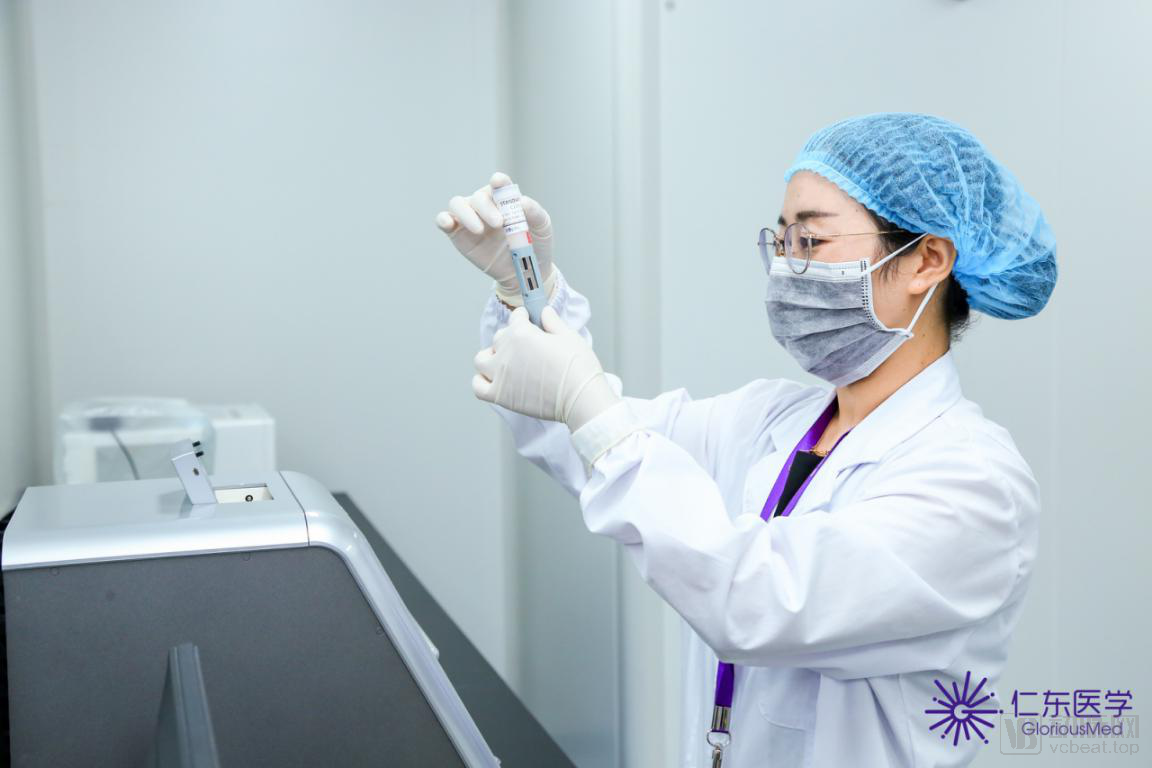
Laboratory staff take turns on duty to ensure the normal operation of experiments.
When confronted with invading pathogens, the human body’s most immediate response is to accelerate cardiac blood supply and raise body temperature in an attempt to eliminate the pathogens. Similarly, for enterprises facing the pandemic, whether the corporate “heart” can resume operation directly impacts the company’s lifeline. Gloriousmed’s laboratories serve as its “heart.” Starting from Day 1 after Jin Ge, the company’s “highest neural center,” resumed his duties, other key “neural centers” within the organization also gradually returned to normal operations. Cao Jianjun, the Chief Operating Officer (COO), stationed himself at the Shanghai headquarters to convey the company’s core values through concrete actions and stabilize employee morale, thereby ensuring the normal functioning of the Shanghai “heart.” Prioritizing resources to support the corporate heart and restoring its normal operation represents the critical second step for the enterprise’s survival.
Corporate “Neural Networks” Are Fully Armed and Ready for Battle
On February 3, 2020, the fourth day after Jin Ge’s return to China and also the fourth day since the laboratory resumed operations, more than ten members of Gloriousmed’s senior executive team all returned to work remotely. On February 5, over thirty management team members held an online meeting to deploy strategic plans for 2020. Adjustments were required in business planning, organizational structure, personnel assessment, and financial budgeting.
The impact of this epidemic on China’s small and medium-sized enterprises (SMEs) is self-evident, with some companies even filing for bankruptcy amidst the turmoil. While restoring normal operations across all departments is an imperative driven by responsibility, the key to “survival” lies in how businesses strategize their next steps in the face of an unpredictable end to epidemic prevention and control measures.
"This year's marketing targets will remain unchanged," marking the first consensus reached by executives at Gloriousmed’s online discussion meeting. Qu Guohua, Senior Marketing Director at Gloriousmed, stated, "During the pandemic, we implemented numerous updates and adjustments, most notably by segmenting our sales clientele. We categorized customers based on dimensions such as visit feasibility and the strength of client relationships. Customers who are accessible for visits and with whom we maintain strong relationships are covered through offline channels, while the remaining customers are engaged via online promotion. Currently, our sales volume has largely remained on par with the same period last year, and we conservatively estimate that we will achieve the marketing targets set for this year."
As the brain resumes function and the heart restores blood supply, these are not only essential steps for human recovery but also an inevitable path for enterprises to combat the pandemic.
However, these two steps are far from sufficient to mitigate the impact of the pandemic. As the enterprise’s “neural network,” the core senior management team oversees grassroots teams beneath each executive, representing every organ that supports the normal functioning of the organizational body. The remote work capability of this team is a prerequisite for restoring operations across all departments of the enterprise. Only when the corporate “neural network” is fully armed and ready can the organs distributed throughout the organizational body truly “come back to life.”
Accelerating the Evolution of Corporate “Functions”
If mitigating the impact of a crisis is merely a survival tactic, then rising to the challenge and turning the tide represents a true phoenix-like rebirth. Looking back at the 2003 SARS outbreak, numerous companies emerged in its aftermath like bamboo shoots after rain. Alibaba and JD.com fought a brilliant battle against the epidemic, surging forward with irresistible momentum to become top-tier players in the e-commerce industry.
“A founder’s perception of a company’s risks and opportunities is inevitably distinct from that of others; such insight cannot be arrived at through ‘discussion.’” Jin Ge regards this attribute as an essential skill for founders, and it was precisely this quality that enabled Gloriousmed to accelerate its “evolution” amidst the recent turmoil.
On February 10, all employees of Gloriousmed resumed work remotely. Previously, the company may have lacked a unified schedule for systematic employee training. However, under the current circumstances, various departments at Gloriousmed have launched comprehensive training programs to strengthen internal capabilities, enabling employees to become more familiar with their operational workflows, identify and address gaps, and an examination mechanism has been implemented.
As a leading enterprise in the field of precision diagnosis and treatment of urological tumors, Gloriousmed regularly holds offline seminars to build a platform for communication and learning among experts in the field. Under the impact of the epidemic, previous offline conferences have been moved online. "The epidemic has only accelerated our 'evolution'. In fact, we began to conceive of moving some conferences online as early as 2019," said Yang Yining, Medical Director of Gloriousmed. "Offline conferences actually require higher travel and time costs. After the epidemic ends, we will continue to hold some online seminars, and some academic promotion conferences will also continue to increase their online formats."
Externally, during the pandemic prevention and control period, Gloriousmed also launched the “Renyun Yiyun” seminar series to facilitate online exchanges among physicians across China.
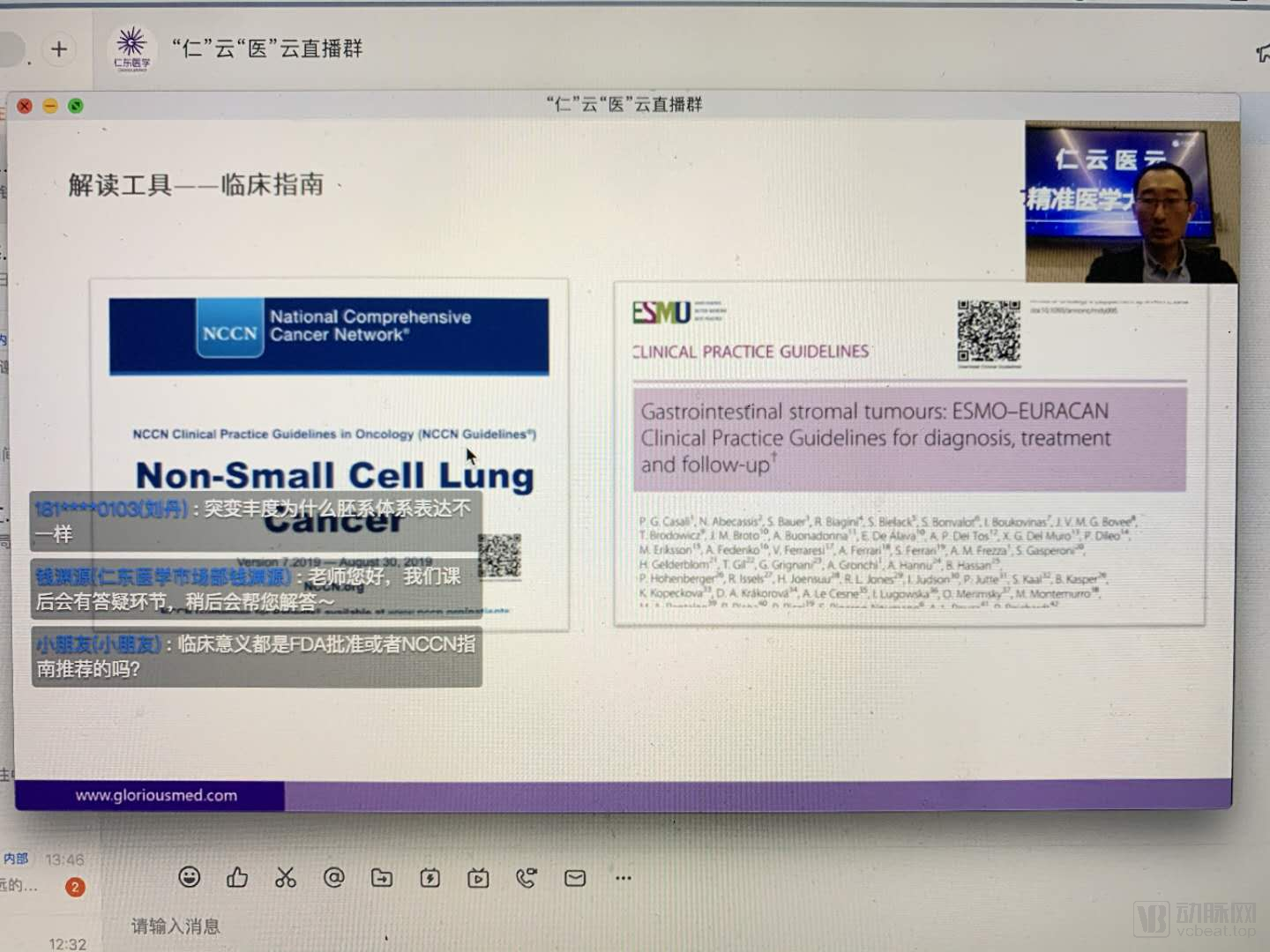
Renyun Medical Cloud Course: Live Now
It is worth mentioning the “Haiji System,” a one-stop data information interaction workstation independently developed by Gloriousmed. By integrating clinical phenotype and genomic data, the system continuously accumulates evidence to support clinical decision-making. During the pandemic prevention and control period, the company also “evolved” this system, upgrading it from a service solely oriented toward physicians to one providing personalized services for patients, thereby achieving iteration to version 2.0. This upgrade aligned with Gloriousmed’s previously considered development direction. The pandemic weakened the connection between patients and physicians, accelerating the product’s enhancement. Leveraging the Haiji System, the company connected physicians and patients on a unified platform to facilitate online consultations and inquiries.
It is reported that Gloriousmed’s Haiji system has enrolled 3,000 prostate cancer patients alone, for whom the company has completed third-party multidisciplinary consultations. The company is also actively advancing similar initiatives for other cancer types, including urothelial carcinoma, renal cell carcinoma, colorectal cancer, and breast cancer.
The pandemic has slowed the return of employees to their workplaces, but it has not hindered companies from strengthening their internal capabilities. In the face of the pandemic, Gloriousmed launched multiple initiatives to “fortify its core competencies.” Systematic training programs were implemented to address gaps, and interactive seminars flourished. These efforts allowed the company to rigorously train its organizational “functions” during the outbreak and accelerate the evolution and upgrading of its major functional departments.
In the face of a pandemic, enterprises must not only learn to rapidly restore their core functions but also seize the opportunity to effectively “evolve” their organizational systems. In the harsh reality of nature, Darwin’s theory of evolution has long revealed the essence of survival: it is those populations that continuously evolve and adapt to their environment that endure. The same holds true for businesses.
Gloriousmed’s “Textbook” Response to a Sudden Crisis: Reflections
It has been over half a month since Jin Ge returned to China, and Gloriousmed has transitioned from its initial state of constraint and panic to one of orderliness. Jin Ge joked, “Every Thursday, we consider resuming office operations the following Monday, but by Sunday, we still haven’t pulled the ‘trigger.’ After all, safety comes first.”
By the latter half of February, the epidemic situation gradually showed signs of improvement, and major enterprises across China began to resume work in phases. As of March 1, Gloriousmed had achieved large-scale resumption of operations.
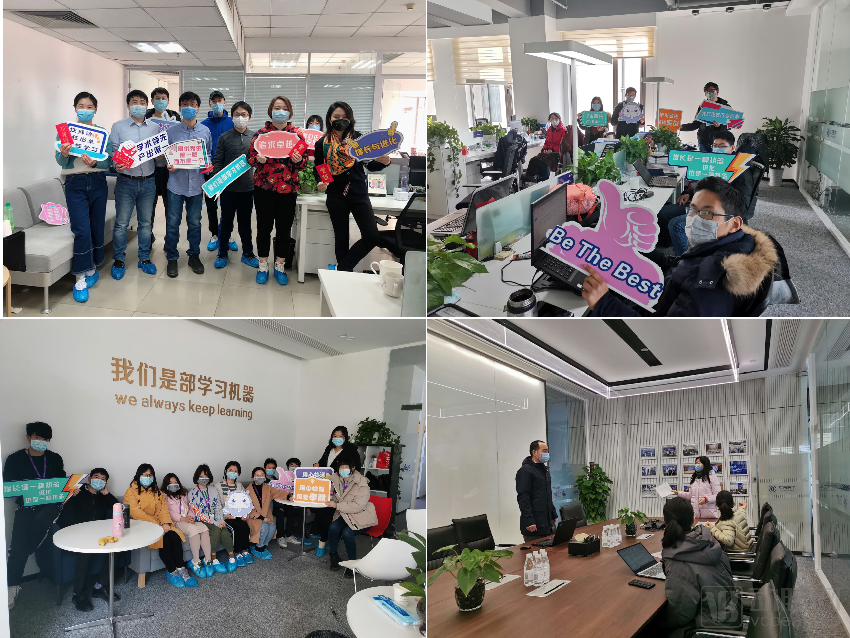
Gloriousmed’s Shanghai Headquarters and Beijing Branch Resume Large-Scale Operations
Amid the anti-epidemic efforts of small and medium-sized enterprises, Gloriousmed was determined to fight a resounding battle and achieve a textbook-style “evolution” against the odds. As is well known, the greatest risk during the pandemic is the dispersal of morale. Jin Ge jokingly remarked that he would “chant scriptures” at remote meetings across various departments every day, instilling confidence in his team, forging resilience through tough battles, and convincing employees that Gloriousmed could certainly turn crisis into opportunity. Indeed, Gloriousmed delivered on this promise.
As a healthcare enterprise, Gloriousmed has delivered a standardized and exemplary response to the question, “How should companies respond to sudden crises?” by seamlessly executing every step—from restoring “cardiac” blood supply and resetting the “neural network,” to ultimately strengthening corporate “functionality.”
In the healthcare industry, most people believe it was the least affected sector during the pandemic, as the existing patient market remained largely unaffected. However, Gloriousmed aimed not only to survive the crisis but also to turn it into an opportunity, achieving a corporate “evolution”—through upgrading and iteration.
This may well become a model case for healthcare enterprises in responding to sudden crises: Founders must demonstrate high sensitivity and make decisive decisions without hesitation, lest they miss the critical window of opportunity; core teams must remain on high alert, actively deliberate response strategies, and seize every second; and the entire company must unite in purpose and effort, confronting challenges head-on with the firm belief that it can navigate through the crisis and successfully achieve transformation amidst adversity.