

BioMind Launches AI-Powered CT Imaging System for Qualitative Diagnosis of COVID-19 in Collaboration with Beijing Tiantan Hospital and PLA General Hospital
The COVID-19 epidemic has touched the hearts of every Chinese citizen. How can artificial intelligence technology be leveraged to help hospitals respond to the outbreak? On January 28, the fourth day of the Lunar New Year,Wang Yongjun, Executive Vice President of Tiantan Hospital, and He Kunlun, Vice President of the Chinese PLA General HospitalJointly initiated, upon receiving the special task from the Ministry of Industry and Information Technology (MIIT) on “AI-Assisted Diagnosis of CT Images for COVID-19,” we immediately organized and launched scientific research efforts by leveraging the strong technical capabilities of the Artificial Intelligence Research Center at Beijing Tiantan Hospital, in collaboration with BioMind, a Beijing-based company listed as a key participant in the MIIT’s “New Generation Artificial Intelligence Industrial Innovation Key Tasks.”
Currently, BioMind has launched the AI-based qualitative auxiliary diagnostic system for CT imaging of “COVID-19” pneumonia (hereinafter referred to as the “COVID-19” AI Qualitative Diagnostic System), which was jointly developed by more than 30 designated treatment hospitals and has been gradually put into use.
Subtitle 1: Pioneering AI-Based Qualitative Diagnosis of COVID-19
The “COVID-19” AI qualitative diagnostic system, jointly launched by Beijing Tiantan Hospital, the Chinese PLA General Hospital, and BioMind, is the first AI-powered system in the industry specifically designed for the qualitative diagnosis of COVID-19.
“Specifically targeting COVID-19” refers to the fact that this AI-based qualitative diagnostic system for COVID-19 not only enables pneumonia diagnosis but also facilitates further differential diagnosis between COVID-19 and other types of pneumonia (such as viral pneumonia and bacterial pneumonia). The entire process takes only a dozen seconds, and the concordance rate between its diagnostic results for COVID-19 and positive nucleic acid test results exceeds 95.5%.
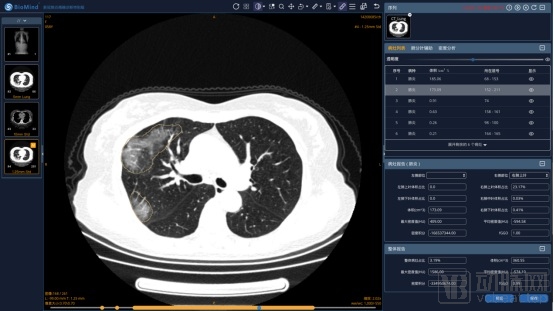
(BioMind “COVID-19” AI Qualitative Diagnostic System Interface Example)
“This AI system is truly derived from real-world cases at the frontline of the epidemic and is designed for application at the epidemic frontline,” said Wu Zhenzhou, Technical Director of the Artificial Intelligence Research Center at Beijing Tiantan Hospital. The early-stage research and development involved more than 30 designated treatment hospitals, including Wuhan Jinyintan Hospital, Wuhan No. 3 Hospital, Suizhou Central Hospital, Xiantao No. 1 People’s Hospital, Wuhan Red Cross Hospital, Wuhan No. 5 Hospital, Wuhan Wuchang Hospital, Wuhan Jiangxia District No. 1 People’s Hospital, Wuhan Huangpi District People’s Hospital, and Wenzhou Central Hospital.
Amidst the heartless epidemic, human compassion prevails. The development of this system has received strong support from relevant leaders at the Ministry of Industry and Information Technology (MIIT) and the Department of Science and Technology, as well as from the Beijing Municipal Bureau of Economy and Information Technology and its Software Division. Currently, the system is freely accessible to all designated hospitals across China. Any designated hospital may either connect through the MIIT system or contact BioMind directly for prompt, free deployment.
The National Health Commission’s “Diagnosis and Treatment Protocol for Novel Coronavirus Pneumonia” includes CT imaging as one of the diagnostic criteria.
As the epidemic prevention and control situation evolved, a large number of suspected cases emerged, and the explosive surge in demand overwhelmed frontline physicians. The high false-negative rate of nucleic acid testing for COVID-19, coupled with the difficulty in imaging-based differential diagnosis, severely hindered the rapid identification and diagnosis of COVID-19.
Ma Lin, Director of the Department of Radiology, Chinese PLA General Hospital“Under these circumstances, leveraging AI for the diagnosis of COVID-19 CT images is of great significance for achieving early diagnosis, early isolation, and early treatment.”
Fan Yanqing, Director of the Department of Radiology, Wuhan Jinyintan HospitalHe stated, “The identification of pneumonia is not difficult for radiologists, and the imaging manifestations of COVID-19 exhibit a certain degree of specificity. However, achieving differential diagnosis between COVID-19 and common pneumonia based solely on imaging findings is no easy task.”
“Conducting only simple pneumonia screening offers limited clinical value. Our goal is to genuinely assist clinicians in achieving differential diagnosis of COVID-19,” stated Wu Zhenzhou. He noted that the technical advantage of performing simultaneous analysis across multiple disease types lays a foundational basis for further distinguishing COVID-19 from other forms of pneumonia.
“Why are we confident in our capability for simultaneous multi-disease analysis?” According to Li Jingjue, CEO of BioMind China, BioMind was the first globally to achieve qualitative diagnosis for over 60 neurological conditions (including brain tumors, small vessel disease, and stroke), more than 10 cardiac diseases, and eight breast diseases. The diagnostic accuracy exceeds 90%, with certain conditions achieving accuracy rates above 96%.
Based on this, the “COVID-19” AI qualitative diagnostic system not only achieves qualitative diagnosis of COVID-19 pneumonia but is also about to launch classification diagnostics for various types of pneumonia (including COVID-19 pneumonia, other viral pneumonias, bacterial pneumonias, fungal pneumonias, etc.).
Wu Zhenzhou emphasized, “This is unique within the industry. There is a fundamental difference, both in terms of technical difficulty and clinical significance, between screening detection and simultaneous qualitative diagnosis of multiple diseases.”
Meanwhile, the clinical application of this system can comprehensively cover the entire clinical cycle, including early diagnosis, treatment assessment, and post-treatment follow-up.
“Data is the cornerstone of medical AI products. This is even more true in the context of the pandemic,” said Wu Zhenzhou. During the R&D process, the team collected data from over 10,000 COVID-19 patients with positive nucleic acid test results (considered the gold standard for etiological diagnosis) from more than 30 designated treatment hospitals across multiple centers. This was combined with data from over 20,000 additional cases of other types of pneumonia verified through clinical diagnosis, forming a high-quality dataset for simultaneous multi-disease analysis.
“Shouldering a glorious mission during special times means we must take on even greater responsibility; we must never compromise the quality of R&D data due to urgent tasks,” said Wu Zhenzhou. The development of medical AI relies heavily on data quality, which directly determines product value.
Wu Zhenzhou introduced that, on one hand, the team implemented strict quality control over CT imaging data for COVID-19, with annotations performed by a team comprising dozens of top experts from the Chinese PLA General Hospital. On the other hand, all software and hardware operations were conducted within the hospital premises, ensuring that data remained on-site to safeguard patient privacy and medical data security.
In other words, AI cannot exist independently; it only becomes “intelligent” through learning from high-quality data and integration with application scenarios.
Liu Ya'ou, Executive Deputy Director (Presiding) of the Department of Radiology, Tiantan Hospitalstated, “Only by ensuring quality at the data source can the prerequisite for true clinical value be met.”
“We never engage in battles without preparation; our entire team has made thorough preparations for this critical task,” said Wu Zhenzhou. He noted that the most capable R&D core personnel were assembled, and the system comprehensively covers the complete clinical cycle, including early diagnosis, treatment assessment, and post-treatment follow-up.
Specifically, the main functions are as follows:
First,"Differential Diagnosis" FeatureCapable of detecting early subtle signs of COVID-19, such as millimeter-scale ground-glass opacities and patchy shadows. While achieving a pneumonia detection sensitivity close to 100%, the accuracy of differential diagnosis for COVID-19 (concordance rate with positive nucleic acid test results) can also exceed 95.5%.
Secondly, ""Intelligent Quantitative Analysis" FeatureIt achieves precise lesion quantification and dynamic assessment, providing quantitative metrics and timely risk warnings for disease progression. This assists radiologists in determining lesion staging and severity, thereby offering a basis for clinicians to promptly implement targeted treatment strategies.
Meanwhile,"Intelligent Follow-up" Feature, enabling rapid automated retrieval of multiple imaging examinations and precise registration and analysis of lesions, thereby assisting physicians in promptly conducting critical tasks such as treatment efficacy assessment, pre-discharge evaluation, and post-discharge rehabilitation follow-up. As the campaign against the epidemic deepens and the number of recovered patients continues to rise, the “Intelligent Follow-up” feature will provide abundant and accurate metrics for precisely monitoring treatment outcomes, closely observing patient prognosis, and assessing the extent of pulmonary structural and functional impairment.
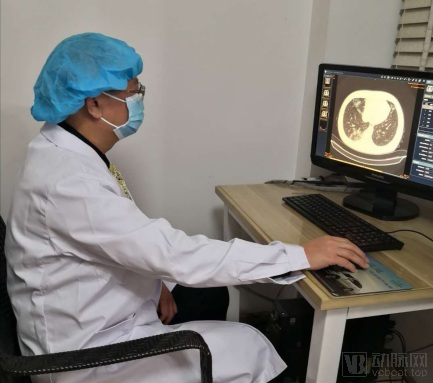
(BioMind “COVID-19” AI Qualitative Diagnostic System: Examples of Real-World Clinical Applications)
Although nucleic acid testing remains the gold standard for diagnosing COVID-19, it has the limitation of requiring multiple negative results before a positive case may be identified, thereby increasing the risk of transmission. CT combined with AI can facilitate rapid diagnosis, buying precious time for epidemic prevention and control. “During the pandemic, time is life. CT plus AI is inevitably an indispensable and effective tool for epidemic prevention and control,” said Li Jingjue.
Secondly, the efficiency gains brought by AI can help minimize patient wait times for results. Prolonged queuing in hospitals for examinations and results poses a significant risk of cross-infection. CT+AI leverages deep learning to perform in-depth interpretation of CT images with second-level computational speed, accelerating report generation from tens of minutes to just a few minutes.
Meanwhile, the integration of CT and AI undoubtedly serves as a “shot in the arm” for the healthcare workforce. On one hand, nucleic acid testing not only demands extremely high precision from medical staff during sample collection—where any slight impropriety can easily lead to false-negative results for patients—but also poses a high risk of infection to healthcare workers. On the other hand, AI can significantly improve diagnostic efficiency, alleviating the immense fatigue and pressure faced by doctors on the front lines.
“We have remained steadfast and down-to-earth in our R&D efforts, as always, hoping to help the nation weather this crisis,” said Li Jingjue. This reflects the shared original aspiration of the AI Research Center at Beijing Tiantan Hospital, the First Medical Center and Fifth Medical Center of the PLA General Hospital, and BioMind: to harness advances in AI technology for the benefit of human health and contribute to the early victory in the fight against the epidemic.
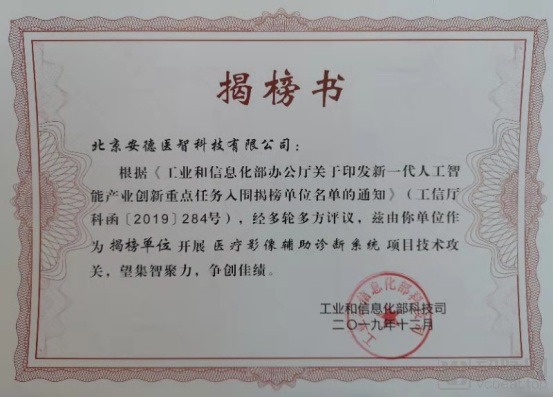
(BioMind Selected as a “Revealer” for the Ministry of Industry and Information Technology’s “Key Tasks for Innovation in the New Generation Artificial Intelligence Industry”)