

JunLian Healthcare Global Drug Pipeline Update – Issue 6, 2020
Feb 24, 2020 19:02
CST Updated
19:02

This week, there were 8 new drug data entries, including 5 for oncology, 1 for hematologic diseases, 1 for dermatologic diseases, and 1 for cardiovascular diseases.
❖Regarding COVID-19, on February 22, China reported 648 newly confirmed cases and 97 new deaths. As of February 22, there were 51,606 active confirmed cases, including 10,968 severe cases. Overall, the epidemic situation in Hubei Province showed signs of improvement, with continued week-on-week decreases in newly suspected cases, the stock of existing suspected cases, and existing severe cases, alongside a further increase in discharges. The outbreak in mainland China (excluding Hubei) has been fully brought under control, with only 18 newly confirmed cases—the lowest since January 21. Newly suspected cases have remained at a low level, the clearance of existing suspected cases is nearing completion, and the discharge rate has exceeded 55%. Although the domestic situation is gradually improving, there is a risk of widespread outbreaks abroad, particularly in Japan and South Korea. As of February 23, the cumulative confirmed cases in Japan and South Korea reached 838 and 602, respectively. Currently, if sufficient attention is not paid and subsequent epidemic control proves inadequate, COVID-19 could become a global “black swan” event in 2020.
❖The FDA has approved Nexletol, developed by Esperion Therapeutics, for marketing as an adjunct to diet and maximally tolerated statin therapy for the treatment of adult patients with heterozygous familial hypercholesterolemia. Notably, Nexletol is the first oral non-statin cholesterol-lowering drug approved in the United States in nearly two decades, featuring a novel mechanism of action for reducing LDL-C. Esperion’s success story is quite legendary: its founder, Roger Newton, previously worked on the development of Lipitor at Warner-Lambert. He established Esperion in 1998; the company later went public on the Nasdaq and was acquired by Pfizer. However, due to unfavorable project progress, Pfizer subsequently divested the company, returning it to Roger Newton’s leadership. In 2013, Esperion relisted on the Nasdaq with its investigational drug Nexletol in development, culminating in the drug’s approval earlier this year—a remarkable achievement. Currently, Esperion’s market capitalization stands at approximately $1.68 billion.
BMS Announces Japanese Approval of Its PD-1 Inhibitor Opdivo for the Treatment of Patients with Unresectable Advanced or Recurrent Esophageal Cancer
BMS Announces Japanese Approval of Its PD-1 Inhibitor Opdivo for Patients with Unresectable Advanced or Recurrent Esophageal Cancer, Marking the First Approval of Opdivo for Advanced Esophageal Cancer and the First Cancer Immunotherapy Approved in Japan for This Indication.
Opdivo is a PD-1 immune checkpoint inhibitor.
In the phase 3 clinical trial named ATTRACTION-3, Opdivo was compared with chemotherapy (docetaxel or paclitaxel) in patients with unresectable advanced or recurrent esophageal squamous cell carcinoma who were generally intolerant to fluoropyrimidine and platinum-based combination therapy.
Compared with chemotherapy, Opdivo demonstrated a statistically significant benefit on the primary endpoint of overall survival (OS), reducing the risk of death by 23% and extending median survival by 2.5 months.
FDA Approves Nexletol for the Treatment of Patients with Familial Hypercholesterolemia or Cardiovascular Disease Requiring Further LDL-C Reduction
FDA Approves Nexletol (Bempedoic Acid), Developed by Esperion Therapeutics, for the Treatment of Adults with Heterozygous Familial Hypercholesterolemia or Cardiovascular Disease Requiring Further LDL-C Reduction, as an Adjunct to Diet and Maximally Tolerated Statin Therapy
ATP citrate lyase, inhibited by bempedoic acid, is a key enzyme in the hepatic cholesterol synthesis pathway. By inhibiting ATP citrate lyase, bempedoic acid reduces the synthesis of LDL-C in the liver, leading to an upregulation of LDL receptor (LDL-R) expression.
Esperion Therapeutics Conducted Multiple Phase 3 Clinical Trials
In patients with hypercholesterolemia, bempedoic acid can further reduce LDL-C levels by 18% when added to maximally tolerated statin therapy. In patients intolerant to statins, bempedoic acid reduces LDL-C levels by 25% compared with placebo.
Mechanism of Action of Bempedoic Acid
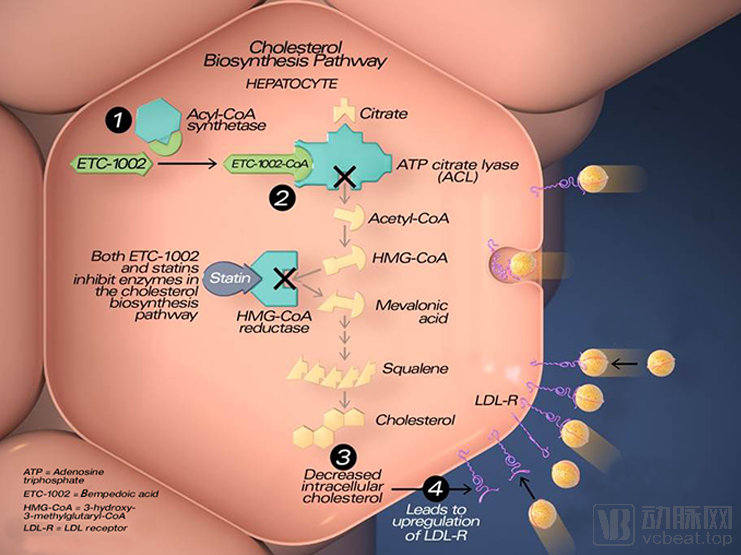
Data Source: Esperion
Karyopharm Announces U.S. FDA Acceptance of sNDA for Selinexor in the Treatment of Patients with Relapsed/Refractory DLBCL
Karyopharm Therapeutics Announces U.S. FDA Acceptance of Supplemental New Drug Application (sNDA) for Xpovio® (selinexor) in Patients with Relapsed/Refractory Diffuse Large B-Cell Lymphoma (R/R DLBCL)
Xpovio is an XPO1 inhibitor that, by inhibiting the function of XPO1, enables tumor suppressor proteins to remain within the nucleus and continue exerting their effects, thereby suppressing the proliferation of tumor cells.
In the Phase 2b clinical trial named SADAL, 127 patients with relapsed/refractory DLBCL were enrolled.
The overall response rate was 28.3%, with a complete response rate of 10.2%. The median duration of response was 9.2 months.
Immutep Announces Positive Interim Results from Phase 2 Clinical Trial of LAG-3 Fusion Protein Eftilagimod Alpha in Combination with Keytruda for NSCLC
Immutep Announces Positive Interim Results from Phase 2 Trial of Eftilagimod Alpha, a Soluble LAG-3 Fusion Protein, in Combination with Merck & Co.’s Blockbuster PD-1 Inhibitor Keytruda for NSCLC
LAG-3 Protein Regulates Signaling Pathways in T Lymphocytes and Antigen-Presenting Cells (APCs) and Plays a Critical Role in Adaptive Immune Responses
Phase II trial; patients are those with NSCLC who have never received PD-1/PD-L1 inhibitor therapy, and enrollment is not contingent on PD-L1 expression levels.
Among the 17 patients who received treatment, the ORR reached 47%. Moreover, responses were observed across all three subgroups stratified by PD-L1 expression levels; among the 8 patients who achieved a response, 5 had PD-L1 expression levels <50%.
Incyte Announces Topical Formulation of JAK Inhibitor Ruxolitinib Meets Primary Endpoint in Phase 3 Trial for Patients with Atopic Dermatitis
Incyte Announces That Topical Formulation of Its JAK Inhibitor Ruxolitinib Met Primary Endpoint in TRuE-AD1, the Second Phase 3 Clinical Trial in Patients With Atopic Dermatitis
Ruxolitinib cream is an innovative topical Janus kinase 1 and 2 (JAK1/JAK2) inhibitor that reduces the systemic side effects associated with oral JAK inhibitors.
In the Phase 3 clinical trial TRuE-AD1, enrolled patients were adolescents and adults with mild-to-moderate atopic dermatitis.
After 8 weeks of treatment, compared with the control group, 50% (at a dose of 0.75%) and 53.8% (at a dose of 1.5%) of patients achieved a significant improvement of more than 2 points from baseline in the Investigator’s Global Assessment (IGA) total score, whereas only 15.1% of patients in the placebo group met this criterion, thereby achieving the primary endpoint of the trial.
PharmaMar and Jazz Pharmaceuticals Jointly Announce Lurbinectedin Seeks FDA Accelerated Approval for the Treatment of Patients with Small Cell Lung Cancer (SCLC)
PharmaMar and Jazz Pharmaceuticals Jointly Announce FDA Acceptance of New Drug Application (NDA) for LurbinectedinPharmaMar and Jazz Pharmaceuticals jointly announced that the U.S. Food and Drug Administration (FDA) has accepted the New Drug Application (NDA) for lurbinectedin. Based on results from a Phase 2 clinical trial, the application seeks accelerated approval from the FDA for the treatment of patients with small cell lung cancer (SCLC).
Lurbinectedin is an inhibitor of RNA polymerase II. It not only inhibits oncogenic transcription in tumor cells, but also reduces the production of cytokines that promote tumor growth by suppressing oncogenic transcription in tumor-associated macrophages.
Results of a Multicenter Phase II Clinical Trial. A total of 105 patients participated in this clinical trial.
As a monotherapy, lurbinectedin achieved an objective response rate (ORR) of 35.2% and a disease control rate (DCR) of 68.6% in patients with previously treated small cell lung cancer (SCLC). The median duration of response was 5.3 months. Among the eight patients who had previously received cancer immunotherapy, five responded to treatment.
Mirati Therapeutics Announces Preliminary Data on Sitravatinib, an Investigational Protein Kinase Inhibitor, in Combination with Nivolumab for the Treatment of Advanced Clear Cell Renal Cell Carcinoma
Mirati Therapeutics Announces Preliminary Clinical Data from a Phase 1/2 Trial of Sitravatinib, an Investigational Protein Kinase Inhibitor, in Combination with the Anti-PD-1 Antibody Nivolumab for the Treatment of Patients with Advanced Clear Cell Renal Cell Carcinoma
Sitravatinib, developed by Mirati Therapeutics, is a lineage-selective oral receptor tyrosine kinase (RTK) inhibitor. It inhibits several related RTKs, including VEGFR2 and KIT.
In this Phase 1/2 clinical trial, 38 patients received treatment for more than 12 weeks and were evaluable. These patients had previously received VEGF-targeted therapy, but their disease continued to progress.
Confirmed PR was achieved in 15/38 (39%) of patients, with one patient further improving to an unconfirmed CR. Disease control (stable disease + PR + CR) was observed in 35/38 (92%) of patients. The preliminary median progression-free survival (PFS) was 10.3 months.
BioMarin Pharmaceutical Announces U.S. FDA Acceptance of BLA for Valoctocogene Roxaparvovec, a Gene Therapy for the Treatment of Hemophilia A
BioMarin Pharmaceutical announced that the U.S. FDA has accepted its Biologics License Application (BLA) for valoctocogene roxaparvovec, a gene therapy for the treatment of hemophilia A.
Valoctocogene roxaparvovec is a gene therapy that uses an AAV5 viral vector to deliver a transgene expressing factor VIII.
This application is based on the interim analysis of data from the ongoing Phase 3 clinical trial, as well as the latest three-year efficacy data from the Phase 1/2 clinical trials.
In the Phase 1/2 clinical trial, patients who received a single dose of gene therapy at 6e13 vg/kg continued to demonstrate controlled annualized bleeding rates (ABR) and reduced factor VIII usage in the third year post-treatment. Over the three-year treatment period, both ABR and factor VIII utilization decreased by an average of 96%. Patients no longer required prophylactic factor VIII injections.
Clinical Results of Valoctocogene Roxaparvovec
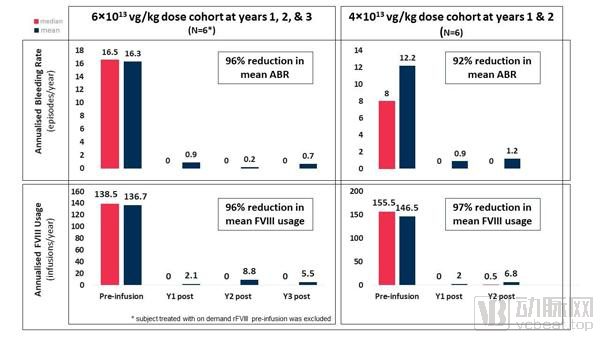
Data source: Biomarin
❖AboutCOVID-19: As of 24:00 on February 22, there were 51,606 current confirmed cases (including 10,968 severe cases), a cumulative total of 22,888 discharged after recovery, a cumulative total of 2,442 deaths, and a cumulative total of 76,936 confirmed cases. There were 4,148 current suspected cases. On February 22, there were 648 newly confirmed cases and 97 newly reported deaths.
❖FDA Approves New Indication for Eli Lilly’s Trulicity (dulaglutide) to Reduce the Risk of Major Adverse Cardiovascular Events in Adults with Type 2 Diabetes Who Have Established Cardiovascular Disease or Multiple Cardiovascular Risk Factors. This approval makes Trulicity the only glucose-lowering medication indicated for both primary and secondary prevention to reduce the risk of major adverse cardiovascular events in patients with type 2 diabetes.
❖Following the United States, Switzerland, and Australia, Novartis’ blockbuster ophthalmic drug Beovu® (brolucizumab) has been approved for marketing in the European Union for the treatment of wet age-related macular degeneration (wet AMD). Beovu® is the first anti-VEGF therapy approved in the EU that demonstrates superiority over aflibercept in the resolution of retinal fluid (intraretinal and/or subretinal fluid).
❖Baudax Bio recently announced that the U.S. FDA has approved its non-opioid analgesic Anjeso (meloxicam) injection, either as monotherapy or in combination with other non-NSAID analgesics, for the management of moderate to severe pain. Notably, Anjeso is the first and only once-daily intravenous analgesic to receive approval.
❖Seattle Genetics and Astellas Jointly Announce FDA Grants Breakthrough Therapy Designation to the Antibody-Drug Conjugate Padcev in Combination with Keytruda as a First-Line Treatment for Previously Untreated Patients with Locally Advanced or Metastatic Urothelial Carcinoma