

Zipline Files for IPO After $225M Funding: Revolutionizing Medical Logistics with Drone Delivery

Zipline
Medical Drone Manufacturer and Transportation Service Provider
In recent years, drone delivery services have surged globally with remarkable momentum. Many commercial giants, such as Amazon, Uber, UPS in the United States, and DHL in Germany, have established a presence in this sector. However, their operations are predominantly concentrated on “last-mile” logistics for retail goods. In contrast, few companies have ventured into the healthcare field.
Zipline, a U.S. medical drone company founded in 2014, is undoubtedly a “rising star” in the medical drone market. By taking an innovative approach to delivering life-saving medical supplies via drones to thousands of remote areas, it rapidly captured an underserved segment of the healthcare market. The company has sequentially secured investment from prominent firms such as Sequoia Capital, Andreessen Horowitz (a16z), GV, TPG, Baillie Gifford, and Katalyst Ventures, raising $225 million in funding and achieving a valuation exceeding $1 billion.
How Does Zipline Serve the Healthcare Sector? What Are the Secrets Behind Its Successful Expansion?
Zipline is a medical drone company based in California, USA. Its team comprises experienced engineers from SpaceX, Tesla, Google, and Boeing. The company’s independently developed drone system delivers life-saving medications to remote areas.
Before founding Zipline to develop drones, its founder Keller Rinaudo established the brand Romotive in 2011, which produced an iPhone-controlled robot named Romo. In 2014, the Romotive team underwent restructuring; co-founders Keenan Wyrobek and William Hetzler joined at that time, and the company shifted its strategic focus to developing drones for delivering medical supplies.
Founder Keller Rinaudo stated that Zipline was established to deliver critical medical supplies to underdeveloped countries in terms of economy and infrastructure. The company initially launched in Rwanda, where it set up a distribution center in the Muhanga district. From this hub, Zipline deploys drones to fly across western Rwanda, delivering essential blood products—including red blood cells, platelets, and plasma—to hospitals in need of additional supplies.
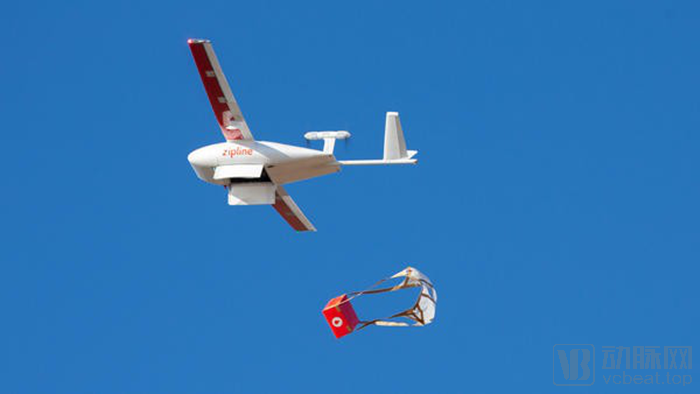
After opening its first base in Muhanga, Zipline launched a second distribution center in eastern Rwanda, enabling it to serve the entire country and offer a broader range of products across its bases. It is reported that the Rwandan government has awarded Zipline the majority of the nation’s blood supply orders.
In April 2019, Zipline expanded its operations to Ghana, delivering medical supplies to 2,000 healthcare facilities on behalf of the government and serving a population of 12 million nationwide. Zipline currently operates three bases in southern Ghana, each equipped with 30 drones.
According to the U.S. Food and Drug Administration (FDA), the shelf life of red blood cells, the most commonly used blood product, is limited to 42 days in the United States, 35 days in Europe, and similarly in other parts of the world.
In situations such as surging demand, natural disasters, and other mass casualty events, countries need to maintain surplus blood supplies.
In fact, many developed countries experience significant blood waste (as blood products expire before they can be used), but they are fortunate enough to afford the costs associated with this waste. However, poorer countries cannot afford the luxury of wasting blood and therefore need more practical and innovative solutions in their blood distribution chains.
Zipline’s emergence has effectively addressed this pain point.
Having successfully entered the blue-ocean market, Zipline has set its sights on building the world’s fastest drone.
The drones it has developed can deliver up to three units of blood per flight (with a payload of 1.8 kg), have a range of 160 kilometers, and cruise at a speed of 110 kilometers per hour.
Furthermore, the drone features a fully automated system capable of high-speed flight in various weather conditions (wind, rain, and severe thunderstorms) and across diverse terrains. It can typically reach the nearest hospital within 15 minutes and the farthest hospital in just one hour.
One-third of Zipline’s deliveries are conducted for emergency situations. Although Rwanda is a relatively poor country, it operates a universal healthcare system, making it an ideal location for Zipline’s initial service launch.
For instance, most roads in Rwanda are unpaved dirt roads, which means that when the rainy season arrives, traversing the country becomes difficult, severely hindering hospitals' access to essential medicines and blood supplies.
To address these challenges, the Rwandan government partnered with Zipline to reduce the delivery time for medical supplies. Zipline’s specially designed micro-drones can deploy payloads via parachute to remote areas, cutting what was once a four-hour journey down to just 15 minutes, thereby significantly reducing the turnaround time for blood supply and demand.
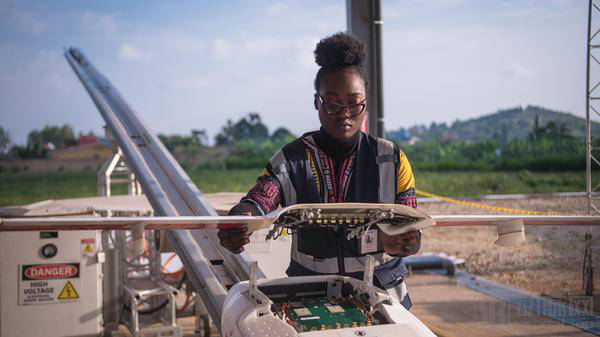
In western Rwanda, Zipline drones serve 21 hospitals. Any hospital can place orders through Zipline via email, text message, phone, WhatsApp, or other channels. Once an order is placed, flight operators receive and process it, relay the information to the next person in the workflow, and maintain communication with the hospital to inform them of the expected delivery time.
Rinaudo of Zipline stated, “Last year, we completed approximately 4,000 life-saving emergency deliveries, but the scale of our launch in Ghana is about 20 times that.” He added, “Excitingly, the technology has finally scaled to a level that allows us to discuss achieving universal healthcare access for an entire country.” In Rwanda, Zipline’s drones have flown over 1 million kilometers and completed more than 13,000 deliveries.
Rinaudo stated that, through collaboration with healthcare institutions, governments, and pharmaceutical companies, Zipline’s presence would provide people across various regions with a higher level of care. Zipline reported that it is currently delivering more than 170 different vaccines, blood products, and medications to 2,500 healthcare facilities, serving nearly 22 million people.
It is reported that in the 2019 CNBC Disruptor 50 list, Zipline ranked 39th, raising $190 million in venture capital at a valuation of $1.2 billion. Investors included Baillie Gifford, The Rise Fund, Alphabet, and Katalyst Ventures. This funding brought Zipline’s total capital raised to $225 million.
CEO Keller Rinaudo stated that with the new funding, Zipline plans to establish delivery centers among 2,600 healthcare institutions in Rwanda and Ghana. The company will also soon commence operations in North Carolina, USA, a plan that has received approval from the U.S. Federal Aviation Administration (FAA).
Keller Rinaudo stated, “Around the world, a growing number of people feel that technology has not benefited the vast majority. The conventional wisdom in the past was that building a successful tech company required leveraging individuals’ personal information or employing marketing tactics to capture their attention. Zipline aims to establish a new model for success in Silicon Valley by demonstrating to the world that a genuine technology company, driven by a sound mission and backed by a high-caliber team, can help improve the lives of everyone on Earth.”
He revealed that Zipline will continue to expand its drone delivery services into developed and developing regions, including the United States, Africa, South Asia, Southeast Asia, and the Americas. Its goal is to provide rapid and convenient medical services to 700 million people within the next five years.