

Tech Fight Against Epidemic: Shaanxi's Internet + Cloud Services Strengthen COVID-19 Prevention and Control Network
Adversity Cannot Break Us; Now Is the Time to Rise Up. At a critical stage in the decisive battle against the COVID-19 epidemic, General Secretary Xi Jinping attended and delivered an important speech at the meeting on coordinating COVID-19 prevention and control with economic and social development work on the 23rd, emphasizing that prevention and control measures must be tightened, implemented, and refined without any letup. In response to this sudden epidemic test, Shaanxi Province rapidly deployed resources and strengthened unified command over epidemic prevention and control efforts. Its effective measures to resolutely curb the spread of the epidemic have drawn widespread attention.
The Health Commission of Shaanxi Province responded rapidly to the epidemic, prioritizing the safety and health of the public. Leveraging the Shaanxi Health Cloud Platform and building upon the province-wide remote consultation cloud platform, and with support from SENYINT, it established the “Shaanxi Provincial Internet Medical Treatment Command Platform for COVID-19.” This platform has played a significant role in unifying deployment and enabling efficient medical collaboration in the fight against the epidemic.

Shaanxi Province Conducts Cloud-Based Training via the Anti-Epidemic Rapid Cloud Platform
Currently, the province has convened multiple emergency epidemic prevention and control deployment meetings via a cloud platform to ensure efficient and accurate information dissemination. With 108 counties maintaining 24-hour online interaction and 131 designated medical institutions for epidemic treatment engaging in remote collaboration, Shaanxi has established an epidemic prevention and control network characterized by “joint prevention and control, information sharing, vertical coordination, and medical collaboration.”
“You’ve worked so hard! We’re truly grateful—you’ve put our minds at ease. Your support has been even more timely and precious than aid in a time of dire need!” This was the phrase most frequently heard by staff from the Ankang Municipal Health and Family Planning Commission in Shaanxi Province, as they reviewed the progress of health screening for Wuhan migrants across all counties (cities and districts) and gained a comprehensive understanding of grassroots epidemic control efforts.
“Hardship is not the issue; this is our duty! Let’s all pull together—with united efforts, we will surely overcome the epidemic,” staff members told reporters. They explained that by leveraging the “Cloud Meeting” feature of the “Anti-Epidemic Rapid Cloud Platform,” health commissions across various regions can conveniently convene video conferences for emergency response, rapidly disseminate directives, and facilitate unified command and coordinated deployment of government emergency prevention and control measures. “It’s very convenient!”
Currently, with the support of cloud platform services, the Community Prevention and Control Group of the Shaanxi Provincial Leading Group for Joint Prevention and Control of the Novel Coronavirus Pneumonia Epidemic is available online 24 hours a day. It conducts one-on-one interviews with the directors of health commissions and civil affairs bureaus in all 108 counties across the province, allocating 20 minutes per county to carry out epidemic screening work.
In addition, the Office of the Leading Group for Responding to the Novel Coronavirus Pneumonia Epidemic in Shaanxi Province also utilizes the platform to provide educational and training services—such as rebroadcasting national video-conference calls and live-streaming meetings related to epidemic prevention and control—to public medical institutions at five administrative levels (provincial, municipal, county, township, and village) and relevant administrative disease-control agencies.
Data show that from January 27 to February 20, 2020, Shaanxi Province conducted more than 30 cloud conferences on epidemic control and related training sessions via its Provincial Telemedicine Platform for Novel Coronavirus Pneumonia. A cumulative total of 15,000 medical institutions were connected to the platform, with 220,000 participant instances, ensuring smooth transmission of command and control information for epidemic response.
Taking Shaanxi Province as an example, in the rescue of critically ill COVID-19 patients, the province has pooled high-quality expert resources at the provincial level to fully establish a provincial medical treatment team. Through the provincial cloud platform for remote medical care, the team conducts centralized consultations to optimize resource allocation and alleviate pressure on designated hospitals. Meanwhile, the expert group provides centralized diagnosis and offers multi-dimensionally verified diagnostic and treatment recommendations for patients who have recovered and been discharged.
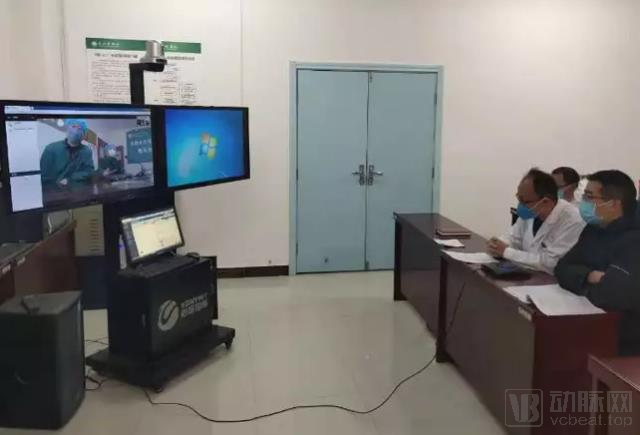
Ningshan County Hospital Conducts Remote Consultations with Experts from Ankang Central Hospital via Cloud Platform
As of the 20th, the Provincial Medical Treatment Group has organized 18 multidisciplinary expert consultations for key severe COVID-19 cases. Designated medical institutions across the province have completed a total of 52 point-to-point case consultations. Specific examples include Tangdu Hospital (6 cases), The First Affiliated Hospital of Xi’an Jiaotong University (6 cases), The Second Affiliated Hospital of Xi’an Jiaotong University (1 case), Shaanxi Provincial People’s Hospital (5 cases), Shaanxi Provincial Hospital of Traditional Chinese Medicine (5 cases), Xi’an Children’s Hospital (6 cases), The First Affiliated Hospital of Xi’an Medical University (5 cases), Ankang Central Hospital Infectious Disease Hospital (15 cases), Ankang Hospital of Traditional Chinese Medicine (1 case), and Weinan Central Hospital (2 cases). Numerous medical institutions at all levels throughout the province have taken active measures, continuously enhancing diagnosis, treatment, and prevention and control services through remote assistance.
Leveraging Internet Plus and cloud services, health authorities at all levels across the province have achieved orderly operational collaboration, further enhancing the efficiency and effectiveness of pandemic prevention and control in areas such as management, training, implementation, and inter-agency coordination. Designated hospitals and medical institutions providing assistance have made significant strides in supporting epidemic situation assessment, innovating remote diagnosis and treatment models, and improving service efficiency. These efforts have effectively reduced the risk of infection among healthcare workers, increased the efficiency of diagnosis and treatment for confirmed patients, and contributed comprehensively to winning the battle against the epidemic.