

Faith and Perseverance: A Wuhan Health Tech Founder's Pandemic Diary
Before Wuhan went into lockdown, Yang Haolin canceled his flight ticket back to his hometown.
As a local healthcare entrepreneur in Wuhan, Yang Haolin, who was more aware than most of the severity of the epidemic, chose to stay.
Yang Haolin is the founder of 365 Imaging Cloud. During the pandemic, he not only helped coordinate donations of medical supplies and medical aid, but his company’s product, Imaging Cloud, also played a significant role. Leveraging its business advantages, “365 Imaging Cloud” was the first to provide free remote consultation services in epidemic-affected areas and assisted Xiaogan City in identifying its first confirmed case. As of February 20, the “365 Imaging Cloud” platform had stored complete imaging data for 15,744 patients and directly assisted 504 patient visits, building a bridge of communication between patients, hospitals, and experts during the outbreak.
Yang Haolin chronicled his experiences fighting the pandemic in 25 diary entries. These journals not only document the authentic realities of the front lines in epidemic areas but also serve as a testament to Ernest Hemingway’s famous line from The Old Man and the Sea—"Now is not the time to dwell on what you lack; instead, consider what you can achieve with what you already have."
January 23Night, the next day is New Year's Eve.
At the West Campus of Wuhan Pu’ai Hospital, medical staff were bustling about, preparing to admit pneumonia patients. The hospital director’s eyes were bloodshot from several consecutive days without rest. As patients were about to be admitted, Secretary Liao from Tongji Hospital was urgently coordinating to resolve shortages of medical personnel and protective suits. The network connection between the two hospitals was quickly established, enabling Director Lü and Professor Xia to conduct their first remote consultation. Another nurse arrived to perform a CT scan; fortunately, the results were negative. But what about tomorrow? And the day after? Let us hope that luck continues. For the exhausted hospital director, the anxiously engaged Secretary Liao, and the healthcare workers lacking adequate protective measures, what of their Spring Festival holiday and their safety? Everything is still ongoing, and the epidemic demands even greater sacrifices from them.
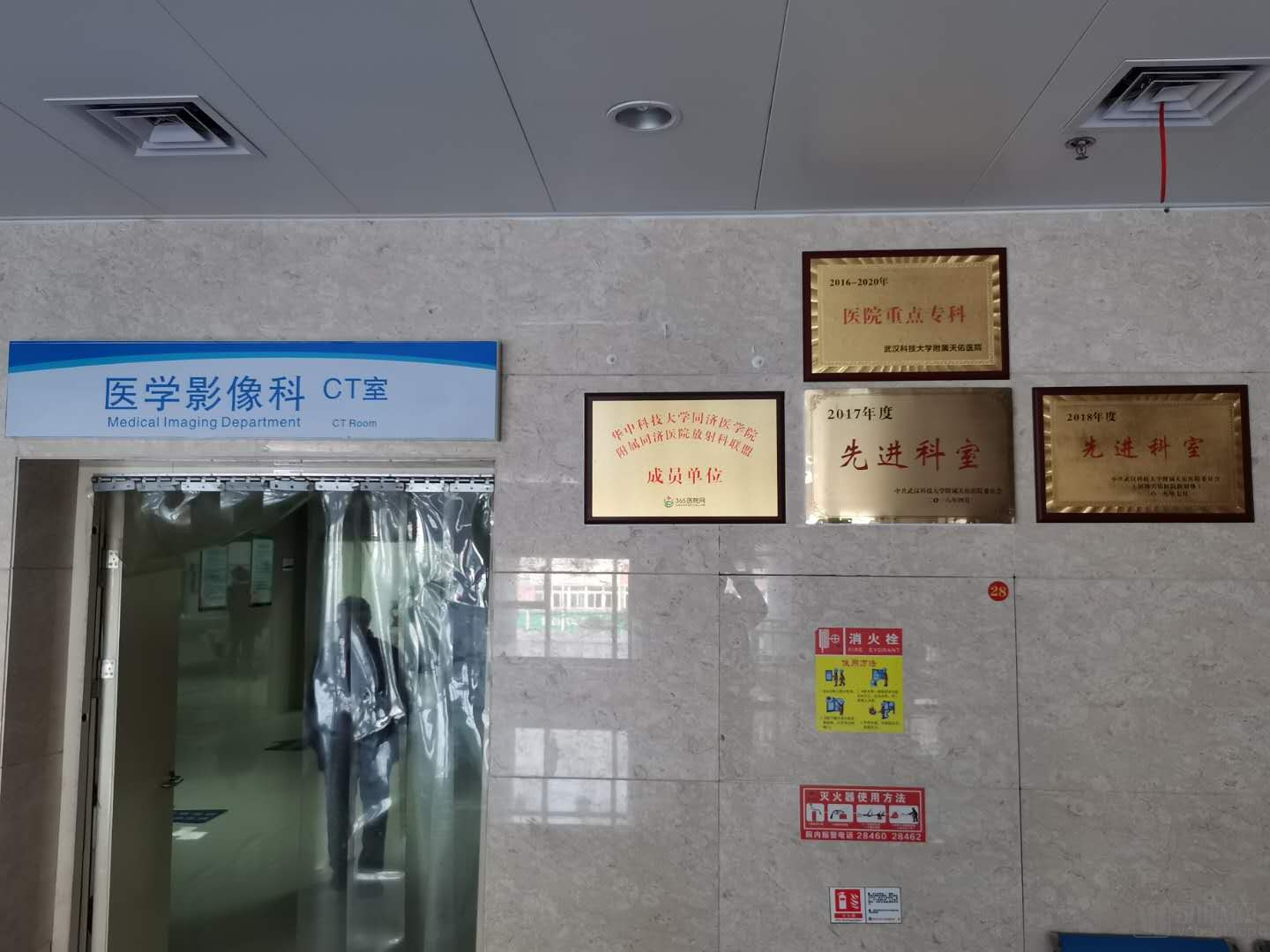
(The photo was taken when Yang Haolin visited Tianyou Hospital of Wuhan University of Science and Technology.)
January 24, wishing all healthcare workers a happy Chinese New Year's Eve.
Current Situation in Wuhan: There is a shortage of hospital wards (specifically, those meeting the criteria for admitting patients), a shortage of physicians (particularly infectious disease specialists in Wuhan), and a shortage of personal protective equipment (PPE) (many of our doctors currently have only basic mask protection). All hospitals are facing these shortages. It is recommended that individuals and organizations capable of providing protective equipment contact the Wuhan Command Center for unified allocation.
January 27.Today is the third day of the Lunar New Year. The central government has announced a series of important measures, with the Premier personally taking charge and appearing at Jinyintan Hospital. Multiple provinces have organized medical rescue teams to rush to hospitals in Wuhan, significantly strengthening the medical workforce!
The pressing reality in Wuhan remains the continuous surge in new patients. Patients struggle to reach hospitals promptly, community workers lack adequate protective gear, vehicles allocated to communities are insufficient, emergency medical services (120) are severely overstretched, and hospital capacity has reached its limit. Shortages of hospital beds and protective equipment remain critical issues, as production, transportation, and distribution all take time. We urge the public to maintain sound judgment and refrain from believing online rumors. At present, we rely on healthcare workers, ambulance and taxi drivers, and other frontline personnel who are addressing these challenges through the most basic means while standing at the forefront of the response.
January 30. Today is the sixth day of the Lunar New Year, with 1,737 new cases reported across China, 1,032 new cases in Hubei Province, and 356 new cases in Wuhan.
Resuming work in two days will pose significant risks. Yesterday, many friends hoped for the emergence of a turning point. I sampled imaging examinations from a fever clinic in Wuhan, and the results were highly concerning. A confirmed case must be based on nucleic acid testing. I understand everyone’s good intentions in hoping for a turning point, but it would be even more alarming if the trend turns for the worse.
February 4, Start of Spring. As of yesterday, the nationwide number of confirmed cases reached 20,438. Last night in Wuhan, ambulance convoys were deployed to transfer patients on a large scale to Huoshenshan Hospital. "Fangcang shelter hospitals" have been established at the Wuhan International Conference and Exhibition Center, Hongshan Gymnasium, and Wuhan Living Room. The military and local authorities are racing against time to set up beds to admit more patients with mild symptoms and suspected cases for isolation. Efforts must be accelerated to cut off transmission routes between infected and uninfected individuals. Psychological counseling during the isolation period must be properly provided to prevent potential risks.
February 6, I kept hearing news of deaths—from strangers, to friends’ relatives, to friends themselves—making death feel ever closer. Damn this virus; I am afraid.
Today, a compassionate vegetable farmer in Dongxihu District, Wuhan, donated fresh produce from ten greenhouses. I helped coordinate with several communities in the Hankou area to ensure these vegetables are distributed gradually to disaster-affected residents in Wuhan, hoping to provide meaningful assistance.
February 7, three apples. These are the only fruits I have left; previously, I was restricted to eating just half an apple per day. With 9 million people still remaining in Wuhan, the next challenge following epidemic prevention and control order and medical care order is maintaining daily life order.
February 9Today, I facilitated two donations of face masks, one donation of protective suits, one donation of ventilators, one donation of vegetables, one donation of coffee, and one donation of temperature screening systems. Yesterday, friends from across China also offered personal donations to me. One online acquaintance, whom I have never met in person, transferred 2,000 yuan to me via WeChat, hoping that I would accept it. First and foremost, I sincerely thank everyone who cares about Wuhan and about me personally; however, I do not need any personal donations. The good news is that logistics services to Wuhan have begun to resume as of yesterday. Residents of Wuhan can now purchase daily necessities online. The central government has mobilized substantial reserves of strategic meat supplies, which are being shipped to Wuhan in batches.
February 10Today, I spent two hours organizing our company’s business systems. As a startup, we are facing severe survival challenges in the wake of this disaster. We have done our utmost; the rest is up to fate. I am deeply grateful to a certain venture capital fund for still thinking of me at this time, showing interest in our business plan, and continuing to consider us—a true source of great comfort.
February 13, residents in the community’s grid management WeChat group have voiced challenges and dissatisfaction toward the grid supervisor. He, too, feels aggrieved, as he is burdened with a wide variety of tasks. The person who originally managed our grid has gone on maternity leave. This morning, he promptly announced the confirmed and suspected COVID-19 cases in the community. I have received updates on the number of infected individuals in the community three times in total, with the count rising from 3 to 10, and then to today’s 17. However, compared with the overall increase in Wuhan, we may still be considered relatively fortunate.
Yang Haolin, a former military veteran, unhesitatingly raised his “gun” in the battle against the epidemic—the Imaging Cloud.
In the early stages of the epidemic, a confirmed case in Wuhan was counted only if it was verified by nucleic acid testing. However, the low accuracy of nucleic acid tests, coupled with a shortage of test kits, hindered detection speed and accelerated transmission within households. It was not until the release of the fifth edition of the Diagnosis and Treatment Protocol for Novel Coronavirus Pneumonia that imaging results were officially included as diagnostic criteria for clinically diagnosed cases.
Yang Haolin emerged as one of the key drivers behind this decision.
As early as the beginning of January, Yang Haolin’s 365 Imaging Cloud played a significant role during the epidemic. On January 1, Yijia Hulian began collaborating with Wuhan Tongji Hospital to provide free online imaging consultation services to more than 100 hospitals within the alliance. Subsequently, Yang Haolin went to the frontline of the epidemic, facilitating interoperability between the radiology departments of Wuhan Jinyintan Hospital and Wuhan Tongji Hospital, striving to assist the first 59 confirmed patients to the greatest extent possible.

(Figure: Login interface of the 365 Imaging Cloud product)
January 13, experts from the Department of Radiology at Wuhan Tongji Hospital leveraged the 365 platform to help Yingcheng Traditional Chinese Medicine Hospital identify the first two cases of viral infection, enabling the local government to take immediate action.
January 20, the 365 Platform provides free secondary imaging specialist consultations to all patients undergoing pulmonary CT scans in Hubei Province.
January 23, Yijia Hulian once again went deep into the front lines of disaster relief, helping Wuhan Pu'ai Hospital's West Campus deploy the 365 Platform on-site to ensure real-time diagnosis with the Department of Radiology at Tongji Hospital.
On New Year’s Eve, Yang Haolin compiled an email and sent it to the Hubei Provincial Department of Science and Technology, outlining the initial frontline services provided by 365 Imaging Cloud in the disaster-stricken areas and explaining the role that 365 Imaging Cloud had identified for itself in protection and treatment efforts during this disaster.
February 3, Professor Zeng Yan of Wuhan University of Science and Technology submitted the data and recommendations proposed by Yang Haolin to the Hubei Provincial Epidemic Prevention and Control Command in the form of a proposal.
The Value of Imaging Diagnosis Shocked the Nation on February 13. On February 13, the Health Commission of Hubei Province announced that there were 14,840 new cases in Hubei (including 13,332 clinically diagnosed cases). The term “clinically diagnosed” here primarily refers to patients’ CT imaging findings.
At the national macro-policy level, there has been consistent encouragement for the integration of healthcare and internet technologies to better provide patients with borderless medical services. Various forms of internet-based healthcare services have subsequently emerged, including online appointment registration, lightweight consultations, video conferencing for medical consultations, and imaging cloud services.
From 2014 to 2019, investment sentiment shifted from overheated to overly cautious, prompting a growing number of funds to redirect their focus back to traditional healthcare businesses. Is internet healthcare truly acclaimed but commercially underperforming?
First, superficial projects certainly exist; some companies are moving closer to the internet but further away from healthcare. Second, healthcare is not a sector that yields rapid growth in a short period. Unlike traditional internet businesses, healthcare services are not characterized by high-frequency usage; they neither occur randomly nor can be fully predetermined.
I have been working on medical imaging projects for six full years, navigating shifts from to-VC to to-C, then to-B, and back to to-C—a journey marked by considerable trials and tribulations. During this period, I have watched many peers pivot to third-party imaging centers (asset-heavy models) or transition into artificial intelligence (a fast track for fundraising)."It's not easy for us to hold on and survive."
In March 2016, Puhua Capital provided us with the largest investment in the imaging cloud startup sector at that time. In May, we became the only medical imaging project shortlisted for the Spring Competition of Demo China in Beijing. In October, we presented a report on cloud imaging at the Apsara Conference hosted by Alibaba Cloud in Hangzhou. From November to December, we emerged as the overall champion of the medical group finals in the Hubei Provincial Entrepreneurship Star Avenue competition.The most glorious days of my past are drifting further and further away.
As is well known, the outbreak of novel coronavirus pneumonia (COVID-19) was sudden and occurred at a particularly complex time, coinciding with both the peak travel season of the Spring Festival and the peak influenza season. This complexity posed a significant challenge to business operations. “365 Imaging Cloud” and the “Wuhan Tongji Hospital Radiology Alliance” began providing free imaging services to hospitals and patients as early as January 1, making them among the earliest internet healthcare projects to respond to the epidemic. From January 1 to February 19, a total of 15,532 medical imaging data records were processed, including 3,677 instances of data storage services, 59 imaging examination appointment services, and 504 expert imaging consultation services (among which two initial confirmed cases in Xiaogan City were diagnosed). However, the epidemic had a substantial impact on enterprises, bringing business operations to a near standstill.
During the most severe phase of the epidemic, patients treated us almost like family members. They consulted us on where to undergo nucleic acid testing and how to secure hospital admission, and they shared updates on their condition with us. Earning their trust was our greatest comfort.
Imaging Appointment Service: Reduces Average Hospital Wait Time from 3 Hours to 0.5 Hours, Allowing Patients to Arrive at Their Scheduled Time for Immediate Examination and Receive Results at Home, Thereby Minimizing the Risk of Cross-Infection and Transmission to Others.
Imaging Specialist Consultation Service: Over a hundred expert professors from the Tongji Hospital Radiology Alliance are available to respond to patients’ consultation needs at any time, delivering diagnostic conclusions to patients and referring hospitals immediately, with a record of zero missed or misdiagnosed cases. Imaging Data Sharing Service: Prior to confirmed diagnosis and hospital admission, patients typically undergo two to three CT imaging examinations, making longitudinal comparison of their condition critically important. However, patients often visit multiple hospitals where data cannot be shared across institutions. Our service enables patients to access all their imaging examination records via mobile devices or physicians’ desktop systems.
The future commercial value of Imaging Cloud is becoming increasingly prominent, provided that traditional transaction logic is transformed.
Conservatively estimated, there are 2 billion imaging examinations in China annually. The average examination fee is RMB 300 per person-time, with specialist service fees ranging from RMB 50 to RMB 800 per person-time. Hubei Province has a clearly defined charging standard of RMB 272 per person-time, and data storage costs amount to RMB 20 per person-time. The total direct market value exceeds one trillion yuan. In the early stages of our venture, we conducted a closed-loop analysis of the healthcare sector, where the value of imaging examinations within the loop was particularly evident. If imaging services can be effectively extended downstream, their value would be even greater.
Post-pandemic, internet healthcare will undergo reshaping, and imaging cloud services will undoubtedly gain significant attention.. No one wishes for an epidemic to occur, but it serves more as a touchstone; in its aftermath, many healthcare models will receive greater attention and undergo restructuring.
Following the painful lessons of the 2003 SARS outbreak, the government placed great emphasis on the development of Centers for Disease Control and Prevention (CDCs), leading to their rapid growth. Similarly, the healthcare reforms implemented from 2009 to the present have been put to the test, revealing areas that require increased investment, such as viral testing capabilities, pharmaceutical R&D capacity, and the capabilities of primary care hospitals. Other areas include the training of family physicians and giving due importance to imaging cloud platforms. At least from the current perspective, cross-institutional medical services delivered via imaging clouds demonstrate the highest efficiency.