

VivaLNK Partners with Alibaba Cloud to Deploy IoT-Enabled Smart Temperature Monitoring System at Zhengzhou 'Xiaotangshan' Hospital
At the end of the lunar year in 2019, the nationwide outbreak of the novel coronavirus epidemic placed an immense strain on China’s public health system. On the flip side, this epidemic also served as an accelerator for transformation within the healthcare industry. New technologies such as artificial intelligence, cloud computing, the Internet of Things, and big data have become key forces in combating the epidemic across various aspects of social governance.
Taking Zhengzhou Qiboshan Hospital, the “Xiaotangshan”-style hospital in Zhengzhou, Henan Province, as an example, its remarkable strengths lie not only in its completion, acceptance, and handover within a mere 10-day construction period—five days ahead of schedule—but also in its operation as an intelligent “cloud-based” hospital.
On January 27, during its preparatory phase, Zhengzhou’s “Xiaotangshan” Hospital partnered with Alibaba Cloud to deploy a system architecture that leverages Alibaba Cloud’s public cloud as the primary infrastructure for core hospital operations, complemented by Alibaba Cloud Apsara Stack Agility Edition as a backup solution. The hospital also introduced multiple intelligent facilities, including an AI-assisted diagnostic tool for COVID-19, an intelligent temperature monitoring system, and smart delivery robots.
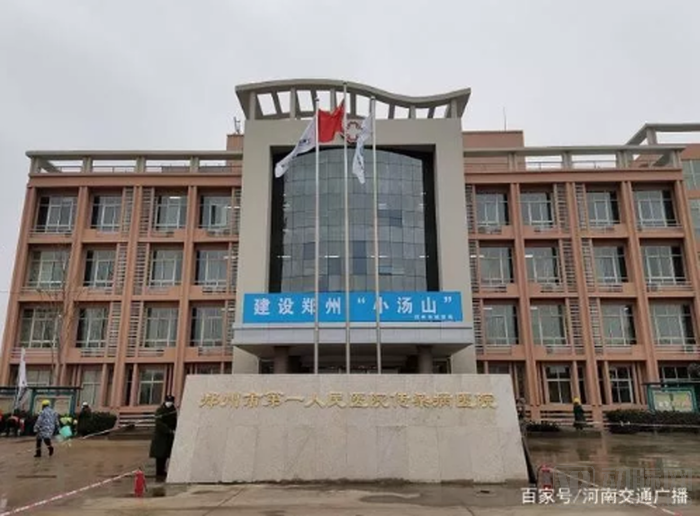
VCBeat (WeChat ID: vcbeat) has learned that the intelligent temperature monitoring system is provided by VivaLNK, a supplier of medical-grade wearable devices. In wards where this intelligent temperature monitoring system has been deployed, healthcare professionals no longer need to follow the traditional manual workflow of “recording, checking, storing, and transcribing” temperature measurements. Instead, the intelligent temperature monitoring system leverages wearable devices to enable wireless, real-time temperature monitoring, information sharing, and automatic alerts for elevated temperatures, thereby improving diagnostic and treatment efficiency while significantly reducing the risk of infection among healthcare staff.
In emergency situations, how did VivaLNK collaborate with Alibaba Cloud and other ecosystem partners to rapidly advance hospital temperature monitoring systems from the paper-based era to the Internet of Things (IoT) era? How did VivaLNK respond to sudden surges in traffic and the diverse temperature monitoring needs across hospitals, communities, and enterprises? VCBeat interviewed Li Jiang, CEO of VivaLNK, to address these questions.
In the early stages of the Wuhan outbreak, amid severe shortages of medical supplies, a news report featured a moving scene: an ICU nurse at a Wuhan hospital chose to remain in the intensive care unit for an extended period to conserve a single set of personal protective equipment (PPE), continuously monitoring and recording patients’ temperatures. A key clinical manifestation of COVID-19 is high fever, making close and continuous temperature monitoring critical for patient care.
Prolonged stays in the ICU undoubtedly increase the risk of infection for healthcare workers; such dauntless spirit is both moving and lamentable.
Li Jiang, CEO of VivaLNK, stated, “In this battle, we must leverage technological means to reduce unnecessary casualties. Tasks that are low-tech and time-consuming should be delegated to intelligent devices as much as possible. Particularly in basic measurements and nursing care, we aim to free up more time and energy for healthcare professionals, allowing them to focus on work that software systems or smart devices cannot yet replace.”
Starting from January 22, some employees of VivaLNK had already begun their Spring Festival holiday. However, upon recognizing the severity of the epidemic, they immediately joined efforts to support frontline operations. VivaLNK, in collaboration with its ecosystem partners (Yijin Health and Guihua Network Technology), jointly developed an intelligent temperature monitoring system designed for hospitalized patients with suspected or confirmed cases.
The recall of employees was voluntary, yet all staff in Hangzhou returned to their posts to assist with preparedness efforts, with technical personnel rushing back to Hangzhou overnight.
“Everyone took the initiative because we all know that no one can remain aloof in the face of the pandemic.”
On January 28, VivaLNK and its partners successfully deployed the epidemic prevention and control temperature monitoring system at public health institutions in Zhejiang and Shanghai. As the epidemic intensified, on February 1, VivaLNK staff braved the risks to deliver more than 300 sets of continuous temperature monitoring products to Henan, another severely affected area.
At this point, a Level I emergency response had been activated across China. Each city was isolated like an island, with urban functions nearly at a standstill. Rapidly delivering supplies to epidemic-affected areas became a major challenge.
Under tight deadlines and heavy workloads, the team decided to drive to Zhengzhou. At 5:00 AM on February 1, VivaLNK’s frontline team drove for over 16 hours, covering nearly 1,000 kilometers, and safely arrived in Zhengzhou with more than 300 units of products and supporting equipment.
Upon arriving at the Zhengzhou “Xiaotangshan” Hospital, the frontline team was still awestruck by the “Zhengzhou Speed.”
“The 5,000 workers on site came from all corners of the country. More than 170 pieces of machinery operated around the clock, deployed simultaneously for the hospital’s construction. Yet the entire site remained orderly, efficient, and rigorous. For medical staff, hardly anyone was able to eat or rest on schedule; they spun like ceaseless tops, constantly addressing emerging emergencies. Unless you were there in person, it would be truly difficult to grasp the sheer magnitude of the scene.”
The five-day construction timeline of Zhengzhou’s “Xiaotangshan” Hospital also posed significant challenges for equipment installation. The installation team encountered numerous difficulties on-site: harsh working conditions, unavailability of supporting components, and inability to debug hardware, with one problem after another emerging. Despite these obstacles, the on-site engineers adapted to local conditions and ultimately completed hardware debugging even before the hospital’s infrastructure was fully finished. In the absence of electricity and internet connectivity, they powered the devices using portable power banks and shared mobile Wi-Fi hotspots, seizing brief windows when temporary power and network access were available to complete urgent system integration and deployment.
At 1:00 a.m. on February 3, the hospital requested an urgent addition of a specific feature. After communicating and confirming the requirements, VivaLNK and its partner (Yijin Health) worked through the night, deployed the feature by the next morning, and successfully met the hospital’s emergency request.
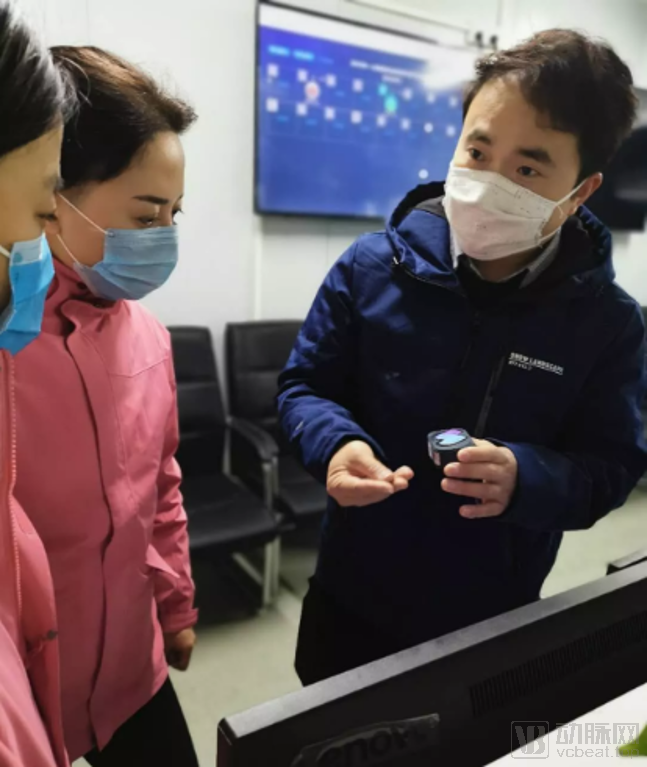
Currently, the smart body temperature monitoring system developed by VivaLNK and its partners has been deployed in more than 10 hospitals designated for epidemic treatment, including Shanghai Public Health Clinical Center and Henan’s “Xiaotangshan” Hospital, and has received positive feedback.
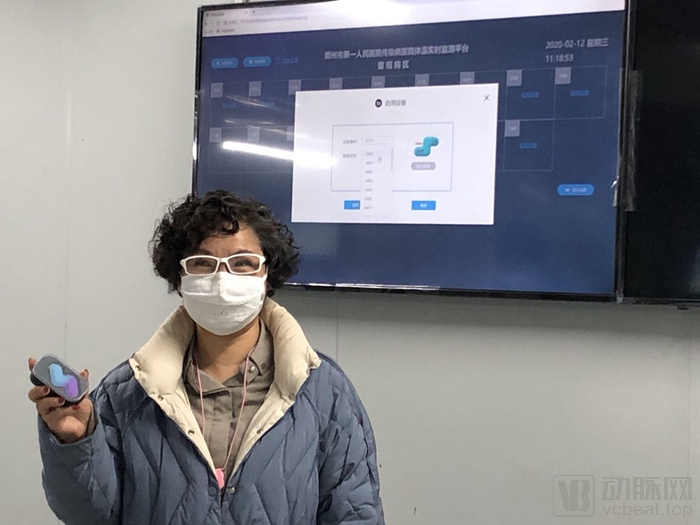
For traditional temperature monitoring methods, devices such as thermometers and infrared forehead thermometers require continuous recording by healthcare personnel. Frequent monitoring increases the workload of medical staff, and patient temperature data cannot be rapidly shared.
The Intelligent Body Temperature Monitoring System addresses these challenges through the integration of electronic skin, the Internet of Things (IoT), and cloud computing. In terms of energy consumption, the Vivalnk flexible temperature patch employs key technologies such as electronic skin and low-power wireless Bluetooth, enabling up to 21 days of continuous use on a single charge, which covers the standard 14-day isolation observation period. As long as patients wear the flexible temperature patch correctly according to the instructions, medical staff can view the real-time body temperatures of all patients in the current ward, as well as their historical temperature curves, directly on the large display screen at the hospital nursing station. Meanwhile, these temperature readings are automatically synchronized with the Hospital Information System (HIS), allowing shared access to the data across temperature charts, nursing records, and electronic medical records, thereby achieving single-point data collection with multi-point sharing.
The body temperature patch developed by VivaLNK was tested by the Zhejiang Provincial Institute for Medical Device Testing and passed clinical trials at two Grade A tertiary hospitals in Nanjing and Wuxi. It has successfully obtained the NMPA (formerly CFDA) certification and production license. The product has also been certified by multiple authoritative bodies, including the FDA and CE, and has received a Class II medical device certificate.
In infectious disease wards, sudden high fever in patients is common; besides enabling real-time monitoring, the intelligent temperature monitoring system can also automatically alert for abnormalities.
Intelligent Body Temperature Monitoring System Facilitates Seamless Sharing of Vital Sign DataIn traditional settings, a whiteboard at the nurses’ station was often used to manually record patient information. In contrast, with the intelligent body temperature monitoring system, sensors worn by patients collect data, and the charging case for the temperature patches serves as a Bluetooth signal relay. It forwards signals from the temperature patches via Bluetooth gateways to the workstation. The charging cases are located at the head of each hospital bed, while Bluetooth gateways are deployed throughout the ward to ensure secure signal transmission. Furthermore, the primary nurse, shift partner nurse, head nurse, and attending physician can all access the latest data in real time.
VivaLNK, born in Silicon Valley, has independently developed its disruptive electronic skin (eSkin®) technology. In medical applications, VivaLNK integrates eSkin sensor technology with AI-driven data analytics on the medical cloud, enabling multi-parameter vital signs monitoring and analysis in the medical Internet of Things (IoMT) through medical-grade wearable devices. This empowers solution providers to enrich and implement comprehensive solutions for health management, patient monitoring, and remote care.
VivaLNK’s corporate vision is to reduce the workload of healthcare professionals in basic care and vital signs monitoring, allowing them to focus on other nursing tasks. It also aims to enable remote hospitals and patients to access high-precision, high-quality intelligent real-time vital signs monitoring systems at a relatively low cost.
After rapidly deploying support to the front lines, VivaLNK recognized that the fight against the epidemic was not solely a battle for healthcare workers; beyond hospitals, upgrading routine temperature monitoring in communities and public workplaces was key to winning the protracted war.
For community-based prevention and control scenarios, Alibaba Cloud has partnered with Vivalnk’s continuous temperature monitoring system—comprising flexible temperature patches, a mobile app, and a medical cloud platform—to create “WenKongBao,” an intelligent remote temperature monitoring solution for residents under home isolation. Leveraging Alibaba Cloud’s computing and IoT technologies, the system displays continuous temperature data in real time on the wearer’s smartphone, as well as at neighborhood monitoring centers, community offices, and higher-level administrative and epidemic prevention control centers. This enhances the efficiency of community management and reduces the risk of infection.
As more and more companies resume work, monitoring employee temperature trends has become a critical metric for employees, enterprises, and epidemic prevention command centers. Yijin Health, in collaboration with VivaLNK’s temperature patches, has launched a real-time temperature monitoring platform—a vital health safeguard for businesses and institutions resuming operations.
Once the wearable temperature patch is properly applied, enterprises can access all employees’ temperature data via the temperature monitoring workstation. This transforms brief, spot-check temperature monitoring into continuous monitoring, enabling the tracking of temperature changes even when employees are at home.
After winning the battle against the viral siege through temperature monitoring, the final step is to thoroughly snipe COVID-19. Intelligent temperature monitoring systems can provide visualized data to clinical experts, assisting physicians in achieving rational drug use.
Physicians assess the efficacy of existing medications in suppressing viral activity by reviewing historical temperature data from patients on different drug regimens, thereby optimizing medication use while accumulating clinical experience. Moving forward, Vivalnk’s flexible temperature patches and associated products will play a significant role in clinical trials for pharmaceuticals and vaccines, in collaboration with drug manufacturers, vaccine producers, and contract research organizations (CROs).
Wearable sensors enable data to flow across different platforms and the cloud, making patient data more multidimensional and comprehensive. These capabilities will constitute important components of the smart healthcare system.
To date, VivaLNK’s flexible ECG patch products (monitoring parameters such as electrocardiogram, heart rate, and respiratory rate) have obtained Class II medical device certifications from the U.S. FDA and the EU CE marking, with approval from China’s National Medical Products Administration (NMPA) currently under review. In the future, VivaLNK plans to further expand the scope of automated basic vital sign acquisition, gradually incorporating medical-grade accurate measurements of ambulatory blood pressure, blood oxygen saturation, and other indicators into the same device.
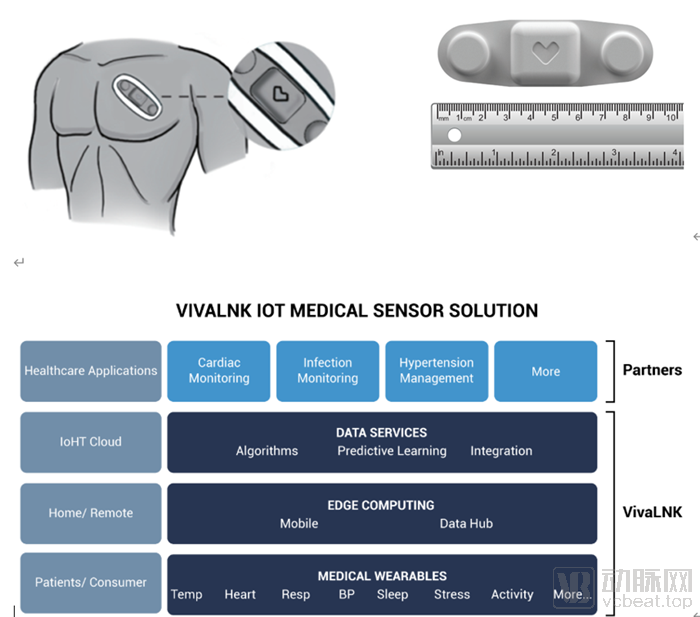
VivaLNK Flexible Medical Sensors and Basic Data Service Platform
Li Jiang stated, “It has been one month since the onset of epidemic prevention and control measures, marking Vivalnk’s most proud month to date, as our previous solutions were successfully implemented during this outbreak. We hope to harness the power of technology as a primary force in future epidemic responses, thereby minimizing infections among healthcare workers.”