

JunLian Healthcare New Drug Bulletin 2020 Issue No.7: Pipeline Highlights and Strategic Collaborations
Mar 02, 2020 18:18
CST Updated
18:18

This week, there were 9 new drug data entries: 4 in oncology, and 1 each in immunology, metabolism, infectious diseases, cardiovascular disease, and CNS.
❖Sangamo, a gene-editing technology company, has entered into a global licensing agreement with Biogen. The two parties will collaborate to develop novel gene-regulating therapies for neurodegenerative diseases using Sangamo’s proprietary zinc finger protein transcription factor technology (commonly known as “Zinc Finger” technology). Following the announcement, Sangamo’s stock price surged by 40%, bringing its market capitalization to approximately $1 billion. The collaboration centers on Sangamo’s proprietary zinc finger protein (ZFP) technology, which is designed to target specific DNA sequences and either inhibit or activate gene expression. Sangamo is a legendary company in the industry; despite being publicly listed for over two decades without any commercialized products, it has maintained a substantial market valuation. Its monopolistic patent protection has prevented other companies from accessing its unique Zinc Finger technology, although this strategy has been criticized for slowing the overall development of the technology. Biogen previously achieved a remarkable turnaround in the field of Alzheimer’s disease (AD); it remains to be seen whether this partnership with Sangamo will yield another success story.
❖Roche Announces Collaboration with UK Biotech Bicycle Therapeutics to Develop Peptide Immunotherapies, with $30 Million Upfront Payment and Potential $1.7 Billion in Milestone PaymentsBicycle’s core technology involves the derivatization of phage-displayed peptide libraries, using a chemical trifunctional linker to convert linear peptides expressed on phages into bicyclic peptides, thereby enhancing metabolic stability, membrane permeability, and biological activity. Over the past three years, Roche has emerged as a major acquirer in the biopharma sector, investing across frontier technologies such as gene therapy, RNA therapeutics, PROTACs, and physical cell-squeezing delivery systems, as well as traditional areas including antibiotics and neurodegenerative diseases. In 2019 alone, Roche struck partnerships with three biotechnology companies in different fields within a single day. With the “low-hanging fruits” in new drug development largely exhausted, and no single emerging technology platform capable of sustaining the entire pharmaceutical industry’s growth, diversified investment strategies have increasingly become a key approach for large multinational corporations (MNCs).
Mirati Therapeutics Announces Preliminary Data on Investigational Protein Kinase Inhibitor Combined with Anti-PD-1 Antibody for the Treatment of Advanced Clear Cell Renal Cell Carcinoma
Mirati Therapeutics Announces Preliminary Clinical Data from a Phase 1/2 Trial Evaluating Sitravatinib, an Investigational Protein Kinase Inhibitor, in Combination with the Anti-PD-1 Antibody Nivolumab for the Treatment of Patients with Advanced Clear Cell Renal Cell Carcinoma (aCCRCC)
Sitravatinib, developed by Mirati Therapeutics, is a lineage-selective oral receptor tyrosine kinase (RTK) inhibitor. It inhibits several related RTKs, including TAM (Tyro3/Axl/MERTK), VEGFR2, and KIT.
In this Phase 1/2 clinical trial, as of January 1, 2020, 38 patients who had received treatment for more than 12 weeks were evaluable. These patients had previously received VEGF-targeted therapy, but their disease continued to progress.
Confirmed partial response (PR) was achieved in 15/38 (39%) patients, with one patient further improving to an unconfirmed complete response (CR); disease control (stable disease + PR + CR) was achieved in 35/38 (92%) patients; the preliminary median progression-free survival (PFS) was 10.3 months.
Combination Data of Sitravatinib and Nivolumab
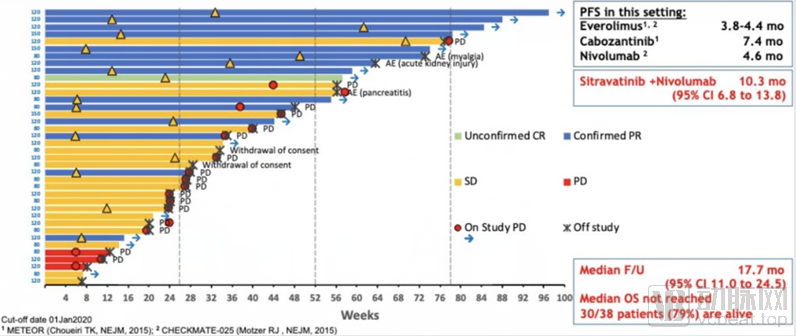 Data source: Mirati
Debiopharm Announces FDA Grants Breakthrough Therapy Designation to Debio 1143 for First-Line Treatment of Unresectable Locally Advanced Squamous Cell Carcinoma of the Head and Neck
Debiopharm Announces FDA Grants Breakthrough Therapy Designation to Debio 1143 in Combination with Standard of Care for First-Line Treatment of Unresectable Locally Advanced Squamous Cell Carcinoma of the Head and Neck
Debio 1143 is an antagonist of inhibitor of apoptosis proteins (IAPs) that sensitizes tumor cells to chemoradiotherapy (CRT) by promoting apoptosis and enhancing anti-tumor immune responses.
Phase II Clinical Trial: Comparing Debio 1143 + CRT versus CRT Based on Outcomes at 18 Months and 2 Years
Compared with the control group, patients in the treatment group showed a 21% improvement in local control rate after 18 months of CRT. After 2 years of treatment, the risk of disease progression and death decreased by 63% (p=0.007).
Biohaven Announces FDA Approval of Nurtec ODT, a CGRP Receptor Antagonist, for the Acute Treatment of Migraine in Adults
Biohaven Announces FDA Approval of Nurtec (rimegepant) Orally Disintegrating Tablets (ODT), a CGRP Receptor Antagonist, for the Acute Treatment of Migraine in Adults
Nurtec ODT is an innovative, orally disintegrating tablet formulation of rimegepant. Rimegepant treats the root cause of migraine by blocking the CGRP receptor.
F. Pivotal Phase 3 Clinical Trial and Long-Term Open-Label Safety Study
In the Phase 3 clinical trial, rimegepant met the dual primary endpoints of pain freedom and relief from the most bothersome symptom. Moreover, these effects were achieved with a single dose of rimegepant, with 86% of patients not requiring any additional rescue therapy (such as other analgesics) within 24 hours after treatment.
Esperion Announces FDA Approval of Nexlizet for the Treatment of Adults with Heterozygous Familial Hypercholesterolemia and Atherosclerotic Cardiovascular Disease
Esperion Announces FDA Approval of Nexlizet (bempedoic acid/ezetimibe) for the Treatment of Adult Patients with Heterozygous Familial Hypercholesterolemia (HeFH) and Atherosclerotic Cardiovascular Disease (ASCVD)
Bempedoic acid is an ATP citrate lyase (ACL) inhibitor that reduces cholesterol biosynthesis, thereby lowering LDL-C levels. Ezetimibe inhibits the activity of the cholesterol transporter NPC1L1, reducing gastrointestinal cholesterol absorption and its transport to the liver. This is the first statin-free combination therapy for lowering low-density lipoprotein cholesterol (LDL-C).
Phase III Clinical Trial
Compared with the placebo group, the combination of Nexlizet and statins at the maximum tolerated dose reduced patients' LDL-C levels by 38%. Nexlizet is scheduled to be launched in the United States this July.
GM Biopharmaceuticals Announces Positive Phase 2 Clinical Trial Data for Aldafermin, Its Lead Candidate for the Treatment of NASH Patients
NGM Biopharmaceuticals Announces Positive Preliminary Liver Histology and Biomarker Data from Analysis of Cohort 4 in Phase 2 Clinical Trial of Aldafermin (NGM282), Its Lead Candidate for NASH Patients
Aldafermin is a non-carcinogenic, engineered variant of the human hormone FGF19 that significantly reduces hepatic fat content and improves liver function by targeting multiple pathogenic pathways in NASH.
In a 24-week, randomized, double-blind, placebo-controlled Phase 2 clinical trial, 78 patients with biopsy-confirmed nonalcoholic steatohepatitis (NASH) and moderate to severe (F2–F3) liver fibrosis were enrolled.
In the treatment group, 38% of patients achieved a significant improvement in fibrosis of ≥1 stage without worsening of NASH, compared with only 18% in the placebo group. In the treatment group, 24% of patients met the endpoint of NASH resolution without worsening of fibrosis, compared with only 9% in the placebo group.
Novartis Announces FDA and EMA Acceptance of BLA for Humanized CD20 Antibody Arzerra for the Treatment of Patients with Relapsing Multiple Sclerosis (RMS)
Novartis Announces that the U.S. FDA and the European Medicines Agency (EMA) Have Accepted Its Supplemental Biologics License Application (sBLA) and Marketing Authorization Application (MAA) for Arzerra (ofatumumab, OMB157), a Humanized CD20 Antibody, for the Treatment of Patients with Relapsing Multiple Sclerosis (RMS).
Ofatumumab is a fully humanized CD20 antibody. By binding to CD20 on the surface of B lymphocytes, it eliminates B cells from the bloodstream; these cells play a crucial role in triggering autoimmune responses in patients with multiple sclerosis (MS).
The 30-month ASCLEPIOS trial, involving 1,882 patients with multiple sclerosis (MS), compared the safety and efficacy of ofatumumab versus teriflunomide in adult patients with relapsing multiple sclerosis (RMS).
Compared with the active control group, ofatumumab reduced the annualized relapse rate (ARR) in patients with multiple sclerosis (MS) by 50.5% and 58.8% in the two trials, respectively. The key secondary endpoint of delaying disease progression was also met; compared with the active control group, the risk of confirmed disability progression (CDP) at 3 months was reduced by 34.4%, and the reduction at 6 months was 32.5%.
Takeda Announces FDA Acceptance of NDA for Alunbrig as First-Line Treatment for ALK-Positive Non-Small Cell Lung Cancer
Takeda announced that the FDA has accepted the company’s New Drug Application (NDA) for Alunbrig (brigatinib) and granted it Priority Review designation. This application seeks to expand the indication of Alunbrig as a first-line therapy for the treatment of ALK-positive non-small cell lung cancer (NSCLC).
Alunbrig is a next-generation tyrosine kinase inhibitor (TKI) developed by Takeda, designed to selectively target and inhibit ALK fusion proteins.
In the Phase 3 ALTA-1L clinical trial, 275 patients with ALK-positive advanced or metastatic non-small cell lung cancer (NSCLC) were treated with Alunbrig or crizotinib. These patients had not previously received treatment with an ALK inhibitor.
According to the investigators’ assessment, the progression-free survival (PFS) for patients in the Alunbrig group was 29.4 months, compared with 9.2 months in the active control group. Among patients with brain metastases, the PFS was 24 months in the Alunbrig group versus 5.6 months in the active control group.
ContraFect Announces FDA Grants Breakthrough Therapy Designation to Exebacase for the Treatment of Bloodstream Infections Caused by MRSA
ContraFect Corporation announced that the U.S. FDA has granted Breakthrough Therapy Designation to exebacase (CE-301) for the treatment of bloodstream infections (bacteremia) caused by methicillin-resistant Staphylococcus aureus (MRSA), including in patients with right-sided endocarditis.
Exebacase, a candidate therapy developed by ContraFect Corporation, is a recombinant lysin (cell wall hydrolase) with potent bactericidal activity against Staphylococcus aureus.
A Phase 2 clinical trial compared the improvement in remission rates between patients receiving exebacase added to the current standard of care (SOC) and those receiving SOC alone.
In the subgroup of patients with MRSA infection, those treated with exebacase had a 42.8% higher clinical response rate on Day 14 than those receiving standard of care (SOC) alone (74.1% vs. 31.3%). Furthermore, exebacase treatment reduced all-cause mortality within 30 days by 21%.
Immutep Announces Positive Interim Results from Phase 2 Clinical Trial of LAG-3 Fusion Protein Eftilagimod Alpha in Combination with Keytruda
Immutep Announces Positive Interim Results from Phase 2 Trial of Its Soluble LAG-3 Fusion Protein Eftilagimod Alpha (efti, Also Known as IMP321) in Combination with Merck & Co.’s Blockbuster PD-1 Inhibitor Keytruda
LAG3 (lymphocyte activation gene 3, LAG3, CD223) is an immune checkpoint receptor protein primarily expressed on activated T cells, NK cells, B cells, plasmacytoid dendritic cells, and conventional dendritic cells.
In the Phase 2 TACTI-002 clinical trial, eftilagimod alpha was combined with the PD-1 inhibitor Keytruda to treat patients with various types of non-small cell lung cancer (NSCLC) and squamous cell carcinoma of the head and neck, regardless of their PD-L1 expression levels.
Trial results showed that among the 17 patients who received treatment, the ORR reached 47%. Moreover, responses were observed across all three categories of patients with different PD-L1 expression levels; among the 8 patients who achieved a response, 5 had PD-L1 expression levels <50%.
Mechanism of Action of LAG-3
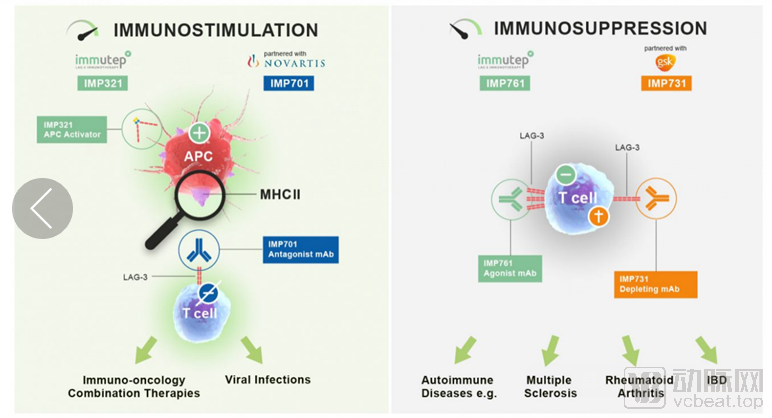
Data source: Immutep
❖Regarding COVID-19, 573 new confirmed cases and 35 new deaths (34 in Hubei Province and 1 in Henan Province) were reported on February 29, along with 132 new suspected cases. Among the new confirmed cases, 570 were in Hubei Province (including 565 in Wuhan). As of February 29, there were 35,329 existing confirmed cases (including 7,365 severe cases), a cumulative total of 41,625 discharged patients after recovery, a cumulative total of 2,870 deaths, and a cumulative total of 79,824 confirmed cases reported.
❖Biogen (Biogen and genomics company Sangamo Therapeutics jointly announced that they have reached a global licensing and collaboration agreement. The partnership will leverage Sangamo’s proprietary zinc finger protein (ZFP) technology and adeno-associated virus (AAV) vectors to modulate the expression of key genes associated with neurological diseases, jointly developing and commercializing the gene regulation therapies ST-501 and ST-502 for the treatment of Alzheimer’s disease and Parkinson’s disease, respectively.
❖Takeda announced that, for approximatelyAcquired PvP Biologics for $330 million. Under the terms of the agreement, PvP Biologics was responsible for the development of TAK-062 (Kuma062), a therapeutic candidate for celiac disease, through Phase 1 clinical validation. Currently, TAK-062 has completed Phase 1 clinical validation, successfully adding a second potential therapy for celiac disease to Takeda’s pipeline.
❖Bicycle Therapeutics Announces Strategic Collaboration with Genentech, a Member of the Roche GroupBicycle Therapeutics has announced a strategic collaboration agreement with Genentech, a member of the Roche Group. Under the terms of the agreement, Bicycle will be responsible for discovery research and early preclinical development up to the nomination of candidate drugs, while Genentech will be responsible for the further development and commercialization of such candidates. Bicycle will receive an upfront payment of $30 million, as well as potential milestone payments totaling up to $1.7 billion.