

Three Independent Imaging Centers Secure Over 100 Million Yuan in Funding Within a Year: Unlocking Value Post-Pandemic

Universal Medical
Healthcare Service Provider

Rimag
Third-Party Chain Medical Imaging Service Provider
At the headquarters of RIMAG, Chao led the procurement team in swiftly stacking the newly counted masks into piles. Compared to the anticipated procurement volume of 100,000 masks, less than one-tenth of that amount was delivered to the center this time. Nevertheless, for non-public medical institutions like RIMAG Imaging, these supplies were exceptionally precious.
Healthcare professionals always have an early awareness of epidemics. As early as January 20, RIMAG recognized the severity of the outbreak and began rapidly mobilizing supplies, but still fell slightly behind in timing.
“At the outset, our procurement volume was substantial, with mask orders starting at 300,000 units and protective suits at 5,000 units. However, as lockdown measures were implemented across various regions and resident demand for masks surged, conventional supply channels became unavailable. During that period, every colleague was seeking mask supplies through their WeChat Moments.”
“The same was true for protective suits. Medical supplies for frontline physicians were even more scarce than ours. We organized several large-scale donations of medical supplies, but when we also joined the front line, we ran short of protective suits. Doctors at the Imaging Center began to improvise, crafting their own protective suits using various methods and materials. No one had anticipated that the epidemic would last so long; no hospital would stockpile such a large reserve of protective equipment.”
Since the outbreak of the pandemic, private healthcare institutions such as RIMAG have found themselves in a somewhat awkward position. Nevertheless, as an integral component of China’s healthcare system, they are actively seeking ways to break through the impasse. As RIMAG is not a designated fever clinic, its self-built, non-affiliated imaging centers, despite having the capacity to accommodate COVID-19 patients, are ineligible for state-subsidized medical supplies. A similar situation has arisen in medical testing: laboratories such as BGI Genomics significantly expanded their testing capacity at the onset of the epidemic, only to end up with substantial underutilization of that capacity.
As the pandemic escalated, China’s rigid demand for the allocation of medical resources increased. In response to emerging gaps, private healthcare institutions fully demonstrated their “combat effectiveness” and “public welfare commitment.” Taking RIMAG as an example, the company leveraged telemedicine through its “Cloud Imaging Platform + AI” model to handle a massive volume of patient image interpretation tasks. Statistics show that RIMAG’s 26 imaging centers in Jiangxi Province assisted designated treatment facilities in confirming 170 cases, accounting for one-quarter of all confirmed cases in Jiangxi Province.
However, they still did not receive adequate logistical support.
As a nascent industry, independent imaging centers have seen significant individual growth during their five years of operation in China. However, this sudden incident has revealed that despite possessing resources and potential, these institutions have failed to fulfill their expected roles. At this emerging stage, how can they build trust with society and the government? VCBeat interviewed several independent imaging organizations, which are currently transforming themselves to establish a foothold in the market.
The development of non-public healthcare is inseparable from policy support, while the rise of independent imaging centers stems from the implementation of tiered diagnosis and treatment. To better address the long-standing challenges of highly concentrated medical resources in China, coupled with a shortage of primary care resources and poor service capacity, the 18th National Congress of the Communist Party of China focused on discussing a series of solutions.
In September 2015, the General Office of the State Council issued the Guiding Opinions on Promoting the Construction of a Tiered Diagnosis and Treatment System, which explicitly proposed “exploring the establishment of independent regional medical laboratory institutions, pathological diagnosis institutions, medical imaging examination institutions, sterile supply institutions, and blood purification institutions to achieve regional resource sharing.” In August 2017, the National Health and Family Planning Commission (now the National Health Commission) added five more categories of independently established medical institutions to the five previously approved types, thereby permitting social capital to invest in independently established medical institutions and operate them through chain and group-based models.
The introduction of two major policies has laid a solid foundation for the development of third-party diagnostic centers. Between 2015 and 2019, a large number of independent imaging centers were established in succession. These included enterprises such as Universal Medical and HeartView International, which primarily targeted high-net-worth clients, as well as centers like Kaipu Imaging and Wanliyun, which focused on self-built facilities. RIMAG adopted a dual strategy combining self-built and co-constructed models. Ping An Health (Diagnostic) Center stood out as an exception; leveraging the backing of Ping An Group, it established an integrated medical service model encompassing medical imaging, clinical laboratory testing, and routine health examinations, while also co-constructing imaging centers with numerous hospitals, setting an ambitious goal of opening 1,000 imaging centers within five years.
Their goals are strikingly similar: to spin off the radiology department from hospitals.
However, during this pandemic, independent imaging centers clearly failed to play their intended role, and tiered diagnosis and treatment effectively disappeared from the epidemic response landscape. Many centers were ordered to shut down shortly after opening, forcing them to provide SaaS services to hospitals via cloud-based imaging platforms in order to alleviate the image interpretation burden at tertiary A-level hospitals.
However, companies not directly involved in the epidemic response have also been striving to allocate resources to the front lines. As of February 21, Universal Medical Imaging Diagnostic donated various types of supplieswith assets valued at over RMB 2 million; Ping An Health (Testing) Center, in collaboration with the headquarters of SRL, a subsidiary of Japan’s MIRACA Group, jointly launched an overseas fundraising campaign for medical epidemic prevention supplies, including urgently needed items such as protective suits, various types of masks, and goggles, and completed the receipt and distribution of these supplies on February 1... Numerous enterprises actively participated in this effort.
Although the role of independent imaging centers in the epidemic prevention and control efforts was limited, this does not negate the inherent value of this model. Over the past six months, several leading independent imaging centers have secured financing, suggesting that the broader market is gradually recognizing the value of the independent imaging center sector.
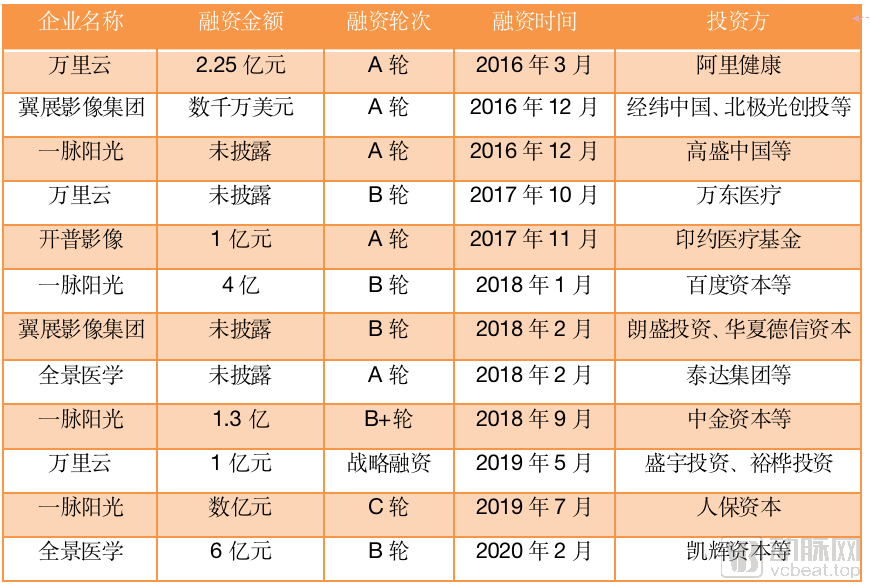
In May 2019, Wandong Medical introduced strategic investment into Wanli Cloud from Shengyu Investment and Yuhua Investment. Following the closing, Wandong Medical’s equity stake in Wanli Cloud decreased from 75% to 55.85%, while Alibaba Health’s stake declined from 25% to 23.28%. In July of the same year, RIMAG (Jiangxi Yimai Yangguang Imaging Hospital Group Co., Ltd.) completed the signing with the lead investor for its Series C financing and finalized the initial closing, with PICC Equity Leading the round. Regarding the use of proceeds, both companies stated that the funds would be utilized to build a “medical imaging service platform” and to advance the digital transformation of independent imaging centers.
On February 10, 2020, Universal Medical, a provider of medical imaging services targeting high-income groups, successfully completed a Series B financing round of RMB 600 million. This marks the largest financing deal in the industry since the rise of independent imaging centers. Universal Medical aims to use these funds to deploy independent imaging centers in more cities.
For companies operating independent imaging centers, financing in the hundreds of millions of yuan is not substantial. Taking Ping An Health (Center) as an example, the construction cost for a single center is approximately RMB 80 million. Therefore, this asset-heavy operational model has, to some extent, raised market entry barriers while also amplifying potential risks for investors. Thus, although capital has flowed into several leading independent imaging centers, the sector can still be characterized as being in a stage of “initial capital allocation and steady corporate development.” However, compared with the initial few years, capital inflows have become much more commonplace.
Data sourced from Tianyancha
Furthermore, financing data indicates that capital continues to flow primarily to a few established players, with few new entrants emerging. For instance, Universal Medical, a later entrant, has expanded into overseas medical services through cooperation with Xin Ying International, rather than establishing independent entities. From this perspective, the market remains a blue ocean.
It is worth noting that after nearly four years of development, the majority of imaging centers remain unprofitable. This situation is likely to persist for some time until these centers achieve economies of scale. To address this issue as quickly as possible, many companies are seeking to transform their business models.
“Independent imaging center” is actually a term imported from abroad.
In the 1980s, the growing aging population led to a substantial increase in demand for hospital radiology departments. Data from *China Hospital CEO Magazine* indicates that in the United States, the demand for diagnostic radiological imaging among individuals aged 65 and older is twice that of those aged 45–64 and three times that of those aged 20–44.
On this basis, several factors have jointly driven the development of the medical imaging industry: clinicians’ growing emphasis on preventive disease screening; adjustments to reimbursement policies for medical imaging applications (particularly the liberalization of clinical use of PET technology); upgrades in imaging technologies enabling more precise diagnoses; and physicians’ increasing reliance on imaging for assessing treatment efficacy. To achieve economies of scale in diagnosis and ultimately reduce imaging examination costs, independent imaging centers emerged in the United States.
Over the past three decades, the U.S. model has gradually matured, with independent imaging centers primarily adopting two approaches: joint-venture imaging centers invested in and built within hospitals through partnerships between independent imaging entities and hospitals (the co-construction model), and independently constructed imaging centers located in densely populated areas (the self-built model). In the first model, hospital imaging services are accounted for separately, targeting mainly inpatients and outpatients; the second model aims to provide comfortable and convenient outpatient imaging services to residents outside the hospital setting.
During the initial three years, the development of China’s independent imaging centers largely replicated the U.S. model. However, the realities in China and the United States are, in fact, vastly different.
One reason stems from differing policy objectives. The United States aims for independent imaging centers to provide more competitive and cost-effective diagnostic imaging services, while China seeks to promote tiered diagnosis and treatment, strengthen regional healthcare capabilities, and alleviate the clinical burden on tertiary hospitals.
The second factor stems from differences in the commercial insurance landscape. In the United States, a mature commercial insurance system incentivizes physicians to conduct more rigorous preventive screenings, enabling early detection of patient conditions to reduce payment costs. In this regard, neither patients nor physicians in China have paid sufficient attention to “prevention,” and the absence of commercial insurance has resulted in a lack of incentives for individuals to undergo self-initiated health checks.
Furthermore, issues such as the shortage of medical imaging professionals and the lack of mutual recognition of imaging standards are also driving China’s independent imaging centers to carve out their own path. In fact, differentiated competition has long been underway; from the current perspective, we can identify four “Chinese models” that differ from those in the United States.
Universal Medical: Leveraging Talent and Equipment as Core Competencies to Navigate the High-Net-Worth Market
Providing equitable medical services to patients is a strength of public hospitals. However, with China’s economic development, some high-income individuals have sought faster and more personalized medical imaging services. Recognizing this gap, Universal Medical has pursued a differentiated development strategy relative to public hospitals, a choice that enabled the company to break even in its first year of operations.
This model imposes high requirements on hospital equipment configuration, site selection for centers, and personalized services. Universal Medical has established medical imaging diagnostic centers in Shanghai, Hangzhou, Guangzhou, Chongqing, Chengdu, Tianjin, and Beijing, with centers under construction in Jinan, Zhengzhou, Wuhan, and Nanjing. By 2020, it will have formed a network of more than 10 central cities across China, equipped with internationally leading medical imaging diagnostic devices such as FLASH dual-source CT and 3.0T MRI. It was also the first to introduce “multi-modal” imaging screening equipment, including PET/MR and PET/CT, in the non-public healthcare sector, providing nuclear medicine imaging services to users.
Currently, Universal Medical Imaging Diagnostic Center’s patient acquisition primarily stems from hospital referrals and commercial insurance recommendations. Following its recent financing round, Universal Medical informed VCBeat that it plans to establish independent imaging centers in key cities such as Wuhan and Xi’an.
RIMAG: Cloud Platform Connects Imaging Centers and Medical Institutions
Among existing startups, RIMAG has the largest number of projects in China, and its imaging centers have carried out the most extensive range of epidemic prevention and control efforts during this outbreak.
Across the industry, RIMAG has been continuously advancing the development of telemedicine and establishing medical imaging centers. As the number of projects increases, RIMAG is leveraging cloud platforms and artificial intelligence to expand the coverage and diagnostic efficiency of individual imaging centers. Furthermore, for its affiliated imaging centers, RIMAG will ensure full integration with medical insurance payment systems.
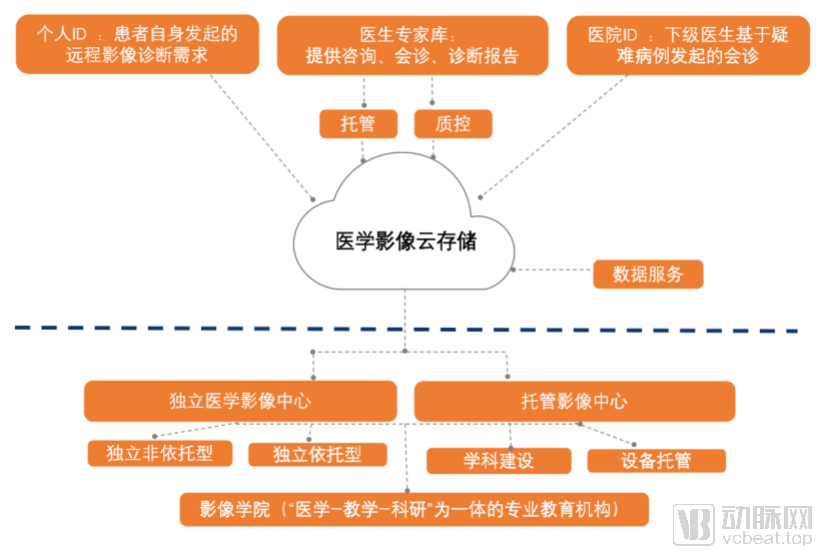
The advantage of the RIMAG model lies in the availability of U.S. experience for reference; however, its operational effectiveness depends to some extent on the level of acceptance of independent imaging centers by regional physicians and patients. In terms of brand communication, Ping An Health (Testing) Center’s substantial investments and promotional efforts may have, to a certain degree, driven industry development.
Wingspan Medical Group: Secures China’s First License for an Internet-Based Imaging Center
When it comes to innovation in the third-party medical imaging model, Wingspan Medical Group stands out as a unique pioneer. In addition to its layout of offline-operated imaging centers within its imaging ecosystem, Wingspan obtained China’s first—and currently only—license for an online internet-based imaging center at the end of 2019, marking the advent of the era of internet hospitals for independent imaging centers.
The Online Imaging Center is inextricably linked to the imaging cloud platform that Wingspan has operated for many years. The key distinction lies in its capacity, as a medical institution, to assume medical liability for diagnostic outcomes. In essence, it functions as an internet hospital specializing in medical imaging diagnosis, marking a transformation from a SaaS provider to a licensed medical institution. Leveraging the separability of medical imaging acquisition and diagnostic processes, the Online Imaging Center enhances the quality of medical services at primary healthcare institutions within the region through the transfer of diagnostic liability.
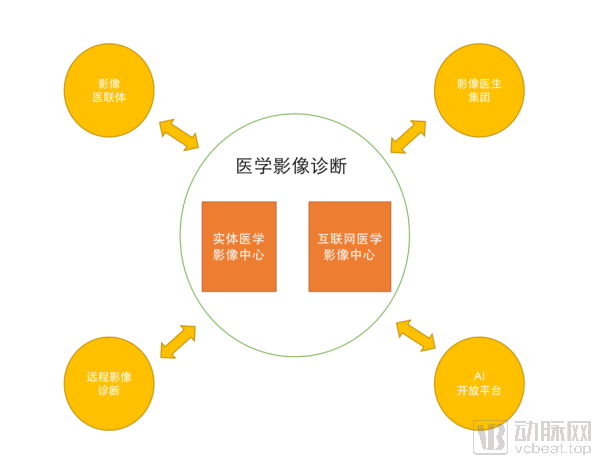
A representative from Wingspan Medical Group stated, “After years of market observation, we have found that China does not entirely lack medical equipment, but rather high-level diagnostic capabilities. Many primary care and secondary healthcare institutions possess imaging equipment but lack experienced radiologists. By leveraging online third-party independent imaging centers, we can fully reactivate existing supply-side capabilities and achieve resource reallocation, which may become a significant growth driver in the future.”
Judging from the current epidemic, remote image interpretation has played a significant role in alleviating the pressure on hospital radiology departments, while the development of internet hospitals has also validated, to some extent, the operational feasibility of internet-based imaging centers. In VCBeat’s view, Wingspan’s existing model of “online internet imaging center + offline independent imaging center” may be a microcosm of the future development of small and medium-sized independent imaging centers.
This also conceals another possibility: many AI companies and internet healthcare enterprises may, in the future, seek to partner with hospitals to apply for licenses to establish Internet Medical Imaging Centers, thereby providing remote image interpretation services to patients.
Ping An Health (Testing) Center: A Trinity of Laboratory Testing, Diagnostic Testing, and Health Checkups
Backed by robust financial strength, Ping An Health (Diagnostic) Centers have expanded at a rapid pace. Within just two years, eight Ping An Health (Diagnostic) Centers have officially opened, and more than 300 co-built imaging centers have commenced operations.
The independent imaging centers under Ping An are not entirely standalone entities; rather, they function as part of the “trinity” model of Ping An Health (Testing) Centers, offering two distinct service tiers tailored to middle- and high-income groups and the general population, respectively.
In the process of brand building, Ping An Health (Diagnostic) Center has adopted a two-pronged strategy. On one hand, it actively establishes collaborations with hospitals at all levels, alleviating the excessive medical demand on tertiary Grade A hospitals while enhancing the service quality of primary-care institutions. On the other hand, it invests in state-of-the-art MR and CT equipment and recruits renowned specialists from tertiary Grade A hospitals, striving to deliver optimal imaging services.
Structurally, Ping An connects all content from the patient side to the payment side. On the patient side, Ping An Good Doctor serves as the portal, providing consultation and triage services, and then directing patients who require examinations to the Ping An Health (Testing) Center. The Testing Center is linked with medical insurance companies and Ping An’s commercial insurance, which not only establishes a rational payment infrastructure but also reduces related insurance costs, making the entire information flow more transparent. In terms of technology, Ping An has its independent health cloud and the Global Medical and Health Research Center for support, enabling services such as imaging diagnosis, medical laboratory testing, precision examinations, consultations with renowned specialists, extended treatment, remote image interpretation, and multidisciplinary team (MDT) consultations.
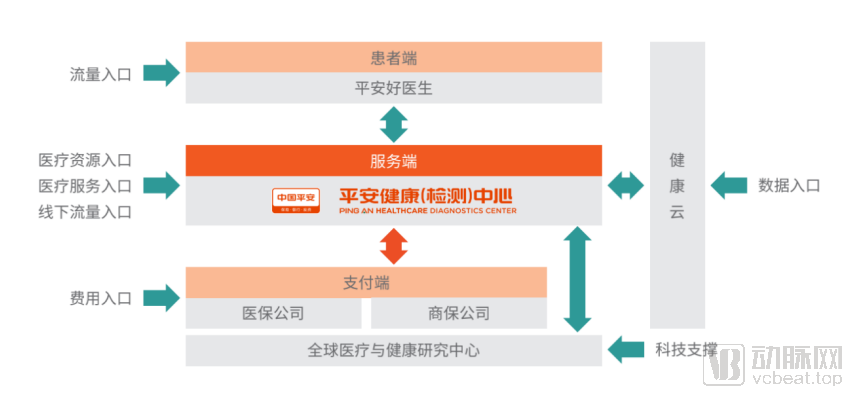
The advantage of the Ping An model lies in its control over the entire process encompassing traffic, data, technology, and services. It provides a stable source of patient acquisition, while the physical centers themselves provide support for the internet-based model. Once the independent medical imaging model matures and offline traffic stabilizes, it can feed back into the internet hospital, transforming Ping An Good Doctor’s long-standing one-way traffic diversion into a two-way closed-loop ecosystem.
However, this model requires robust financial backing and a comprehensive ecosystem for support, with the ecosystem playing a particularly critical role. While enterprises can moderate their expansion pace, maintaining cash flow to sustain future growth during this process necessitates capital to mitigate risks and an ecosystem to ensure steady traffic. Therefore, Ping An’s model is difficult to replicate.
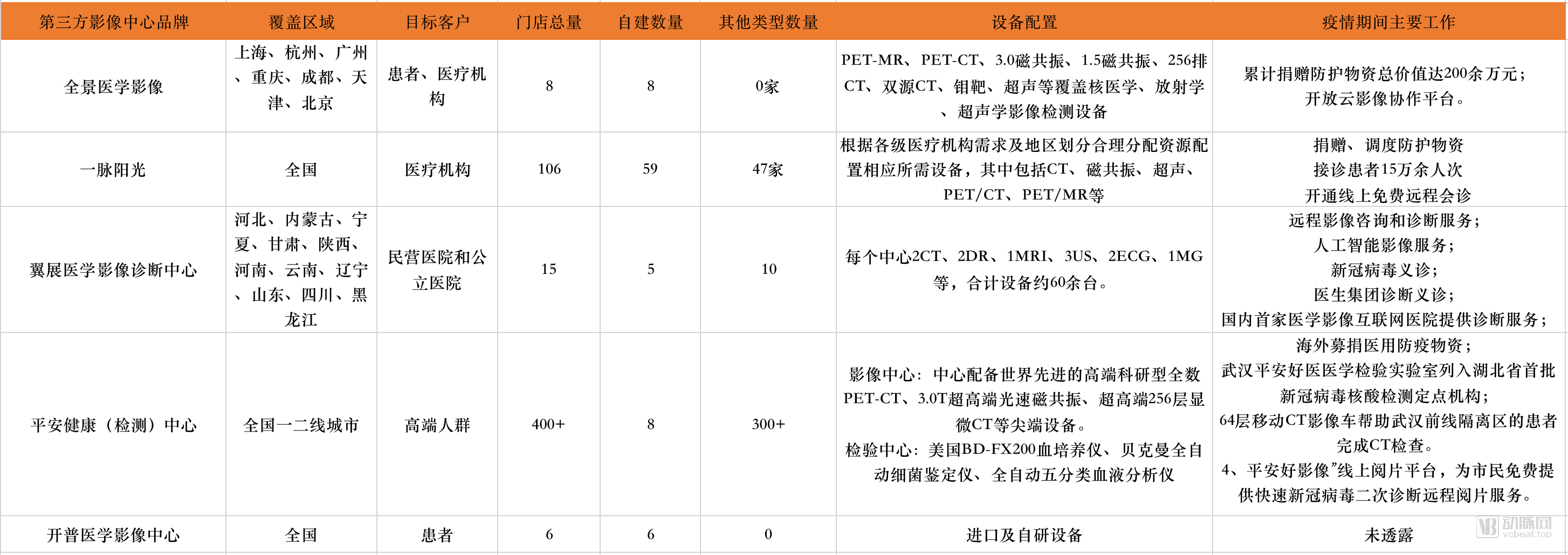
Current Status of Some Third-Party Imaging Centers
Although the independent imaging center model has undergone innovation, have all its underlying issues truly been resolved?
Independent imaging centers have long grappled with challenges such as difficulty in patient acquisition, scarcity of high-caliber radiologists, hurdles in the mutual recognition of imaging results, and the absence of structured talent development programs. While a shift in business model can address the first issue, the remaining challenges require gradual resolution through refined management practices and the establishment of standardized protocols.
“The application scenarios for medical imaging have become more extensive. In addition to traditional diagnostic services, some medical aesthetic institutions now recommend that customers undergo CT scans before receiving related treatments to mitigate health risks,” Wang Shihe of RIMAG told VCBeat. “These new clients are becoming one of our key customer segments. Furthermore, high-net-worth clients referred by the banking and insurance industries are accounting for an increasingly significant proportion of our revenue.”
Collaboration with insurance companies has been one of the primary drivers behind the growth of third-party independent imaging centers over the past two years, with each center engaging in varying degrees of partnership with insurers. Furthermore, taking Ping An Health (Testing) Center as an example, Ping An Good Doctor, a subsidiary of Ping An Group, facilitates patient referrals through its internet hospital platform.
Regarding the issue of physician resources, Wang Shihe stated, “First, we must acknowledge the current shortage of talent in non-public healthcare institutions. Cultivating such talent is a long-term strategic endeavor that cannot be accomplished overnight. Therefore, RIMAG leverages artificial intelligence and remote consultation platforms to train talent in batches through a mentorship model where experienced professionals guide newcomers.”
On this basis, we need to further strengthen the development of talent pipelines. Many healthcare professionals holding intermediate titles are reluctant to leave public hospitals due to the lack of well-structured promotion mechanisms outside these institutions. However, this situation has significantly improved in the current stage; for instance, Guangzhou has relaxed its professional title evaluation policies for private medical institutions.
Professor Wang Quanshi, Chief Medical Officer of Nuclear Medicine at Ping An Health (Testing) Center, stated, “Under current regulations, physicians in private hospitals are still required to submit academic papers and research projects for professional title evaluation. To address this, Ping An Health (Testing) Center has established a special fund to encourage internal physicians to concurrently engage in medical diagnostics and clinical research, regularly review and discuss diagnostic reports, and enhance disciplinary capabilities. For instance, the Wuhan Ping An Health (Testing) Center focuses on ‘multimodal cardiac imaging assessment’ as its primary research direction, integrating multidisciplinary imaging technologies to provide clients with high-end imaging services ranging from cardiac morphological structure to comprehensive functional analysis.”
Finally, mutual recognition of standards is the cornerstone for the development of independent imaging centers. If public hospitals do not accept the interpretation results from independent imaging centers, patients will inevitably undergo redundant imaging examinations. This is a critical issue that independent imaging centers must address.
Nowadays, Wingspan Medical Group and RIMAG are both collaborating with the Chinese Medical Doctor Association to promote online imaging diagnosis standards, but neither party has disclosed specific progress.
As enterprises have stated, hospitals are continuously subdividing their business operations, and an increasing number of companies with comparative advantages in resources are driving medical services toward greater specialization. However, without sufficient policy support, how should capital-intensive private healthcare providers in these specialized sectors develop? How can they mitigate risks?
From the perspective of shareholding in self-built independent imaging centers, many Grade A tertiary hospitals hold stakes behind these centers, which seems to be a reassuring factor. However, all parties are still experimenting with how to move from losses to profitability.
Secondly, the current outbreak has also revealed that neither government entities (G-end) nor consumers (C-end) have yet placed sufficient trust in imaging centers. Only when these groups place their trust in imaging centers can we say that this model has proven successful in China.
As for the solution to this problem, we may see the answer when more players enter this track.