

Where Did the 100,000 Tons of Pandemic Medical Waste Go? Surge in Medical Waste Industry Presents New Opportunities
Since the outbreak of the COVID-19 pandemic, people across China have actively engaged in the battle against the epidemic. As the final line of defense, medical waste disposal has also drawn significant public attention.
Due to characteristics such as latent and acute infectivity, medical waste poses a hazard several times greater than that of municipal solid waste. Improper disposal and management of medical waste can easily lead to contamination of water bodies, soil, and air, creating new sources for viral transmission and further exacerbating epidemic spread. Therefore, the proper disposal of medical waste is a critical component in safeguarding public health security.
During the epidemic prevention and control period, national regulations required that medical waste in local jurisdictions be cleared on a daily basis, with collections generally occurring every 12 hours and never exceeding a 24-hour interval for collection and disposal. Consequently, personnel involved in the disposal of epidemic-related medical waste became one of the groups closest to sources of infection, second only to frontline healthcare workers.
According to the latest data released by the Ministry of Ecology and Environment, as of February 24, 2020, Wuhan’s medical waste disposal capacity reached 262.8 tons per day, Hubei Province’s capacity reached 648.6 tons per day, and China’s national capacity reached 5,830.8 tons per day. On February 24 alone, a total of 2,719.1 tons of medical waste were collected nationwide, with a cumulative disposal volume of 98,508.1 tons (since January 20).
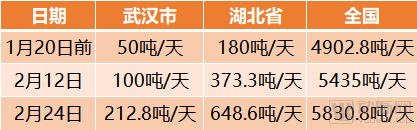
Changes in Medical Waste Disposal Capacity Nationwide and in Wuhan, Hubei Province, Before and After the Outbreak (Data Source: Ministry of Ecology and Environment)
Apart from Hubei Province, the medical waste disposal capacity in other provinces and autonomous regions has also significantly improved compared to pre-outbreak levels, fully meeting the demand for medical waste disposal in each region. Since the outbreak began on January 20, Sichuan Province has disposed of 5,380 tons of medical waste, including 375 tons of pandemic-related medical waste, with a disposal load rate of approximately 50% (as of February 28). Shaanxi Province has disposed of 2,363.47 tons of medical waste, including 283.25 tons of pandemic-related medical waste, with a disposal load rate of approximately 45% (as of February 24).
Nationwide, China has established 481 medical waste disposal facilities. The Ministry of Ecology and Environment conducts daily monitoring of these facilities, issues supervisory warnings to 54 cities operating under excessive or high loads, and holds “one-on-one” video consultations with 13 cities in Hubei Province to implement emergency response measures.
As the COVID-19 pandemic continues to escalate, the volume of medical waste generated by frontline healthcare workers—such as used syringes and masks—has surged significantly on a daily basis. In the face of this mounting challenge, how can China unite nationwide to win the battle against medical waste?
The government plays an indispensable role in ensuring that medical waste is actively, effectively, and properly managed during the COVID-19 pandemic.
As early as 2003, China promulgated the Measures for the Management of Medical Waste in Medical and Health Institutions. However, due to the relatively small volume of medical waste generated at that time, the industry long suffered from insufficient attention. Nevertheless, with the year-on-year increase in annual patient visits in China, the volume of medical waste has been on a steady rise. In March 2019, medical waste disposal was included within the scope of inspections by the central environmental protection authorities, and the ongoing COVID-19 pandemic has further spurred the development of this sector.
On January 20, 2020, in the early stages of the battle against the epidemic, the Ministry of Ecology and Environment established a Leading Group for Epidemic Response, responsible for the overall coordination, planning, and deployment of anti-epidemic efforts across China.
To ensure the timely, efficient, and harmless disposal of medical waste across China during the epidemic, the Ministry of Ecology and Environment issued the “Notice on Doing a Good Job in the Environmental Management of Medical Waste Generated from the Novel Coronavirus Pneumonia Epidemic” (hereinafter referred to as the “Notice”) on January 21. This Notice is the first document released by the government concerning the disposal of medical waste related to the COVID-19 epidemic since its outbreak.
“The Notice” requires that medical waste disposal units across all regions prioritize the treatment of medical waste related to the COVID-19 pandemic, and effectively strengthen supervision and management of pollution prevention and control during the collection, transportation, storage, and disposal of medical waste.
To further implement emergency response measures for medical waste during the COVID-19 outbreak, the Ministry of Ecology and Environment issued the Technical Guidelines for Emergency Management and Disposal of Medical Waste Generated from Novel Coronavirus Pneumonia (Trial) (hereinafter referred to as the “Technical Guidelines”) on January 28, 2020. These guidelines standardize the management and technical requirements for the emergency disposal of medical waste associated with the COVID-19 pandemic, and a detailed interpretation will be provided later in this text.
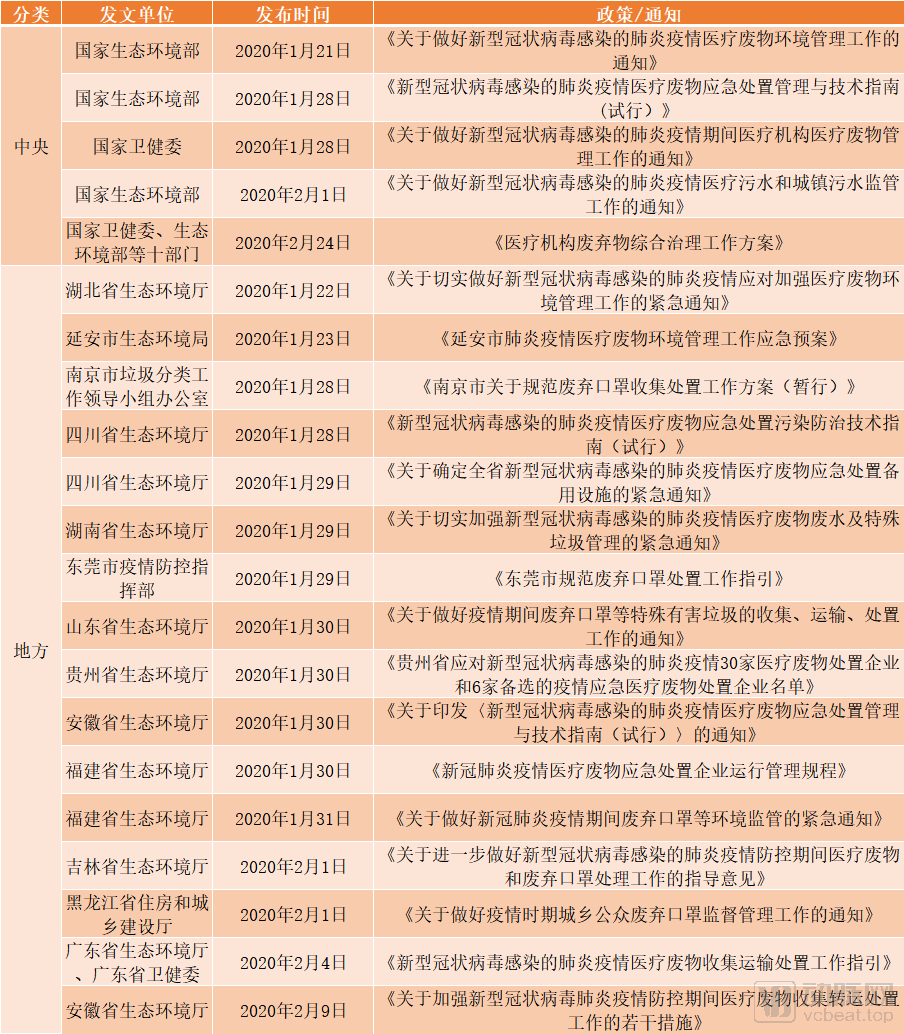
Review of Policies/Notices on Medical Waste Disposal Issued by Central and Local Provincial/Municipal Governments After the Outbreak (Excerpt)
Following the issuance of documents related to the COVID-19 pandemic by central government agencies, including the Ministry of Ecology and Environment and the National Health Commission, local governments promptly followed suit. Notably, Hubei Province, a hard-hit area, took the lead on January 22, 2020, by issuing the “Urgent Notice on Effectively Responding to the Novel Coronavirus Pneumonia Epidemic and Strengthening Environmental Management of Medical Waste.” This notice mandated enhanced safety precautions and coordinated efforts for key healthcare institutions, medical waste transportation processes, and centralized disposal facilities.
The Hubei Provincial Department of Ecology and Environment was also the first local government to issue a notice on the disposal of medical waste generated during the COVID-19 pandemic. Subsequently, multiple other regions, including Shaanxi, Jiangsu, and Sichuan, issued specific notices or regulations on the disposal of medical waste related to the COVID-19 pandemic in accordance with the directives from central government documents.
Medical waste, abbreviated as “med-waste,” is defined in Article 2 of the Regulations on the Management of Medical Waste promulgated by the State Council in 2003 as “waste generated by healthcare institutions during medical, preventive, health care, and other related activities that possesses direct or indirect infectiousness, toxicity, and other hazardous properties.”
In the "Classified Catalogue of Medical Waste" issued in 2003 by the former Ministry of Health and the former State Environmental Protection Administration, medical waste was categorized into five major types: infectious waste, pathological waste, sharps waste, pharmaceutical waste, and chemical waste. The medical waste generated during the current COVID-19 pandemic is classified as infectious medical waste. According to the "National Hazardous Waste List" (2016 Edition), its waste category is HW01 (Medical Waste), with the waste code 831-001-01.
Medical waste disposal refers to the entire process by which professionals collect, temporarily store, transport, and treat medical waste. Currently, the best available technologies for medical waste disposal in China are categorized into two main types: incineration and non-incineration technologies. Incineration technologies primarily include pyrolysis incineration and rotary kiln incineration; non-incineration technologies mainly encompass high-temperature steam treatment, chemical treatment, and microwave treatment.
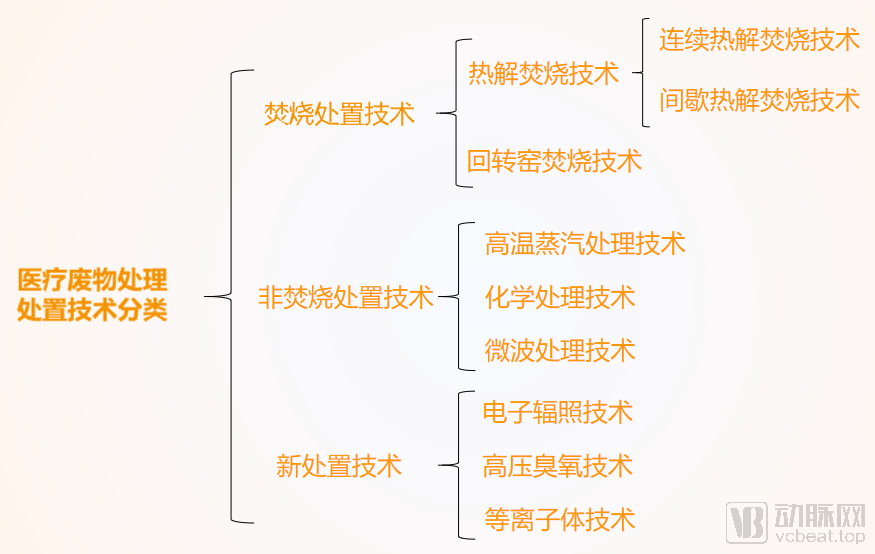
Classification of Several Disposal Technologies for Medical Waste Treatment (Data Source: Ministry of Ecology and Environment of the People's Republic of China)
Due to the high combustible content of medical waste, high-temperature incineration is currently the mainstream disposal technology for medical waste treatment.
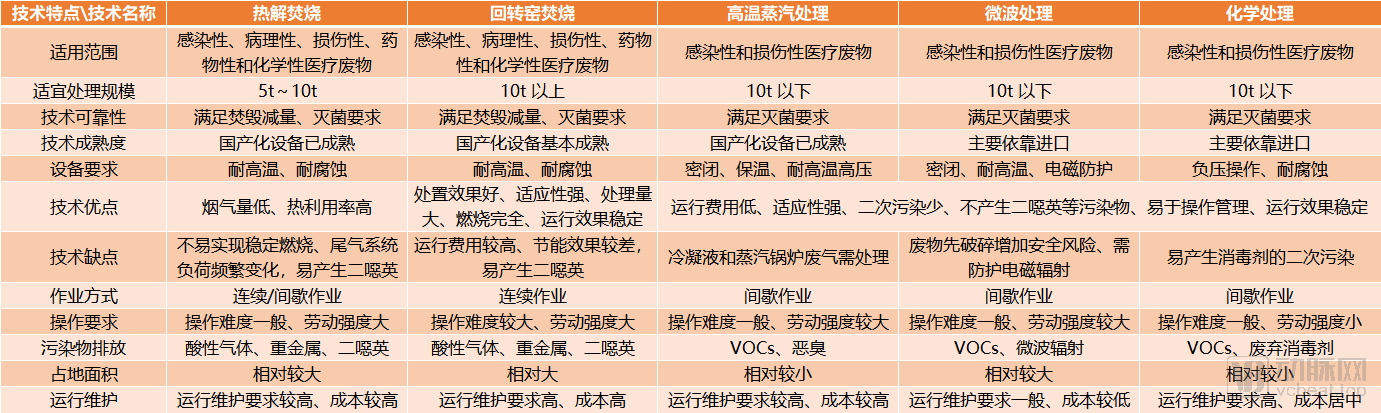
Comparison of Medical Waste Disposal Technologies (Data Source: Ministry of Ecology and Environment)
The Technical Guidelines issued by the Ministry of Ecology and Environment outline emergency response technical pathways for medical waste generated during the COVID-19 pandemic. Provided that disposal efficacy is ensured, localities may adopt site-specific approaches, utilizing mobile medical waste treatment facilities, hazardous waste incinerators, municipal solid waste incinerators, industrial kilns, and other facilities for the emergency treatment of pandemic-related medical waste under designated management protocols. Alternatively, in accordance with cross-regional collaborative mechanisms for emergency response, pandemic-related medical waste may be transported to centralized medical waste treatment facilities in neighboring areas for disposal.
Regarding the disposal of medical waste generated during the COVID-19 pandemic, most regions have adopted high-temperature incineration as the primary method, which ensures both safety and efficiency.
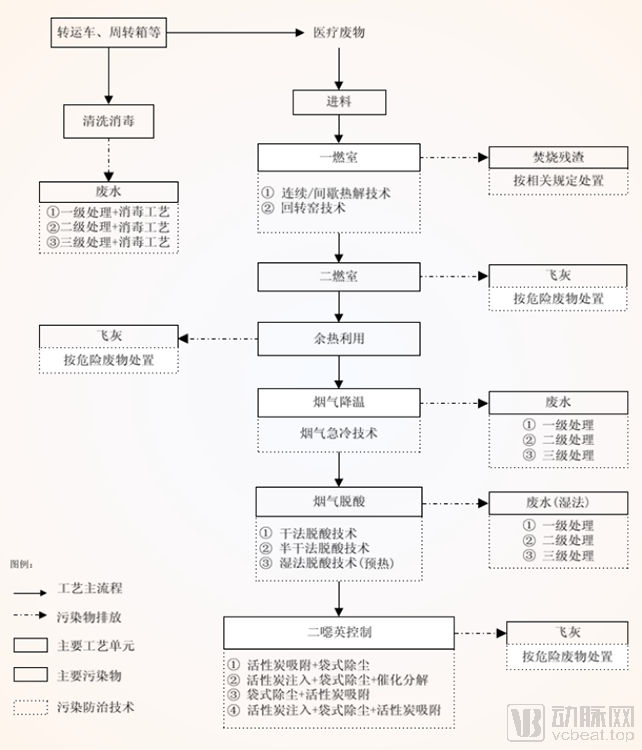
Process Flow for Incineration and Disposal of Medical Waste (Data Source: Ministry of Ecology and Environment of the People's Republic of China)
What specific upgrades were implemented for medical waste disposal at Huoshenshan and Leishenshan Hospitals? Overall, there are four key aspects to medical waste management at Huoshenshan Hospital:
1. When receiving medical waste into the storage room, attention should be paid to whether the packaging meets the standards and whether the classification of medical waste complies with the standards;
II. During the transportation of medical waste to the incinerator, primary attention should be paid to preventing leakage and spillage;
III. The incineration of medical waste must be strictly conducted in accordance with national unified standards, with particular attention paid to whether the incineration temperature and other existing indicators meet relevant requirements and standards;
IV. When disinfecting used medical waste and trash bins, ensure that the disinfectant is sprayed comprehensively. The site is equipped with both chemical disinfectant spraying and ultraviolet (UV) lamp disinfection, which can be performed simultaneously.
In the Technical Guidelines, the state also provides key points on emergency disposal technologies for medical waste during the COVID-19 pandemic:
First, regarding the collection and temporary storage of medical waste generated during the pandemic, infectious medical waste produced in the prevention and control of COVID-19 must be strictly packaged in accordance with the Standard for Special Packaging Bags, Containers, and Warning Signs for Medical Waste. It should be placed in designated transfer bins (boxes) or disposable special packaging containers, with the surface of the packaging printed or affixed with a red “Infectious Waste” label, among other markings. The temporary storage sites shall implement dedicated storage areas and assigned personnel management, with a maximum storage time not exceeding 24 hours.
Secondly, for the transportation of medical waste generated during the epidemic, dedicated medical waste transport vehicles must be used. Transport routes should, as much as possible, avoid densely populated areas, and transport times should avoid peak commuting hours. Such waste must not be mixed or co-transported with other medical waste, and detailed ledgers must be maintained. Medical waste shall be transported to disposal facilities within no more than 48 hours. After each unloading, transport vehicles must be disinfected according to the methods and frequency required by the health authorities.
Subsequently, regarding the disposal of medical waste generated during the epidemic, medical waste disposal entities shall prioritize the collection and treatment of infectious medical waste produced in the prevention and control of COVID-19. Medical waste arriving at disposal facilities should be processed immediately upon arrival whenever possible, with temporary storage time at the disposal facility not exceeding 12 hours. The medical waste isolation area at the disposal facility must have dedicated isolation signage and be managed by designated personnel. Walls, floors, and object surfaces shall be disinfected by spraying or mopping in accordance with the methods and frequency required by the health administrative authorities.
Finally, regarding the requirements for emergency disposal facilities for medical waste generated during epidemics, it is necessary to designate specific areas for unloading and reception, as well as for cleaning and disinfection. Essential measures for rain protection, leak prevention, and spill containment must be implemented. Dedicated traffic routes shall be planned for medical waste transport vehicles, with assigned personnel responsible for management. Warning signs and access control measures shall be established at the reception site. Feeding should preferably be carried out using specialized conveying and loading equipment to prevent secondary cross-contamination resulting from contact between medical waste and other incinerable materials. Proper co-incineration ratios of medical waste and other incinerable materials shall be maintained to ensure stable and controllable operation of process equipment.
Furthermore, the Ministry of Ecology and Environment recommends that, in areas with appropriate conditions, frontline personnel involved in the collection, storage, transportation, and disposal of medical waste should be arranged to reside in centralized accommodations.
Medical waste is classified as hazardous waste, and a Hazardous Waste Operation Permit is required for its disposal. In China, medical waste disposal facilities holding such permits fall into two categories: those dedicated solely to medical waste disposal, and those capable of disposing of both hazardous waste and medical waste.
According to the 2019 Annual Report of the Ministry of Ecology and Environment, by the end of 2018, a total of 3,220 hazardous waste operation permits had been issued by provinces (autonomous regions and municipalities) across China. Among these, 407 permits were designated for the disposal of medical waste (383 for facilities dedicated solely to medical waste disposal, and 24 for facilities handling both hazardous waste and medical waste).
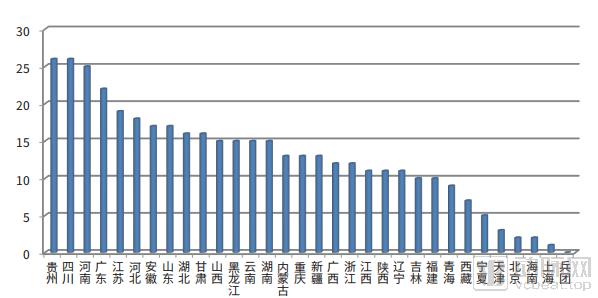
Number of Medical Waste Operation Permits Issued by Each Province (Autonomous Region, and Municipality) in 2018 Unit: Permit (Data Source: Ministry of Ecology and Environment of the People's Republic of China)
Among these 407 medical waste operation permits, Guizhou, Sichuan, and Henan provinces issued the highest number of permits, with 26 in Guizhou Province, 26 in Sichuan Province, and 25 in Henan Province.
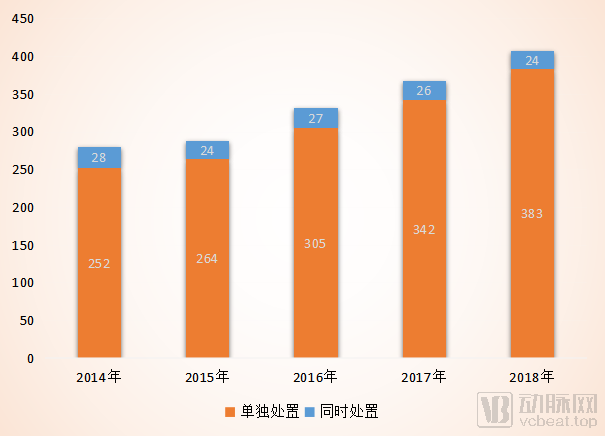
Number of Medical Waste Permits Issued Annually from 2014 to 2018 Unit: Number (Source: Ministry of Ecology and Environment)
Compared with previous years, the number of hazardous waste operation permits issued has been increasing year by year, and the state’s emphasis on medical waste disposal has continued to strengthen. However, the growth in permits for facilities capable of treating both hazardous waste and medical waste has not been significant; the annual number of such permits issued has generally remained below 30. This indicates that the technical requirements for obtaining these permits are relatively high.
Amid the nationwide concerted efforts to combat the COVID-19 pandemic, third-party environmental protection companies in China have also actively joined the frontline battle against medical waste. VCBeat has compiled a brief overview of the third-party environmental firms involved in medical waste management during the COVID-19 outbreak, based on publicly available information, and provided concise introductions to these companies.
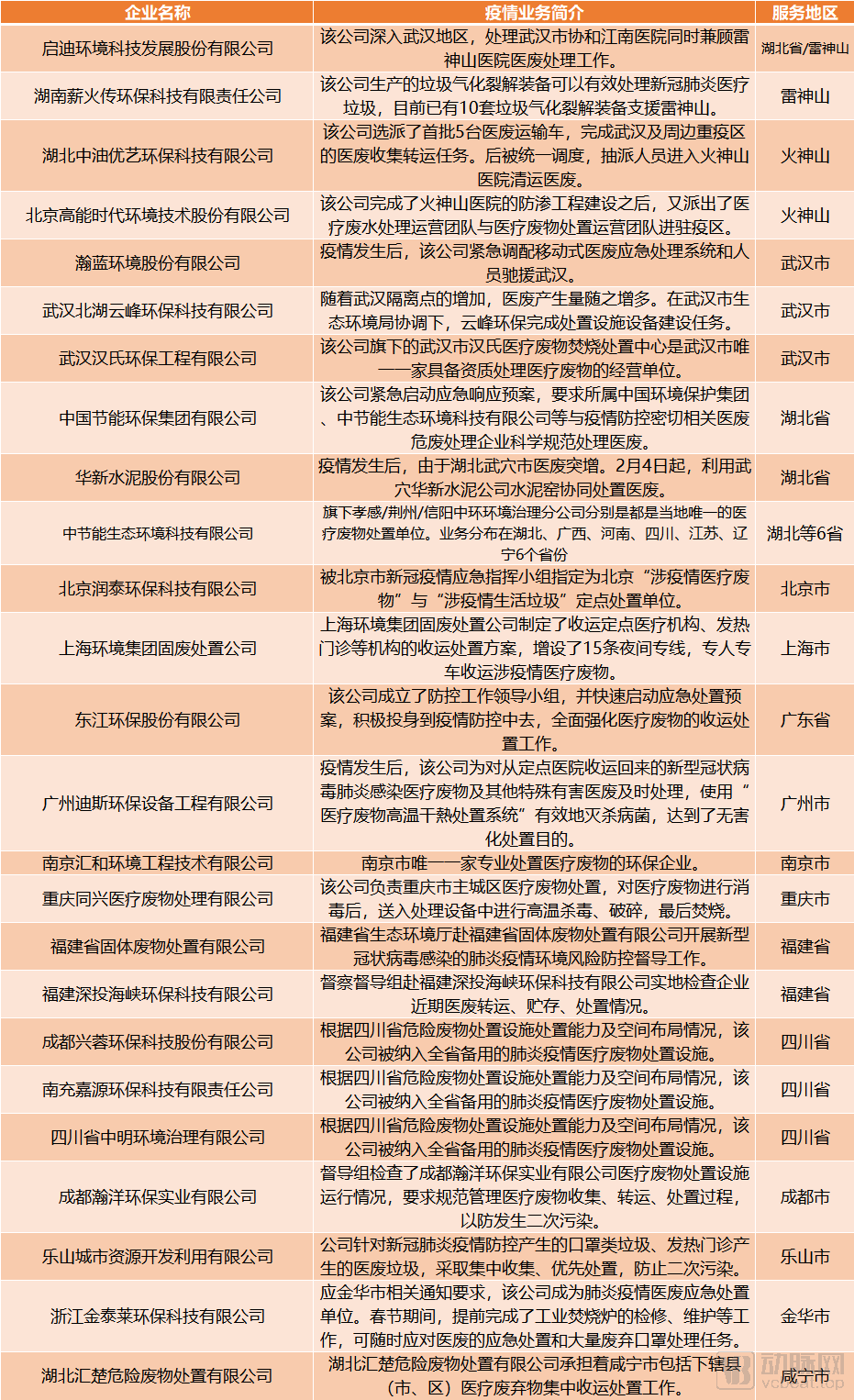
Third-Party Environmental Protection Companies Involved in Medical Waste Disposal During the COVID-19 Pandemic Control Period (Excerpt)
Here is a brief introduction to several third-party environmental protection companies that rushed to the front lines in Wuhan.
Tus Environment
Tus-Holdings Environmental Technology Development Co., Ltd. (000826), abbreviated as “Tus Environment,” possesses a relatively complete industrial chain for solid waste disposal, covering areas such as waste incineration, composting, landfilling, anaerobic digestion of kitchen waste, municipal sludge, hazardous waste, medical waste, construction waste, agricultural organic waste, and leachate treatment.
Currently, Tus Environment primarily conducts its medical waste treatment operations through several wholly-owned subsidiaries. It has established hazardous waste (including medical hazardous waste) disposal projects in Hubei, Inner Mongolia, Guangxi, and other regions, with a medical hazardous waste treatment capacity of 20 tons per day.
During the pandemic, Yichang Sound Environmental Sanitation Co., Ltd., a wholly-owned subsidiary of Tus Environment, installed hundreds of dedicated collection bins for discarded masks and deployed professional cleaning and disinfection vehicles to sort, collect, and transport used masks and household protective waste within epidemic areas. Another wholly-owned subsidiary, Yichang Sound Environmental Protection Technology Co., Ltd., which specializes in the disposal of hazardous and medical waste, operated at full capacity in terms of daily hazardous waste processing volume during the outbreak.
High Energy Environment
Beijing High Energy Environment Technology Co., Ltd. (“High Energy Environment”) is one of China’s earliest national high-tech enterprises specializing in the research, technological commercialization, and provision of systematic solutions for solid waste pollution prevention and control. Established in 1992, the company was listed on the Main Board of the A-share market (Stock Code: 603588) in 2014, with total assets approaching RMB 10 billion.
During the pandemic control period, eight branches and subsidiaries of GaoNeng Environment participated in the medical waste treatment at Huoshenshan Hospital. These entities primarily operate in the disposal of medical and hazardous waste, and their personnel possess mature professional technologies for the harmless treatment of medical waste along with years of practical experience.
In addition to participating in the operation of medical waste disposal at Huoshenshan Hospital, High Energy Environment also engaged in local epidemic prevention and control efforts in Guilin, Hezhou, and Yueyang by collecting, transporting, and disposing of medical waste generated by designated local hospitals, thereby achieving immediate clearance of both medical waste and household garbage upon generation to minimize viral proliferation and transmission.
PetroChina Environmental Protection
Hubei Zhongyou Youyi Environmental Protection Technology Co., Ltd. (hereinafter referred to as “Zhongyou Environmental”) has been acquired by Runbang Shares, which holds a 21.16% equity stake.
Zhongyou Environmental Protection has 12 subsidiaries, including three engaged in hazardous waste disposal, four in medical waste disposal, three in both hazardous and medical waste disposal, one in road transport of dangerous goods, and one in the research, design, and manufacturing of environmental protection equipment.
During the pandemic, CNPC Environmental Protection dispatched an initial fleet of five medical waste transport vehicles as a support unit. Equipped with their own protective gear and supplies, they assisted Wuhan in the emergency collection and transportation of medical waste, successfully completing the task of collecting and transporting medical waste in Wuhan and surrounding heavily affected areas.
In addition, under the unified deployment of the Hubei Provincial Epidemic Prevention and Control Command Headquarters, CNPC Environmental Protection has dispatched personnel to Huoshenshan Hospital for medical waste cleanup.
Xin Huo Chuan Environmental Protection
Hunan Xinhuochuan Environmental Protection Technology Co., Ltd. (hereinafter referred to as “Xinhuochuan Environmental”) has developed a waste gasification and pyrolysis system capable of directly processing wet medical and general waste without prior drying. The entire process is free of smoke, odor, and wastewater discharge. The system can process 20 medical waste containers (240 liters each) in a single batch, with a daily treatment capacity of 6 tons of medical waste, equivalent to the output of Leishenshan Hospital.
Since the outbreak of the pandemic, Xinhaochuan Environmental Protection has successively transported three batches, totaling 10 sets of medical waste gasification and pyrolysis equipment, from Hunan to donate to Hubei’s frontline.
Han's Environmental Protection
Wuhan Hanshi Environmental Protection Engineering Co., Ltd. (hereinafter referred to as “Hanshi Environmental Protection”) operates the Wuhan Hanshi Medical Waste Incineration and Disposal Center, which is the only qualified entity in Wuhan authorized to handle medical waste. The center is specifically responsible for the collection, storage, and disposal of medical waste in Wuhan. The company employs pyrolysis gasification incineration technology for medical waste treatment, with an annual processing capacity of 18,000 tons and a daily disposal capacity of 50 tons. Under normal circumstances, the facility operates essentially at full load.
During the COVID-19 pandemic control period, the daily volume of medical waste generated by major hospitals in Wuhan far exceeded normal levels. Given the high infectivity of pandemic-related medical waste, which requires prompt disposal on the same day, the Wuhan Hanshi Medical Waste Incineration and Disposal Center was unable to handle the increased volume. Consequently, the newly generated medical waste is now being centrally processed by local hazardous waste disposal enterprises in Wuhan.
Grandblue Environment
Grandblue Environment Co., Ltd. (“Grandblue Environment”) is a publicly listed company (stock code: 600323) specializing in the environmental services industry. Its business scope covers water supply, wastewater treatment, solid waste management, and energy services. The company operates nine eco-industrial parks for solid waste treatment, 14 municipal sanitation and cleaning projects, 23 municipal solid waste incineration power generation projects, three landfill projects, three waste compaction and transfer projects, seven kitchen waste treatment projects, four sludge treatment projects, three hazardous waste treatment projects, and four agricultural waste treatment projects.
Since the outbreak of the COVID-19 pandemic, project companies under Grandblue Environment’s solid waste treatment, water supply, natural gas supply, and wastewater treatment segments have actively engaged in frontline epidemic prevention and control efforts. Across 43 cities in 13 provinces, including Guangdong, Jiangxi, Shandong, and Hubei, these entities promptly established emergency command teams in accordance with local government guidelines and the company’s overall deployment. They implemented preventive measures, strengthened operational protocols, and fully committed to the critical battle against the epidemic.
Yunfeng Environmental Protection
Wuhan Beihu Yunfeng Environmental Protection Technology Co., Ltd. (“Yunfeng Environmental”) is a comprehensive environmental service enterprise specializing in the resource utilization of industrial waste, located in the Circular Economy Industrial Park, Qingshan District, Wuhan City, Hubei Province. Jointly invested by Wugang Beihu Economic Development Company and a well-known domestic listed company, the company has a total investment of RMB 200 million. Upon completion, it will have an annual capacity to utilize 60,000 tons of various resources, generating an output value of RMB 300 million. As a key supplier of essential environmental infrastructure in Wuhan, Hubei Province, the company is also among those receiving priority support from the Chinese government.
Following the outbreak of the COVID-19 pandemic, and under the coordination of the Wuhan Municipal Ecology and Environment Bureau, the company immediately initiated a transformation of its medical waste disposal operations and implemented process improvements to continuously enhance its disposal capacity. From the arrival of the first batch of medical waste at the facility until February 18, Yunfeng Environmental Protection disposed of nearly 200 metric tons of medical waste for the entire city over a period of 26 days.
Recently, the company trended on Weibo for its daily processing capacity of 400 barrels of medical waste, raising public awareness of third-party environmental protection firms that have been quietly contributing on the front lines of the fight against the epidemic.
On the morning of February 13, 2020, at the 19th press conference on epidemic prevention and control held by the Information Office of the Guangdong Provincial People's Government, Zhao Jincun, Deputy Director of a State Key Laboratory, announced that his team had isolated a strain of the novel coronavirus (2019-nCoV) from a fecal swab specimen collected from a patient with severe novel coronavirus pneumonia.
Upon the release of this news, the stock market was the first to respond. The medical waste treatment sector surged in the afternoon, closing with the highest gain among all sectors. Individual stocks, such as Qiaoyin Environmental Protection and Runbang Shares, nearly hit their daily price limits.
The impact of the COVID-19 epidemic on the medical waste treatment industry is clearly reflected in the performance of related stocks: as of the market close on March 4, the medical waste treatment sector led gains, with Yuhetian surging 10%, Qiaoyin Environmental rising more than 6%, and other stocks including Gaoneng Environment, Green Power, Xingyuan Environment, and Jiangnan Water following suit.
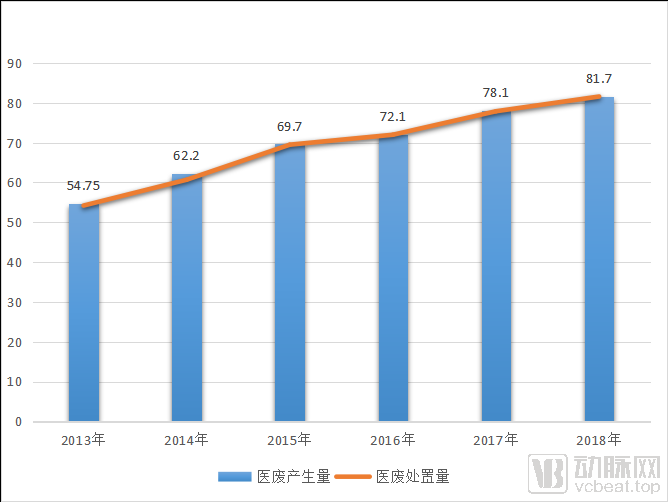
2013–2018 Medical Waste Generation and Treatment Volume in China Unit: 10,000 tons (Data source: Ministry of Ecology and Environment)
According to data from the Annual Report on the Prevention and Control of Environmental Pollution by Solid Waste in Large and Medium-Sized Cities, released by China’s Ministry of Ecology and Environment between 2014 and 2019, the volume of medical waste generated in China has been steadily increasing. The disposal capacity for medical waste has risen correspondingly, basically maintaining a 100% treatment rate. The volume of medical waste generated increased from 547,500 tons in 2013 to 817,000 tons in 2018, representing an average annual growth rate of approximately 9.8%.
From 2013 to 2018, Guangdong ranked first in medical waste generation four times, and Zhejiang twice, contributing the most to the total volume of medical waste generated. However, due to the impact of the COVID-19 pandemic, both the generation and disposal volumes of medical waste are expected to surge significantly in 2019 and 2020, with an estimated increase of over 25%. Consequently, Hebei Province is projected to become the largest contributor to medical waste generation and disposal.
The outbreak of the COVID-19 pandemic has driven short-term growth in the medical waste treatment industry. For instance, Dongjiang Environmental’s hazardous waste treatment and disposal capacity in Hubei Province is approximately 60 tons per day, while the average daily volume of medical waste processed at its hazardous waste disposal bases in Jiangsu and Zhejiang provinces has increased by 30% to 40%.
According to Everbright Securities’ research report, the surge in emergency demand for medical waste disposal during the pandemic is short-term. Once the industry returns to normal, the annual market size for medical waste disposal is estimated at RMB 4–4.5 billion, indicating relatively limited market potential. However, post-pandemic, standards and requirements for medical waste disposal are likely to be further tightened.
However, for companies engaged in hazardous waste management, if their business is predominantly focused on industrial hazardous waste treatment, the impact of the COVID-19 pandemic—specifically the difficulties faced by factories in resuming operations—will likely lead to the suspension of their industrial hazardous waste treatment activities, potentially resulting in a decline in this year’s performance. In contrast, hazardous waste management companies whose primary business is medical waste treatment stand to benefit from the current situation.
“The epidemic is a command, and prevention and control are our responsibility.” This was a familiar slogan during the COVID-19 pandemic. Everyone bears responsibility for epidemic prevention and control, from the “angels in white” dedicating themselves on the front lines to ordinary citizens isolating themselves at home. In this global battle against the epidemic, we would like to conclude with the words of Mr. Li, a volunteer involved in frontline medical waste disposal: “We only hope that the roaring flames of this pyrolysis incinerator, with its light and heat, will carry away the plague, restore health to the people, and revive all industries!”