

Medlinker Chengdu Model: Pioneering Internet-Based Medical Consultations with Integrated Health Insurance Reimbursement Amid the Pandemic

Medlinker
Chronic Disease Management Platform Provider
French author Albert Camus once wrote in The Plague: “The epidemic forced residents to share a common plight and become interdependent, yet it severed their traditional ties, plunging each individual back into isolation and thereby creating a situation in which everyone felt threatened.” The collective anxiety conveyed by this fictional outbreak that took place half a century ago in the small Albanian town of Oran still resonates with readers today, evoking a sense of empathy.
During the COVID-19 pandemic, concerns about visiting hospitals transformed internet healthcare—long a low-frequency demand—into a high-frequency necessity amid city lockdowns and home quarantine measures. Deviations from normal life routines often foster new habits; thus, even after the pandemic subsides, people may gradually become accustomed to shifting a portion of their offline medical needs online, enjoying the efficiency and convenience offered by internet healthcare.
On February 28, the National Healthcare Security Administration and the National Health Commission jointly issued the “Guiding Opinions on Promoting ‘Internet+’ Healthcare Services During the Prevention and Control of COVID-19,” which proposed including eligible fees for “Internet+” medical services within the scope of medical insurance reimbursement, encouraging designated medical and pharmaceutical institutions to provide contactless medication purchasing services, and facilitating the orderly implementation of “Internet+” medical insurance services.
Coincidentally, on February 28, the Chengdu Municipal Healthcare Security Administration collaborated with enterprises to explore online payments using personal medical insurance accounts. Medlinker’s Chengdu High-Tech Haier Sen Internet Hospital (hereinafter referred to as “Medlinker Internet Hospital”) officially enabled online payment via personal medical insurance accounts for its medical services in the Chengdu area, providing local residents with a full-process internet healthcare service featuring “online consultation and medication purchase, with home-based medical insurance payment.”
Chengdu residents can now use their medical insurance cards to pay for consultations and medication purchases on the Medlinker Internet Hospital, enabling online medical services to be covered by personal medical insurance accounts. The launch and integration of this feature is undoubtedly welcome news for Chengdu residents during the pandemic, meaning they can “consult doctors without leaving home, avoid queues for appointments, purchase medications online, and pay using medical insurance.” This not only reduces the risk of cross-infection associated with visiting hospitals in person but also significantly saves time previously spent queuing for registration, consultations, prescription renewals, and medication purchases at hospitals.
Specifically, residents of Chengdu can follow the “Medlinker Health” official WeChat account and click the “Chronic Disease Medication” button in the bottom menu bar to access the exclusive channel for medical consultations covered by Chengdu’s basic medical insurance. Residents can not only use their medical insurance cards to purchase certain over-the-counter (OTC) drugs on their own, but chronic disease patients can also consult with doctors online. Doctors will issue electronic prescriptions, and patients can pay directly using the personal account funds from their medical insurance cards. The medications are then delivered straight to their homes. What previously required a three-hour hospital visit for Chengdu residents can now be completed in just three minutes via the Medlinker Internet Hospital, significantly improving the efficiency of medical consultations and medication purchases.
On August 30, 2019, the National Healthcare Security Administration issued the “Guiding Opinions on Improving Pricing and Medical Insurance Payment Policies for ‘Internet+’ Medical Services” (hereinafter referred to as the “National Guiding Opinions”), clarifying that eligible “Internet+” medical services shall be covered by medical insurance payment policies in accordance with the principle of fairness between online and offline services, and that agreement management, settlement processes, and relevant indicators shall be improved based on the characteristics of these services.
According to the national “Guiding Opinions,” the establishment of pricing items for “Internet+” medical services shall simultaneously meet the following basic conditions: (1) The service must be permitted by the competent health authorities to be delivered via “Internet+” methods, with clear clinical pathways and well-defined technical specifications; (2) It must provide direct services to patients; (3) The service process must be conducted remotely through the Internet or other media; (4) The service must be capable of achieving the same functions as its offline counterpart; (5) The service must have a substantive effect on the diagnosis and treatment of diseases. It is prohibited to create new items by altering wording, fragmenting the scope of services, adding non-medical steps, or under any other pretexts.
Furthermore, the national “Guiding Opinions” established the principles for formulating internet-based medical service items, pricing, and health insurance reimbursement. The pricing of medical service items is primarily managed at the provincial level, under a three-tier management system involving the national, provincial, and municipal authorities.
In accordance with the three-tier management requirements, the National Healthcare Security Administration is responsible for standardizing principles for project initiation, project names, service connotations, pricing units, pricing descriptions, coding rules, and other elements; provincial-level healthcare security departments are responsible for establishing medical service price items applicable to their respective regions based on the development of medical technologies and local conditions; prefecture-level city healthcare security departments accept applications for fee item initiation, and those meeting the access criteria are submitted to the provincial-level healthcare security departments for centralized review and decision-making;
As of press time, provincial-level healthcare security administrations in Ningxia, Shandong, Henan, Guangdong, Sichuan, Shaanxi, Tianjin, and other regions have formulated and issued implementation guidelines for the national “Guiding Opinions.” Among them, Fujian, Sichuan, Liaoning, Guangxi, and Shanxi (for public comment) have specified the first batch of “Internet+” medical service items and trial prices. Services such as online follow-up consultations, remote consultations, and remote pathology have been included in the clearly defined “Internet+” medical service items across various regions.
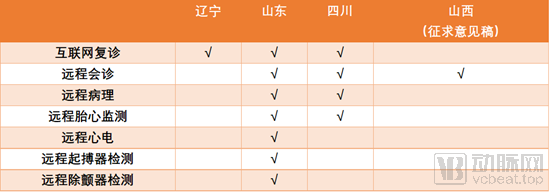
On December 12, 2019, the Sichuan Provincial Healthcare Security Administration issued the “Implementation Opinions on Improving the Pricing and Medical Insurance Reimbursement Policies for ‘Internet+’ Medical Services in Our Province.” The day before, the Sichuan Provincial Healthcare Security Administration had released the “Notice on Announcing the Trial Prices and Medical Insurance Reimbursement Policies for the First Batch of ‘Internet+’ Medical Service Items in Sichuan Province” (hereinafter referred to as the “Notice”).
The Notice states that, in accordance with the Implementation Opinions and relevant documents, the Sichuan Provincial Healthcare Security Administration has carried out pricing procedures and conducted demonstrations for inclusion in the basic medical insurance scheme, thereby formulating trial prices and medical insurance payment policies for the first batch of “Internet+” medical service items in Sichuan Province. The first batch comprises four items: online follow-up consultations, remote consultations, remote pathological consultations, and remote fetal heart rate monitoring. The notice specifies the content, pricing units, pricing instructions, and medical insurance payment policies for these items. The initial batch of items was implemented on a trial basis for two years starting from January 15, 2020. Upon expiration of the trial period, the provincial healthcare security authorities will announce the official prices based on assessments of service effectiveness, costs, and revenue.
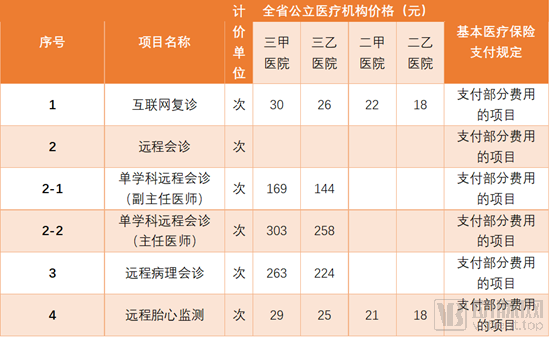
Table of Trial Prices and Medical Insurance Payment Policies for the First Batch of "Internet+" Medical Service Projects in Sichuan Province
Among these, the Notice specifies that the scope of “Internet Follow-up Consultation” refers to medical institutions providing diagnostic and therapeutic services via telemedicine service platforms, where physicians with at least three years of independent clinical experience directly serve patients requiring follow-up care for common and chronic diseases. This includes obtaining medical history and patient chief complaints online, reviewing medical information such as examination and test results, documenting the patient’s condition, and providing reasonable and compliant diagnostic and treatment recommendations, such as formulating treatment plans or issuing prescriptions.
During the pandemic, multiple provinces and municipalities—including Shanghai, Jiangsu, Zhejiang, Tianjin, Sichuan, Guangdong, and Ningxia—temporarily incorporated online consultations and prescription renewals for follow-up visits into their medical insurance coverage. A review of national and local policies reveals that medical insurance authorities at both the national and provincial levels are continuously exploring new technologies and models to improve the cost-efficiency and experience of healthcare delivery, thereby providing a more favorable environment for the development of the internet healthcare industry.
Under the guidance of the Chengdu Municipal Healthcare Security Administration, Medlinker Internet Hospital has enabled payments via Chengdu’s personal medical insurance accounts, achieving full coverage for patients with common diseases and those requiring follow-up care for chronic conditions. Residents can not only consult doctors and obtain medications for common ailments through Medlinker Internet Hospital, but patients with chronic diseases can also access comprehensive and systematic chronic disease management services. They can communicate online with physicians, and after an electronic prescription is issued, settle the cost of required medications directly using their personal medical insurance accounts, thereby providing significant convenience to patients.
Wang Shirui, Founder and CEO of Medlinker, stated, “Medlinker Internet Hospital actively responds to the national policy encouraging the vigorous development of internet healthcare. By leveraging advanced internet healthcare technologies, we enable patients to enjoy integrated medical services from the comfort of their homes, including online follow-up consultations, prescription renewals, medication purchases, and home delivery of medicines. As the pneumonia epidemic caused by the novel coronavirus continues, citizens are advised to reduce outdoor activities, practice proper home isolation and protection, and safeguard their personal health and safety. Medlinker Internet Hospital features physicians from major hospitals across China, providing 24/7 online consultations, medication purchasing, and chronic disease management services. Additionally, residents of Chengdu can use the personal accounts in their medical insurance cards for direct online payment, enjoying the convenience and safety of having medications delivered to their doorsteps.”
According to publicly available information compiled by VCBeat, in addition to “Medlinker Internet Hospital,” Sichuan Province implemented two other measures during the pandemic to include online consultations in medical insurance reimbursement.
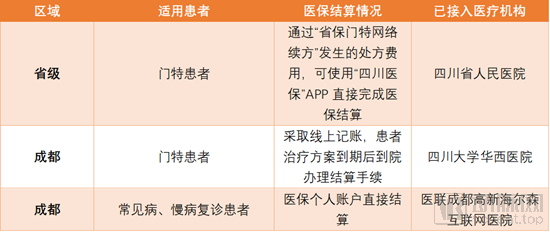
On January 31, 2020, West China Hospital of Sichuan University issued a notice announcing the launch of the “Special Outpatient Care Zone” on its internet hospital platform. For patients enrolled in Chengdu’s Special Outpatient Care program who have designated West China Hospital as their treatment provider and whose treatment plans are still within the validity period for prescription renewals, the hospital adopted an online billing model with SF Express delivery to the registered address for specific diseases. The delivery service was limited to the Greater Chengdu area, with a turnaround time of 48 hours. However, West China Hospital also required that patients complete settlement procedures in person at the hospital upon expiration of their treatment plans.
On February 21, Sichuan Provincial People’s Hospital officially launched an online service for provincial-level outpatients with special diseases, enabling them to “consult physicians, obtain prescriptions, and have medications delivered to their homes.” According to regulations, insured individuals under the Sichuan provincial scheme who have designated Sichuan Provincial People’s Hospital as their contracted hospital for a given calendar year can settle insurance payments directly via the “Sichuan Medical Insurance” app for special-disease prescriptions issued through the hospital’s internet hospital platform under the “Provincial Insurance Special Disease Online Prescription Renewal” service.
"Men Te," or Special Outpatient Diseases under Basic Medical Insurance, refers to diseases stipulated by national healthcare security authorities that require long-term outpatient treatment after the patient's condition has stabilized, and which incur high medical costs. According to regulations of the Sichuan Provincial Healthcare Security Administration, special outpatient diseases are categorized into two classes comprising 35 specific conditions, including diabetes, hypertension (Stage II and III), tuberculosis, and chronic cancers. Furthermore, medical insurance implements a "Three-Fixed" management policy for patients with special outpatient diseases: fixed designated medical institutions, fixed clinical departments, and fixed scopes of diagnostic and therapeutic services and medications.
“As the first online medical institution in Sichuan to enable online payment via personal medical insurance accounts, Medlinker Internet Hospital represents Medlinker’s exploration and advancement of online medical insurance payments for internet-based healthcare. This can be regarded as the ‘Medlinker Chengdu’ model for online medical insurance reimbursement by internet medical institutions, which merits further research and exploration by the digital health industry,” said an industry insider.
Livelihood issues have always been a high priority for local governments. During the pandemic, Medlinker, as a representative enterprise of Chengdu’s new economy, enabled online payment via personal medical insurance accounts for internet-based medical services provided by its affiliated physical hospitals. This initiative marked a proactive exploration through government-enterprise collaboration, creating a safe and convenient healthcare channel for Chengdu residents that allows “home-based consultations and medication purchases with online medical insurance payment.” The Chengdu Medical Insurance Bureau will continue to collaborate with enterprises to explore and improve online medical insurance payment systems, providing greater convenience to citizens in their daily lives.
According to incomplete statistics from VCBeat, there are currently nearly 180 internet hospitals in China that have obtained qualifications for providing online medical services. Of these, 39% are led by online healthcare platforms, 33% by public hospitals, and 28% by other entities such as single-disease specialty centers and physician groups. These internet hospitals have largely met the public’s demand for “contactless” medical care during the pandemic and have gained increasing recognition and acceptance among the general population. As more diagnosis and treatment items under the medical insurance system become integrated with internet hospitals, facilitating the implementation of the “three-medical linkage” (coordination among medical care, health insurance, and pharmaceutical supply), online healthcare is poised to play an even more significant role in whole-process health management.
References:
Wuhan and Over a Dozen Other Cities Urgently Enable Online Consultation Reimbursement; Major Bottlenecks in Internet Healthcare Are Cleared During the Pandemic
https://vcbeat.top/NjM2OWQxNWEyZWM2ZDkzZTY3OTBiNGZkMWNkODQwYzI=