

34 Years of Healthcare-Associated Infection Control in China: SARS Spurred Systematic Regulation, What Will COVID-19 Bring?
On February 27, a team led by Professor Hua Shucheng from the First Hospital of Jilin University published an article on the preprint server medRxiv, revealing the presence of SARS-CoV-2 in hospital air. This finding not only provides new theoretical evidence for the high transmission risk and infection rates of the novel coronavirus but also poses new challenges for hospital infection control and the protection of healthcare workers.
Hospitals, as the primary reservoirs for viruses, exhibit extremely high rates of population infection. The quality of infection prevention and control in hospitals directly impacts medical outcomes and patient safety, serving as a critical barrier against cross-infection. Under these circumstances, vigilance in hospital infection protection must never be relaxed.
As the novel coronavirus rages, industries across the board are actively fighting back. As the last line of defense against hospital-acquired infections, how are companies in the infection prevention and control (IPC) sector “safeguarding” hospitals and healthcare workers? In light of this, VCBeat (WeChat ID: vcbeat) has reviewed the development history, policy environment, market landscape, and industrial trends of China’s IPC industry, and compiled a list of IPC companies that have responded proactively during the pandemic.
In the early 1960s, the United Kingdom proposed the establishment of hospital infection control nurses and the development of hospital infection surveillance systems to prevent, treat, and control healthcare-associated infections. Shortly thereafter, the U.S. Centers for Disease Control and Prevention (CDC) adopted the UK’s “hospital infection control nurse” model and organized a pilot program involving 38 hospitals to conduct surveillance and control of healthcare-associated infections.
China’s infection prevention and control (IPC) initiatives started relatively late, with 1986 regarded as the inaugural year of IPC development in the country. In September 1986, the First National Symposium on Hospital Infection Management was convened, establishing a Coordination Group for Hospital Infection Surveillance and initiating monitoring of hospital-acquired infection incidence rates. In November of the same year, with support from the Department of Medical Administration of the former Ministry of Health, Professor Wang Shuqun from the Institute of Epidemiology and Microbiology of the former Chinese Academy of Preventive Medicine led the establishment of a hospital infection surveillance system.
China’s first cohort of infection prevention and control professionals began to approach hospital infection management as a systematic endeavor, setting in motion the development of China’s hospital infection prevention and control sector.
In 1989, the former Ministry of Health incorporated hospital infection management standards into the Accreditation Standards for General Hospitals, designated Xiangya Hospital of Central South University as the National Training Base for Hospital Infection Surveillance and Management, and approved 103 hospitals nationwide to participate in the Hospital Infection Surveillance Network. Two years later, the number of hospitals in the surveillance system expanded to 134.
In February 1989, the Law of the People's Republic of China on the Prevention and Treatment of Infectious Diseases was promulgated, specifying the guiding principles, policies, and various measures for the prevention and control of infectious diseases, as well as clarifying the responsibilities of citizens, relevant social organizations, and government departments in this effort. This law has since served as the highest-level legal basis for infection prevention and control.
In the 1990s, China established the Professional Committee on Hospital Infection Management and promulgated its first "Code for Management of Hospital Infection (Trial)." This code was further revised and improved in 2000. In 2001, the state promulgated the "Diagnostic Criteria for Hospital Infection (Trial)."
Under this standard, infection incidents involving healthcare personnel within hospital premises are included within the scope of healthcare-associated infections (HAIs). The significance of this standard lies in its emphasis that HAI prevention and control are not limited to safeguarding patient safety; the occupational safety of healthcare workers is equally important.
Since the mid-1980s, China’s infection prevention and control (IPC) sector has grown from scratch, with IPC professionals building the field from the ground up. By the eve of the 21st century, China had initially established a nationwide nosocomial infection surveillance network, developed a comprehensive organizational framework, completed extensive monitoring activities, and seen the gradual establishment and improvement of regulatory frameworks for infection control management.
Entering the 21st century, China’s infection prevention and control (IPC) initiatives have kept pace with international efforts, with hospital infection control concepts and methods gradually aligning with global standards. In 2002, China first proposed applying the principles of evidence-based medicine to guide hospital infection surveillance and control activities.
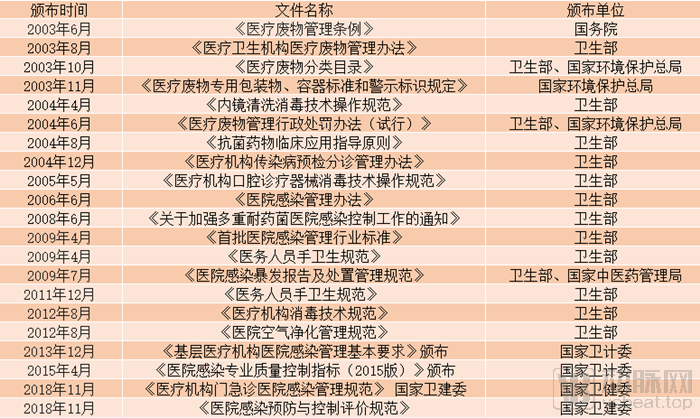
2003 marked a significant milestone in the history of infection prevention and control (IPC) development in China. During the severe acute respiratory syndrome (SARS) outbreak, healthcare workers frequently contracted the virus, and nosocomial cross-infections were widespread. It was precisely during patient treatment and the implementation of protective measures for medical personnel that the shortcomings of China’s hospital-acquired infection (HAI) prevention and control efforts were exposed: weak awareness of HAI prevention and control among healthcare workers; insufficient institutional emphasis on HAI prevention and control, as IPC departments were viewed as cost centers rather than revenue-generating units; and prominent hygiene issues within healthcare facilities.
Prior to this, although relevant authorities had been making efforts, progress in infection prevention and control (IPC) was slow due to the late start of China’s IPC initiatives and inadequate understanding of healthcare-associated infections (HAIs). In the aftermath of the SARS outbreak, China established comprehensive regulations and systems for HAI prevention and control, leading to rapid advancements in this field.
Source: Official website of the National Health Commission; Graphic by VCBeat
Professor Wu Anhua of Xiangya Hospital, Central South University, believes that the key to hospital-acquired infection prevention and control lies in interrupting transmission routes. In over one hundred infection control training sessions, Professor Wu has consistently emphasized that measures must be taken against the source of infection, with oral barrier protection and hand hygiene being critical methods for blocking viral transmission.
This is indeed the case. Hand hygiene among healthcare workers is the most important, simplest, most effective, and cost-efficient method for preventing and controlling healthcare-associated infections (HAIs). Numerous studies have revealed that microbial contamination on the hands of healthcare personnel is severe, often serving as a vector for the transmission of infectious diseases. Infections caused by the direct or indirect transmission of pathogens via hands account for more than 30.0% of all HAIs.
Spurred by the SARS outbreak, the Department of Medical Administration under the Ministry of Health initiated relevant departments to begin formulating the “Specifications for Hand Hygiene of Healthcare Workers.” After five years of effort, China’s first Specifications for Hand Hygiene of Healthcare Workers was finally released, providing detailed guidelines on how healthcare workers should “properly wash their hands,” with the aim of controlling the high incidence of nosocomial cross-infections.
In 2005 and 2006, the Shanghai International Forum on Hospital Infection Control successively proposed two themes: first, that the immediate priority for hospital infection surveillance in China is to “do the right thing”; second, that process monitoring of hospital infections is more important than outcome monitoring.
This also offers us some insights: It is imperative to gradually establish an evidence-based mindset for hospital infection control that aligns with the specific characteristics of in-hospital infection prevention and control, and to develop practical guidelines and standards to regulate infection control practices. Furthermore, passive prevention alone cannot resolve the issue; only proactive interventions can reduce the risk of healthcare-associated infections.
On May 23, 2019, the National Health Commission issued the “Notice on Further Strengthening Infection Prevention and Control in Medical Institutions,” incorporating “infection prevention and control work” as a veto criterion in the accreditation of tiered hospitals.
The hospital infection control market mainly consists of two aspects: one is hospital infection software, and the other is hospital infection control consumables and equipment.
According to statistics from the National Health Commission, by the end of November 2019, there were 1.014 million medical and health institutions nationwide, including 34,000 hospitals. Peng Fang, CEO of Blue Dragonfly Network, stated that the informatization of hospital infection control has undergone a long period of groundwork, and the market is currently on an upward trend. While more than 20,000 hospitals across China require integration with infection control software, only one-quarter have implemented such systems. “There remains significant market potential to be tapped in the field of infection prevention and control informatization.”
Regarding the infection control hardware market, Jia Hongwei, General Manager of Anbao Infection Control, stated in an interview with the media that China’s medical infection control market has become the third largest in the world, after the United States and Japan. It is expected to maintain a compound annual growth rate of over 20% in the next five years, with the total consumption of medical infection control consumables projected to exceed RMB 10 billion by 2025.
Infection Control Hardware:
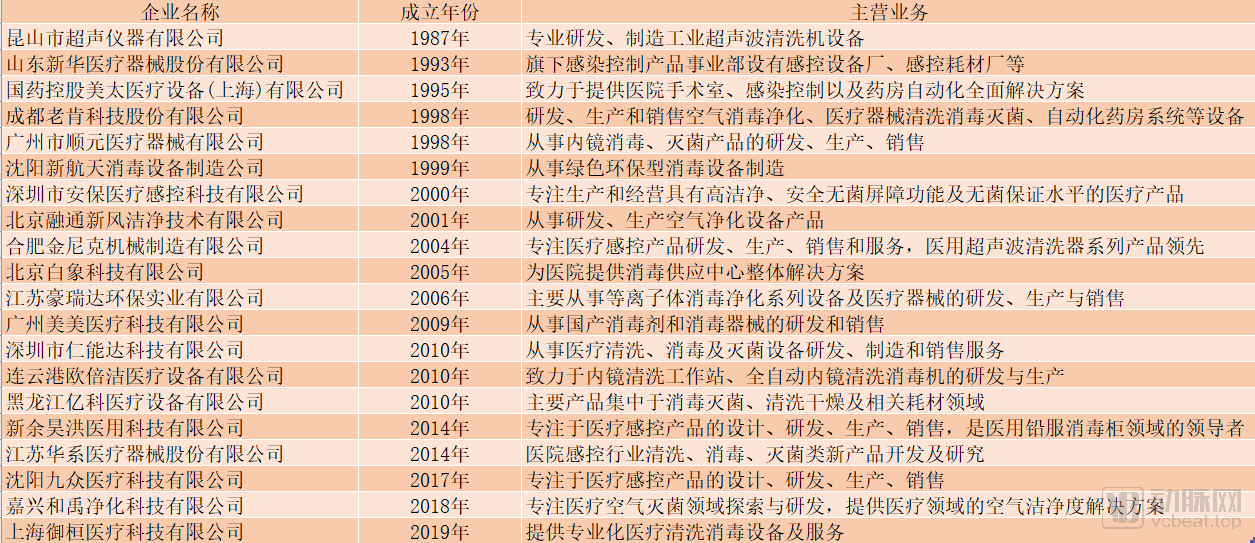
No shortage of participants across various fields, and hospital infection control is no exception. VCBeat has compiled a list of some hardware companies specializing in infection control:
Selected Domestic Infection Control Consumables & Equipment Companies (Compiled and charted by VCBeat based on public information)
On October 18, 2019, Anbao Infection Control, a provider of medical device packaging solutions, completed a Series B financing round worth tens of millions of yuan, aiming to introduce its mature portfolio of hospital-wide infection control consumables into the Chinese market. Established in 2000 as a leading enterprise in China’s infection control packaging materials sector, Anbao Infection Control specializes in the design and production of medical infection control solutions, with its business having covered more than 60% of U.S. hospitals for eight consecutive years. The company has launched its O2O online sales platform, striving to build a one-stop global procurement platform for high-end medical packaging.
Jiangsu Haoruida was established in 2006 in the Yannan High-Tech Industrial Development Zone, specializing in the research and development, production, and sales of plasma sterilization and purification equipment series as well as medical devices. Its products have been widely used in renowned Grade III Class A hospitals across China and numerous other healthcare institutions.
On the first day of the Lunar New Year, after receiving orders from multiple hospitals in Hubei Province, Haoruida immediately organized a resumption of work. With partial production capacity restored, the company was able to manufacture more than 50 plasma air sterilizers per day for use in medical settings. On February 3, Haoruida rapidly loaded and dispatched dozens of these plasma air sterilizers to Wuhan Huoshenshan Hospital. To date, it has supplied over 1,400 air disinfection and purification units to selected hospitals in Hubei, Henan, Jiangsu, and other provinces.
As a leading provider of comprehensive sterilization and disinfection services in China, Laoken Medical has been dedicated to hospital-based sterilization and disinfection since its establishment in 1998. Hundreds of thousands of its sterilization and disinfection devices are currently in operation across medical institutions throughout China, with the installed base growing by tens of thousands of units annually.
On January 29, after Laoken Medical received an urgent order for a batch of air sterilizers from Huoshenshan Hospital, Laoken MedicalImmediately mobilize and organize cadres and employees from the production, technology, customer service, quality inspection, and supply chain departments to suspend their leave, return to their posts, and conduct 24/7 uninterrupted production operations. Meanwhile, in response to the actual conditions at Huoshenshan Hospital, Leishenshan Hospital, and makeshift hospitals in the Wuhan epidemic center, the production proportion of mobile air disinfectors was increased to facilitate rapid installation and deployment.
To date, Laoken Medical has delivered more than 10,000 units of air disinfection machines to the Wuhan area and over 15,000 units to other regions across China. The company has also received substantial orders from more than 100 domestic medical institutions, including the Central Epidemic Prevention Guidance Group and Beijing Xiaotangshan Hospital.
In 2003, the infection prevention and control (IPC) market was still in its early stages of development. Seventeen years later, with the outbreak of the novel coronavirus, the IPC industry responded rapidly, establishing a barrier between healthcare workers and the virus.
Infection Control Informatics:
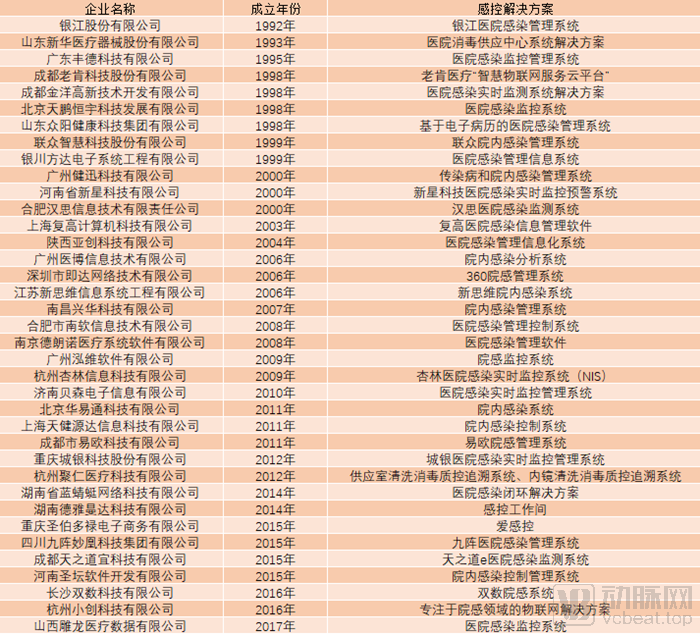
As another group of participants in the field of infection prevention and control (IPC), IPC informatics companies primarily engage in hospital-based IPC work through two approaches: early warning and intervention. VCBeat has compiled a list of informatics companies whose core business or operations involve IPC-related services:
Domestic Infection Control Informatics Companies (Compiled from Public Sources; Graphic by VCBeat)
Hunan Blue Dragonfly Network Technology Co., Ltd. is a subsidiary of the domestic internet healthcare enterprise “Health 160.” As a leading provider of professional medical informatics solutions in China, the company has been deeply engaged in infection control and infectious disease health surveillance for 14 years, ranking among the earliest companies in China to develop hospital infection control software.
Blue Dragonfly Network, in collaboration with the National Hospital Infection Control Monitoring and Training Base at Xiangya Hospital of Central South University, has jointly developed infection control products, establishing a comprehensive closed-loop system for infection prevention and control that spans from monitoring to process intervention, followed by supervision and evaluation, as well as education and training. To date, Blue Dragonfly’s series of hospital infection control products have been adopted by more than 6,000 users across China.
Juren Medical was incubated by the marketing department of Weike Software and was established in 2012, specializing in the research, development, and sales of in-hospital infection control software. Leveraging the strong technical support of Zhejiang University, Juren Medical has assembled a team of high-caliber professionals, including numerous postdoctoral fellows and PhD holders. The company has jointly undertaken multiple key national and provincial/ministerial-level research projects, participated in the formulation of national standards and strategic planning for hospital informatization, and achieved significant research outcomes in medical information integration and fusion technologies under the National 863 Program. Furthermore, it has established clinical collaboration bases at dozens of large comprehensive hospitals.
During the ongoing pandemic, Juren Medical established a leading group for pandemic response to coordinate and allocate resources in full support of the aforementioned matters. It also provided its two major traceability software solutions—the Sterile Supply Department Cleaning and Disinfection Quality Control Traceability System and the Endoscope Cleaning and Disinfection Quality Control Traceability System—to designated hospitals across China treating COVID-19 patients in need.
On November 18, 2019, Xiaochuang Technology, an IoT solution provider specializing in healthcare-associated infection (HAI) control, completed a RMB 10 million Pre-A financing round. Founded in October 2016 and based in the China Artificial Intelligence Town in Hangzhou, Zhejiang Province, Xiaochuang Technology has developed infection prevention and control systems for several key areas, including hand hygiene, environmental surface cleaning, and medical waste management. The company has expanded into markets such as China, Japan, the United States, and Canada. Within China, its solutions have been deployed across 19 provinces and municipalities, covering 55 hospitals.
In December 2017, the Basic Functional Specifications for Hospital Infection Management Information Systems were officially implemented, stipulating the basic requirements for hospital infection management information systems, functional requirements for hospital infection surveillance, and surveillance functional requirements for key departments, critical processes, and high-risk populations. The implementation of these specifications has also advanced the intelligent and informatized development of hospital infection management, facilitated the sharing of hospital infection data, and promoted the homogenization of hospital infection management quality.
The epidemic has dealt a blow to various industries, and the infection control sector is no exception; however, challenges and opportunities always arise unexpectedly.
Disinfection and Infection Control Equipment Faces a Larger Market
The outbreak has instantly made “disinfection” a trending search term. In the month following the onset of this outbreak, Laoken received more orders than in its entire previous year (over 30,000 units annually). Yuwell Medical, whose stock hit the daily upper limit for two consecutive days, announced on the evening of February 3 that surging demand for epidemic prevention and control products due to the spread of the virus had led to complete sell-outs of its disinfection and infection-control devices, thermometers, pulse oximeters, and face masks.
However, the extension of the Spring Festival holiday and traffic control measures implemented across various regions have hindered the resumption of work among upstream supply chain enterprises and disrupted raw material supplies for medical device manufacturers, thereby posing certain obstacles to their production operations.
LaoKen Medical believes that, for a considerable period in the future, the state will vigorously strengthen comprehensive supply-side reforms in public health and infectious disease prevention and control, addressing directional, systemic, and fundamental issues in these fields. These measures will drive the development of the infection control industry for air disinfectors.
Furthermore, given the ongoing impact of the current novel coronavirus outbreak and the assessment that SARS-CoV-2 may persist at low levels for an extended period even after the epidemic subsides, the demand for medical-grade air disinfection is gradually extending beyond healthcare institutions to new application scenarios such as office buildings, classrooms, supermarkets, and cinemas. A rapidly expanding consumer and commercial market, characterized by geometric growth, is taking shape.
“From a medium- to long-term perspective, demand for household and commercial air disinfectors is expected to surge during the later stages of pandemic control, potentially driving the formation of a new development pattern for air disinfection that integrates ‘medical, household, and public use.’” Chen Wenchuan, Director of the Chairman’s Office at LaoKen Medical, revealed that medical and commercial equipment are currently key focus areas for the company.
Infection Control Informatics: Like a Compressed Spring
The first quarter is traditionally the off-season for healthcare IT companies. The outbreak of the pandemic further exacerbated their difficulties, impacting businesses to varying degrees. During this spring slump, orders for infection control informatization solutions were already scarce. Compounded by the shortage of medical personnel during the epidemic, projects related to infection control informatization had to be put on hold.
As a risk-mitigation department within hospitals, the Infection Prevention and Control (IPC) Department does not directly generate revenue, resulting in relatively low prioritization. However, in the post-pandemic era, hospital IPC is moving from the background to the forefront. Peng Fang, CEO of Lanqingting Network, noted that the market for IPC informatization has shown a clear upward trend.
“I believe the pandemic will ultimately benefit traceability systems.” Chen Jijun, head of the Infection Control Division at Juren Medical, also expressed optimism about the post-pandemic infection control market. On one hand, for hospitals, information-based traceability systems represent a rigid demand that will not disappear due to the pandemic; at most, this demand has been temporarily suppressed. “On the contrary, under such circumstances, many latent and marginal needs may be stimulated, ultimately ushering in a new round of explosive growth after the pandemic ends.”
Third-Party Sterile Supply Centers to See a Wave of Favorable Developments
As economic integration deepens, the interdependence among enterprises within the industrial chain often means that a minor disruption can have far-reaching consequences. In the infection prevention and control (IPC) market, the industrial chain is structured with equipment manufacturers as upstream players, third-party sterile supply centers as midstream players, and hospitals and healthcare institutions as downstream players. For domestic third-party sterile supply centers, the current epidemic has posed an unprecedented “major test.”
In 2003, the domestic market for third-party sterile supply centers was a blank slate, with no prior experience to draw upon. How to deliver a performance that “lives up to the mission” and “admits no failure” was becoming the “touchstone” for testing this emerging business model, represented by Julikang and other third-party sterile supply centers.
Ten years later, the market size of third-party sterile supply centers in China had reached RMB 1.4 billion, growing to RMB 12 billion by 2017, with a compound annual growth rate (CAGR) of 70%. The CAGR is projected to be 42% over the next five years. According to a Frost & Sullivan report, the market size is expected to reach RMB 76 billion by 2022, while Julikang predicts that the effective market size will be approximately RMB 35 billion. Furthermore, the current market penetration rate is less than 0.3%, indicating substantial growth potential. “The number of market participants is continuously increasing; only enterprises with strong resource integration capabilities (spanning upstream and downstream sectors, capital, as well as quality, technology, and service) and superior service quality will prevail.”
Shen Jiayin, Chairman of Julikang, stated that on February 14, national leaders referenced “15 systems, 9 mechanisms, and 4 institutions” at the 12th Meeting of the Central Committee for Comprehensively Deepening Reforms. Many of these initiatives are closely related to the development of third-party sterile supply centers. The role of third-party sterile supply centers in reducing hospital infection control risks and improving the utilization efficiency of hospital personnel and facilities has been increasingly recognized by hospitals, making the market demand self-evident.
Hospital-acquired infection control is the baseline for hospital prevention and control. The core of infection control is to block the transmission routes of infectious sources, with prevention being the primary task.
Infection control personnel must be specialized and professionalized.“Infection prevention and control is not a catch-all bucket that can hold everything; it is a highly specialized discipline,” stated Fu Qiang from the National Center for Quality Control in Hospital Infection.
“The development of hospital infection control teams requires talent and structural advancement,” said Professor Wu Anhua from Xiangya Hospital of Central South University in an interview with the media on March 3, 2020. Professor Wu advocates that undergraduate medical schools should establish majors in hospital infection control, which would not only enable healthcare professionals to address issues promptly and effectively in their work but also contribute to the development of this discipline in China.
Furthermore, infection control places considerable demands on the managerial competence and capabilities of practitioners. Without a solid grasp of management principles and proficiency in using management tools, it is difficult for professionals to effectively carry out infection prevention and control (IPC) work. This necessitates that IPC practitioners strengthen their training in systematic management skills, while hospitals must also invest in building robust infection management teams.
In fact, China has already established a genuine academic discipline in hospital infection management. In April 2017, the School of Medicine and Health Management at Shandong University launched two undergraduate programs (online education) leading to bachelor’s degrees: “Hospital Infection Management” and “Hospital Sterile Supply.” This major began recruiting students nationwide in January 2018, with a program duration of 2.5 years, conferring a Bachelor of Management degree, thereby laying the foundation for the professional training of personnel in hospital infection control.
Achieving comprehensive infection prevention and control throughout the entire process requires collaboration and coordination among multiple departments.With the rapid development of infection prevention and control (IPC) in China, IPC has swiftly transitioned from the foundational era—focused on disinfection and sterilization, isolation, hand hygiene, and environmental infection control—to a comprehensive era encompassing the entire process of infection prevention, diagnosis, and treatment.
Fu Qiang, Director of the National Healthcare-Associated Infection Quality Control Center, also pointed out in an article published in the Chinese Journal of Nosocomiology that infection prevention and control (IPC) is not merely a “supportive” factor operating outside the scope of medical quality and safety to provide important support and assurance; rather, it is an integral and inseparable component of medical quality and patient safety. Therefore, IPC practices must be integrated into clinical diagnosis and treatment processes to fully realize their impact. The expansion of IPC responsibilities poses greater challenges to the professional competence and management capabilities of IPC practitioners.
Furthermore, effectively implementing laws, regulations, and industry standards requires multi-departmental collaboration. This process is lengthy and broad in scope; if any link is inadequate, progress becomes difficult. Taking the implementation of the “Hand Hygiene Guidelines for Healthcare Workers” as an example, failure in any single aspect—such as healthcare workers’ awareness, leadership commitment, or the availability of hand hygiene facilities—can stall the entire initiative.
Tech Empowerment.Unlike the SARS outbreak 17 years ago, this epidemic has placed high expectations on the power of technology. Technological innovations such as the Internet of Things (IoT), artificial intelligence (AI), and robotics are also being leveraged to their full potential in the field of infection prevention and control (IPC). Taking IoT as an example, its adoption enables healthcare workers to access real-time information on equipment status, malfunctions, alert notifications, after-sales maintenance progress, and efficacy monitoring and evaluation. This helps improve work efficiency, ensure the effectiveness of disinfection and sterilization, prevent IPC incidents, and safeguard the health of both medical staff and patients.
The future is bright, but the path is tortuous; the development of all things is a unity of forward momentum and twists and turns. The field of infection prevention and control (IPC) is no exception. During this epidemic, the IPC sector will also be responsible for the concluding phase of the “battle” against the virus. After the last patient is discharged, designated hospitals will undergo thorough disinfection to restore them to their original state, meeting the standards for treating other patients and returning everything to how it was before.