

Zhihuilin Medical, Founded by Huawei's First Mobile Phone Employee Jiang Huabing, Files IPO Prospectus
Jiang Huabing likes Chen Chunhua.
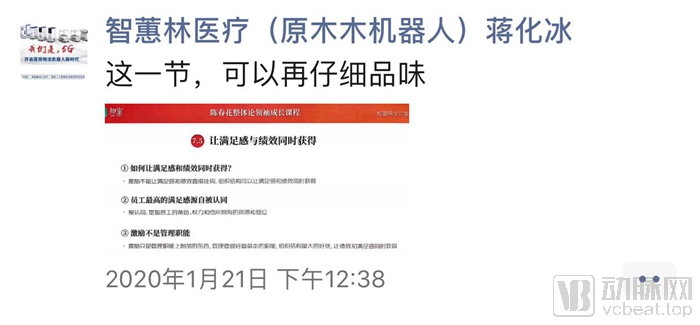
On January 21, the most recent WeChat Moments post unrelated to the pandemic was a slide from Chen Chunhua’s Leadership Growth Course, bearing the title “Achieving Both Satisfaction and Performance.” This image had appeared in Jiang Huabing’s WeChat Moments for the fifth time.
Jiang Huabing is a seasoned technology-driven executive. Having spent seventeen years at Huawei, he was one of the founders of Huawei’s mobile phone business and previously served as President of the Huawei Mobile Phone Product Line, President of Sales for Overseas Regions, and Deputy General Manager of 3G Base Stations. In his entrepreneurial ventures, Jiang believes that technology and high-quality products are paramount; therefore, he allocates the majority of corporate resources to R&D and product development.
When asked why he enjoys reading the works of Professor Chen Chunhua, Jiang Huabing candidly stated, “Entrepreneurship requires multidisciplinary knowledge; we must not only draw on our own accumulated expertise but also continually learn from experts in various fields.”
In September 2014, Jiang Huabing led a team from Huawei’s mobile phone division to establish Zhihuilin Medical (formerly known as “Mumu Robotics”). The company currently provides hospitals with solutions such as the Noah Hospital Logistics Robot, Smart Nurse Stations, Life IoT Systems, and surgical robots. It holds over 350 original core patents, employs more than 50 senior technical experts, and has R&D personnel accounting for over 70% of its workforce. Leveraging foundational AI technology from the United States, the company is a member of international expert committees on artificial intelligence and robotics standards.
From the early decision to focus on service robots to the rationale behind specializing in smart hospital scenarios, and from the selection of niche segments within the smart hospital sector to product performance, the reporter engaged in a detailed dialogue with Jiang Huabing.
When launching his venture in 2014, Mr. Jiang established several criteria for himself: A. The market must be sufficiently large with substantial social value, going beyond the mere aim of “making some money.” B. The barrier to entry should be relatively high, with frequent technological innovations. C. We must possess our own accumulated expertise and competitive advantages.
Lao Jiang has identified artificial intelligence and service robotics as the major direction and overarching trend. However, determining which specific sector to enter and how to proceed is a process of gradual exploration.
In 2017, China launched a new round of healthcare reform, which disrupted traditional medical distribution channels and spurred the healthcare sector’s embrace of the internet. At that time, Zhihuilin connected with numerous seasoned healthcare professionals and channels. Leveraging the technological expertise and brand reputation it had accumulated over three years in the service robotics field, Zhihuilin quickly found common ground and established partnerships with collaborators in the healthcare industry.
The contradiction between limited medical resources and growing patient demand is a long-standing and widespread challenge, prevalent not only in China but also in developed countries in Europe and the United States. The recent pandemic has highlighted this discrepancy, revealing that healthcare resource supply systems across various countries lack sufficient resilience in responding to emergencies. How should this persistent issue be addressed? Jiang Huabing suggests approaching it from two perspectives: first, enhancing the efficient utilization of existing medical resources; second, expanding the overall supply of medical resources. “Improving the efficiency of existing medical resources may require greater governmental consideration, whereas increasing the supply of medical resources is the responsibility of entrepreneurs. It is crucial for entrepreneurs to leverage new technologies to break through bottlenecks and create additional capacity. The most critical element in medical resources is human capital—specifically, healthcare professionals. Our starting point in selecting our strategic focus lies in exploring how new technologies can assist or even replace certain tasks performed by these professionals.”
Which type of medical robot can assist healthcare workers or even replace them in performing tasks? Jiang Huabing’s answer is hospital logistics robots. He believes that hospital logistics robots will be the first category of medical robots to achieve large-scale adoption. “Consider this from dimensions such as demand intensity and safety attributes. Under normal circumstances, a hospital with 1,000 beds handles approximately 20 tons of supplies for delivery and transportation each day. This volume is substantial, and deploying robots in this context offers greater ease in ensuring safety.”
Since its deployment at Noah Hospital in October 2017, the logistics robot has continuously expanded its application scenarios within the hospital. Starting with intravenous admixture delivery for the Pharmacy Intravenous Admixture Service (PIVAS), its capabilities have gradually extended to include the delivery of oral medications, specimens, high-value consumables, sterile packs, and the collection of contaminated instruments for reprocessing. Currently, it has achieved intelligent delivery across all hospital scenarios.
Can run errands for nurses, and assist in managing and transporting supplies;
Solves 90% of medical supply transportation, with 100% precise and safe delivery;
Develop nearly 100 types of visual models for hospitals and use deep learning to reconstruct 3D hospital environments;
Trackless autonomous navigation, automatic elevator access, obstacle and pedestrian avoidance, 24/7 all-weather response;
AI-Enabled Closed-Loop Supply Management: Multi-Level Access Control with End-to-End Monitoring of Medication Dispensing and Delivery, and Comprehensive Process Documentation.
It is understood that Zhihuilin Medical has developed a tiered product portfolio, categorized into high-, mid-, and low-end segments, to meet hospital needs. Noah logistics robots are currently operational in over 70 hospitals across 18 provinces, with a repurchase rate of 57%.
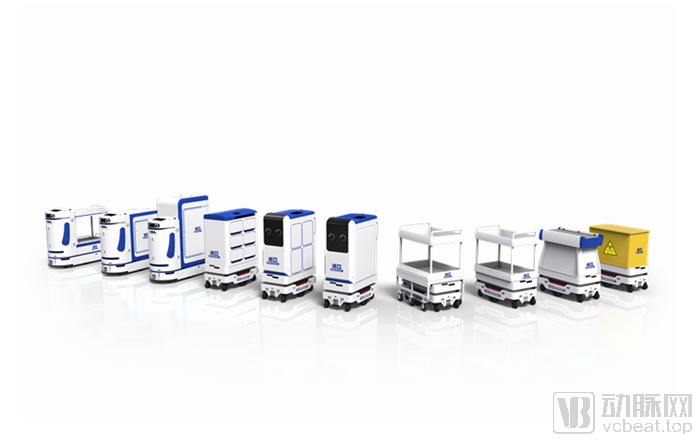
Noah Product Series (Image source: Provided by the company)
Jiang Huabing stated, “The implementation of new technology products involves a cycle. In the early stages, we primarily engaged with hospitals that had clear essential needs and a forward-looking vision for new technologies; they have consistently supported the continuous evolution of our products. Currently, an increasing number of hospitals are proactively reaching out to us and voluntarily purchasing our products.”
In the early stages of deploying new technological products, supply chain instability is a common challenge. To secure high-quality suppliers and ensure product quality, Noah established its own manufacturing facility in Rugao, Jiangsu Province. Reportedly, this facility is the only hospital logistics robot factory to have obtained the CR certification (China Robot Product Certification).
To date, Zhihuilin Medical has accumulated more than 350 patents. Moving forward, Zhihuilin will build technological and product barriers while supplying products to more hospitals, achieving lower costs through economies of scale. Meanwhile, its mature and stable quality, rapid implementation, and minimal rework will establish a total cost leadership advantage. Cost is designed in, not saved out.
Prior to the outbreak, Noah Hospital Logistics Robots had already deployed more than ten units at Wuhan Asia Heart Hospital, Tongji Hospital, and Wuhan Central Hospital. Following the outbreak, Jiang Huabing attached great importance to the situation, conducting urgent assessments on the first day of the Lunar New Year to ensure the stable and efficient operation of robots in epidemic areas and all hospitals. Meanwhile, production was accelerated to safeguard supply, leading to a current state where demand exceeds supply.
Meanwhile, in response to the current epidemic, Noah has rapidly launched a professional disinfection cabinet-style logistics robot. This new type of logistics robot features a built-in disinfection module that utilizes light-based disinfection technology to ensure a clean internal environment while simultaneously disinfecting items placed inside, thereby further preventing viral transmission. It is reported that this product has essentially completed testing and is about to be launched for commercial use. In addition, Noah is currently developing three-dimensional automatic disinfection technology for the robot’s exterior surface. At the interfaces between areas with different cleanliness requirements (such as ICUs, infection wards, and operating rooms), a small physical space will be configured for the robot to undergo automatic disinfection, thus meeting cleanliness standards and enabling safe delivery.
The contradiction between limited medical resources and growing patient demand is a long-standing and widespread issue, with new technologies serving as the key to breaking this deadlock. However, the application of new technologies faces numerous hurdles; only by overcoming challenges related to scaling up demand, ensuring product quality stability, and maintaining reasonable supply prices can these technologies achieve healthy development. The current epidemic will inevitably accelerate the implementation of new smart healthcare technologies in China.
As the dawn of post-pandemic recovery approaches, we believe that the future of China’s smart healthcare is equally vast and promising.