Zhiran Medical, a Leading Chinese Developer of Invasive Brain-Computer Interfaces, Featured on Beijing TV

BCIFlex
Invasive High-Throughput Ultra-Thin Flexible Brain-Computer Interface System Developer
Recently, the "Beijing News" program on Beijing Satellite TV focused on brain-computer interface, a key future industry direction outlined in the "15th Five-Year Plan" proposal, highlighting representative companies in its three major technical routes: non-invasive, semi-invasive, and invasive.BCIFlex, as the leader of invasive brain-computer interface in China, receives key coverage.
(Video excerpted from the relevant report of "Beijing News" on Beijing Satellite TV)
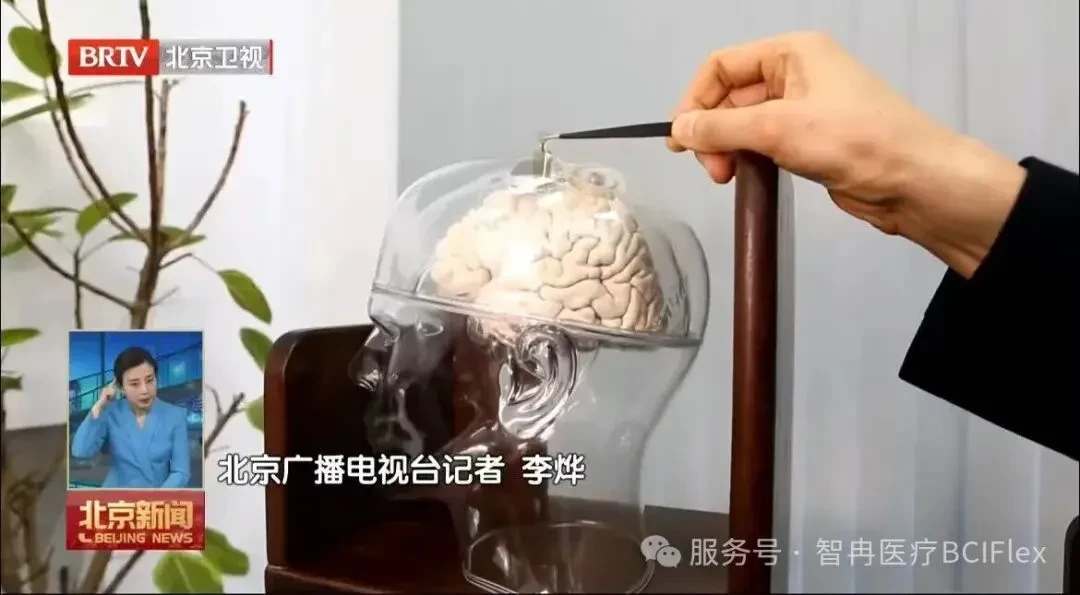
In the镜头中, the reporter showcased the ultra-thin flexible electrode independently developed by BCIFlex. The BCIFlex flexible electrode has simultaneously received patent authorization in both China and the United States. With its excellent biocompatibility and long-term stable signal acquisition capabilities, it has gained widespread recognition within the industry.
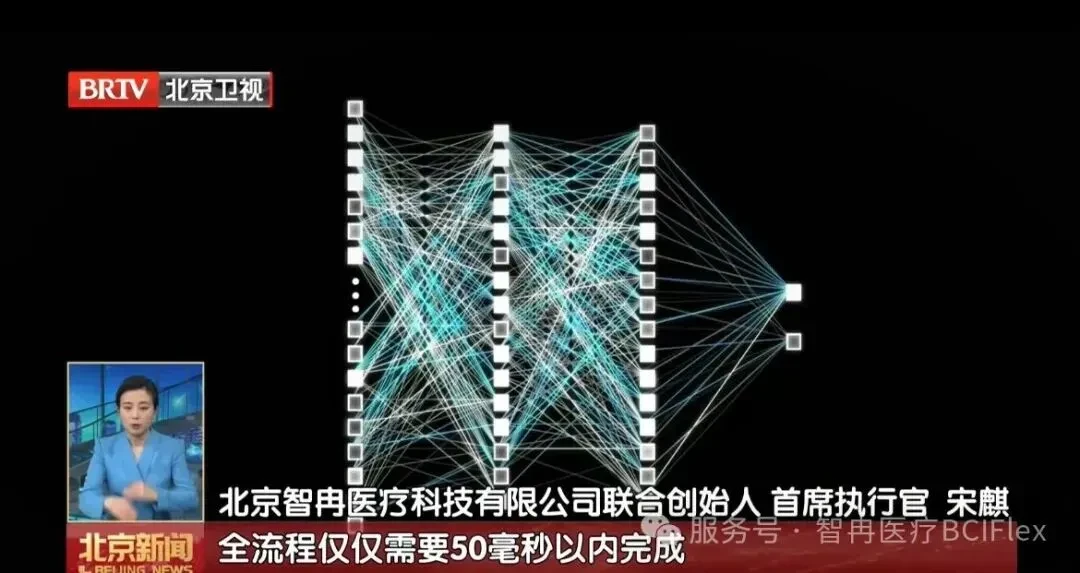
"The core of invasive brain-computer interfaces is to build a high-bandwidth 'information highway' between brain cells and the external world." Song Qi, co-founder and CEO of BCIFlex, introduced that the company's self-developed new generation of invasive flexible brain-computer interface system covers neural signal acquisition, decoding, and driving external devices.,The entire process takes less than 50 milliseconds, which is 3-5 times faster than the human physiological response speed of 150-300 milliseconds.This breakthrough lays a crucial foundation for high-throughput brain-computer interaction, enabling disabled individuals to control prosthetics with their thoughts and facilitating communication for paralyzed patients.Scenes such as general access are gradually moving from science fiction to reality.
As the route with the highest technical barriers and the most profound application potential in brain-computer interface technology, invasive technology is considered by the industry to be the core force in unleashing the "tornado" of human-computer interaction — it can directly capture the neural electrical activity of the cerebral cortex, with signal resolution far surpassing non-invasive and semi-invasive technologies, making it the primary direction for future deep human-computer integration.
"The 15th Five-Year Plan" proposes to include brain-computer interface in the key cultivation of future industries, global technology giants accelerate their layout, and industrial value continues to be released.BCIFlex takes clinical needs as the driving force for innovation and has built a full-chain self-developed system in key technical areas such as flexible electrodes, decoding algorithms, software systems, and electrode implantation robots.This time, the key coverage by Beijing Satellite TV not only recognizes its technical strength but also affirms the innovative vitality of China's brain-computer interface industry.
In the future, BCIFlex will continue to focus on the research and development of invasive brain-computer interface technology, accelerate the clinical transformation and industrial implementation of the technology. Riding on the momentum of the future industrial development during China's "15th Five-Year Plan," BCIFlex will leverage Chinese innovation to make invasive brain-computer interface technology truly serve human well-being, and provide a "Chinese answer" to the global brain-computer interface industry.