

Li Baowei of PKU Healthcare Innovation Valley: Analyzing Challenges and Strategies for Innovative Enterprises During the Pandemic from an Incubator Perspective | VB Group Interview
In the spring of 2020, the COVID-19 pandemic plunged China’s rapidly growing economy into a “deep freeze.”
As key players in economic development, many enterprises are facing an unprecedented test. The pandemic has persisted for three months, and it remains uncertain when it will come to an end. In this fight against the epidemic, what challenges do medical and pharmaceutical innovation companies face, and how can they break through?
Recently, VCBeat conducted an exclusive interview with Li Baowei, Deputy General Manager of Peking University Medical Innovation Valley. From the perspective of a medical and pharmaceutical park operator, he provided a comprehensive analysis of the opportunities and challenges facing innovative healthcare and pharmaceutical companies during the pandemic, offering substantial insights.
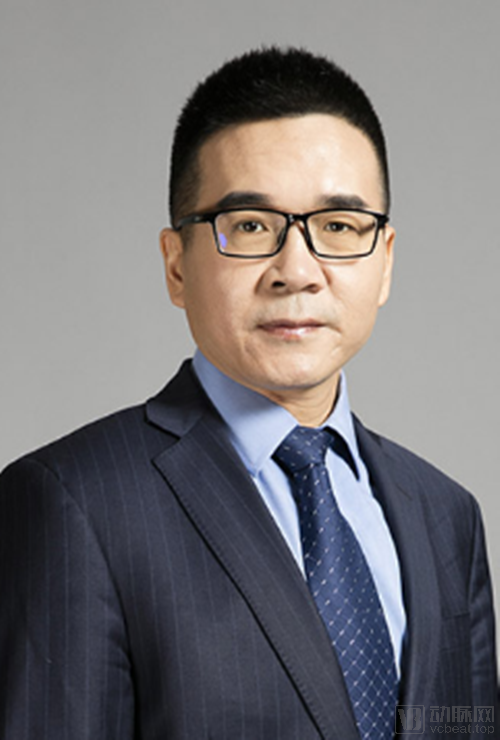
(Li Baowei, Deputy General Manager of Peking University Healthcare Innovation Valley)
Li Baowei, M.D., graduated from Peking Union Medical College. He currently serves as Deputy General Manager of PKU Healthcare Innovation Valley. Previously, he held positions such as Assistant Researcher at the Institute of Materia Medica, Chinese Academy of Medical Sciences, and Deputy General Manager of Beijing Shibo Haoze Pharmaceutical R&D Co., Ltd. During his career, he has published more than 10 professional papers and contributed to three scientific research publications. He has filed four patent applications, two of which have been granted. Mr. Li possesses extensive experience in the operation of biomedical professional parks, incubation and investment in healthcare and pharmaceutical innovative enterprises, and industry collaboration among medicine, engineering, and research institutions.
“In fact, the epidemic has had a short-term negative impact on companies in the healthcare industry, but it is beneficial in the long run,” commented Li Baowei.
He stated that, according to survey statistics from the Haoyue Capital Research Institute, the sectors that have benefited most from the pandemic include biopharmaceuticals, medical devices, IVD and precision medicine, healthcare services, and smart healthcare. Within the biopharmaceutical sector, key areas include antiviral small-molecule drugs, vaccines, antiviral monoclonal antibodies, nucleic acid-based therapeutics, and anti-infective agents targeting bacterial and fungal infections.
As the pandemic struck, the anti-epidemic “miracle drug” remdesivir garnered significant attention. Regarded by the World Health Organization as the only medication currently with potential efficacy against the novel coronavirus, it topped trending search lists for several consecutive days immediately after being reported. In addition to remdesivir, a search of the Chinese Clinical Trial Registry reveals nearly 300 entries related to clinical studies on COVID-19, a figure that underscores the intense current focus on biopharmaceuticals.
“In this contest against the virus, significant development opportunities for the biopharmaceutical industry will inevitably emerge,” said Li Baowei.
Medical device sectors benefiting from the pandemic include disinfection, protective equipment, telemedicine robots, ECMO (extracorporeal membrane oxygenation) artificial lungs, and extracorporeal circulation support systems. During the major effort to combat pneumonia, many medical device companies actively developed products and provided urgent support to affected areas, drawing significant attention. Innovative medical devices have brought more “possibilities” to clinical practice.
The field of IVD-based precision medicine has also played a significant role during this pandemic. Segments within IVD precision medicine that have benefited from the outbreak include nucleic acid testing, point-of-care testing (POCT), sequencing instruments and reagents, and CRISPR-based diagnostics. Li Baowei pointed out that nucleic acid testing was rapidly elevated in prominence during this pandemic and is poised for a surge in development in the future.
Medical services and smart healthcare sectors that have benefited from the pandemic include telemedicine, third-party testing, commercial health insurance, pharmaceutical e-commerce, and AI-assisted image interpretation. “Telemedicine has been a ‘special winner’ of this pandemic; cloud-based services are efficiently changing public acceptance and transforming the traditional landscape of medical consultations,” said Li Baowei.
“For the healthcare industry, the crisis is temporary. In its aftermath, bolstered by heightened national attention and favorable policy support, the sector as a whole is poised for stronger development,” commented Li Baowei.
“For innovative enterprises, Li Baowei used these two metaphors to describe the role played by the industrial park. ‘The park is like a school, with enterprises as students; teachers are better positioned to judge whether kindergarteners will gain admission to prestigious universities. The park is also like a military barracks, with enterprises as soldiers; while the barracks remain steadfast, soldiers come and go—some fall on the battlefield, while others rise to prominence.’” he said.
From the perspective of an industrial park, the key to success lies in how innovative enterprises accurately navigate the four critical steps: identifying promising projects, securing funding, recruiting talent, and acquiring land.
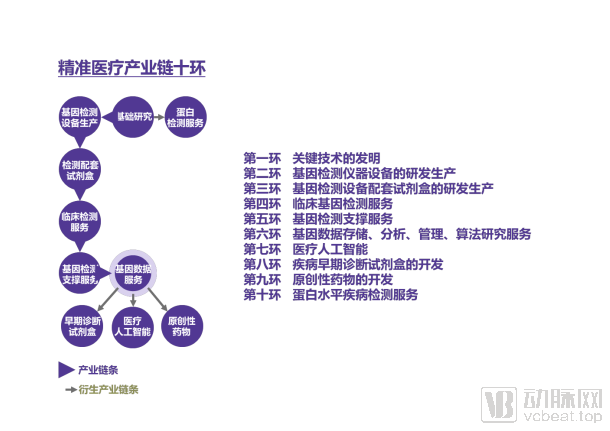
A promising project is synonymous with a high-quality product or service. Taking the precision medicine industry chain at Peking University Medical Industrial Park as an example, a viable project must encompass at least one of the following segments.
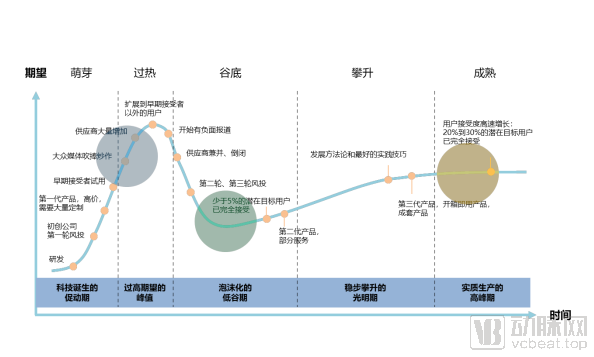
He cited “The Development of Genetic Testing Services Through the Lens of the Gartner Hype Cycle” as an example. The Gartner Hype Cycle typically encompasses five stages: the Innovation Trigger, the Peak of Inflated Expectations, the Trough of Disillusionment, the Slope of Enlightenment, and the Plateau of Productivity. During the Innovation Trigger phase, the influx of capital and media hype generate significant excitement. However, as suppliers undergo mergers or go bankrupt and negative information emerges frequently, the field rapidly falls into the Trough of Disillusionment.
“The Gartner Hype Cycle highlights several critical issues that enterprises must carefully evaluate and clarify: When is the optimal time to enter the market? Can they remain committed without giving up? Is their business model capable of sustaining profitability?” said Li Baowei.
Furthermore, he pointed out that for innovative enterprises to survive and thrive, they must accurately identify clinical needs. “Clinical needs are the source of innovation; for instance, there are numerous entry points for innovation by small and micro enterprises in niche segments of the medical device industry. Finding a promising project is half the battle,” commented Li Baowei.
How Can Innovative Enterprises Secure Funding? From the Perspective of Industrial Parks, Four Channels Are Worth Considering: Venture Capital (VC) and Private Equity (PE), Commercial Banks (Addressing Guarantee Issues), Government Guidance Funds (Direct Investment and Fund-of-Funds), and Others (Financial Leasing and Intellectual Property Financing).
How Should Companies Choose a Site? First, settling into an industrial park is a sound choice. Industrial parks can help companies address many issues, allowing them to operate with peace of mind. “Industrial parks often serve as ‘village cadres,’ facilitating communication between government departments and enterprises. Parks provide not only physical space but also assist companies in promptly understanding and accessing favorable policies, thereby creating prerequisite conditions for the rapid growth of startups,” introduced Li Baowei.
During this epidemic, many innovative enterprises have been affected. The Peking University Medical Innovation Valley Park has provided a series of services to the companies within the park, including: rent reductions, complimentary innovation vouchers for public technical service platforms, free maintenance of air conditioning facilities and equipment, provision of remote video conferencing systems and meeting rooms at no cost, quarantine observation hotels for personnel returning to Beijing, and assistance in applying for support funds and qualifications honors for enterprises.
Selecting the right industrial park is crucial. So, how should one make the choice? What key criteria should be prioritized?
How to Select an Industrial Park: Li Baowei’s RecommendationsLi Baowei suggests that innovative enterprises should first focus on specialized industrial parks and industry chains. Based on their corporate positioning, companies should identify the specific industry chain within their niche sector. A well-defined industry chain stabilizes the continuity of upstream and downstream operations, reduces logistics costs, accelerates product updates and iterations, and fosters a mature environment for talent mobility.
Cost is a critical consideration for all enterprises. When evaluating overall costs, companies prioritizing technological development should opt for first-tier cities such as Beijing, Shanghai, and Guangzhou, while those focusing on production may choose second- or third-tier cities with lower comprehensive costs.
Taking "labor costs" in the healthcare and pharmaceutical industry as an example, Tier-1 industrial cities such as Beijing and Shanghai can be selected; key cities in provinces like Guangdong, Jiangsu, Shandong, and Sichuan can be chosen for Tier-2 industrial regions; and cities with a certain foundation in the pharmaceutical and healthcare industries can be opted for Tier-3 industrial areas.
Furthermore, the services provided by the park are also a key consideration. Li Baowei introduced that, taking Peking University Medical Innovation Valley as an example, the valley offers a comprehensive suite of 13 services to incubate enterprises within the park. These include: property management, instruments and equipment, policy training, sci-tech innovation services, literature and intelligence support, intellectual property, technical services, R&D management, innovation and venture capital, “Ten Entrepreneurship Lessons,” talent recruitment, financing and incubation, market matchmaking, media promotion, and industrial implementation.
“Choosing an industrial park is not just about selecting an office location; it also requires a comprehensive consideration of the added value it offers,” commented Li Baowei.