

Over 100 SARS-CoV-2 Nucleic Acid Detection Kits Aid Patient Screening: Rapid Diagnosis Potential Lies in Emerging Methods
For more timely information on investments in nucleic acid testing during the pandemic, please click to view VCBeat.Special Topic on Nucleic Acid Diagnostic Reagents
After several adjustments, the novel coronavirus was named SARS-CoV-2 by the World Health Organization (WHO), rendering 2019-nCoV an obsolete designation. Shortly before this, the National Health Commission of China named the disease caused by this novel virus COVID-19. Human understanding of the virus that suddenly struck China during the Lunar New Year of the Gengzi year is gradually becoming clearer based on newly published findings, while the final naming of SARS-CoV-2 awaits formal determination by the International Committee on Taxonomy of Viruses at its meeting around June this year.
Based on current scientific understanding, SARS-CoV-2 is an enveloped betacoronavirus. Its genetic material consists of a single strand of positive-sense RNA comprising nearly 30,000 bases. This RNA is encased in a protein shell densely covered with spike proteins (S proteins), which are key to SARS-CoV-2’s infection of host cells and contribute to its high transmissibility. An article published in the February 20 issue of Science reported that scientists, using cryo-electron microscopy to resolve the molecular structure of the spike protein, found that SARS-CoV-2 invades cells by interacting with the ACE2 receptors on human cells. Its affinity for ACE2 is 10–20 times greater than that of the SARS virus, which partly explains its high transmissibility.
For highly contagious viruses that still present knowledge gaps, leveraging precise and rapid diagnosis, swift screening and triage, interruption of transmission sources, and prevention of cross-infection is undoubtedly key to controlling the outbreak. The most commonly used rapid pathogen detection techniques in clinical practice mainly fall into two categories: nucleic acid testing and antigen-antibody testing (which we have previously reviewed). As the genetic material of viruses, nucleic acids (DNA or RNA) possess unique sequences for each species; therefore, detecting characteristic nucleic acid sequences in samples allows for the identification of the pathogen.
Currently, nucleic acid detection methods mainly include PCR, isothermal amplification, sequencing, and CRISPR-based detection. Among these, second-generation PCR technology is the mainstream method for virus detection and is currently the officially recognized method for SARS-CoV-2 testing. Second-generation PCR technology, also known as real-time fluorescent PCR, involves adding fluorescent substances to the reaction system, enabling real-time fluorescence detection through specialized instruments and quantitative analysis of the template. To enhance sensitivity and specificity, numerous improved versions of fluorescent PCR have been developed, including the TaqMan probe method and dual or multiplex fluorescent PCR.
Despite concerns about “false negatives,” nucleic acid testing remains the gold standard for diagnosis in the prevention and control of SARS-CoV-2. At a press conference held by the Joint Prevention and Control Mechanism, a relevant official from the State Council stated that promoting the use of new rapid detection methods at more grassroots levels—enabling areas with limited medical resources to conduct nucleic acid testing—would be the next step in their work.
Among the 116 SARS-CoV-2 nucleic acid detection kits developed by 115 companies, as compiled by VCBeat from publicly available data, 98 kits utilized fluorescent PCR technology, and kits based on this method have all been released.
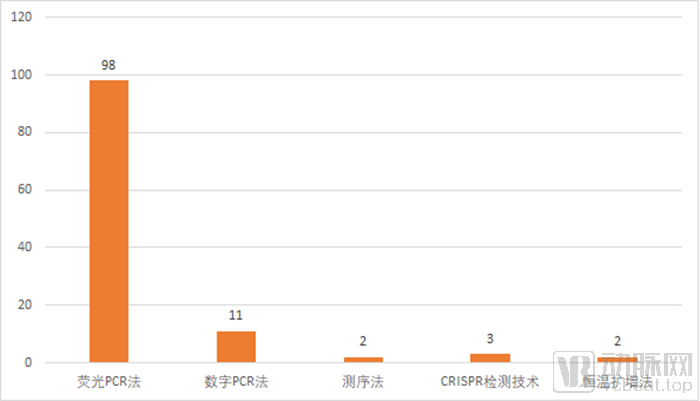
Distribution of Kit Types by Principle Data Source: VCBeat, compiled from public information
PCR, or Polymerase Chain Reaction, is a method for amplifying nucleic acids in samples under test. Fluorescent PCR, also known as qPCR (Quantitative Real-time PCR), is an outcome of the development of biomolecular fluorescence technology. It involves adding fluorescent chemical substances during the nucleic acid amplification reaction and measuring the level of nucleic acids in the products after PCR cycles based on fluorescence intensity. The concept of fluorescent PCR was first mentioned by Japanese scientists in 1992 and was commercialized four years later by the American company ABI. Today, ABI's position in the manufacturing of real-time quantitative PCR instruments remains unshakable, with its third-generation product, the ABI 7500 Real-time PCR System, being the most widely used fluorescent quantitative PCR instrument globally.
According to reports, on January 7, 2020, Chinese researchers uploaded the full genomic sequence of SARS-CoV-2 to the NIH GenBank and GISAID databases for global sharing; on January 21, the Chinese Center for Disease Control and Prevention (CDC) also published several gene sequences, including those of the ORF and N genes, on its official website. Consequently, in the fourth edition of the Diagnosis and Treatment Protocol for Novel Coronavirus Pneumonia released by the National Health Commission on January 27, it was stated that a confirmed diagnosis could be made based solely on positive RT-PCR or sequencing results, as corresponding enzymes and probes could be designed according to the genetic sequences to detect the virus.
During this period, domestic nucleic acid diagnostic reagent companies quickly followed suit, developing diagnostic assays for the virus using publicly available viral sequences as targets. As of press time, VCBeat has identified 98 fluorescent PCR-based SARS-CoV-2 nucleic acid test kits that have completed development through public sources; of course, many products still under research and those with undisclosed information were not included in this count. Due to space constraints, this article does not list detailed information on all nucleic acid test kits. Interested readers may refer to the relevant page of the Pro special topic for further details.
In January, the National Medical Products Administration (NMPA) opened an emergency approval channel for medical device registration. According to regulations, nucleic acid testing reagents could be marketed without prior clinical trials during the epidemic, with supplementary clinical trial data to be submitted later; the approval validity period was one year. Once nucleic acid testing kits received NMPA approval and were listed on the market, they could be deployed in hospitals across various regions and in third-party medical laboratories that were gradually reopening, thereby providing strong support for the screening of infected individuals by Centers for Disease Control and Prevention (CDCs). Taking Hubei Province as an example, there are currently 18 CDCs, 63 hospitals, and 13 independent third-party institutions capable of conducting nucleic acid testing, including 25 hospitals in Wuhan.
The table below lists six products that employ the fluorescent PCR method among the nine SARS-CoV-2 nucleic acid detection kits approved for market launch by the National Medical Products Administration (NMPA). These kits are developed by six companies: ZJ Bio, BGI Genomics, JieNuo Diagnostics, Bioperfectus Technologies, Sansure Biotech, and DaAn Gene. Most of these kits target the ORF1ab and N genes. It is understood that the ORF1ab gene exhibits high specificity, whereas the N gene is relatively conserved within coronaviruses and may lead to cross-reactivity. For instance, positive results may also be observed when detecting human coronaviruses with limited transmissibility, such as 229E, OC43, and HKU-1.
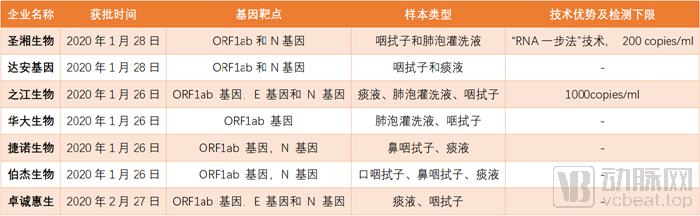
All of the aforementioned companies promptly announced the approval of their new products on their official WeChat accounts. Their capabilities in rapidly developing new products, fully mobilizing production capacity to ensure supply, and integrating multi-channel distribution to deliver products to users in a timely manner played a pivotal role in the fight against the COVID-19 pandemic. For instance, Sansure Biotech developed its nucleic acid testing kit as early as January 14. Similarly, Daan Gene obtained the viral genome sequence on January 12 and secured the medical device registration certificate for its testing kit by January 28, completing the process in just half a month. It also increased its core daily production capacity from 100,000 to 200,000 tests, supplying kits across China.
Meanwhile, these companies have also been frequently visible in charitable aid efforts. For example, on February 3, ZJ Bio-Tech, with logistical support from the Blue Sky Rescue Team and through the China Charity Federation, made a targeted donation of its first batch of supplies to Wuhan Union Hospital, including 10,000 tests worth of novel coronavirus nucleic acid detection reagents, corresponding extraction reagents, and related automated equipment. As of February 18, BGI Genomics had donated 102,500 test kits for the novel coronavirus to Hubei Province and other regions across China.
As of today, the spread of the epidemic has been initially contained, and prevention and control efforts have achieved phased results. Many regions across China have adjusted their response levels to major public health emergencies, while nucleic acid testing kits remain at the forefront of ensuring the safe resumption of work for enterprise employees.
Regarding detection efficiency, an industry insider told VCBeat that although some companies claim to be able to complete nucleic acid testing within half an hour or even 15 minutes, all currently approved and marketed test kits require 2–3 hours to complete the entire nucleic acid testing process. The insider pointed out that the most distinctive feature of PCR is its real-time nature; the time it takes for a sample to test positive is correlated with the viral load in the sample. Since asymptomatic or mildly symptomatic individuals have low viral loads, an excessive pursuit of rapid reaction times may lead to false negatives.
In the remaining sections of this article, we will provide a brief introduction to the SARS-CoV-2 nucleic acid detection kits that have already been developed based on digital PCR, sequencing, CRISPR-based detection, and isothermal amplification methods.
Digital PCR (dPCR) technology, the third generation of PCR techniques, is a method for the absolute quantification of nucleic acid molecules. Currently, there are three primary methods for nucleic acid quantification: spectrophotometry, which quantifies based on the absorbance of nucleic acid molecules; real-time quantitative PCR (qPCR), which relies on the Ct value (the number of cycles required to detect a fluorescent signal); and digital PCR, the latest quantification technology. dPCR primarily utilizes microfluidics or droplet-based methods, which are prominent areas of research in analytical chemistry. Using specialized equipment, approximately 50 microliters of a nucleic acid sample are extensively diluted and partitioned into nearly 100,000 droplets, which are distributed into microreactors on a chip or as individual droplets. Each single droplet serves as an independent reaction unit, with each reactor containing no more than one nucleic acid template molecule. After PCR amplification cycles, reactors containing a nucleic acid template emit a fluorescent signal, while those without a template do not. By analyzing the ratio of positive to negative reactions and knowing the volume of the reactors, the nucleic acid concentration in the original solution can be calculated, thereby achieving absolute quantification of nucleic acid molecules in the sample by directly determining the nucleic acid copy number.
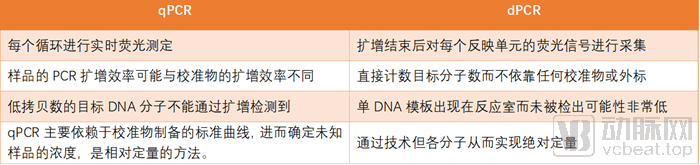
The key distinction between digital PCR (dPCR) and fluorescent PCR lies in the difference between absolute quantification and relative quantification of detection results. It is understood that, at present, the combined cost of dPCR reagents and instruments is relatively high (with a single instrument costing nearly one million yuan), offering limited advantages for the rapid detection of SARS-CoV-2. However, due to technical advantages such as higher levels of automation and shorter turnaround times, several domestic nucleic acid reagent developers with expertise in dPCR technology are attempting to develop relevant test kits suitable for SARS-CoV-2 detection. An incomplete list of these efforts is provided below.
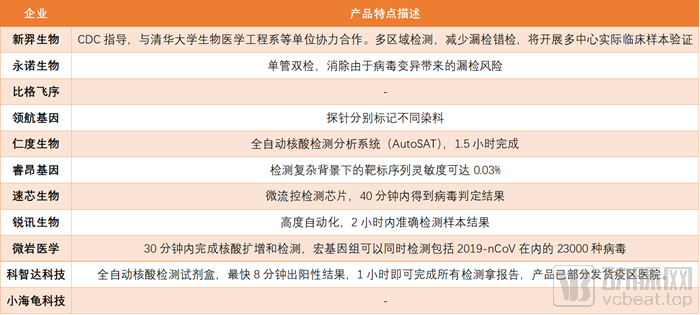
Sequencing can directly determine the order of nucleic acid bases, making it essential for a completely unknown new virus. Although sequencing technology was invented as early as 1977 and experienced rapid development after breaking through key technical bottlenecks during the final stages of the Human Genome Project, only a few companies have developed and launched nucleic acid sequencing kits for the novel coronavirus.
Hybribio
On the evening of February 3, listed company Guangdong Hybribio Biotech Co., Ltd. announced that its subsidiaries, Chaozhou Hybribio Biochemistry Co., Ltd. and Guangzhou Hybribio Pharmaceutical Technology Co., Ltd., had their R&D teams successfully develop two novel coronavirus (2019-nCoV) nucleic acid detection kits: the Novel Coronavirus (2019-nCoV) Nucleic Acid Detection Kit (PCR-Fluorescent Probe Method) using fluorescent PCR technology, and the Novel Coronavirus (2019-nCoV) Nucleic Acid Detection Kit (Sanger Sequencing Method) based on the Sanger sequencing platform.
Furthermore, Guangzhou Kaipu Medical Laboratory, a subsidiary controlled by the Company, has been designated by the Health Commission of Guangdong Province as one of the third-party testing institutions authorized to conduct SARS-CoV-2 sample testing and is currently carrying out related testing services. Wuhan Kaipu Medical Laboratory Co., Ltd. has been included in the first batch of third-party institutions approved by the Hubei Provincial Command Center for the Prevention and Control of Novel Coronavirus Pneumonia to perform SARS-CoV-2 nucleic acid testing.
Jieyi Biotech
Jieyi Biotechnology has developed a novel mNGS solution specifically for the novel coronavirus. While comprehensively identifying pathogens, this approach incorporates a series of SARS-CoV-2-specific primers and leverages Jieyi Biotechnology’s proprietary PCR-free rapid library preparation method to launch the Novel Coronavirus (2019-nCoV) Nucleic Acid Detection Kit (Reversible Terminator Sequencing Method). This kit enables direct processing from clinical samples, significantly enhancing the enrichment efficiency of SARS-CoV-2 nucleic acids. In comparisons with confirmed samples exhibiting fluorescent quantitative CT values <37, the positive concordance rate increased from 87.5% with traditional mNGS to 100%, while genome coverage reached up to 99.8%. In addition to the kit, this solution is equipped with the Cubics™ Pathogen Metagenomics One-Stop Library Preparation Instrument and localized data analysis software, enabling fully unattended automation from clinical samples to sequencing libraries in just 3.5 hours.
According to the introduction, Jieyi Biotechnology’s test kits are characterized by automation, high speed, low cost, and broad coverage. The Cubics™ one-stop library preparation system features four independent reaction channels and can be placed inside a biosafety cabinet to perform the entire workflow of nucleic acid extraction, library preparation, and purification in an unattended manner. With a “sample-in, library-out” design, it effectively eliminates cross-contamination between samples and reduces the risk of infection for laboratory personnel. Sequencing data analysis is automated locally and takes approximately one hour. Under conditions of 20 million (20M) reads per sample with a read length of 75 bp, the genome coverage for SARS-CoV-2 can reach up to 99.8%, significantly improving sequencer utilization and reducing sequencing costs. In addition to SARS-CoV-2, the system can simultaneously detect more than 16,000 types of DNA pathogens (including bacteria, DNA viruses, fungi, and parasites) in samples, providing precise and comprehensive infectious disease diagnosis for critically ill patients.
Equipped with this latest suite of powerful tools, clinicians can complete metagenomic pathogen detection within 18 hours and efficiently obtain genomic sequence data for the novel coronavirus. This capability is crucial for analyzing the virus’s evolutionary origins, pathogenic mechanisms, mutation patterns, and assessing its human-to-human transmissibility.
CRISPR-based detection technology represents a novel approach for detecting SARS-CoV-2 RNA. It requires only purified nucleic acid samples and can complete the detection process within one hour through three simple steps. Shortly after the onset of the SARS-CoV-2 pandemic, Feng Zhang’s team publicly published a nucleic acid detection method based on this technology. Their primary tools include the Cas13a nuclease and two guide RNAs (gRNAs) designed to target specific sequences: one targeting the S gene and the other targeting the Orf1ab gene. Theoretically, if SARS-CoV-2 RNA is present in the sample, the gRNAs will direct Cas13a to cleave the target RNA, resulting in two bands in positive cases, whereas negative cases will show only a single control band. However, this achievement by Feng Zhang’s team remains under clinical investigation.
Universal Pharma
Pulihua announced that the novel coronavirus (2019-nCoV) point-of-care testing kit (CRISPR-based), jointly developed with Pushi Junan, has completed validation. This is a point-of-care testing kit for the novel coronavirus that does not require quantitative PCR instruments. It is easy to operate and rapid, enabling broader application in various frontline prevention and control scenarios, such as primary healthcare facilities, transportation hubs, airports, and customs checkpoints.
According to the introduction, Pushilihua’s test kit can complete detection within 30 minutes, with a limit of detection (LOD) reaching the attomolar (aM, 10⁻¹⁸) level. The high specificity of target detection is ensured by gRNA-mediated specific recognition. Furthermore, the kit is provided in lyophilized form, facilitating ambient-temperature transport. When used with compatible sampling devices, it enables extraction-free molecular testing.
MicroFar Genomics
On January 23, Genetron Health announced that it had successfully developed the “Novel Coronavirus (2019-nCoV) Nucleic Acid Detection Kit (Isothermal CRISPR Method)” in just five days. This innovative gene-editing tool, CRISPR-nCoV, enables highly specific, single-copy-level sensitive detection of the novel coronavirus within 40 minutes.
Weiyuan Gene stated that the kit was developed using its proprietary CRISPR pathogen diagnostic platform, with specific CRISPR detection sites designed based on the 2019-nCoV sequence (BetaCoV/Wuhan/IPBCAMS-WH-01/2019, Collection date: 2019-12-24) published by GISAID. Product performance validation was conducted, and a joint evaluation was carried out with the Institute of Pathogen Biology, Chinese Academy of Medical Sciences. The CRISPR-nCoV kit offers sensitivity as low as a single copy and high specificity that clearly distinguishes it from other coronaviruses. It is capable of detecting various sample types, including sputum, swabs, and bronchoalveolar lavage fluid, with a sample volume requirement as low as 100 µL. The detection time is reduced to under one hour, and the portable, scalable instrumentation holds potential for point-of-care testing applications.
Bojie Biotech
On February 21, Wuhan Bojie Biomedical Technology Co., Ltd. announced the successful development of a CRISPR-based rapid nucleic acid test kit for novel coronavirus (SARS-CoV-2), jointly developed with the core team from the Fifth Medical Center of the PLA General Hospital (formerly the 302nd Hospital of the Chinese People's Liberation Army). The kit has entered the preliminary clinical validation phase. Feedback from clinical operators indicates that the kit offers advantages such as ease of use, rapid turnaround time, and high sensitivity and specificity, enabling quick detection of the virus and identification of infected patients. According to Bojie Biomedical, the kit leverages CRISPR technology to ensure rapid, convenient, and accurate detection, while also employing specialized techniques to effectively mitigate the biosafety risks associated with viral RNA. Furthermore, the instrument accompanying the CRISPR rapid nucleic acid test kit is simple and portable, eliminating the need for expensive, high-end equipment or specially trained personnel. Housed in a single carrying case, it facilitates testing deployment at primary healthcare facilities.
Meanwhile, Bojie Biology has officially launched the research and development of a rapid nucleic acid test strip for the novel coronavirus (2019-nCoV). Centered on CRISPR technology, this test strip eliminates the need to prepare specific antibodies, offering a simpler and more stable workflow compared to traditional colloidal gold immunochromatography. By targeting specific viral nucleic acid fragments, it enables earlier detection of the virus (while immunoassays typically yield results 3–5 days post-infection, the nucleic acid test strip can detect the virus at any stage of infection). In contrast to existing RT-PCR kits on the market, which require sophisticated instrumentation, highly skilled personnel, and longer turnaround times, the rapid and visually interpretable CRISPR test strip is well-suited for screening individuals in the incubation period. It can be deployed in tertiary hospitals, regional hospitals across counties and cities, and even community health centers with limited resources, enabling preliminary self-testing at home.
Isothermal amplification methods eliminate the need for temperature cycling required in fluorescent PCR. These methods primarily involve two categories of techniques. The first category employs specialized enzymes to replace the high-temperature denaturation step in PCR, such as strand-displacing DNA polymerase used in Loop-mediated Isothermal Amplification (LAMP), and recombinase, single-stranded binding protein, and strand-displacing enzyme utilized in Recombinase Polymerase Amplification (RPA). The second category involves amplification through interconversion between DNA and RNA, exemplified by the reverse transcriptase and RNA polymerase used in Nucleic Acid Sequence-Based Amplification (NASBA) and Transcription-Mediated Amplification (TMA).
Boao Bio
On February 22, the “Six-Item Respiratory Virus Nucleic Acid Detection Kit (Isothermal Amplification Chip Method),” which includes detection for the novel coronavirus, jointly designed and developed by Academician Cheng Jing’s team from the School of Medicine at Tsinghua University, West China Hospital of Sichuan University, and CapitalBio Corporation, received emergency medical device approval from the National Medical Products Administration (NMPA). This is the first product of its kind to obtain a registration certificate from the NMPA.
According to the introduction, this test kit is a novel microfluidic chip system designed for multiplex respiratory virus detection. It requires only secretion samples, such as oropharyngeal swabs, from patients and can simultaneously detect six common respiratory viruses, including the novel coronavirus (2019-nCoV), within 1.5 hours. The system has currently been granted 15 authorized patents. In addition to detecting the novel coronavirus, the system can simultaneously detect five other common respiratory viruses at twice the speed of other approved single-analyte testing products. This enables accurate differentiation of various common viruses, including the novel coronavirus, thereby facilitating the exclusion of other viruses that cause similar symptoms. The product features faster processing, higher multiplexing capacity, and enhanced safety.
BioCapital stated that once the kit is applied in clinical settings, it will enable rapid differential diagnosis and timely targeted treatment for suspected patients, significantly alleviating the burden on hospitals and allowing precious medical resources to be concentrated on the treatment of patients with novel coronavirus. After the product received approval, Tsinghua University contacted Wuhan, a city severely affected by the epidemic, to urgently provide four sets of testing instruments and donate chips and reagents worth RMB 5 million, sufficient for 12,000 tests. These instruments will be used at Union Hospital and Tongji Hospital affiliated with Huazhong University of Science and Technology, as well as Huoshenshan Hospital, to retest clinically diagnosed COVID-19 patients and perform differential diagnosis for suspected cases.
Zhongzhi Biology
Based on the information from six novel coronavirus genome sequences published by domestic and international experts on the GISAID platform, the R&D team of Zhongzhi Biology has developed two kits: the “Novel Coronavirus (2019-nCoV) Nucleic Acid Detection Kit (Dual Amplification Method)” and the “Novel Coronavirus (2019-nCoV) Nucleic Acid Detection Kit (RNA Isothermal Amplification–Gold Probe Lateral Flow Assay),” to assist in the early differential diagnosis of novel coronavirus infections in respiratory diseases.
Among these, the novel coronavirus nucleic acid detection kit developed based on the patented technology “RNA Isothermal Amplification-Gold Probe Lateral Flow Assay (RGT)” can complete viral detection within 1 hour. It eliminates the need for nucleic acid extraction; after collecting upper or lower respiratory tract samples, direct cell lysis is performed for isothermal amplification of viral RNA. The method has low equipment requirements and does not necessitate specialized instruments, as both amplification and lateral flow detection can be completed using a constant-temperature device. It is suitable for medical institutions at all levels and various application scenarios, enabling point-of-care testing (POCT) for pathogen RNA.