

JunLian Healthcare New Drug Bulletin 2020, Issue 8: Highlights and Pipeline Updates
Mar 09, 2020 18:06
CST Updated
18:06

This week, there were 8 new drug data entries, including one each for urology, ophthalmology, pain, and immune system diseases, and four for oncology.
❖Gilead Announces $4.9 Billion Cash Acquisition of Forty Seven (FTSV), a Developer of CD47 Pathway InhibitorsForty Seven’s core asset is the CD47 antibody magrolimab, which garnered significant attention at last year’s ASH Annual Meeting by demonstrating a 64% response rate in first-line treatment of patients with acute myeloid leukemia (AML). CD47 serves as a so-called “don’t eat me” signal; it binds to the SIRPα receptor on the surface of macrophages, thereby inhibiting macrophage phagocytosis and preventing the clearance of CD47-expressing cells. Currently, most monotherapies targeting CD47 have shown very limited efficacy, with magrolimab monotherapy achieving only a 10% response rate in hematologic malignancies. However, CD47 is also expressed in non-tumor tissues, particularly on red blood cells. Therefore, similar to other innate immune targets such as STING and TLRs, systemic toxicity remains a potential concern for CD47-targeted therapies. This toxicity limits the tolerable dose and indirectly compromises therapeutic efficacy. In China, several companies, including I-Mab, ImmuneOnco, Innovent Biologics, and Hanse Bio, are actively pursuing this target.
❖Karyopharm’s selinexor met the primary endpoint in a Phase 3 clinical trial for the combination treatment of patients with multiple myeloma (MM), while Sarclisa, a CD38 antibody developed by Sanofi, has been launched for use in combination therapy for adult MM. As the second most common hematologic malignancy after non-Hodgkin lymphoma, MM is characterized by its propensity for drug resistance and relapse, as well as prolonged treatment cycles, making it a consistent focus of development for multinational corporations (MNCs). Currently, the treatment landscape for MM is relatively well-established, with lenalidomide and bortezomib largely occupying the leading position (though the specific first-line agents differ between China and other markets). Furthermore, daratumumab (a CD38-targeting agent) has demonstrated blockbuster potential, gradually shifting from fourth-line to second-line therapy. In addition, BCMA, a unique target on B cells, is emerging as the next major focus in MM. Companies leveraging various platforms, including antibody-drug conjugates (ADCs), bispecific antibodies, and CAR-T cell therapies, are entering this space, potentially replicating the success story seen with the CD38 target.
Urovant Sciences Announces U.S. FDA Acceptance of NDA for Vibegron to Treat Urgency Urinary Incontinence, Urgency, and Frequency in Patients with Overactive Bladder
Urovant Sciences Announces FDA Acceptance of New Drug Application (NDA) for Vibegron, an Investigational Small-Molecule β3-Adrenergic Receptor Agonist, for the Treatment of Urge Incontinence, Urgency, and Frequency in Patients with Overactive Bladder (OAB)
Vibegron, developed by Urovant, is a once-daily oral β3-adrenergic receptor agonist. Studies have shown that it can selectively activate β3-adrenergic receptors.
In the Phase 3 EMPOWUR clinical trial, 1,518 patients were randomized to receive once-daily vibegron (75 mg), tolterodine, or placebo.
Vibegron has a rapid onset of action, demonstrating significant improvement in primary endpoints and alleviation of urinary frequency symptoms after just two weeks of treatment.
Allergan Announces U.S. FDA Approval of Durysta, a Bimatoprost Sustained-Release Implant, for the Treatment of Patients with Open-Angle Glaucoma or Ocular Hypertension
Allergan announced that the U.S. FDA has approved Durysta, a sustained-release bimatoprost implant developed by the company, for marketing to treat patients with open-angle glaucoma (OAG) or ocular hypertension (OHT). This is the first and only biodegradable sustained-release implant.
Bimatoprost is a prostaglandin analog that effectively lowers intraocular pressure. Durysta is a biodegradable, sustained-release implant.
In two Phase 3 clinical studies, 1,122 patients with open-angle glaucoma (OAG) and ocular hypertension (OHT) received treatment with either Durysta or timolol eye drops.
After 12 weeks of treatment, intraocular pressure in patients receiving Durysta was reduced by 30%, meeting the pre-specified non-inferiority criteria compared with the active control group. Furthermore, the study demonstrated that more than 80% of patients may not require additional therapy within one year following implantation.
Merck Announces That Keytruda Met Primary Endpoint in Pivotal Phase 3 Trial for Patients With Relapsed/Refractory Classical Hodgkin Lymphoma
Merck Announces That Keytruda Met the Primary Endpoint of Progression-Free Survival (PFS) in a Pivotal Phase 3 Clinical Trial for Patients with Relapsed/Refractory Classical Hodgkin Lymphoma (R/R cHL)
Keytruda is a blockbuster PD-1 inhibitor developed by Merck & Co. It binds to the PD-1 receptor, blocking its interaction with PD-L1 and PD-L2.
In the pivotal Phase 3 clinical trial, 304 patients were enrolled to primarily compare the efficacy and safety of Keytruda versus the standard therapy brentuximab vedotin in patients with relapsed or refractory classical Hodgkin lymphoma (R/R cHL).
Keytruda provides a statistically significant and clinically meaningful improvement in PFS compared with common therapies, but OS data have not yet been released.
Pfizer and Eli Lilly Announce U.S. FDA Acceptance of BLA for Subcutaneous Tanezumab for the Treatment of Chronic Pain in Patients with Moderate to Severe Osteoarthritis
Pfizer and Eli Lilly Announce FDA Acceptance of Biologics License Application (BLA) for Subcutaneous Tanezumab for the Treatment of Chronic Pain Due to Moderate-to-Severe Osteoarthritis (OA)
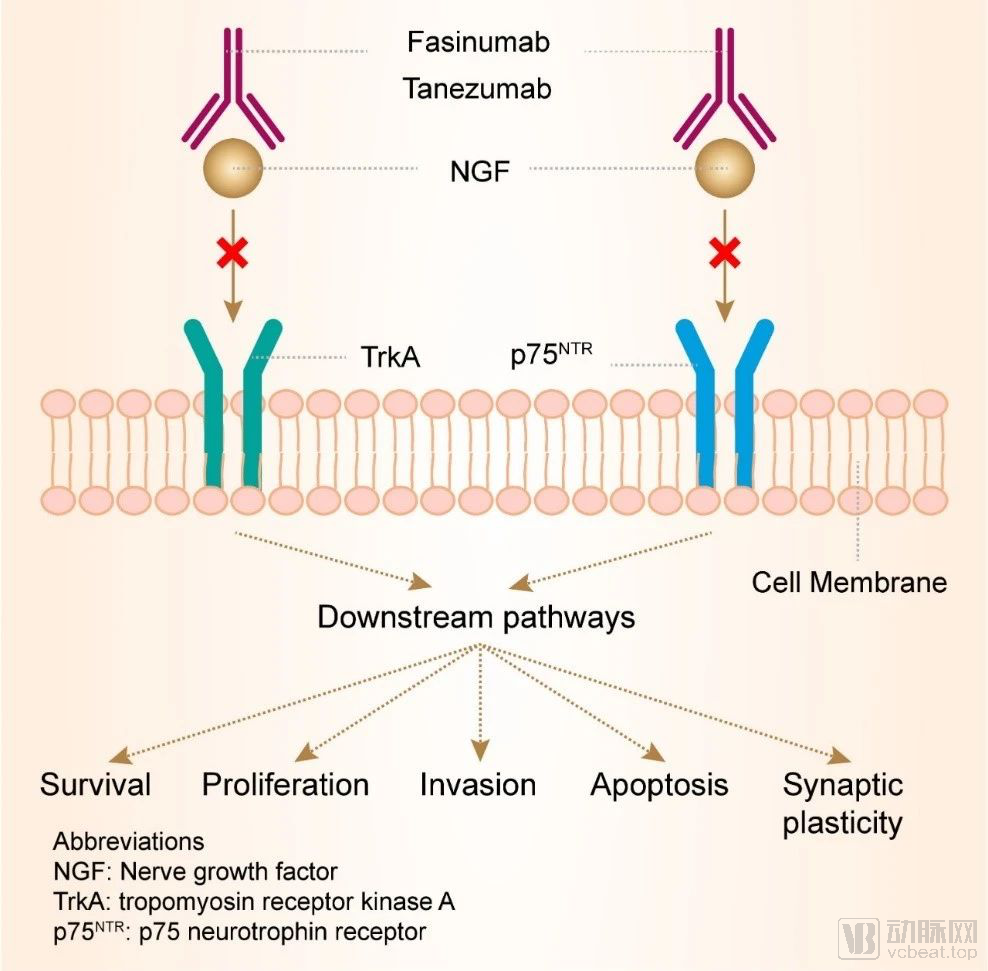
Tanezumab is a humanized monoclonal antibody against nerve growth factor (NGF) and the first NGF inhibitor to receive FDA Fast Track designation. It selectively binds to and inhibits NGF.
A total of 18,000 patients were enrolled in 39 Phase I to III clinical trials.
In a 24-week Phase 3 clinical study, tanezumab met all primary endpoints, with treatment resulting in statistically significant improvements in pain and physical function among patients with moderate-to-severe osteoarthritis (OA) of the knee or hip.
Mechanism of Action of Tanezumab
 Data source: Pfizer
Genentech Announces U.S. FDA Grants Breakthrough Therapy Designation to Esbriet (pirfenidone) for Adult Patients with Unclassifiable Interstitial Lung Disease
Genentech Announces FDA Grants Breakthrough Therapy Designation to Esbriet (pirfenidone) for Adult Patients with Unclassified Interstitial Lung Disease (uILD)
Esbriet (pirfenidone) is an oral medication approved for the treatment of idiopathic pulmonary fibrosis (IPF), with antifibrotic and anti-inflammatory effects.
The results are based on the Phase 2 clinical trial of Esbriet, which is the first randomized controlled trial to include patients with unclassifiable interstitial lung disease exhibiting progressive fibrosis.
Trial data indicate that treatment with Esbriet can delay disease progression in these patients by 24 weeks and improve multiple pulmonary function parameters, including forced vital capacity (FVC).
FDA Approves Sarclisa, a CD38 Antibody Developed by Sanofi, for Combination Therapy in Adult Patients with Multiple Myeloma
The U.S. FDA Approves Sanofi’s CD38 Antibody Sarclisa (isatuximab-irfc) for Marketing, in Combination with Pomalidomide and Dexamethasone, for the Treatment of Adult Patients with Multiple Myeloma (MM)
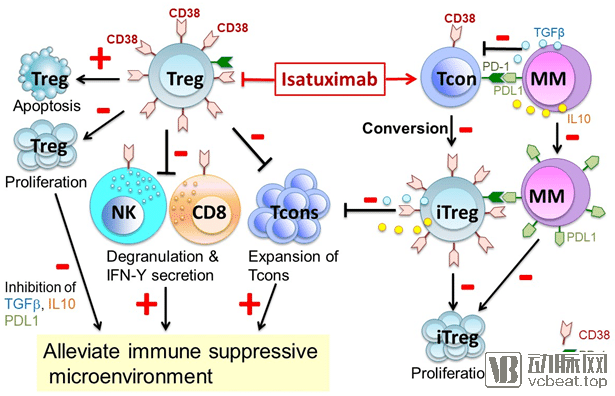
Isatuximab is a monoclonal antibody targeting the CD38 receptor on the surface of plasma cells, which can trigger multiple distinct mechanisms of action to promote apoptosis and modulate immune responses.
This study is based on the clinical trial results of 307 patients with relapsed/refractory multiple myeloma, all of whom had received at least two prior lines of therapy, including lenalidomide and proteasome inhibitors.
The experimental group reduced the risk of disease progression and death by 40%, with a median progression-free survival (PFS) of 11.53 months—nearly double that of the active control group (6.47 months). The overall response rate (ORR) was 60.4% in the experimental group, compared with 35.3% in the active control group.
Mechanism of Action of Isatuximab
Data source: Sanofi
MorphoSys Announces FDA Acceptance of BLA for Tafasitamab, Developed by the Company, in Combination Therapy for Relapsed/Refractory Diffuse Large B-Cell Lymphoma
MorphoSys Announces U.S. FDA Acceptance of Biologics License Application (BLA) for Tafasitamab in Combination with Lenalidomide for the Treatment of Patients with Relapsed/Refractory Diffuse Large B-Cell Lymphoma (DLBCL)
Tafasitamab is a humanized monoclonal antibody targeting the CD19 antigen. CD19 is an antigen widely expressed in B-cell malignancies; it enhances B-cell receptor-mediated signaling pathways and supports B-cell survival, making it a critical target for the treatment of B-cell cancers.
In the Phase 2 clinical trial named L-MIND, 80 patients with relapsed/refractory DLBCL who were ineligible for intensive chemotherapy or stem cell transplantation received combination therapy consisting of tafasitamab and lenalidomide.
Patients receiving treatment achieved an objective response rate (ORR) of 60% and a complete response rate (CR) of 43%. At a median follow-up of 17.3 months, the median progression-free survival (PFS) was 12.1 months.
Karyopharm Therapeutics Announces That Selinexor Met Primary Endpoint in Phase 3 Clinical Trial for Combination Therapy in Patients with Multiple Myeloma
Karyopharm Therapeutics announced that Xpovio (selinexor), developed by the company, in combination with Velcade (bortezomib) and dexamethasone, met the primary endpoint in the Phase 3 BOSTON clinical trial for the treatment of patients with refractory multiple myeloma.
Xpovio is an oral selective inhibitor of nuclear export that binds to the nuclear export protein XPO1 and inhibits its function, leading to the accumulation of tumor suppressor proteins in the nucleus.
In the Phase 3 BOSTON trial, 402 patients with multiple myeloma who had received one to three prior lines of therapy were enrolled.
Compared with the active control group, combination therapy incorporating Xpovio significantly reduced the risk of disease progression or death in patients. The median progression-free survival (PFS) was 13.93 months in the treatment group and 9.46 months in the active control group, representing a difference of 4.47 months.
❖Regarding COVID-19, on March 7, mainland China reported 44 new confirmed cases, including 41 in Hubei Province (all in Wuhan) and 3 in other provinces. The domestic epidemic has been largely brought under comprehensive control.
❖Gilead Sciences Announces $4.9 Billion Cash Acquisition of Forty Seven (FTSV), Developer of CD47 Pathway Inhibitors, at $95.50 Per ShareForty Seven’s core asset is the CD47 antibody magrolimab, which garnered significant attention at last year’s American Society of Hematology (ASH) Annual Meeting. In a small clinical trial, the product demonstrated a 64% response rate when combined with the chemotherapy agent azacitidine in previously untreated acute myeloid leukemia (AML) patients, and a 92% response rate in previously untreated high-risk myelodysplastic syndromes (MDS) patients. The acquisition price represents 16 times Forty Seven’s market capitalization from six months ago.
❖Orionis Biosciences Announces Four-Year R&D Collaboration with Novartis to Discover and Design Innovative Small-Molecule Therapies, Including Protein Degraders, Leveraging Orionis’s Proprietary Allo-Glue Small-Molecule Drug Platform Across Multiple Therapeutic Areas
❖Editas Medicine and Allergan jointly announced that the first patient has been dosed in the Brilliance clinical trial. This trial is designed to evaluate the safety, tolerability, and efficacy of AGN-151587 (EDIT-101), an investigational therapy based on CRISPR gene-editing technology, in patients with Leber congenital amaurosis 10 (LCA10). This marks the world’s first in vivo CRISPR gene-editing therapy administered to patients.