

Accelerated Digital Transformation in Pharmaceutical Marketing: SaaS Platforms, Physicians, or Retail Channels – Which Is the Optimal Path?
Although the COVID-19 pandemic has not yet fully subsided, its impact on the digitalization of the healthcare industry is gradually becoming apparent. With physical contact severed, the importance of digital solutions has surged. Internet-based healthcare played a pivotal role in ensuring medical security during the pandemic, and many cities urgently enabled online consultation services to be covered by medical insurance payments.
The rapid development of internet healthcare in recent years has made it well-equipped to handle the sudden outbreak. However, it seems that not every sector was adequately prepared.
For a long time, pharmaceutical companies’ marketing efforts have relied on offline connections established between medical representatives and physicians. During the current pandemic, traditional pharmaceutical marketing approaches have become virtually inoperable, whereas companies that had proactively implemented digital marketing strategies have remained largely unaffected. In this shifting marketing landscape, they may have even secured more resources than usual.
Has digital marketing become an essential strategy for pharmaceutical companies today? Among the three key areas of digital marketing deployment by pharmaceutical firms—SaaS platforms, physicians, and retail outlets—which is the most critical factor in drug marketing?
The healthcare sector has undergone tremendous changes over the past five years, with the application of digital technologies undoubtedly leading the trend.
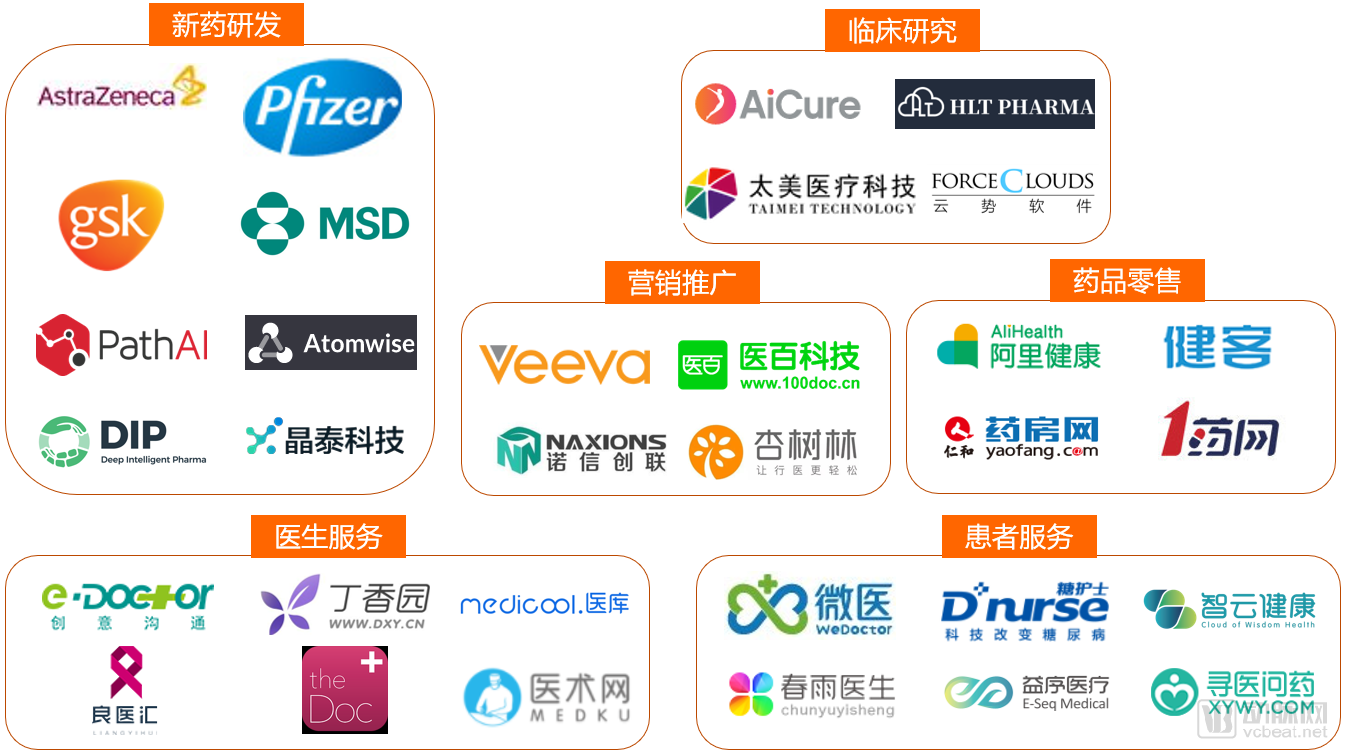
Map of Digital Innovation Enterprises in the Pharmaceutical IndustryVCBeat.
In its 2019 Research Report on Digital Innovation in the Pharmaceutical Industry, VCBeat noted that the pharmaceutical industry’s compound annual growth rate (CAGR) ranked second only to the financial and insurance sectors in cross-industry comparisons, surpassing other sectors such as information and communications technology (ICT), retail, high-end manufacturing, and wholesale trade. However, the level of digital development in the pharmaceutical industry remains relatively low. Therefore, from the perspective of future industry-wide digitalization, the pharmaceutical sector holds substantial potential for digital transformation, and the application of digital technologies will drive even faster growth in the industry.
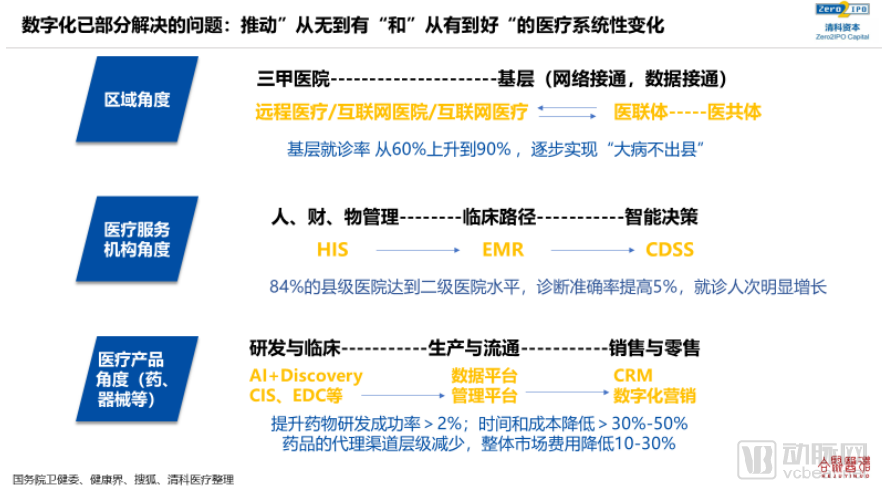
It is not only VCBeat that has reached similar conclusions; Zero2IPO Capital has also arrived at comparable findings through its research. In Zero2IPO Capital’s healthcare research map, the integration of digital technologies into the healthcare industry is categorized into three major directions, which are further subdivided into nine specific domains. According to Yu Jurong from Zero2IPO Capital, as digital solutions permeate various segments of the healthcare industry, many pre-existing challenges can be effectively addressed through these digital means.
For instance, by integrating networks and data between tertiary hospitals and primary care institutions, and leveraging tools such as telemedicine, internet hospitals, and various out-of-hospital digital health platforms to establish medical alliances and medical consortia, the patient visit rate at the primary care level increased from 60% in 2016 to 90% in 2019, progressively achieving the goal of “managing serious illnesses within the county.”
The informatization of healthcare institutions has evolved from general management software, such as Hospital Information Systems (HIS), to clinical-centric Electronic Medical Records (EMR), and further to Clinical Decision Support Systems (CDSS) for intelligent auxiliary decision-making. Currently, 84% of county-level hospitals in China have reached the standards of Tier II hospitals, with a 5% increase in diagnostic accuracy and significant growth in both outpatient and inpatient visits.
The digitalization of R&D and clinical trials has raised the success rate of new drug development to above 2%, while reducing time and costs by 30%–50%, serving as a powerful leverage point. Meanwhile, the digitalization of pharmaceutical distribution and sales has reduced the layers of agency channels, lowering the overall market expense ratio by at least 10%–30%, which is also highly valuable.
Over the past few years, we have witnessed the gradual maturation of multiple sectors, characterized by well-defined industry landscapes and dominant market leaders. In contrast, the industrial structure of certain other sectors remains unclear, suggesting that these areas may still harbor significant opportunities. Digital marketing is one such high-potential sector.
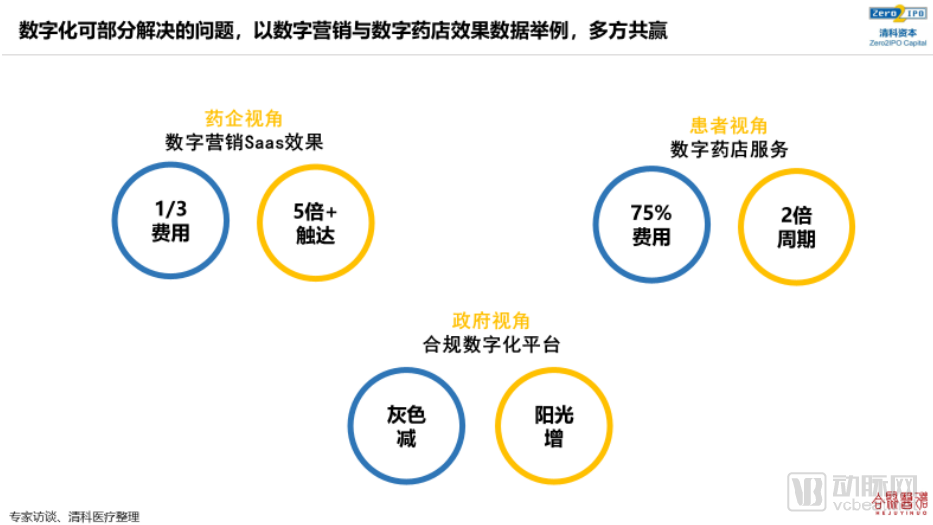
Digital Marketing and Retail in the Pharmaceutical Industry Create a Win-Win Situation for All Parties
According to Yu Jurong from Zero2IPO Capital, the integration of digitalization into the healthcare sector creates a win-win scenario for all stakeholders. Digital transformation delivers mutual benefits to pharmaceutical companies, patients, and the government. From the perspective of pharmaceutical companies, leveraging SaaS-based digital marketing systems enables them to reach five times as many physicians within the same timeframe while incurring only one-third of the original costs. For patients, digital pharmacy services have doubled medication adherence duration, significantly reducing the risk of disease recurrence while lowering per-unit medication costs by more than 25%, thereby providing substantial value. For the government, compliant digital platforms signify a reduction in gray-area operations and an increase in transparency, serving as a key indicator of a healthy industry ecosystem.
Over the past decade, although many enterprises have begun exploring digitalization, the domestic pharmaceutical marketing sector has failed to complete its digital transformation due to limitations in technological capabilities and insufficient internal motivation. While the constraints imposed by technology are easy to understand, why would companies lack sufficient motivation for such a cost-controlling initiative?
The root cause lies in the persistently high gross profit margins within China’s pharmaceutical industry. In an environment characterized by such high margins, companies have the financial capacity to invest heavily in marketing without significant concern for cost control, thereby limiting the potential impact of digital tools in this area. Furthermore, these high margins empower sales departments with substantial influence within organizations. The introduction of digital solutions inevitably challenges the status and authority of sales teams, leading to resistance from within these departments.
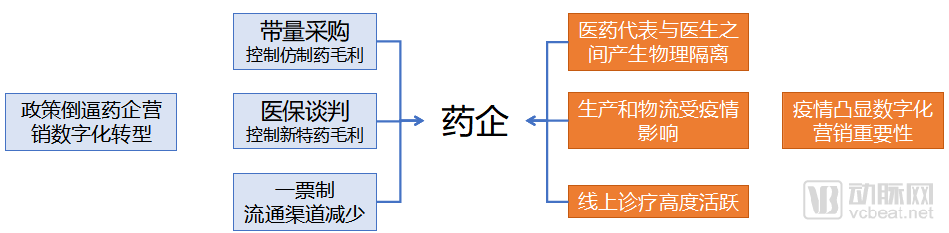
External Factors Drive the Digital Transformation of Pharmaceutical Marketing
However, with the changing policy landscape, the era of high gross margins in the pharmaceutical industry is gone for good. Volume-based procurement and national reimbursement drug price negotiations have squeezed profit margins for generic drugs and innovative drugs, respectively, forcing companies to control their costs. In the process of cost reduction, the sales department, which accounts for the largest expenditure, naturally bears the brunt—this is what was widely rumored last year as the “pharmaceutical representative crisis.” As sales teams shrink, the ability of digital tools to improve personnel efficiency has become increasingly prominent.
On the other hand, the Two-Invoice System has been fully implemented, while the One-Invoice System is currently being piloted. The current Two-Invoice System has significantly reduced the intermediate distribution links between pharmaceutical manufacturers and sales terminals. The forthcoming One-Invoice System will further require pharmaceutical manufacturers to supply directly to sales terminals. This means that the customer base for pharmaceutical companies will shift from a handful of regional distributors in the past to tens of thousands of hospitals, pharmacies, and online pharmaceutical platforms. For pharmaceutical companies to control their costs without compromising sales, digitalization may be the only viable solution.
During this epidemic, pharmaceutical companies should have a deeper understanding of the importance of digital transformation for future marketing.
First, the comprehensive quarantine measures implemented during this outbreak directly severed the physical contact between pharmaceutical sales representatives and physicians; offline academic conferences could not be held during this period. The traditional marketing strategies employed by pharmaceutical companies became almost entirely ineffective during the pandemic.
Second, due to the impact of the pandemic, logistics resources across China were concentrated on pandemic response efforts. In addition to pandemic-related medications, the production of other pharmaceuticals was also affected to some extent. Digital marketing tools enable pharmaceutical companies to rapidly assess conditions at various sales terminals, allocate their resources rationally, and ensure continued drug sales during the pandemic.
Third, the surge in traffic on internet healthcare platforms during the pandemic, coupled with difficulties in accessing offline medical services, led a large number of patients to seek online consultations and purchase medications. Pharmaceutical companies that had already established partnerships with these platforms through digital marketing strategies benefited from this wave of traffic dividends and helped more patients navigate the challenges posed by the pandemic.
Many pharmaceutical companies, both domestic and international, have recognized the importance of digital marketing and have begun to explore approaches to implementing it.
Digital marketing by pharmaceutical companies primarily targets their own prescription drugs. Currently, there are three main areas of collaboration for pharmaceutical companies in digital marketing: digital marketing platforms, physician-facing traffic entry points, and drug sales terminals.
As gross margins continue to decline, the sales departments of pharmaceutical companies are gradually shrinking. Despite the reduction in team size, these companies must still maintain their existing marketing channels, posing a significant challenge for the pharmaceutical industry.
Pharmaceutical marketing requires extensive user screening, sustained engagement, and precise targeting. Establishing connections with physicians is merely the first step in the marketing process; the key to success for pharmaceutical companies lies in the subsequent long-term relationship maintenance.
Previously, the maintenance of physician resources relied primarily on direct connections established between local market teams and physicians. This marketing approach required substantial labor costs, while pharmaceutical companies’ management of these resources remained relatively fragmented. Particularly during the recent pandemic, traditional marketing methods faced even greater challenges once physical contact between medical representatives and physicians was severed.
To better manage and maintain the customer resources they have accumulated over time, pharmaceutical companies need a comprehensive digital solution to improve their efficiency in resource maintenance. This demand has been noticed by many entrepreneurs, forming a brand-new niche market that includes startups such as Medibai Technology, Huimei Digital Science, and Yunshi Software.
“Leading enterprises, particularly multinational pharmaceutical giants such as Pfizer, Bayer, and AstraZeneca, began exploring digital marketing strategies five to ten years ago. However, not every company possesses the R&D capabilities and financial strength of these industry leaders. Currently, many domestic pharmaceutical companies in China have a relatively low level of digitalization, yet they face an urgent need to innovate their marketing through digital means under the country’s new pharmaceutical policies. We believe that high-quality domestic pharmaceutical enterprises will play an increasingly important role in China’s future pharmaceutical market. Therefore, we aim to empower them through Yibai’s one-stop SaaS cloud services, helping pharmaceutical companies achieve leapfrog growth in their marketing efforts.” Ms. Qu Tan, Co-founder and COO of Yibai Technology, explained the company’s mission from her perspective.
Companies like Yibai Technology primarily assist pharmaceutical enterprises in digitalizing their marketing management by providing SaaS platforms. These platforms enable the migration of most marketing activities from offline to online channels, thereby enhancing marketing efficiency and traceability for pharmaceutical companies through a phased integration of online and offline approaches.
In recent years, pharmaceutical companies have increasingly focused on compliant, exclusive, efficient, and empowering digital transformation in marketing. The outbreak of the COVID-19 pandemic in early 2020 undoubtedly accelerated the pace and rhythm of corporate digitalization. Many companies rapidly initiated the construction of exclusive digital platforms and project preparations after the Spring Festival, primarily to ensure that traditional marketing activities—such as internal communication, dissemination of academic information, market brand exposure, and engagement with target customers—could proceed in an orderly manner during the epidemic period. This marks what we often refer to as Marketing Transformation 1.0, or "Stock Marketing." While stock marketing has brought significant value to enterprises, it can also quickly and substantially reduce the substantial ineffective costs associated with traditional offline marketing, thereby improving efficiency, lowering costs, and enhancing marketing profits. As more companies join the ranks of digitalization, we are currently planning and reflecting on the next step: Marketing 2.0, focused on "Incremental Marketing," and establishing a closed-loop system for Digital Marketing 2.0.
SaaS platforms are well-equipped to address the comprehensive, one-stop integrated marketing needs of pharmaceutical companies across all scenarios, while also enabling rapid iteration. Taking Yibai Technology as an example, its SaaS offerings cover more than 30 traditional pharmaceutical marketing scenarios, including virtual departmental meetings, live surgical broadcasts, case collection campaigns, and questionnaire surveys. In terms of service content, the SaaS platform continuously iterates based on user demands. As the number of partner pharmaceutical companies grows, its service functionalities and product offerings will become increasingly robust and comprehensive.
“If pharmaceutical companies choose to build their own digital marketing platforms, they must consider both development costs and timeframes. Our advantages in this area are quite evident. Tailored to the needs of pharmaceutical enterprises, we can help them rapidly launch a comprehensive, company-specific digital marketing platform within approximately one week. This eliminates the extensive efforts previously required for client-developer communication, testing, and post-launch iterations and bug fixes. Yibai’s SaaS cloud service platform has already gained experience serving 200 leading pharmaceutical companies, with over a million clinical experts using the platform. Our strengths in providing dedicated services to support the digital marketing transformation of pharmaceutical enterprises are clearly pronounced,” said Qu Tan.
During this outbreak, Yibai Technology has upheld its corporate mission of “making healthcare more compassionate” and contributed to epidemic relief efforts in its own way. The company has provided free access to its digital online education platform for medical institutions and professional societies, enabling them to disseminate online content during the pandemic, including continuing medical education for physicians.
Physicians with prescribing authority have long been the core marketing target for pharmaceutical companies. While digital operations can help pharmaceutical companies manage their established base of physicians with whom they maintain stable relationships, these companies also need to identify additional physician resources to broaden awareness of their product advantages among a larger pool of prescribers.
In traditional marketing models, the development and maintenance of physician relationships relied on offline visits by medical representatives and the organization of academic conferences. However, as the size of medical representative teams shrinks, the number of physicians each representative must cover has expanded rapidly. The previous labor-intensive sales approach is no longer sustainable, making it an urgent priority for pharmaceutical companies to identify suitable channels for accessing physician traffic.
Consequently, internet healthcare companies and physician communities with extensive physician resources have become the primary battlegrounds for pharmaceutical companies to expand their new resources. In the era of pharmaceutical sales representatives, each representative could tailor targeted sales strategies based on the specific circumstances of individual physicians. In contrast, in the era of digital marketing, pharmaceutical companies face tens of thousands of physicians on platforms, shifting their sales strategies from product-centric promotion to addressing physicians’ needs, such as providing diagnostic and treatment tools, patient management solutions, and continuing medical education. In this regard, platforms like DXY and Apricot Forest (Xingshulin) have already established numerous successful collaboration cases.
For internet healthcare companies, digital marketing still holds room for further expansion. The complete closed-loop process of online consultation, prescription issuance, payment settlement, and medication delivery in internet healthcare enables pharmaceutical companies to manage the entire patient journey from physicians to patients on internet healthcare platforms. For instance, WeDoctor signed agreements with multiple pharmaceutical companies in October 2019 to establish disease-specific medical consortia, building a digital chronic disease prevention and control system for patients with chronic conditions.
During this epidemic, internet healthcare played a pivotal role in the management of chronic diseases. Under conditions of comprehensive lockdown, patients faced significant difficulties in attending offline follow-up visits, and obtaining medications was even more challenging. The complete closed-loop system established by internet healthcare aligned precisely with patient management needs during the pandemic. In response, more than ten provinces and municipalities across China urgently enabled online medical consultation services to be covered by medical insurance. Pharmaceutical companies that had strategically positioned themselves in the internet healthcare sector in advance were naturally able to benefit from this trend. For instance, Miaoshou Doctor partnered with Hong Kong AoMei Pharmaceutical to launch free online clinical consultations during the epidemic.
Overall, pharmaceutical companies have promoted their products through their own marketing campaigns; internet enterprises and physician communities have achieved traffic monetization; and physicians have fulfilled their specific professional needs. From a results-oriented perspective, the digital marketing efforts of pharmaceutical companies targeting physicians have ultimately created a win-win situation for all parties involved.
At the entrance to the inpatient departments of hospitals, one often sees the prominent sign: “Pharmaceutical Representatives Are Not Allowed.” During the most profitable era for pharmaceutical companies, medical representatives would even enter patient wards to peddle medications. Today, however, these representatives struggle merely to maintain relationships with physicians; consequently, pharmaceutical companies naturally lack the resources to engage in direct-to-patient sales.
On the other hand, pharmaceutical companies face regulatory constraints when implementing marketing strategies targeted at patients. National policies and regulations prohibit the advertising of prescription drugs through mass media or any other form of public-facing promotional activities. Common advertising methods used for over-the-counter (OTC) drugs are therefore not applicable. Consequently, when promoting to patients, pharmaceutical companies must rely on sales channels that offer the most direct access to patients.
As hospitals’ share in pharmaceutical distribution declines, pharmacies have absorbed a significant volume of terminal sales shifting away from hospitals, positioning themselves to potentially become the largest patient traffic entry point in the future. Consequently, physical and online pharmacies, as the pharmaceutical sales channels closest to patients, have become key intermediaries for pharmaceutical companies to reach patients. Moreover, with the comprehensive expansion of volume-based procurement (VBP), products that fail to win bids lose direct access to the hospital market, further intensifying competition among pharmaceutical companies for pharmacy channel partnerships.
Chronic disease medications are a critical component of pharmaceutical companies’ sales strategies. The long-term, stable medication adherence among patients with chronic conditions ensures that this segment remains the largest market within the pharmaceutical industry. Collaboration between pharmaceutical companies and pharmacies is particularly vital in the chronic disease sector. By providing pharmacies with digital solutions for chronic disease management and enhancing their capabilities in this area, pharmaceutical companies can indirectly reach chronic disease patients through these partnered pharmacies. The General Manager of Hengrui Medicine’s Integrated Product Division has stated that Hengrui will leverage chronic disease medications as a breakthrough point in the terminal retail market, anticipating strong growth in this sector.
On the other hand, pharmaceutical e-commerce platforms possess inherent advantages in chronic disease management. The integration of online consultations with pharmaceutical e-commerce enables patients to complete follow-up visits, prescription renewals, and medication purchases without leaving home, with medicines delivered directly to their doorsteps. Therefore, when collaborating with internet healthcare platforms, pharmaceutical companies value not only the physician resources available during the consultation phase but also the comprehensive, end-to-end chronic disease management services that include pharmaceutical retail. In addition, major pharmaceutical e-commerce platforms such as JD Health Pharmacy, 111.com, and Dekai Pharmaceutical maintain close collaborative relationships with pharmaceutical manufacturers.
During this outbreak, online pharmaceutical sales also played a pivotal role in chronic disease management. For instance, JD Health, AliHealth, and Dekai Pharmaceutical successively launched their own “Chronic Disease Benefit Programs,” partnering with dozens of pharmaceutical companies to ensure the supply of medications for chronic conditions through their respective e-commerce platforms during the pandemic.
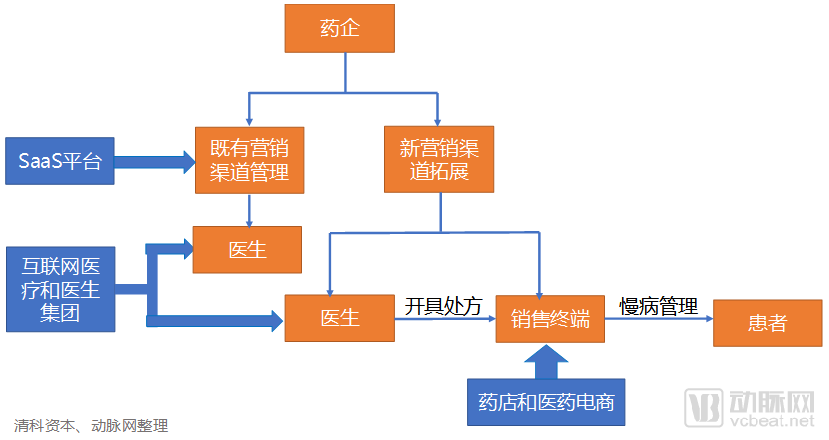
Digital Marketing for Pharmaceutical Companies
In general, digital marketing has become an essential strategy for pharmaceutical companies today. To excel in digital marketing in the new era, it is crucial to strengthen both internal capabilities and external outreach.
Internally, digital tools are employed to manage existing marketing channels, enhance the sales team's productivity ratio, and achieve maximum channel coverage with minimal resource consumption.
Externally, we are strategically positioning ourselves on both the physician and patient sides. We aim to connect with more physicians through internet platforms to address their clinical needs, while simultaneously assisting pharmaceutical sales terminals in managing patients effectively to enhance patient stickiness.
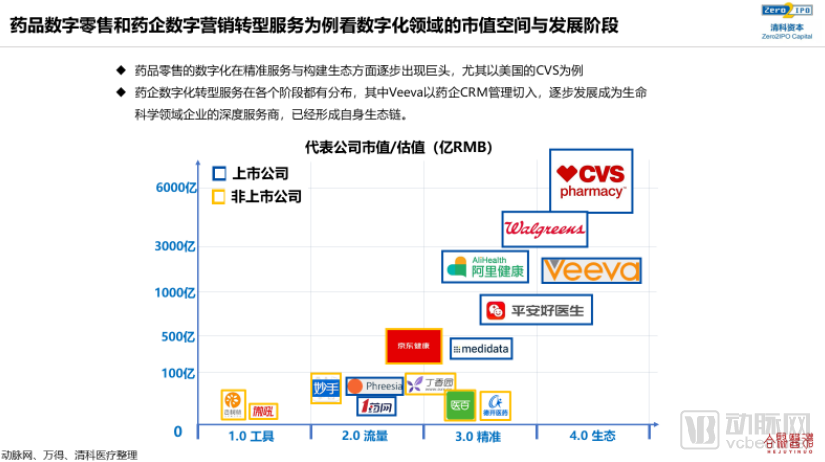
Market Size and Development Stage of Digital Pharmaceutical Marketing (Zero2IPO Capital)
Based on the differing entry points for digital marketing enterprises, Zero2IPO Capital categorizes the development of digital pharmaceutical marketing into four stages. In the 1.0 Tool Era, digital marketing merely involved the use of basic digital tools. The 2.0 Traffic Era marked an entry point through digital healthcare, collaborating with traffic gateways for product promotion. In the 3.0 Precision Era, pharmaceutical companies began employing more sophisticated digital marketing tools to reach and manage their core target audiences with greater precision. Finally, in the 4.0 Ecosystem Era, service providers assisting pharmaceutical companies with digital marketing will establish a comprehensive digital marketing ecosystem, enabling pharmaceutical companies to conduct one-stop digital marketing operations on their platforms.
Yu Jurong of Zero2IPO Capital believes that China’s pharmaceutical sector is currently undergoing a transition from the “Traffic Era 2.0” to the “Precision Era 3.0.” As pharmaceutical companies accumulate more resources, the value of traffic entry points is gradually diminishing, being replaced by digital platforms that facilitate precise marketing management for these enterprises.
Leading global companies in digital marketing, such as Veeva Systems and WebMD, have already entered this stage. Taking Veeva as an example, the company initially entered the market through pharmaceutical CRM solutions and gradually evolved into a deep-service provider for the life sciences sector. Its client base now includes nearly all of the top 20 pharmaceutical companies worldwide. Veeva’s revenue grew rapidly from $233 million in fiscal year 2015 to $862 million in fiscal year 2019, representing a compound annual growth rate (CAGR) of 31.4%, with its market capitalization exceeding $20 billion. CVS Health is undoubtedly the giant in digital pharmaceutical retail, leading globally in online-to-offline (OTO) retail combined with pharmacy benefit management (PBM) services, and boasting a market capitalization of over $90 billion.
In China, the market capitalization of most companies specializing in digital marketing remains at the level of hundreds of millions of RMB. Compared to the country’s RMB 2 trillion pharmaceutical market, or even the broader medical device market, there is still significant room for growth in digital marketing within the healthcare sector.