

K Health Files for IPO After Raising Nearly $100 Million in Four Years to Power AI-Driven Primary Care

K Health
Internet Health Service Platform
On February 27, 2020, AI-powered telehealth company K Health closed a $48 million Series C financing round, led by 14W and Mangrove Capital, with participation from Anthem, Lerer Hippeau, and Primary Venture Partners. Following this $48 million Series C raise, K Health will use the funds to expand its model and shift primary care services to mobile devices, aiming to improve healthcare accessibility worldwide.
Prior to this, the company completed a $12.5 million Series A financing round in July 2018, and in December of the same year, secured a $25 million Series B financing round from 14W, Comcast Ventures, Mangrove Capital Partners, and other angel investors.。
In recent years, K Health has made significant strides through partnerships with insurance providers such as Anthem. The new round of financing will pave the way for K Health’s future growth. Backed by a large number of companies, the four-year-old startup has raised a total of $97.3 million in funding.
What Makes K Health So Appealing That It Has Garnered Sustained Favor from Investors?
K Health, founded in 2016 and headquartered in New York, USA, and Tel Aviv, Israel, is a developer of AI-powered healthcare applications. The company is driven by a global team comprising physicians and software developers. They have created an application that leverages artificial intelligence to help consumers better understand their current health status and provides personalized primary care services.
K Health employs 110 staff members across New York and Tel Aviv, including 20 physicians, 30 data scientists and AI specialists, 40 engineers, and 20 product and marketing professionals. The company is dedicated to leveraging advanced AI technologies to transform clinical health data into intuitively accessible information, empowering users to better manage their health knowledge, while continuously expanding and enhancing its telehealth services.
When discussing K Health, it is impossible not to mentionCo-Founder and CEO Allon Bloch。
Allon Bloch graduated from Columbia University with an MBA from Columbia Business School. He previously served as the CEO of Wix and Vroom, and currently remains a board member of Wix. He also formerly served as a General Partner at Jerusalem Venture Partners, a major Israeli venture capital firm.
Allon Bloch is disillusioned with the U.S. healthcare system. He believes that telemedicine can be immensely helpful in reducing the high costs associated with regular doctor visits.
To address these medical issues, K Health’s platform incorporates medical histories, clinical outcomes, and the expertise of over 10,000 physicians, providing treatment information for hundreds of conditions.
By analyzing a dataset comprising physician notes, laboratory results, treatment protocols, and prescriptions, K Health leverages an AI-powered chatbot to inform users about their health concerns, provide diagnostic and therapeutic guidance, and recommend appropriate care pathways. When necessary, it also facilitates connections between consumers and specific healthcare providers.
Bloch stated that K Health’s new funding has two primary objectives. The first is to expand its products into new markets both domestically and internationally.
“The U.S. has a large population, and healthcare services are either too expensive or too cumbersome; for at least some market segments, the system is already broken,” he said. “Moreover, we plan to enter countries with weaker healthcare systems through our information and service layers. Although we are not yet ready to make announcements, we will pursue some of these initiatives jointly with partners.”
The second, and most urgent, task is to further refine their tools. He stated that this is a decade-long project, not a two-year endeavor.
K Health Has Two Business ModelsFirst, it partners with companies like Anthem to offer the application to their customers. Second, it provides medical services through physicians employed by K Health. In both scenarios, physicians prescribe medications for patients and refer them for laboratory tests or hospital emergency care. The company emphasizes that it can reduce healthcare costs by 80%.
“Gathering insights through an application offers another advantage. An application never gets tired from long working hours, does not need to go home, and does not experience boredom, even after reviewing 500 similar cases in the past month.” Allon Bloch added, “Furthermore, physicians—especially family practitioners—must continuously learn new things. If a patient’s information is not straightforward, doctors do not have three hours to spend researching new topics. They then refer the patient to a specialist, which can take several more months.”
Allon Bloch’s expertise in business management and his focus on telemedicine enabled him to keenly identify and seize opportunities within the industry. Through the efforts of him and his team, Allon Bloch successfully captured a significant share of the market.
Allon Bloch stated, “What we are trying to do is completely transform the way healthcare is delivered.”
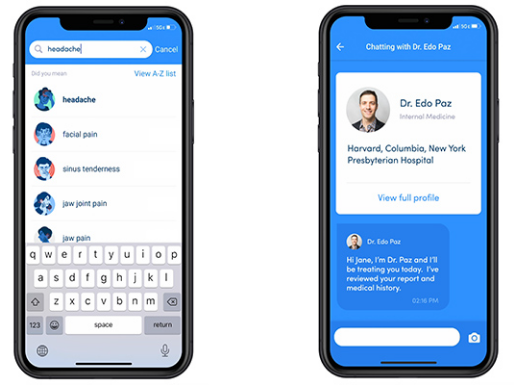
K Health’s eponymous application has garnered support from users worldwide and numerous investors. In July 2019, K Health announced a partnership with insurance provider Anthem, enabling K Health to directly serve Anthem’s 40 million members. Anthem also made a multi-million-dollar investment in K Health.
K Health has also received partial funding from the Maccabi and Morris Kahn Institute for Research and Innovation, the technology incubator of Israel’s health maintenance organization (HMO), Maccabi Health Services. Profits from the application are reinvested into building K Health’s database.
K Health’s platform focuses on primary care; on the company’s free mobile app, users spend 3–4 minutes answering an average of 21 questions about their background and experienced symptoms.
Regarding the application developed by K Health, Allon Bloch explained: “We have developed an AI-powered model that engages users in conversations about their health status, tailored to their gender, age, specific medical history, and symptoms.”
K Health obtained a data license from the Israeli managed care organization Maccabi Healthcare Services, gaining access to over 2 billion anonymized medical records spanning two decades. This enables K Health’s AI chatbot to retrieve matching information based on consumer-provided data and deliver personalized diagnoses and recommendations by comparing each case with similar ones.
The application can also show users how a physician would diagnose and treat their condition based on their individual circumstances. Physicians review the AI-assisted breakdown of patient symptoms, then proceed with diagnosis, prescription, or referral as needed.
K Health’s app is free, but consulting a doctor may incur a fee. For $39 per month, users can chat with doctors an unlimited number of times.
K Health analyzed the anonymized database of Maccabi users and compared its app’s recommendations with physicians’ final diagnoses. The study showed that, across 1,085 cases, the app achieved an accuracy rate of 82.4%.
K Health does not aim to replace physicians; in fact, it believes its platform can unlock significant value for doctors and the broader healthcare system by better allocating resources.
In terms of user experience, K Health is highly user-friendly, featuring intelligent AI and a fast-responsive application. Interactions with physicians are not limited to brief consultations but instead unfold as ongoing dialogues, akin to exchanging messages with a friend on WeChat.
Furthermore, it complies with HIPAA and GDPR (the world’s leading standards for information security and privacy), and its records are private, thereby safeguarding user privacy.
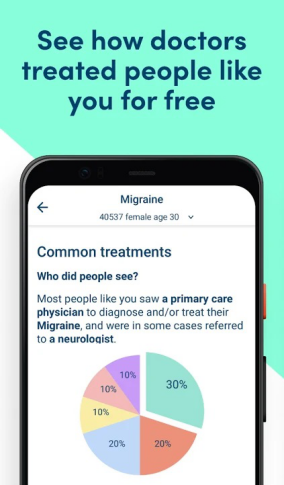
“We have developed medical charts and laboratory modules, and built models that enable the software to engage in targeted conversations with users about what their symptoms—such as headache, nausea, or vomiting—may indicate,” said Allon Bloch. “In essence, we aim to replicate the entire process of a patient visiting a doctor: the patient describes their condition to the physician, who then provides a diagnosis and treatment recommendations.”
K Health demonstrates a conscientious, responsible, and meticulous approach to the telemedicine services and human health industries.According to Allon Bloch, K Health currently contracts with physicians across the United States to provide medical services 12 hours a day, seven days a week. They can treat most acute conditions and prescribe medications, but do not prescribe opioids or other potentially addictive substances.。
Since its inception, K Health has focused primarily on urgent care services, but Allon Bloch also aims to expand into the chronic disease sector. He plans to add pediatrics to the platform this year and intends to offer its services in Spanish.
When asked whether they plan to venture into more specialized fields, Allon Bloch expressed caution: “Even if we develop a free application without diagnostic capabilities, we want it to adhere to the principle of ‘first, do no harm,’ just like physicians. There are certain matters that we need to approach gradually under the guidance of medical professionals.”
In the long run, K Health aims to build on existing datasets to enable the management of health for large populations.
K Health’s app has a 4.8-star rating on the App Store, with its user base nearing 3 million. According to Allon Bloch, K Health is adding 10,000 to 15,000 new users daily.
K Health was also listed in Forbes'“AI 50: America’s Most Promising AI Companies,” Ranked No. 29。
In the primary care app sector, K Health is rivaled by 98point6, a Seattle-based startup that raised $50 million in late 2018. Meanwhile, both Carbon Health and One Medical, which recently went public, are also gaining momentum with their hybrid app-and-physical-care models.
The competition in the emerging telemedicine market remains fierce, with some analysts estimating that the market value would reach $29.6 billion by 2022. Companies such as Doctor on Demand, HealthTap, PlushCare, Teladoc, American Well, 98point6, and Carbon Health are all vying for market share in this industry. Similar applications exist in China, including Zuoshou Yisheng (Left Hand Doctor), Haitun Erke (Dolphin Pediatrics), Haowen Jiao, and Huiyi Dabai.
However, Bloch asserts that K Health’s AI-driven approach, combined with its proprietary medical knowledge database, offers significant advantages.
With the advancement of technology, online healthcare programs that allow individuals to receive medical services without leaving home have come into public view, gained widespread recognition, and become an important diagnostic and treatment modality alongside traditional medical care.
Another benefit of online telemedicine is that it enables the convening of experts from various regions for multidisciplinary consultations on complex and rare conditions, eliminating the need for physicians to travel long distances to patients’ locations as was previously required.
With the implementation of online telemedicine, U.S. healthcare institutions have established connections with counterparts around the world, enabling patients globally to access America’s most advanced medical diagnostic equipment and abundant healthcare resources. According to statistical data, approximately 15% of physicians in the United States currently accept telemedicine patients.
In fact, practical applications of online telemedicine had already emerged in the United States as early as the 1980s (or even earlier). Over the years, this industry has continued to evolve, with new concepts, technologies, and models constantly emerging. Investors, hospitals, and even governments have turned their attention to the telemedicine market.To promote the development of online telemedicine, more than 30 U.S. states have enacted laws requiring health insurers to cover telemedicine services, thereby providing patients with more options for medical consultations.
Nevertheless, this industry remains an emerging sector; even in developed countries such as the United States, telemedicine has not yet become a mainstream healthcare modality. From another perspective, this also represents the industry’s opportunity and mission.
Discussions on human health have never ceased. Given the market’s immense potential and fertile ground, many entrepreneurs have chosen to enter the telemedicine industry.
However, the business models of China’s smart healthcare industry remain contentious and problematic. There are hardly any established, well-developed, and replicable business model cases; while conceptual products abound, few are practically useful, making it difficult to meet market demand.
The success of K Health offers us many insights into problem-solving.
First, team composition is the cornerstone of industrial development, with suitable talent being the key. Allon Bloch and his core team are all elite professionals, and Israel Roth, the Chief Technology Officer of K Health, has made tremendous contributions to their success.
Second, establish a replicable business model. Successful business models are always replicable; once a key bottleneck is resolved, subsequent growth can be rapidly scaled according to established processes. K Health has demonstrated a clear and well-defined model and objectives, enabling it to enter and capture the market smoothly and swiftly.
Third, by focusing on actual market demand, diligently refining products, pursuing continuous self-improvement, and cultivating unique core competencies. Continuously enhancing service capabilities and technical quality is also the key to K Health’s success.
Fourth, prioritize attention to detail and care for user experience. This is a principle that every industry must adhere to; only by enhancing user stickiness can an industry survive in a fiercely competitive market environment.
Fifth, actively seek partnerships. The United States has a well-developed system of commercial medical insurance companies; therefore, K Health has partnered with insurers and achieved substantial returns. As China’s policies are increasingly favoring the development of commercial medical insurance, actively pursuing collaborations with insurance companies is a key factor for success.